
2027 Online Data Science Master's for Healthcare Administrators: A Career Transition Guide

Co-Founder and Chief Data Scientist
Healthcare administrators considering an online data science master's face a choice: build technical skills for a new role, or strengthen their existing work in operations, quality, or strategy. The right degree depends less on its title than on the analysis it teaches, the projects it permits, and the jobs you want afterward. This guide helps you assess that fit, identify preparation gaps, and compare a master's with smaller steps toward a career transition.
Key Things You Should Know
- For administrators, the most direct transitions are often into healthcare analytics, quality analytics, or analytics management; research-heavy data scientist roles may require deeper programming and statistics.
- The U.S. Bureau of Labor Statistics projects 35% employment growth for data scientists from 2025 to 2035, but that occupation-wide figure does not predict healthcare-specific openings or an individual graduate's prospects.
- Choose a program by testing its technical depth, healthcare project access, accreditation, and full cost against a target role - not by relying on the degree title or national salary figures.
What Is an Online Data Science Master's for Healthcare Administrators?
It is a graduate degree that teaches students to use programming, statistics, and data systems to answer questions with data. For a healthcare administrator, the practical goal may be to move from overseeing performance reports to building and evaluating analyses that inform staffing, access, quality, or financial decisions.
A general data science degree can serve that goal if it offers suitable electives and projects; a healthcare-focused title is not essential. Conversely, a program that mentions healthcare but provides little coding or statistical practice may not prepare you for technical roles. If your goal is primarily reporting and operational decision support rather than model development, explore master's degrees in data analytics as a possible alternative.
Why Should Healthcare Administrators Earn a Data Science Master's Degree?
Administrators already understand workflows, budgets, performance measures, and the consequences of a poorly chosen metric. Those strengths can make them valuable partners in analytics work: they can frame a useful question and recognize when a technically sound result would be impractical to implement. A master's may help when the desired role also requires you to write code, test assumptions, and explain uncertainty rather than only commission analyses.
The Bureau of Labor Statistics projects 35% growth in U.S. data scientist employment from 2025 to 2035. That signals broad demand for the occupation, not a guarantee that healthcare employers will hire career changers into data scientist positions. Before committing to a degree, compare job postings for your intended role with your current skills. If the gap is limited to SQL or dashboard development, a course, supervised project, or internal transfer may be a more proportionate first step.
How Do You Choose an Accredited Online Data Science Master's Program?
Start with institutional accreditation: confirm the university's current status through the accreditor or the U.S. Department of Education's accreditation database. Accreditation applies to the institution or a defined program scope; it does not establish that a curriculum fits healthcare analytics. Also confirm that the school can enroll students in your state and whether any required activities must be completed in person.
Then assess the program against the job you want. Ask for current course descriptions, prerequisite rules, a sample study plan, project requirements, and the full tuition-and-fee schedule. Look for substantive practice with SQL, Python or R, statistical inference, and data governance, plus opportunities to investigate healthcare questions. These career-oriented online data science degree options provide another way to compare program features, but verify every current requirement with the university.
Red flag: A program promotes healthcare career outcomes but cannot show how students develop or demonstrate the technical skills those roles require. Ask what graduates actually produce and whether reported outcomes distinguish new entrants from experienced analysts.
What Do Online Healthcare Data Science Master's Programs Teach?
Relevant programs combine data preparation, databases, programming, probability, statistical modeling, visualization, and communication. More technical paths add machine learning and model evaluation. For healthcare work, useful applications include measuring appointment access, studying variation in service use, and evaluating whether an operational change improved a defined outcome.
Course titles alone do not show depth. A healthcare analytics elective might introduce terminology, while a substantial project requires students to define an outcome, check data quality, select a defensible method, evaluate limitations, and explain the result to a decision-maker. Ask to see project descriptions and grading expectations. Training should also address privacy, access controls, bias, and appropriate use of sensitive data; HIPAA obligations depend on the organization and how data is handled.
For a transition portfolio, a reproducible analysis with a clear operational question is often more persuasive than a complex model without a decision it supports. Use authorized or public data, document your assumptions, and explain what you would need to validate before applying the findings in a care setting.
What Are the Admission Requirements for These Master's Programs?
Requirements vary by university. Applicants commonly need a bachelor's degree and may be asked to document preparation in calculus, statistics, and programming; some programs provide introductory coursework, while others expect those skills before enrollment. Healthcare management experience can demonstrate domain knowledge but should not be assumed to satisfy a formal mathematics or coding prerequisite.
Compare your transcript and work samples with each program's published requirements. If you lack a prerequisite, ask admissions whether a graded course, approved bridge course, or other evidence is accepted. Self-study can prepare you to succeed without necessarily fulfilling an admissions rule. In your application, connect a specific operational problem you have handled to the analytical skills you want to gain.
How Long Do Online Data Science Master's Programs Take and Cost?
Time to completion depends on required credits, course sequencing, start dates, and whether you study part time. Rather than relying on an advertised fastest finish, request a term-by-term plan for your intended course load and ask how often required classes run. This matters especially if you must keep a full-time administrative job.
Compare schools using the same cost definition: tuition for all required credits plus mandatory program and university fees. Then account for books, software or computing needs, any required travel, and financing costs if you borrow. Ask whether tuition changes by residency, enrollment pace, or academic year, and whether employer tuition assistance applies. Published tuition alone is not a reliable measure of total cost.
A narrower technical degree may sometimes meet a different goal at a different price; the online machine learning master's budget guide can help frame that comparison. Confirm current charges directly with each school. For return on investment, compare the expense and time commitment with plausible roles - not an assumption that a degree will cause a particular salary increase.
How Do Online and Campus-Based Data Science Programs Compare?
Online study can let administrators remain employed and apply coursework to workplace questions. Its trade-offs may include scheduled live sessions, group work across time zones, and fewer informal opportunities to meet faculty or local employers. Campus study may make in-person collaboration easier but can require commuting or a change in work schedule. Neither format is inherently more rigorous; compare the same curriculum, faculty access, projects, and support services.
Ask whether classes are recorded, exams are scheduled, and projects require employer data or campus attendance. Speed is a separate decision from format: compare accelerated artificial intelligence master's degrees only if an AI-focused curriculum matches your target role. A shorter program is less useful if its pace prevents you from developing the statistical and healthcare-specific evidence employers will need to see.
What Careers Can Healthcare Administrators Pursue After Graduation?
The most realistic target depends on how much technical work you want to do. Administrative experience can remain an asset across these roles, but a degree alone does not establish proficiency.
The table distinguishes adjacent paths by the work they emphasize, helping you choose projects and electives that support a specific transition.
| Target role | Typical emphasis | Evidence to build |
| Healthcare or operations analyst | Metrics, reporting, and service improvement | SQL-based analysis and a clear operational recommendation |
| Quality or population health analyst | Outcome measures and variation across groups | Careful measure definitions and statistical interpretation |
| Analytics manager | Setting priorities and translating results into decisions | Technical literacy paired with stakeholder leadership |
| Data scientist in a healthcare organization | Modeling, evaluation, and reproducible analytical work | Strong coding, statistics, and validated projects |
An internal move can provide a way to test the transition: seek an authorized cross-functional project with an analytics team, then document your contribution without disclosing confidential information. If postings demand extensive production modeling experience, an analyst position may be a more credible bridge than applying only to data scientist roles.
What Salaries Can Healthcare Data Science Professionals Expect?
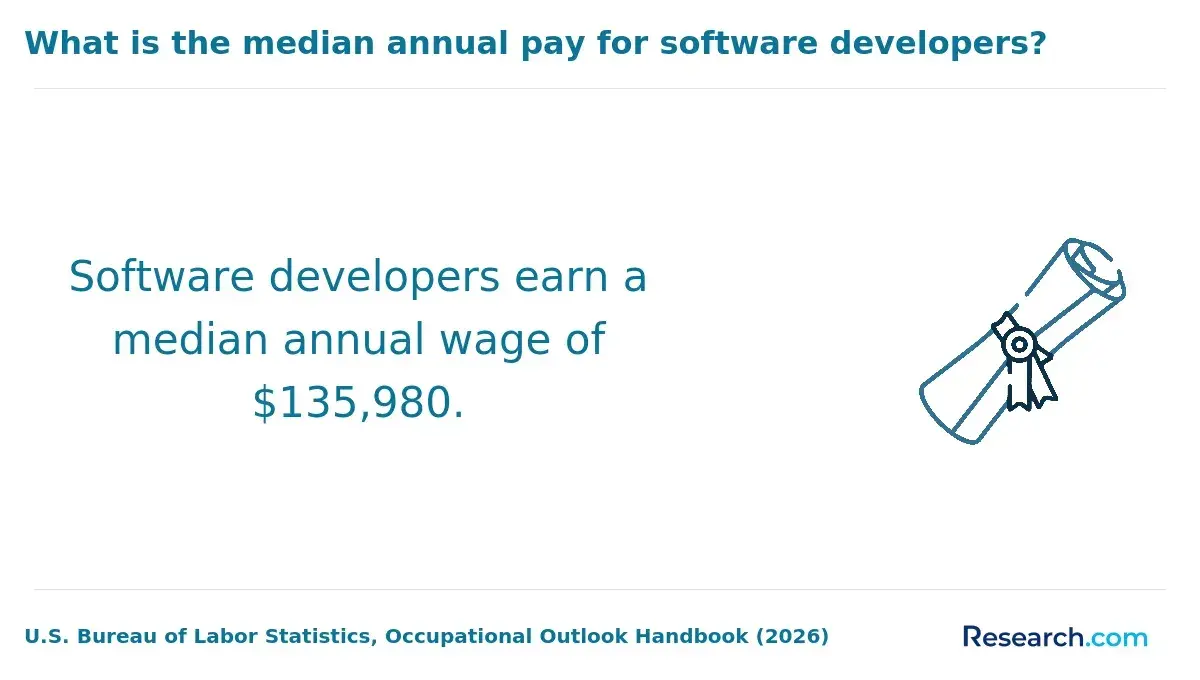
The Bureau of Labor Statistics reports a $120,230 median annual wage for U.S. data scientists in May 2025. This is an occupation-wide figure, not a healthcare-specific salary or an expected starting wage for an administrator changing careers. Pay depends on the role, location, employer, experience, and technical responsibilities.
When assessing an offer or a degree's potential value, compare salaries for the job title and market you would actually pursue. Industry pay patterns for data science degree holders can provide context, but they cannot isolate the earnings effect of a master's. Give greater weight to role-specific offers and verified program outcomes than to a national median.
Are Certifications or Licenses Required for Healthcare Data Science Careers?
Healthcare data science and analytics jobs generally do not have a universal professional license. Employers may prefer particular software skills, cloud credentials, or experience with healthcare systems, but requirements vary by position. A certificate can demonstrate a specific skill; it is not a substitute for being able to explain and reproduce your work.
If you intend to retain duties in a separately licensed profession, check that profession's state rules independently. Also ask prospective employers what privacy and security training they require before staff can access their data. These workplace permissions are distinct from admission to a master's program.
Other Things You Should Know About Data Science
Only with the organization's authorization and the school's required approvals. Removing names alone does not necessarily make a dataset safe to share. Agree on access, storage, publication, and review rules before selecting the project.
Yes. Public or synthetic datasets can demonstrate coding, validation, and communication. State the dataset's limitations clearly rather than presenting a classroom result as a clinical finding.
Possibly, but transfer policies and course-equivalency decisions are program-specific. Request a written evaluation before assuming prior graduate coursework will reduce the degree's cost or length.
Not necessarily. For many applied roles, a well-documented project may be more relevant. Check whether the program offers enough faculty feedback and a project you are permitted to discuss with employers.
References
- Cost of Attendance (Budget) | 2025-2026 Federal Student Aid Handbook https://fsapartners.ed.gov/knowledge-center/fsa-handbook/2025-2026/vol3/ch2-cost-attendance-budget
- Healthcare data scientist qualifications, skills, and job focus | nih.gov https://pmc.ncbi.nlm.nih.gov/articles/PMC7787353/
- The HIPAA Privacy Rule | hhs.gov https://www.hhs.gov/hipaa/for-professionals/privacy/index.html
- Prerequisite Key Topics - UVA School of Data Science https://datascience.virginia.edu/pages/prerequisite-key-topics
- Is a Master's in Data Science Worth It? | University of San Diego Online Degrees https://onlinedegrees.sandiego.edu/is-a-masters-in-data-science-worth-it/
- What Is a Healthcare Data Analyst? Skills & Salary Guide | SIUE https://online.siue.edu/degrees/undergraduate/bsba/data-analytics-spec/how-to-become-a-healthcare-analyst/
- Master of Science in Health Information Management | CUNY SPS https://sps.cuny.edu/academics/graduate/master-science-health-information-management
- Master's in Health Informatics and Data Analytics | Texas State https://online.txst.edu/degrees/graduate/masters-health-information-management/data-analytics/
- What Does a Health Data Analyst Do? | Online Health Informatics and Health Information Management https://healthinformatics.uic.edu/news-stories/health-data-analyst/
- Cost of attendance | Twin Cities One Stop Student Services https://onestop.umn.edu/finances/costs/cost-attendance


