
2027 Online Data Science Master's After a Bachelor's in Music Technology: Prerequisites and Program Fit

Co-Founder and Chief Data Scientist
A bachelor's in music technology can be a useful starting point for an online data science master's, but the degree title alone will not establish your readiness. Audio programming, signal processing, and production projects may demonstrate relevant skills; calculus, statistics, or general-purpose programming may still need attention.
This guide helps you assess your transcript and portfolio, identify programs that fit your preparation, and decide what to complete before applying.
Key Things You Should Know
- A music technology degree does not automatically qualify or disqualify you; programs assess the courses and technical work behind it.
- Compare your record with each program's math, statistics, and programming requirements, then confirm whether missing courses must be completed before admission.
- Data scientist employment is projected by the U.S. Bureau of Labor Statistics to grow 35% from 2025 to 2035, but that occupation-wide forecast does not predict an individual graduate's job prospects.
Can you pursue an online data science master's after a music technology bachelor's?
Yes, potentially. What matters is whether a program accepts applicants from your academic background and whether you can document its prerequisites.
Music technology curricula vary: one graduate may have studied coding and digital signal processing, while another has concentrated on recording and production. Readiness depends on your actual coursework and projects, not an assumption about either graduate.
Experience with waveforms, feature extraction, sound classification, or experimental listening tests can carry over to data work. The likely shift is from solving audio-specific problems to using statistical and computational methods across datasets.
If your goal is primarily to develop music-generation systems rather than work broadly with data, compare artificial intelligence degree options as well; inspect the courses rather than relying on the degree name.
What prerequisites do online data science master's programs require?
Requirements differ by institution. Some programs specify prior courses; others evaluate equivalent preparation or provide foundational study. This comparison helps you distinguish experience that may transfer from a gap that needs formal coursework.
| Area to check | Possible music technology evidence | Potential gap |
| Mathematics | Calculus or mathematical signal-processing coursework | Calculus or linear algebra if absent from the transcript |
| Statistics | Research methods, experiments, or statistical analysis of audio | Probability and statistical inference |
| Programming | Code for audio tools, synthesis, or signal analysis | Data manipulation, testing, and work in a language the program expects |
| Computing foundations | Software development or substantial technical projects | Algorithms, databases, or data structures where required |
A project can show capability without satisfying a prerequisite stated as a credited course. Check each program's exact course descriptions, grade rules, and policy on equivalent experience before paying for additional classes.
How do you choose an accredited online data science master's program?
First, verify that the university holds recognized institutional accreditation through the U.S. Department of Education's accreditation database or the Council for Higher Education Accreditation.
Then confirm that the specific online program accepts students residing in your state; institutional accreditation and authorization to enroll a student are different questions.
Next, compare programs on the factors that affect this transition: whether prerequisites match your record, how much instruction is devoted to statistics and computing foundations, whether projects can use audio data, and whether advising is available when you encounter gaps.
A program with attractive audio electives but little statistical depth may be a poor fit for a broad data science goal. Conversely, a technically strong program may be impractical if it expects courses you cannot complete before entry.
Which admission requirements should music technology graduates expect?
Expect to submit an academic record and to show why your preparation fits the particular program. Schools may also request recommendations, a résumé, a statement, tests, or examples of technical work; none of these is universal.
Read the current admissions page for each program rather than treating a general master's checklist as its policy.
Make your evidence legible to reviewers outside music technology. For an audio-analysis project, identify the programming language, dataset, statistical method, your individual contribution, and how you evaluated the result.
If an application essay is a barrier, online ML master's programs with simplified essay requirements provide a related option to investigate, though you must still check each program's current requirements and curricular fit.
What courses are included in an online data science master's curriculum?
Look for substantial instruction in statistics, machine learning, programming, data management, and evaluation - not just a course that mentions those subjects. A strong fit lets you progress from cleaning and querying data to building models, testing their performance, and explaining their limitations.
Course titles alone cannot establish how deeply a topic is taught; examine descriptions, prerequisites, and project requirements.
Audio-oriented electives or a flexible capstone could let you study speech, sound events, or music-listening data while building skills usable beyond music.
If clinical audio or speech-health applications are your goal, examine privacy and healthcare-data content too; AI master's degrees relevant to clinical data work offer another curricular comparison. Do not assume a program will approve a particular audio or healthcare capstone without asking.
How can you build missing math, statistics, and programming skills?
Start with a transcript audit rather than repeating skills you already have. The following sequence separates preparation for graduate study from proof that you have met an admissions condition:
- List the prerequisites published by each target program and match them to completed courses, including course descriptions where titles are ambiguous.
- Ask admissions whether an accredited course, an equivalent prior course, or demonstrated experience will satisfy each gap; obtain clarification before enrolling elsewhere.
- Fill confirmed gaps in an appropriate sequence, particularly foundational math before advanced statistics or machine learning.
- Build a reproducible project using an audio dataset: document data rights, write readable code, establish a baseline, and explain why your evaluation measures fit the question.
Self-study and short courses can help you test your interest and prepare for demanding classes. They do not necessarily replace a transcripted prerequisite. A common mistake is building an impressive classifier while leaving a required statistics course unfinished.
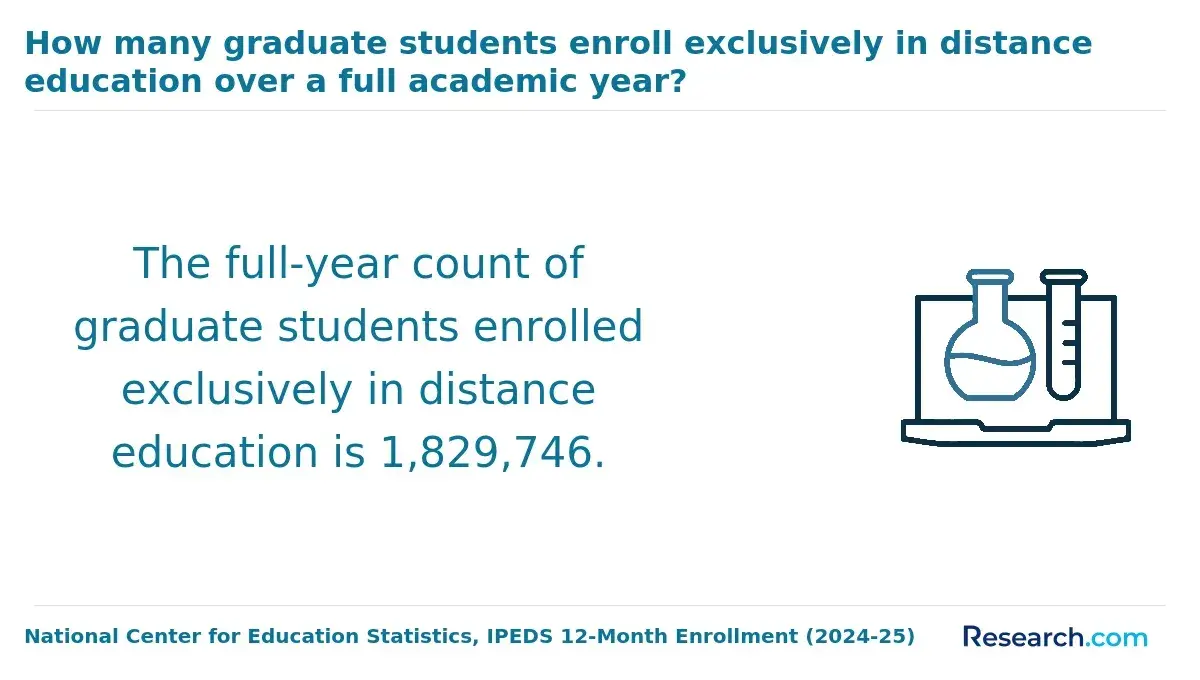
How do online and campus-based data science master's programs compare?
Choose primarily on the learning conditions you need, not the assumption that online means self-paced. Online programs may include scheduled sessions, group work, fixed deadlines, or proctored assessments; campus programs may offer more in-person contact and local networking. Either format can teach the necessary material if its curriculum and support match your needs.
Online study may be more suitable if you plan to keep an audio-industry job or cannot relocate. Before committing, ask about time zones, live attendance, weekly workload, access to instructors, and any campus visits.
If employment is central to your plan, review guidance on pursuing a data science master's while keeping your job. Campus study may be preferable if you rely on regular face-to-face instruction or want access to a particular local research group.
How long do online data science master's programs take and cost?
There is no reliable single price or completion time for online data science master's degrees. Both depend on the program's credit requirements, tuition and fee schedule, course availability, and whether you study full- or part-time. Prerequisite classes taken before enrollment can add time and expense without counting toward the master's.
For a decision-ready estimate, request the current total required credits and an itemized tuition-and-mandatory-fee calculation for your residency and enrollment status. Add any required prerequisite courses, materials, technology, travel, and financing costs.
Ask whether part-time pacing changes fees or access to aid, and compare that full estimate, not one school's per-credit tuition, with other options. If your employer offers tuition assistance, confirm eligibility and reimbursement conditions before using it in your budget.
What data science careers and salaries can graduates pursue?
A music technology graduate might first pursue audio or speech-data analysis, music-platform analytics, or a broader analyst role, depending on prior experience and the skills demonstrated in projects.
Data scientist roles generally call for stronger modeling and statistical evidence. Neither a master's nor an audio portfolio alone ensures entry into a particular role.
The U.S. Bureau of Labor Statistics reports a $120,230 median annual wage for data scientists in May 2025. That is an occupation-wide figure, not a starting salary or an estimate of what this degree would add to your pay.
Location, sector, role, and prior experience affect individual outcomes; data science degree earnings by sector can help frame those differences without treating a sector figure as a personal offer.
What certifications and job outlook apply to data science careers?
There is no single certification that substitutes for the math, statistics, programming, and project work a data science role may require. A tool-specific certificate can demonstrate focused practice, but judge it against job descriptions for roles you actually want.
If your immediate goal is an analyst position, a smaller credential and a credible portfolio may be worth testing before committing to a master's.
The Bureau of Labor Statistics projects 35% growth in data scientist employment from 2025 to 2035. That supports investigating the field, but it does not mean every applicant, or every music technology graduate, will find a data scientist position.
Compare the skills requested in relevant vacancies with the curriculum and with your existing experience before treating the forecast as a reason to enroll.
Other Things You Should Know About Data Science
Usually, the question is whether prior courses satisfy entry requirements, not whether undergraduate credits reduce graduate credit requirements. Ask the program about both policies separately.
Not necessarily. General data science coursework centers on data and computing; an audio project may use existing datasets. Check the program's computer requirements and any project-specific needs before buying equipment.
Do not assume you have permission to redistribute recordings or derived data. Check the dataset's license and applicable permissions, and consider a dataset expressly cleared for your intended use.
Possibly, if the program approves it and your employer permits the necessary data access and disclosure. Clarify confidentiality, publication, and supervision rules before proposing the project.
References
- Bachelor of Arts, Music Technology | illinois.edu https://music.illinois.edu/admissions/undergraduate-programs-and-application/undergraduate-degrees/music-technology/
- Master of Science (M.S.) in Applied Data Science - UGA Online https://online.uga.edu/degrees-certificates/master-of-science-in-applied-data-science/
- Computer Science, M.S. | NYU Tandon School of Engineering https://engineering.nyu.edu/academics/programs/computer-science-ms
- Prerequisite Key Topics - UVA School of Data Science https://datascience.virginia.edu/pages/prerequisite-key-topics
- Music, Science, and Technology - Stanford Department of Music https://music.stanford.edu/about/what-we-do/music-science-and-technology
- Online Master's in Data Science - Graduate School https://asegrad.tufts.edu/program/online-masters-data-science
- Bachelor of Science in Music Technology - Electrical and Computer Engineering: Signal Processing | Georgia Tech Catalog https://catalog.gatech.edu/programs/music-technology-ece-bs/
- Master of Science in Applied Data Science | USC Online https://online.usc.edu/programs/master-of-science-in-applied-data-science/
- Online vs. In-Person College: What Employers Really Think About Each - CityU of Seattle https://cityu.edu/online-vs-in-person-college/
- Master of Science Admission Requirements | Nova Southeastern University https://computing.nova.edu/admissions/masters-programs.html


