2027 Online BS in Business Administration vs. a General Studies Bachelor's: Which Route Fits Your Career Plan?
Audited and Verified:
Our Editorial and Data Verification Process
Research.com uses government datasets, official education statistics and primary institutional information to support its career and degree guides. Our review process checks factual accuracy, occupational definitions, source dates and the requirements associated with the credentials discussed.
How This Article Was Fact-Checked
Our editorial team verifies salary estimates, employment projections, education requirements and program information against original data providers and official organizations. Salary figures are checked against the relevant occupational definitions and reporting periods. Information about licensure, accreditation and required in-person training is reviewed separately.
Fact-checked and verified on:

Co-Founder and Chief Data Scientist
If you have college credits to finish and a career goal in mind, the fastest-looking bachelor's program may not be the best fit. An online BS in Business Administration offers a defined business curriculum, a general studies bachelor's may offer more room to apply credits from different subjects.
That difference can affect both your graduation date and the evidence you can show an employer. This comparison is for prospective, transfer, and returning students who want to weigh career preparation against completion time, cost, and flexibility before choosing a route.
Key Things You Should Know
- Choose business administration when your target role calls for accounting, operations, marketing, or other business knowledge that you still need to develop; choose general studies when its flexible requirements better preserve useful credits and you can build the missing skills elsewhere.
- Compare credits that satisfy graduation requirements, not just credits a school accepts. Business prerequisites, course sequencing, and residency rules can change both the time and cost of completion.
- Neither degree guarantees a business job or management position. For context, the US Bureau of Labor Statistics reports a $75,940 median annual wage for human resources specialists in May 2025, an occupation-wide figure, not a starting salary for either degree.
What is the difference between an online business administration degree and a general studies bachelor's degree?
An online BS in Business Administration is a bachelor's degree with a prescribed business core, commonly spanning accounting, finance, marketing, management, operations, and quantitative decision-making. "Online" describes how classes are delivered, not what the degree qualifies you to do. A general studies bachelor's is an interdisciplinary degree whose requirements typically allow more coursework across fields. Its transcript may show a coherent focus, or a broad mix, depending on the program and your choices.
The comparison below centers on what each route is designed to teach and how it may use your existing credits. Actual requirements depend on the institution.
| Decision factor | Online BS in Business Administration | General studies bachelor's |
| Curriculum | Required business courses provide a common foundation. | Requirements permit more cross-disciplinary choices; business depth varies. |
| Prior credits | Unrelated credits may count chiefly as general education or electives. | Courses from multiple fields may fit more readily, subject to school rules. |
| Career signal | Degree title identifies formal undergraduate business study. | Work experience, electives, and projects may need to explain the career focus. |
| Potential constraint | Business prerequisites or sequenced courses may extend completion. | Flexibility alone may leave a target skill gap unaddressed. |
For employees hoping to study while staying in their jobs, compare the actual schedules of business administration programs supporting continued employment. A general studies program can also be online; the degree subject and delivery format are separate decisions.
Which degree is better for specific career goals: business administration or general studies?
Business administration is usually the stronger choice when your goal requires a broad business foundation you do not yet have. It can help a career changer build vocabulary and work samples for operations, marketing, HR, or business support roles. A general studies degree may be the better completion route if you already perform relevant business work, need a bachelor's for an employer requirement, and would otherwise repeat substantial coursework. Neither conclusion holds until you compare official degree audits.
Start with the duties of your target job rather than its title. An aspiring operations coordinator might need spreadsheet analysis and process documentation; someone seeking an HR role may need employment-practice knowledge and relevant administrative experience. A degree with neither appropriate courses nor opportunities to demonstrate those skills is a weak fit, however quickly it can be completed.
If your goal is specifically procurement or logistics, compare both broad degrees with shorter online supply chain degree pathways. A specialized program could be more relevant, but only if its requirements accept your credits and its added focus is worth the cost.
What careers can you pursue with each bachelor's degree?
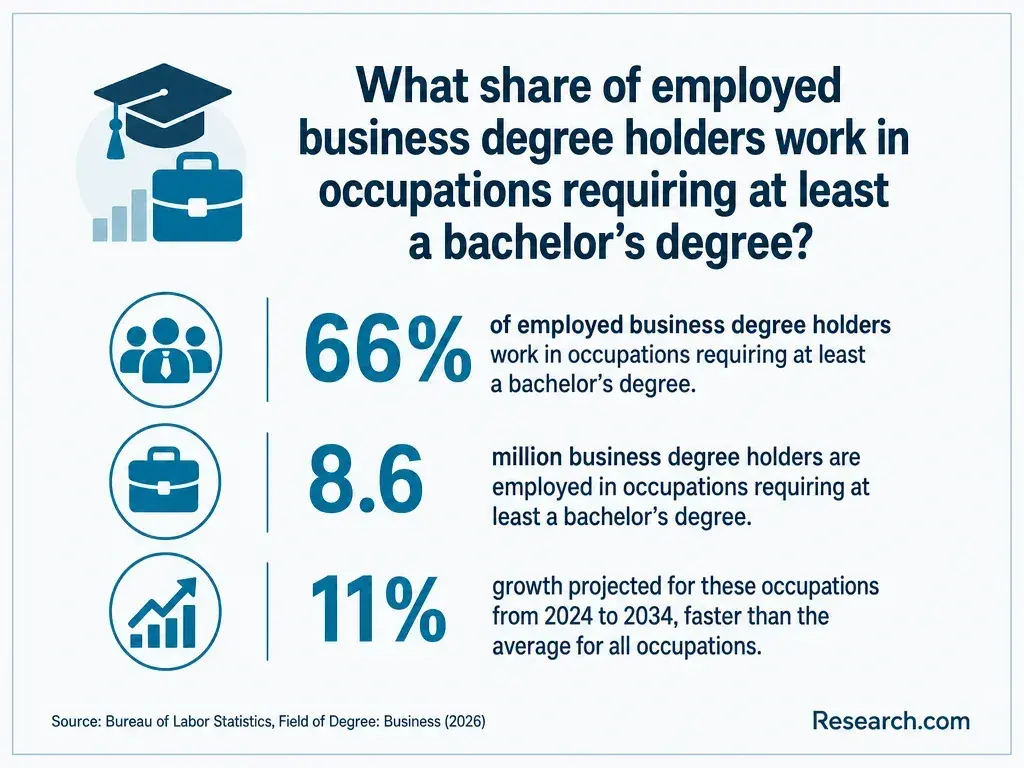
Graduates of either route may seek coordinator, assistant, or specialist-track roles, depending on prior work and employer requirements. Business administration supplies more directly relevant coursework for functions such as sales operations, marketing support, procurement, and HR administration. General studies graduates can pursue those roles too, particularly when their electives, internships, or employment demonstrate the required skills.
An applicant moving from customer service into marketing coordination, for example, could pair customer insight with campaign-related coursework and a responsibly documented project. An experienced office employee pursuing an operations role may benefit more from finishing a general studies degree while strengthening spreadsheets and process-improvement skills at work. By contrast, a person without business experience may value the structured business core and applied assignments.
Aspiring supervisors should check whether the next role calls for staff leadership, budgeting responsibility, or industry experience - not merely a bachelor's degree. If leadership is the specific educational goal, completion times for organizational leadership degrees offer another route to compare, though coursework cannot substitute for a record of leading people or projects.
Online study may eliminate a commute and make it easier to keep working, but it does not necessarily let you study whenever you want. Live discussions, group presentations, timed exams, internships, and weekly deadlines can still conflict with shifts or caregiving. Campus programs may make scheduled face-to-face collaboration easier while requiring travel and attendance at fixed times.
Compare the format of required courses, not just the program's advertised format. Ask for sample schedules and assessment policies, including any proctoring, campus visits, or live sessions. Also check how students access advising, tutoring, career services, and project opportunities remotely. Online degrees with accelerated terms may shorten the calendar, but compressed deadlines can raise the weekly workload; they do not remove the work.
Business administration programs commonly require financial and managerial accounting, economics, finance, marketing, management, statistics or other quantitative work, and a strategy or capstone course. A school may also offer a formal concentration, such as supply chain or analytics; a few electives with that theme are not automatically a concentration. Check prerequisites and how often upper-level courses run.
General studies programs usually combine general education with electives or a defined interdisciplinary focus. That freedom can support a deliberate business-oriented plan - such as accounting fundamentals, data analysis, and communication - or leave important gaps if courses are selected only because they transfer. Review actual course descriptions and assignments, not just catalog titles.
If supply chain is your intended function, an online supply chain bachelor's fast-track guide can help you compare specialized course sequences with the electives available in each broader degree. The useful question is whether you can complete the relevant coursework and demonstrate its application without unnecessary extra terms.
Both routes generally require evidence of secondary-school completion or prior college study, but admission rules vary. Transfer applicants should expect schools to review official transcripts. Some business majors have separate entry standards or require mathematics, accounting, economics, or other introductory courses before upper-level study, a general studies major may have different rules. Admission to a university does not necessarily mean admission to its business major.
Before applying, ask whether you qualify for the degree and when you can start its required upper-level courses. If you are considering accelerated options, use US rankings for accelerated business bachelor's degrees as a starting shortlist, then confirm admission, prerequisite, and transfer policies directly with each school. A published pace is not your personal completion schedule.
The deciding number for a transfer student is remaining required credits, not credits already earned. A general studies degree may finish sooner if it applies more prior courses toward graduation. A business degree may take longer if accounting or quantitative prerequisites must precede upper-level classes. The reverse is possible when a student already has business coursework that fits the major.
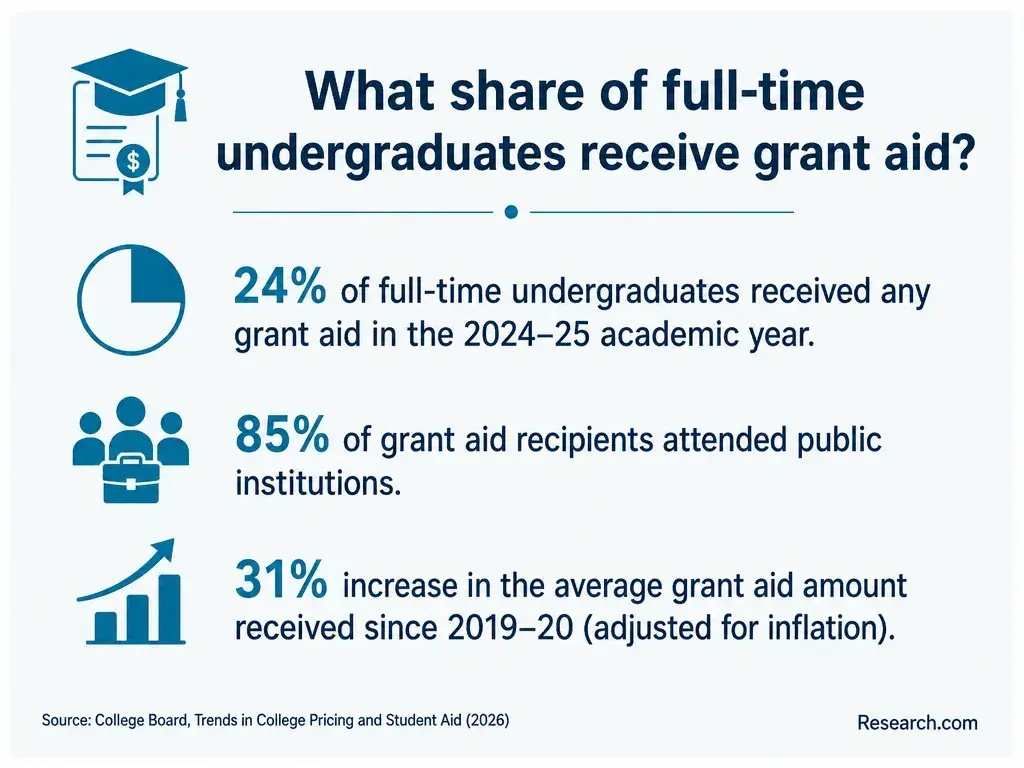
Compare written degree audits and an estimated schedule from each school, then price the courses still needed. Include tuition, mandatory fees, books, software, possible proctoring or travel, and the effect of studying part time. Ask whether aid or employer reimbursement applies to the planned enrollment pattern. For a broader cost-and-timeline comparison, review business administration degrees compared by cost, duration, and outlook, but use your own evaluated credits to estimate your total.
Check an institution's accreditation status and whether it meets your needs for credit recognition and federal student aid. AACSB, ACBSP, and IACBE accreditation concern business education at a specified school or program scope; do not assume that a university's accreditation or a business-school claim covers the exact degree you are considering. Accreditation is an important screening factor, not proof of a particular graduation or employment outcome.
For transfer students, an accepted credit may count only as an elective rather than satisfy accounting, general education, concentration, or residency requirements. Request a program-specific audit showing where every credit applies, what remains, and who can approve substitutions or appeals. If financing matters, compare business administration tuition budgets using federal student aid only after confirming the institution's eligibility, your own aid status, and the cost of your remaining courses.
There is no reliable national salary attached to either degree title. Pay depends on the occupation, location, employer, and applicant's experience. The US Bureau of Labor Statistics reports a May 2025 median annual wage of $78,760 for market research analysts and projects 7% employment growth for that occupation from 2025 to 2035. Those figures cover workers across experience levels and education backgrounds; they are not an offer to new graduates.
Use occupation data to test whether a target field interests you, then inspect actual job postings for required tools, experience, and education. A general studies graduate with relevant analytical work may be more competitive for a particular opening than a business graduate without it, and vice versa. If project coordination is your intended entry point, affordable project management schools provide a specialized comparison, but check whether the jobs you want actually call for that degree rather than transferable coordination experience.
Do business administration or general studies careers require licenses or certifications?
Most general business support roles do not require a license simply because the applicant holds either bachelor's degree. Specific activities can be different: public accounting, certain financial-services work, and other regulated occupations may have state or industry requirements. A business administration course or concentration does not itself establish eligibility for a CPA license or any other professional designation.
Voluntary certifications may help in an established function, but eligibility can depend on experience, examinations, or education defined by the issuing organization. Check the exact credential rules and target job postings before paying for one. If project management is your goal and a specialized bachelor's is under consideration, undergraduate project management grants and scholarship planning can inform the education-cost comparison, funding for a degree should not be confused with certification eligibility.
Other Things You Should Know About Business Administration
It need not. Name relevant coursework, projects, and work responsibilities alongside the degree. Be accurate: describe a collection of electives as a focus only if the school does not award a formal concentration.
Potentially. MBA programs set their own admission and prerequisite rules, and many consider applicants with non-business bachelor's degrees. Check the programs that interest you rather than assuming either undergraduate major is required.
No. Both may cover core business subjects, but their degree requirements and quantitative or elective emphasis can differ by school. Compare curricula and transfer audits, not degree abbreviations alone.
Possibly, if you already hold the credential a job requires and need only a specific skill. If the job requires a bachelor's you have not completed, targeted training alone may not meet that requirement.
- Accreditation in the U.S. | ed.gov http://www.ed.gov/laws-and-policy/higher-education-laws-and-policy/college-accreditation/accreditation-in-the-us
- Colorado Transfer https://cdhe.colorado.gov/students/attending-college/colorado-transfer
- What Are the Prerequisites for an MBA Program? | marymount.edu https://marymount.edu/blog/what-are-the-prerequisites-for-an-mba-program/
- What Jobs Can You Get With a Business Degree? | snhu.edu https://www.snhu.edu/about-us/newsroom/business/what-jobs-can-you-get-with-a-business-degree
- 11 Types of Business Degrees and Career Pathways | National University https://www.nu.edu/blog/types-of-business-degrees/
- Online vs Traditional Business Admin Degrees: What's Best? | UAGC https://www.uagc.edu/blog/online-vs-traditional-business-administration-degrees-whats-best-you
- Business degree jobs: Career paths for graduates | About the University of Cincinnati https://www.uc.edu/blog/business-degree-jobs.html
- Entry-Level Jobs With a Business Administration Degree | Warner Pacific University http://www.warnerpacific.edu/blog/top-entry-level-jobs-ba-business-administration/
- Undergraduate and Graduate Tuition and Fees | Purdue Global https://www.purdueglobal.edu/tuition-financial-aid/undergraduate-graduate-tuition-and-fees/
- 10 Key Subjects Taught in a Bachelor of Business Administration Program | Carson-Newman University https://www.cn.edu/cps-blog/10-key-subjects-taught-in-a-bachelor-of-business-administration-program/