2027 Online BS in Business Administration vs. a BS in Technical Management: Which Route Fits Your Career Plan?
Audited and Verified:
Our Editorial and Data Verification Process
Research.com uses government datasets, official education statistics and primary institutional information to support its career and degree guides. Our review process checks factual accuracy, occupational definitions, source dates and the requirements associated with the credentials discussed.
How This Article Was Fact-Checked
Our editorial team verifies salary estimates, employment projections, education requirements and program information against original data providers and official organizations. Salary figures are checked against the relevant occupational definitions and reporting periods. Information about licensure, accreditation and required in-person training is reviewed separately.
Fact-checked and verified on:

Co-Founder and Chief Data Scientist
If you work in IT, manufacturing, healthcare operations, or another technical field, both degrees may look like routes to broader responsibility. They prepare you differently: one builds a general business foundation, while the other may connect management study to technical work you already know.
That distinction matters if you are changing fields, seeking advancement, or returning to finish a bachelor's degree. This comparison will help you match coursework and career evidence to your target role, then check the program details that determine your actual time and cost.
Key Things You Should Know
- Choose business administration for flexibility across business functions; consider technical management when you want to build on technical experience in operations, projects, or technical teams.
- Compare required courses and an official transfer-credit audit, not degree titles alone: accepted credits may still leave different major requirements to complete.
- Neither degree guarantees a management job. BLS projects 18% employment growth for logisticians from 2025 to 2035, but occupation-wide outlooks do not predict an individual graduate's prospects.
What is the difference between an online BS in Business Administration and a BS in Technical Management?
A BS in Business Administration generally teaches how organizations make decisions across functions such as accounting, marketing, finance, operations, and management.
A BS in Technical Management generally combines business and leadership study with the management of technical work, processes, or teams. Neither title guarantees a particular curriculum: the institution defines its major, electives, and any concentrations.
This comparison shows the distinction to test in actual degree plans. Technical management is not the same as training to become an engineer, software developer, or licensed technical professional:
| Decision factor | BS in Business Administration | BS in Technical Management |
| Primary emphasis | Business decisions across multiple functions | Coordinating and improving work in technical settings |
| Likely advantage | Flexibility when the target business function is still open | Closer connection to existing technical experience |
| Possible limitation | May require electives or experience to show technical-sector relevance | May offer less depth in a desired business function |
| Most important check | Required core, concentrations, and applied assignments | Required technical content and how prior credits apply |
Use US rankings of online business degree programs to identify programs to investigate, then compare their published requirements rather than treating a ranking as evidence that their curricula are interchangeable.
Which degree better fits your career goals: Business Administration or Technical Management?
Start with the work you want to do next and the experience you can already document. If you are a technician who has coordinated schedules, trained colleagues, or improved a workflow, technical management may help you formalize those responsibilities.
If you want to move from a technical role into marketing, HR, finance, or general business operations, business administration may provide a more relevant foundation.
For project coordination in a technical workplace, compare both degrees with a focused project-management pathway. Low-cost project management degree options may be worth examining if project planning is your specific goal; their price alone does not establish that they meet your employer's requirements.
The recommendation can reverse after a degree audit. A technical management program that applies substantially more of your prior technical coursework to graduation may be the better completion route.
Conversely, a business administration program with a relevant concentration and accessible workplace projects may serve a technical employee better than a technical management curriculum centered on a different industry. If you already have a bachelor's degree, first check whether targeted courses, employer training, or a graduate pathway would address the gap without another undergraduate degree.
What careers can you pursue with each business degree?
Both degrees can support applications for business-facing work, but hiring depends on the role, your experience, and demonstrated skills. A business administration student might pursue marketing coordination, HR support, purchasing, or operations coordination.
A technical management student might pursue technical project coordination, production or service operations support, or logistics work in a field they know. Those are possible pathways, not jobs awarded by the degree.
Match the role's tasks to evidence you can show. For an operations position, that might mean a documented process map, spreadsheet analysis, and examples of communicating with stakeholders.
For HR work, it may mean relevant coursework and experience handling employee-facing processes appropriately; college pathways into human resources can help you compare a broad business degree with more focused study.
Supervisory and specialist positions may require additional experience or training, even when a bachelor's degree is listed in a posting.
Expect overlap in management, communication, accounting, and quantitative reasoning. The consequential difference is what each program requires beyond that shared foundation. Business administration may offer more study across business functions or a formal concentration.
Technical management may emphasize project work, process improvement, technology-related decisions, or leadership in technical organizations. Confirm these features in the current catalog rather than inferring them from the degree name.
Review course descriptions and prerequisites for the skills your target role uses. A single analytics course, for example, is not the same as a sequence involving statistics, data tools, and applied analysis.
Also ask whether a capstone can address a problem from your workplace; employer permission and academic approval may be necessary before using internal data.
Course sequencing affects how quickly either curriculum can be completed. US rankings for accelerated business bachelor's degrees can surface options, but confirm that required courses are offered when you need them and that the faster schedule fits your work hours.
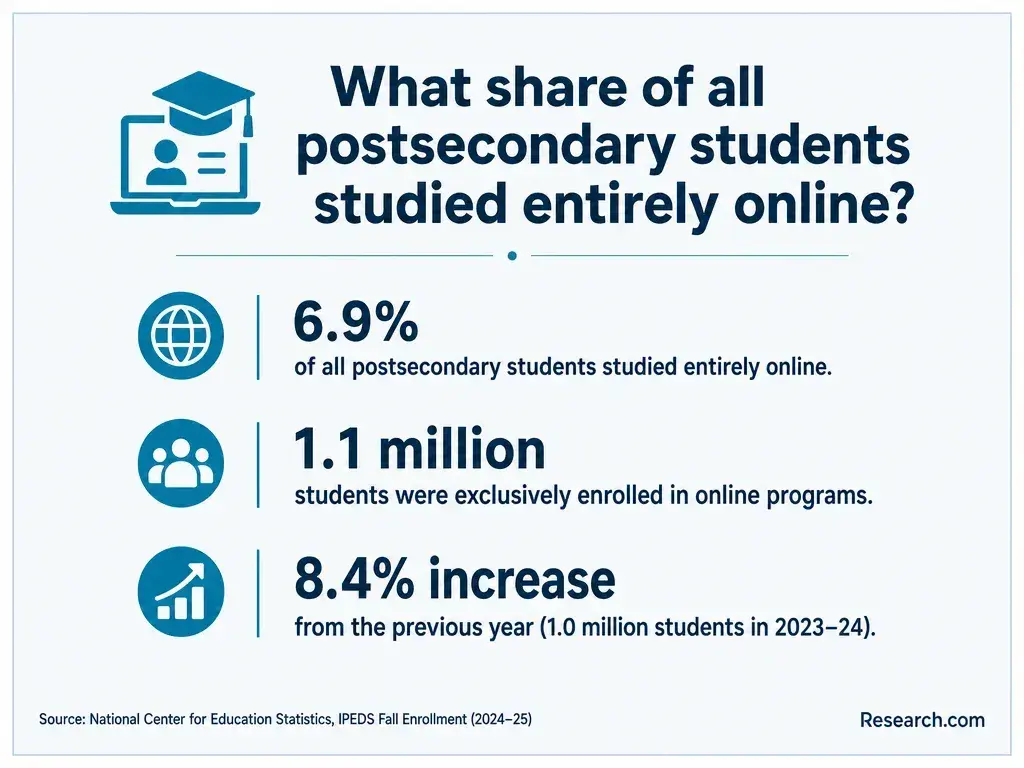
Online delivery does not, by itself, make either degree more or less valuable. Evaluate the institution's accreditation, curriculum, assessed work, faculty access, and opportunities to demonstrate skills.
An online program can be a practical choice for an employed student, but "online" does not necessarily mean self-paced: courses may have live meetings, group presentations, proctored exams, or fixed weekly deadlines.
Compare a typical term against your actual work schedule before enrolling. Online degrees with accelerated terms may shorten the calendar, but compressed courses can increase the work due each week.
Ask about required campus visits, accessibility, technical support, and how students complete applied assignments if they cannot use their employer's data.
Requirements vary by institution and by whether you enter as a first-year, transfer, or degree-completion student. Schools typically review prior education through transcripts; a program may also set GPA, prerequisite, or minimum-transfer-credit rules.
Technical management programs may be designed with particular technical credentials or prior coursework in mind, but do not assume technical employment alone satisfies admission or graduation requirements.
Ask admissions which requirements apply to you, then request a separate evaluation of how prior credits meet general education, business or technical core, elective, and residency requirements. Admission, acceptance of transfer credit, and application of that credit to the major are different decisions.
For a closer look at possible preparation requirements, consult business administration admissions eligibility rules and confirm the applicable policy with each school.
Completion time depends chiefly on credits that satisfy graduation requirements, course availability, and how many courses you can sustain per term.
Two schools may accept the same prior coursework but apply it differently, leaving different amounts of study. Request an official degree audit and a term-by-term plan before relying on an advertised completion timeline.
Compare the cost to finish, not just tuition per credit. Include remaining required courses, fees, books or software, possible travel or proctoring, and borrowing costs; then account for grants or employer assistance only if you are eligible.
A narrower project-management degree may also be worth pricing if it matches your goal. Guidance on how to estimate the cost of accredited project management study can help you make that comparison using consistent assumptions.
There is no reliable national salary attached to either degree title. Occupation-specific BLS data offers context, provided you do not mistake a median for a new graduate's likely pay. The examples below connect to different possible career directions rather than measuring outcomes for either major.
| Occupation | May 2025 median annual pay | Projected US employment growth, 2025-2035 |
| Market research analyst | $78,760 | 7% |
| Logistician | $82,320 | 18% |
These BLS occupation-wide figures include workers with varied education and experience. Market research may demand analytical and research skills beyond a general business core; logistics employers may value industry or supply-chain experience.
Compare local job postings with the courses and work evidence you can actually offer, then weigh that opportunity against your net completion cost. Budget-friendly colleges for business administration online can provide candidates for that cost comparison, subject to an individual credit evaluation.
Neither degree generally requires an occupational license simply to graduate or to apply for ordinary business roles. Particular jobs are different: regulated accounting or financial-services work can have separate state or industry requirements, while employers may prefer voluntary project-management, HR, or supply-chain credentials.
A course or concentration does not automatically confer one of those credentials or establish eligibility for its exam.
If your goal is a specific certification, check the issuing organization's education and experience rules before choosing a degree. If you instead decide you need a project-management bachelor's, project management bachelor's aid application planning addresses financing that academic route - not eligibility for a professional certification.
How can you choose an accredited and reputable online program?
Verify the institution's current accreditation through the accreditor and confirm that the online degree is offered by that institution. If a school cites AACSB, ACBSP, or IACBE, check the accreditor's listing for the scope of business accreditation; institutional accreditation and business-program accreditation are not the same claim.
Before applying, request the current degree plan, a written transfer evaluation, a realistic course schedule, and an itemized estimate of remaining costs. Ask how advising, career services, applied projects, and complaints work for online students.
Free application options at accredited online schools may reduce an upfront expense, but the better choice is the program whose verified requirements and support fit your career plan.
Other Things You Should Know About Business Administration
No. Engineering management programs may have different technical prerequisites and engineering-focused coursework. Compare the actual degree plans if you need preparation for an engineering-specific role.
Potentially. MBA programs set their own admission requirements and assess applicants individually; a particular undergraduate business major is not universally required.
Yes. Neither degree is required to start most businesses, and neither replaces the need to test demand, manage cash flow, and meet any industry-specific legal requirements.
Not automatically. If you already hold a bachelor's, compare your target job's requirements with shorter courses, employer training, relevant certifications, or graduate study before committing to another degree.
- Educational Attainment and Nonwage Labor Market Returns in the United States - PMC https://pmc.ncbi.nlm.nih.gov/articles/PMC10923559/
- Annual Earnings by Educational Attainment - COE https://nces.ed.gov/programs/coe/indicator/cba/annual-earnings
- Accreditation in the U.S. | ed.gov http://www.ed.gov/laws-and-policy/higher-education-laws-and-policy/college-accreditation/accreditation-in-the-us
- Bachelor of Science (B.S.) in General Management | Thomas Edison State University https://www.tesu.edu/degrees-programs/bachelors/bs-general-management.php
- What Is a Capstone Project? | DeVry University https://www.devry.edu/blog/what-is-a-capstone-project.html
- Credit for Prior Learning | UMass Global https://www.umassglobal.edu/admissions/transfer-center/credit-prior-learning
- Find the Right Online Degree Program by Using a Comparison Framework | Columbia Southern University https://www.columbiasouthern.edu/blog/blog-articles/2026/august/find-the-right-online-degree-program
- Academics: College of Management and Human Potential: Undergraduate: BS in Business Administration https://academics.waldenu.edu/catalog/management-human-potential/undergraduate/bachelor-science-business-administration
- BA vs. BS in Business Administration | New England College https://www.nec.edu/news/ba-vs-bs-business-administration