2027 Online BS in Business Administration vs. a BS in Business Analytics: Which Route Fits Your Career Plan?
Audited and Verified:
Our Editorial and Data Verification Process
Research.com uses government datasets, official education statistics and primary institutional information to support its career and degree guides. Our review process checks factual accuracy, occupational definitions, source dates and the requirements associated with the credentials discussed.
How This Article Was Fact-Checked
Our editorial team verifies salary estimates, employment projections, education requirements and program information against original data providers and official organizations. Salary figures are checked against the relevant occupational definitions and reporting periods. Information about licensure, accreditation and required in-person training is reviewed separately.
Fact-checked and verified on:

Co-Founder and Chief Data Scientist
An online business degree can take you toward two different kinds of work: coordinating how an organization operates or using data to investigate its decisions. That distinction matters when you are choosing courses, paying tuition, and trying to build evidence for a first job or career change.
This comparison is for students weighing a BS in business administration against a BS in business analytics. It explains what each route teaches, where their career paths overlap, and which program details to verify before enrolling.
Key Things You Should Know
- Choose business administration for broader preparation across operations, finance, marketing, and management; choose business analytics if you want substantially more statistics, data work, and analytical projects.
- Neither degree guarantees a specialist job. The Bureau of Labor Statistics projects 18% employment growth for logisticians from 2025 to 2035, but relevant experience and skills still matter when pursuing operations roles.
- Compare the courses and credits you have left to complete - not just the degree names. An analytics prerequisite sequence or a business concentration can change your graduation timeline and total cost.
What is the difference between an online BS in business administration and business analytics?
A BS in business administration typically studies how business functions fit together. A BS in business analytics concentrates on turning data into evidence for business decisions. Both may include accounting, economics, and communication, but their required depth in statistics, databases, and analytical methods can differ considerably.
This comparison describes common curricular patterns, not requirements shared by every school. Use the institution's current degree plan to check where the difference actually appears.
| Decision factor | Business administration | Business analytics |
| Primary emphasis | Coordinating people, resources, and business functions | Preparing, analyzing, and interpreting business data |
| Typical applied work | Operating plans, budgets, market analyses, or process proposals | Data cleaning, dashboards, forecasts, or analyses of business questions |
| Best fit | Students exploring several functions or seeking broader operational responsibility | Students who enjoy quantitative work and want it central to their role |
| Main limitation | General coursework may not supply enough technical depth for analytical hiring tests | Technical coursework alone may not build the experience needed to own business decisions |
Some administration degrees offer an analytics concentration. That can be a useful middle route, but check whether it is formally awarded and whether its courses reach beyond introductory analytics. If breadth is your priority, weigh the remaining tuition against your target roles rather than treating the broader degree as an automatic career upgrade; a comparison of business administration degree cost versus career outlook can help frame that trade-off.
Which degree offers better career opportunities: business administration or business analytics?
Neither has universally better opportunities. Business administration can support applications across operations, sales support, procurement, and other business functions. Business analytics is more directly aligned with roles that require data preparation, reporting, and interpretation. The better choice depends on the work you want to do and what you can demonstrate beyond coursework.
For example, an employee with customer-service experience might use business administration to move toward operations coordination, or pair analytics study with a project examining service patterns. A student aiming for an analyst role should look for opportunities to explain an analysis to a nontechnical stakeholder - not merely produce a chart. The Bureau of Labor Statistics projects 10% growth for management analysts from 2025 to 2035, but that occupation commonly calls for related work experience; its outlook is not a forecast of jobs for new graduates.
If your actual goal is purchasing, logistics, or inventory work, compare both degrees with a specialized supply chain curriculum. A returning student may find that lower-cost supply chain completion routes fit existing credits and a defined target role better than either general option.
Is business administration or business analytics better for salary potential?
A degree title is not a reliable salary forecast. Pay depends on the occupation entered, location, industry, responsibilities, and prior experience. Business analytics may provide a more direct route to some analytical hiring requirements, but it does not make every analytics graduate better paid than every administration graduate.
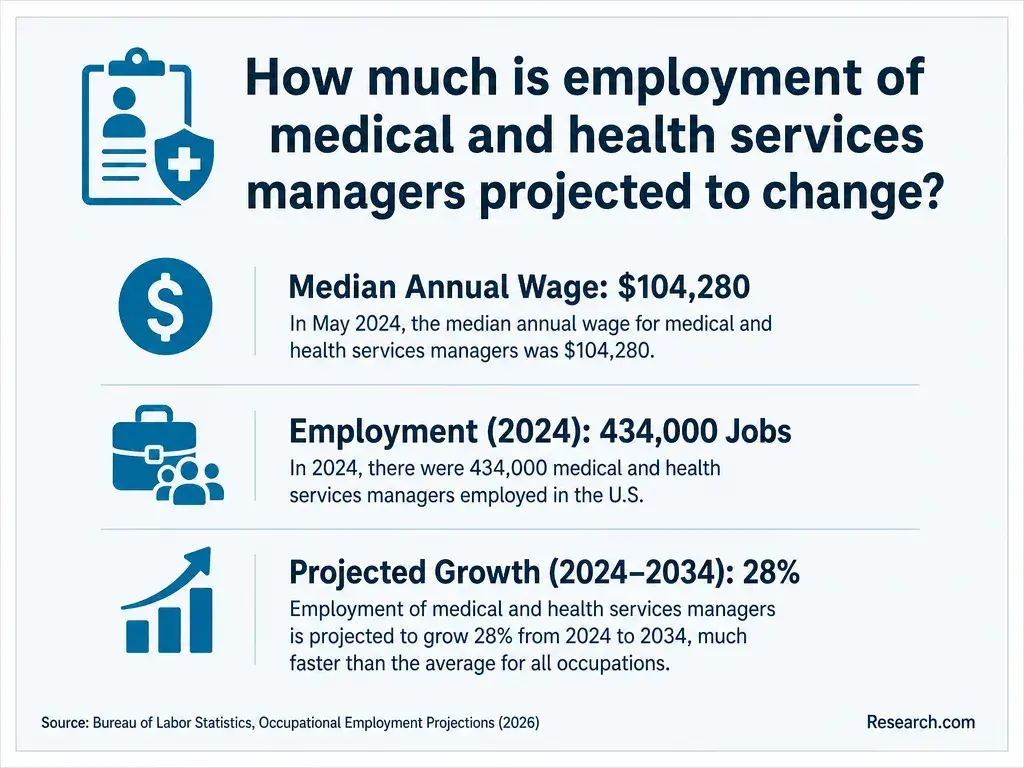
As one occupation-specific benchmark, the Bureau of Labor Statistics reports a May 2025 median annual wage of $78,760 for market research analysts. That is the median across employed workers in the occupation - not an entry-level offer or a wage earned specifically by business analytics graduates. Administration graduates can also pursue market research roles if they have the required research and analytical skills.
Judge the financial choice by likely entry roles and net completion cost, not by comparing a new graduate with an experienced manager's wage. If project coordination is a competing goal, financing may affect the choice as much as a salary figure; students comparing that specialized route can also compare grants for project management undergraduates. Confirm aid eligibility for the specific school and program before counting on an award.
Business administration usually combines accounting, finance, marketing, organizational behavior, operations, economics, and business law. Analytics programs commonly add more substantial work in statistics, data management, visualization, and analytical modeling. Course names alone reveal little: an introductory dashboard assignment is different from a sequence requiring database queries, statistical interpretation, and an assessed project.
Read course descriptions and prerequisites together. Ask what software students use, whether they work with incomplete data, how they explain uncertainty, and whether a capstone requires permission to use workplace information. If supply chain is a possible alternative, accelerated degree planning for supply chain undergraduates offers a useful comparison for checking whether specialized courses can be completed in the needed sequence. Do not assume a course or portfolio assignment establishes professional expertise.
Online delivery changes how students participate, not necessarily what they must learn. Online students may complete the same kinds of case analyses, presentations, team projects, and capstones as campus students. Campus study can make in-person recruiting and collaboration easier; online study can reduce commuting and allow students to remain employed. Either format can be a poor fit if its required meeting times conflict with work or caregiving.
Before choosing, check live-session schedules, exam proctoring, group-work expectations, software access, internship rules, campus visits, and career services available to remote students. "Accelerated" does not mean self-paced or lighter work. Compare actual term schedules with shorter pathways to an online business degree, then decide whether the required weekly workload is sustainable.
Requirements vary by institution and by whether you enter as a first-year or transfer student. Schools may request secondary-school or college transcripts; some set minimum academic standards or require preparatory mathematics before upper-level work. Analytics study may make algebra, statistics, or computing preparation especially important, but do not assume that every program requires those courses for admission rather than before a later class.
Send prior transcripts for an official evaluation and ask which credits meet general education, business core, major, and residency requirements. An accepted elective may not replace a required statistics course. If your background is outside business, check the school's rules alongside guidance on required credits before entering business administration study. Admissions and the academic department must confirm your own eligibility and course placement.
Completion time depends on accepted credits that apply to the degree, enrollment pace, required course availability, and prerequisite order. An analytics major can take longer for a transfer student who still needs foundational quantitative courses; a business administration concentration can also add time if its required classes are offered infrequently. Online delivery alone does not shorten either degree.
Request a term-by-term plan showing remaining requirements and when each course is offered. Check whether a lighter schedule preserves financial-aid eligibility and whether a faster schedule is manageable alongside work. If your intended destination is supervision rather than data analysis, compare the actual coursework and transfer fit of organizational leadership bachelor's routes of three years or less; the advertised duration is not a promise about your personal completion time.
There is no dependable single price for either degree. Tuition may be charged by credit or term, and the amount you pay depends heavily on applicable transfer credit and the courses still required. Add mandatory fees, books, analytics software or computing needs, proctoring, and any travel or internship costs. For working students, reduced hours and the timing of employer reimbursement can matter as much as the posted tuition rate.
Ask each school for an official degree audit and an estimate based on your remaining courses, then check the financial-aid offer and borrowing terms. A lower advertised rate can lose its advantage if more credits remain or required courses delay graduation. Lists of online business administration degrees at lower prices can help build a shortlist, but the school's individualized estimate should control your cost comparison.
Business administration graduates may compete for roles such as operations coordinator, purchasing assistant, sales operations associate, or administrative specialist. Business analytics graduates may pursue reporting analyst, business intelligence assistant, or junior market research roles. Titles vary by employer: read the tasks and required tools rather than assuming that any position called "analyst" requires an analytics degree.
For an entry-level application, connect coursework to evidence: a documented process proposal may support an operations application, while a clearly explained, appropriately sourced data project may support an analytics application. Relevant employment or an internship strengthens either case. Management and consulting positions often require experience beyond a bachelor's degree, and neither degree alone grants a professional license.
If your preferred work is tracking schedules, budgets, and project deliverables rather than analyzing datasets, compare the required courses with online degree options in project management at lower cost. An entry-level project coordinator role may also be reachable through relevant work experience and targeted training without changing majors.
How can students choose an accredited online business program?
First, verify that the institution holds recognized institutional accreditation and that the advertised online degree is the one you would enter. Business-school or programmatic accreditation from AACSB, ACBSP, or IACBE is a separate consideration; confirm its scope rather than assuming it covers every degree at the institution. Accreditation does not, by itself, establish affordability or employment outcomes.
Next, compare the current catalog's required courses against job postings you would realistically pursue. Ask for a transfer evaluation, course rotation, remote-student support details, and any published outcomes - including who was counted and when. Finally, compare individualized total costs; a list of schools where you can compare tuition for online business colleges is a starting point, not a substitute for those checks. Choose the program that gives you the most relevant achievable preparation at a cost and pace you can sustain.
Other Things You Should Know About Business Administration
Possibly. Some schools offer an official analytics concentration or minor within business administration; others offer only electives. Check what appears on the transcript, whether the courses fit your degree audit, and whether they add time or cost.
Requirements vary by employer. The degree title usually tells you less about job preparation than the courses, projects, and experience behind it. Check the specific posting and your program's curriculum.
Only if the school permits it and approves the role, supervision, learning objectives, and assessment. Existing employment does not automatically earn internship credit.
Check employer permission, confidentiality rules, and ownership of the work first. If you cannot share the original project, create a separate demonstration using public or synthetic data and label it accurately.
- Accreditation in the U.S. | ed.gov http://www.ed.gov/laws-and-policy/higher-education-laws-and-policy/college-accreditation/accreditation-in-the-us
- United States Bureau of Labor Statistics Education and Training Classification System | ca.gov https://labormarketinfo.edd.ca.gov/LMID/BLS_Training_Levels.html
- BA vs. BS in Business Administration | New England College https://www.nec.edu/news/ba-vs-bs-business-administration
- What Can You Do With a Degree in Business Analytics? | Hult International Business School https://www.hult.edu/blog/what-can-you-do-with-a-degree-in-business-analytics/
- Find the Right Online Degree Program by Using a Comparison Framework | Columbia Southern University https://www.columbiasouthern.edu/blog/blog-articles/2026/august/find-the-right-online-degree-program
- What is the difference between a B.A. and B.S. in business administration? | Concordia University, Nebraska https://www.cune.edu/news/what-difference-between-b-and-bs-business-administration
- Undergraduate and Graduate Tuition and Fees | Purdue Global https://www.purdueglobal.edu/tuition-financial-aid/undergraduate-graduate-tuition-and-fees/
- Accreditation Process | AACSB https://www.aacsb.edu/educators/accreditation/accreditation-process
- Data Analytics vs. Business Analytics: Key Differences | SIUE https://online.siue.edu/degrees/undergraduate/bsba/gen-program/business-analyst-career-guide/
- UMass Global MyPath: Self-Paced Programs https://www.umassglobal.edu/student-experience/why-umassglobal/flexible-ways-to-learn/self-paced