2027 Online Behavioral Health Leadership Degree Programs With No Personal Statement or Admissions Essay Required

Co-Founder and Chief Data Scientist
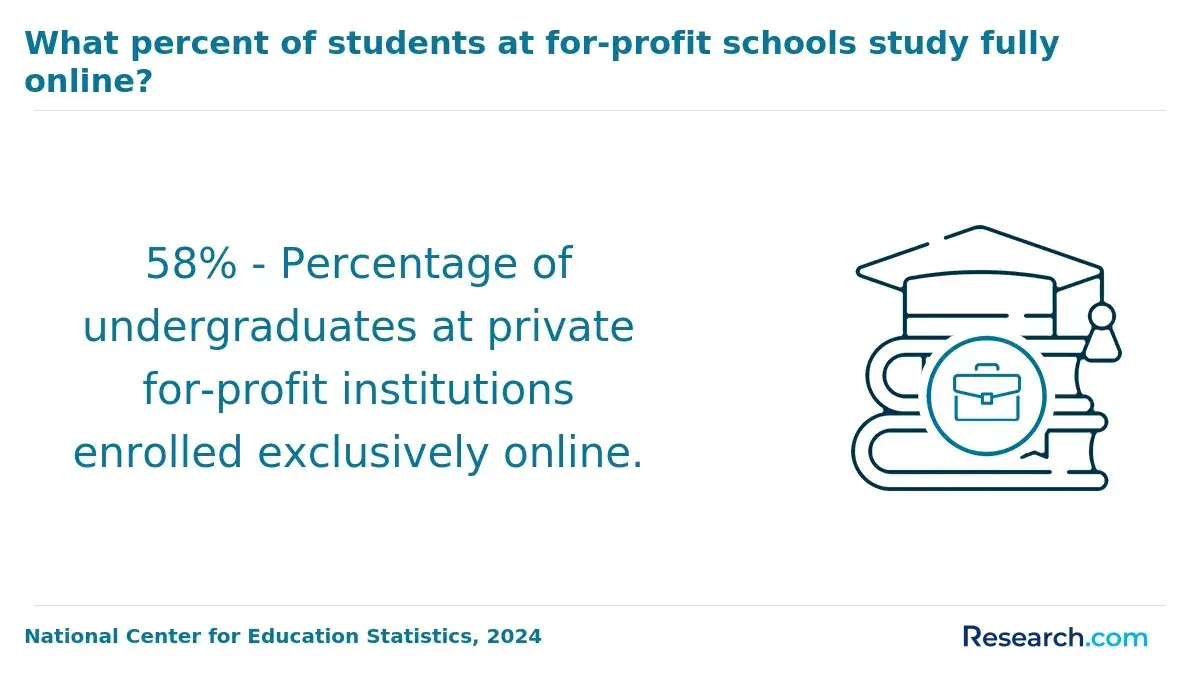
Applying to an online behavioral health leadership program can be simpler when a school does not require a personal statement, but transcripts, GPA, prerequisites, and professional experience may still determine admission. This matters for working adults and transfer students seeking a faster application route. The National Center for Education Statistics reported that millions of U.S. postsecondary students took exclusively distance education courses in recent reporting, reflecting the continuing importance of online options. This guide explains what no-essay policies mean, what to verify, and how to compare programs without choosing based on convenience alone.
Key Things You Should Know
- A true no-essay policy means the standard admission application does not require a personal statement; it does not mean automatic, open, or guaranteed admission because schools may still review GPA, transcripts, prerequisites, work history, and references.
- Essay-optional and essay-waived policies are different: an optional essay may strengthen a borderline application, while a waiver may apply only to eligible applicants; honors tracks, scholarships, and graduate programs can still require written materials.
- Behavioral health leadership can lead toward administrative and program-management work rather than clinical licensure; the U.S. Bureau of Labor Statistics projects 29% employment growth for medical and health services managers from 2023 to 2033, but job eligibility depends on the employer, degree level, experience, and state requirements.
What Does No Personal Statement or Admissions Essay Required Mean for Online Behavioral Health Leadership Degree Programs?
A no-personal-statement or no-admissions-essay policy means applicants are not required to submit a narrative explaining their goals, background, leadership experience, or interest in behavioral health as part of the regular admission decision. Instead, the institution generally evaluates more standardized materials, such as official transcripts and an application form.
Policies apply to a specific program, degree level, term, and applicant category - not necessarily to the entire university. An online bachelor's completion program may have no essay for transfer applicants, while its master's program may require a goals statement. Likewise, a school may remove the essay for admission but retain written requirements for scholarships, competitive cohorts, field placements, or graduate assistantships.
Behavioral health leadership programs commonly focus on organizational leadership in mental health, substance-use services, community health, integrated care, nonprofit administration, quality improvement, budgeting, policy, and workforce management. They are not automatically clinical counseling, social work, psychology, nursing, or therapy degrees. A no-essay admission policy does not change whether the curriculum meets a state's requirements for a regulated license.
Before relying on an advertised policy, ask admissions whether it applies to your exact program and start date, whether any supplemental prompts exist, and whether written materials are needed after admission for practicum placement or financial awards.
What Admissions Requirements Do Online Behavioral Health Leadership Degree Programs Use Instead of an Essay?
When an essay is removed, schools usually rely more heavily on academic records and objective eligibility criteria. Requirements differ substantially between undergraduate, degree-completion, and graduate programs, so applicants should use the program's admissions page rather than a general university checklist.
The following comparison shows common substitutes for an admissions essay and what each item can indicate to a program.
| Requirement | Common use in admissions | What applicants should check |
| Official transcripts | Confirms completed coursework, degree status, and academic performance. | Minimum cumulative GPA, required math or social science courses, and transcript deadlines. |
| GPA threshold | Provides a consistent academic screening measure. | Whether the stated GPA is a minimum, a competitive benchmark, or eligible for conditional review. |
| Prior degree or credits | Establishes readiness for upper-division or graduate study. | Whether an associate degree, bachelor's degree, or a specific number of transferable credits is required. |
| Resume or employment history | May document leadership, health services, or human-services experience. | Whether it is required, preferred, or used only for graduate applicants. |
| Recommendation letters | Can provide evidence of professional readiness and communication skills. | Who may write them and whether they are required for every applicant. |
| Interview or supplemental review | May assess fit for a selective cohort, practicum, or leadership track. | Whether participation is mandatory and whether additional written responses are requested. |
Some online undergraduate programs are test-optional, meaning SAT or ACT scores are not required. Test-optional is separate from no-essay admission: a school can be test-optional while still requiring a personal statement, or it can require neither. For graduate study, standardized tests may be omitted, but a résumé, professional references, or a statement of purpose may still be required.
Applicants below a published GPA minimum should not assume a no-essay policy removes the need to explain academic concerns. Ask whether conditional admission, probationary admission, an interview, or recent-coursework review is available. If an optional statement is allowed, it may be useful to briefly address a documented disruption, an upward academic trend, or relevant leadership experience.
Who Is a Good Fit for Online Behavioral Health Leadership Degree Programs With No Admissions Essay?
No-essay programs can fit applicants whose transcripts and work record already show their readiness and who want to avoid a lengthy writing requirement. They can be especially practical for employed human-services staff, community-health workers, case-management personnel, recovery-support professionals, and transfer students balancing application tasks with work or caregiving.
These programs may also appeal to people exploring administrative advancement in health-related organizations. Students interested in a broader healthcare-management route can compare degree design, cost, and leadership coursework with cheapest online MBA healthcare options, particularly when their goal is operations, finance, or executive management rather than behavioral-health specialization.
A no-essay pathway is less suitable when an applicant needs significant context to present their strengths. For example, a student with a low GPA, limited college coursework, a nontraditional academic history, or a career pivot may benefit from an essay-required or essay-optional program that permits a fuller explanation. An applicant seeking clinical licensure should prioritize the required clinical degree, supervised-practice structure, and state board rules over application simplicity.
Behavioral health leadership study typically fits people who prefer systems-level responsibilities. Potential work may involve supervising staff, coordinating services, improving access, monitoring program outcomes, managing compliance processes, supporting grant-funded operations, or leading community partnerships. It does not by itself authorize someone to diagnose, provide psychotherapy, prescribe medication, or represent themselves as a licensed clinician.
What Is the Difference Between No-Essay, Essay-Optional, and Essay-Waived Behavioral Health Leadership Degree Admissions?
Admissions language can sound similar while creating very different applicant obligations. Reading the exact policy prevents a common mistake: submitting no essay to a program that considers it optional but useful, or assuming a waiver applies to every applicant.
This comparison identifies the practical distinction and when written work may still appear.
| Policy | What it means | Applicant consideration |
| No essay required | The standard application does not ask for a personal statement or admissions essay. | Confirm there are no separate short-answer prompts, program supplements, or placement essays. |
| Essay-optional | The applicant may submit an essay, but it is not mandatory. | An essay can provide useful context, particularly for academic irregularities or relevant leadership experience. |
| Essay-waived | An essay normally applies but is removed for a defined group or condition. | Verify eligibility, such as transfer status, a recruitment agreement, a particular term, or a GPA threshold. |
| Essay required | A written statement is part of the standard application review. | Plan time to address goals, preparation, and fit honestly and specifically. |
A scholarship application can have a separate essay even when admission does not. The same is true of honors programs, competitive leadership fellowships, accelerated tracks, and internships. Treat each form as its own requirement rather than assuming the university uses one policy for all decisions.
Applicants should also distinguish an admissions essay from a writing sample. A graduate program may not ask for a traditional personal statement but may require a professional goals response, a case-analysis exercise, or a short writing sample. Functionally, these are written admissions materials and should be planned for accordingly.
Are Online Behavioral Health Leadership Degree Programs With No Admissions Essay Easier to Get Into?
Not necessarily. A no-essay program has a simpler application component, but admission difficulty depends on the institution's enrollment capacity, minimum qualifications, applicant pool, available support resources, and program-level selection rules. Removing an essay often shifts emphasis to transcripts, GPA, completed prerequisites, and evidence of prior degree completion.
Open admission, selective admission, and conditional admission are also different concepts. Open-admission institutions generally admit many applicants who meet baseline eligibility, while selective programs may cap enrollment or require a stronger academic record. Conditional admission may permit enrollment with academic conditions, such as maintaining a specified GPA or completing foundational coursework successfully.
For career context, the U.S. Bureau of Labor Statistics reports a 2024 median annual wage of $117,960 for medical and health services managers. That occupation covers a broad management category, not only behavioral health leadership graduates, and many positions require relevant experience or an advanced degree. Use the figure as evidence that healthcare management is economically significant, not as a projected individual salary.
A stronger question than "Is it easier?" is whether the program provides the academic preparation, employer recognition, and support needed for your intended role. A fast application is valuable only when the degree's curriculum, accreditation status, cost, and completion structure align with that role.
How Can You Verify Accreditation and Quality in No-Essay Online Behavioral Health Leadership Degree Programs?
Start by confirming institutional accreditation through the U.S. Department of Education's Database of Accredited Postsecondary Institutions and Programs or the Council for Higher Education Accreditation directory. Institutional accreditation matters for federal financial-aid eligibility, transfer-credit review, and general quality assurance. A no-essay policy does not substitute for accreditation.
Next, examine whether the program has specialized accreditation or approval relevant to its discipline. Behavioral health leadership and health administration programs may not have one universal programmatic accreditor, and specialized accreditation is not automatically required. Clinical pathways, however, can involve profession-specific accreditation and state licensing rules that leadership degrees may not satisfy.
Use this quality screen before paying an application fee or enrolling.
- Confirm the school's institutional accreditation, the exact degree title, and whether the online format is covered by the institution's authorization to offer distance education.
- Read the curriculum for leadership, finance, ethics, quality improvement, behavioral health systems, data use, policy, and practicum or applied-learning expectations.
- Ask whether the program is designed for administrative advancement, clinical licensure preparation, or both; do not infer clinical eligibility from behavioral-health language alone.
- Request information on faculty credentials, student support, career services, completion expectations, and any required in-person experiences.
- Compare transfer-credit policies and total credits remaining, not only the advertised program length.
Nursing professionals considering leadership study should similarly verify whether an advanced nursing program supports their credential objective; compare format and progression requirements in online DNP options rather than assuming a general leadership degree meets nursing practice expectations.
How Does the Application Process Work for Online Behavioral Health Leadership Degree Programs With No Personal Statement?
The process is usually shorter because the personal statement is absent, but document collection can still take time. Official transcripts, transfer evaluations, employer verification, and financial-aid processing may determine how quickly an applicant can receive a final decision.
Follow these steps to avoid submitting an incomplete application.
- Identify the exact online behavioral health leadership program, degree level, start term, and applicant type shown on the program's admissions page.
- Read the program-specific checklist and save a copy of the stated no-essay policy before beginning the application.
- Submit the institutional application and request official transcripts from every previously attended college when required.
- Provide required materials such as a résumé, references, proof of degree completion, prerequisite documentation, or an interview response.
- Complete the FAFSA if you plan to seek federal student aid and respond promptly to any verification requests.
- Review the admission decision for conditions, transfer-credit findings, orientation requirements, and registration deadlines before accepting an offer.
Do not leave an essay field blank unless the program clearly labels it optional or inapplicable. Some application systems use a single form for multiple programs and can display fields that do not apply to your track. Contact admissions in writing if the instructions and portal conflict, and keep the response for your records.
A school can request additional information after submission. That request does not necessarily mean the no-essay claim was inaccurate; it may reflect transcript clarification, residency verification, academic review, or a program-specific placement requirement. Ask whether the request is required for admission, enrollment, financial aid, or scholarship consideration.
Can Transfer and Adult Students Apply to Online Behavioral Health Leadership Degree Programs Without an Essay?
Yes, many online programs are structured for transfer and adult students, and a no-essay policy may apply to them. However, transfer admission usually involves more transcript review than first-time admission because the institution must determine which credits meet general education, major, residency, and prerequisite requirements.
Adult applicants should prepare a complete record of prior college enrollment, even for courses that are old or unlikely to transfer. Omitting a transcript can delay review or create an inaccurate credit evaluation. Work experience may support a résumé requirement or prior-learning assessment, but it does not automatically replace missing prerequisite coursework.
Healthcare workers who want to advance through nursing education should compare the credential ladder carefully. An ASN online pathway serves a different purpose from behavioral health leadership study and may involve clinical placement, licensure eligibility, and state authorization requirements that general leadership degrees do not.
Transfer students should ask for a preliminary or official credit evaluation and get answers to these practical questions before enrolling.
- How many previously earned credits will apply to the degree, and which will count toward the major?
- Is there a minimum number of credits that must be completed through the institution?
- Do community-college, military, prior-learning, or employer-training credits receive review?
- Are there grade limits or expiration rules for behavioral science, statistics, anatomy, or other prerequisites?
- Does the no-essay policy apply to readmission applicants, international applicants, and students returning after an academic dismissal?
Do No-Essay Online Behavioral Health Leadership Degree Programs Affect Tuition, Financial Aid, or Scholarships?
No-essay admission does not inherently lower tuition or increase financial aid. Tuition is generally determined by institutional pricing, residency classification, credit load, delivery format, fees, and transfer credits - not whether applicants write an admissions essay. Compare the full estimated cost to complete the degree, including technology, course-material, practicum, and graduation fees where applicable.
Federal aid eligibility is generally based on factors such as enrollment, satisfactory academic progress, program eligibility, and information submitted through the FAFSA. Admission without an essay does not remove FAFSA requirements or guarantee aid. Schools may also require separate institutional forms for grants or payment plans.
Scholarships are the major exception to remember. An institution may admit students with no essay while requiring an essay, résumé, recommendation, interview, or service record for merit awards. Submit scholarship applications early and assess whether the time needed for a competitive written application could meaningfully reduce net cost.
For clinicians moving toward a doctoral nursing credential, tuition comparisons should include clinical and project-related costs as well as per-credit pricing; review MSN to DNP programs online only if that nursing progression matches your professional plan.
To make an apples-to-apples comparison, calculate net cost after grants that are reasonably documented, then compare the credits you must actually complete after transfer evaluation. A lower per-credit price can still cost more overall if fewer credits transfer or additional fees apply.
How Should You Compare Online Behavioral Health Leadership Degree Programs With No Admissions Essay?
Compare programs in the order that protects your career goal: credential fit and quality first, total cost and transfer value second, and application convenience third. A no-essay route is a meaningful benefit when it saves time without compromising the academic and professional outcomes you need.
The table below organizes the most consequential comparison points for prospective students.
| Comparison factor | Why it matters | Strong question to ask |
| Degree level and title | Determines whether the credential matches entry-level, advancement, or graduate-study goals. | Does this bachelor's, master's, certificate, or doctoral program fit my target position? |
| Admissions policy | Clarifies whether no essay applies to you and whether other writing is required. | Is the personal statement absent for my applicant type, term, and program concentration? |
| Accreditation and authorization | Supports quality review, aid access, transferability, and appropriate recognition. | What institutional accreditation does the school hold, and are there profession-specific approvals relevant to my goal? |
| Curriculum and experiential learning | Shows whether the degree develops usable leadership and behavioral-health systems knowledge. | Which courses address operations, ethics, quality, finance, policy, data, and applied practice? |
| Transfer credits and pace | Influences actual time and cost to completion. | How many credits will apply, and what is the maximum realistic course load for a working adult? |
| Total net cost | Prevents decisions based only on advertised tuition. | What will I pay after transfer credit, fees, grants, and required learning experiences? |
| Career alignment | Distinguishes leadership preparation from clinical licensure education. | What roles do the curriculum and employer partnerships realistically support? |
Common red flags include vague accreditation claims, unclear total-cost disclosures, promises of licensure without state-specific confirmation, pressure to enroll before a transcript evaluation, and admissions staff who cannot explain whether an essay waiver applies to you. A school should be able to provide program-specific answers in writing.
If your long-term goal includes research, faculty work, or advanced nursing leadership, a general behavioral health leadership degree may not be the direct route. Compare degree purpose and entry requirements with online PhD nursing programs before investing in a credential that does not match your intended professional pathway.
The best no-essay online behavioral health leadership program is one where the streamlined application matches a credible, affordable, accredited degree plan - not simply the one with the fewest forms.
Other Things You Should Know About Behavioral Health Leadership
Not always. The policy may differ by degree level, transfer status, start term, international status, readmission category, or concentration. Confirm your eligibility with the program rather than relying on a university-wide statement.
Yes. A school may request clarification about coursework, a résumé, a short response for a selective cohort, or documents related to financial aid or placement. Ask whether the request affects admission, enrollment, or only an optional opportunity.
They may. Admission and scholarship decisions are often separate processes. Review scholarship criteria individually because merit awards, honors programs, and leadership scholarships frequently use essays or recommendation letters.
Usually not by itself. Licensure commonly requires a qualifying clinical degree, supervised experience, examinations, and state-board approval. Verify requirements with the licensing board in the state where you intend to practice before enrolling.
References
- Non-degree Admissions - Cummings Graduate Institute for Behavioral Health Studies https://cgi.edu/admissions/non-degree/
- Major Differences https://www.educationnext.org/major-differencecs-why-some-degrees-cost-colleges-more-than-others/
- 12 Personal Statement Examples + Analysis 2026/2027 | College Essay Guy https://www.collegeessayguy.com/blog/personal-statement-examples
- Online College Tuition Comparison: Online vs. In-Person https://www.uagrantham.edu/blog/online-college-tuition-comparison-online-vs-in-person/
- How to Apply - Mental Health & Well-Being https://lesley.edu/admissions/graduate-students/how-to-apply/how-to-apply-mental-health-well-being
- 9 Mental Health Careers You Can Pursue with a BA https://www.nec.edu/news/9-mental-health-careers-you-can-pursue-with-a-ba
- Top 10 Low-Cost Online Doctorate in Psychology Programs with no GRE https://www.greatvaluecolleges.net/rankings/online-doctorate-psychology-no-gre/
- Health and Human Services: Campus & Online Degrees and Careers https://www.publichealthonline.org/human-services/online-degree-programs/
- MPH in Public Health Leadership https://www.unthealth.edu/tcom/public-health/mph-in-public-health-leadership.html
- Why Colleges Are Changing These Three Admissions Policies https://www.saraharberson.com/blog/colleges-changing-admissions-policies