
2027 Most Affordable Associate Degrees for Students Balancing Work and Family

Co-Founder and Chief Data Scientist
The least expensive associate degree on a college website may not be the least expensive one you can finish while working and caring for family. College Board reported average published in-district tuition and fees of $4,050 at public two-year colleges for 2024-25 - but books, travel, childcare, and extra semesters can change the calculation. This guide compares degree fields by their likely cost drivers and scheduling demands, then shows you how to check aid, accreditation, and career requirements. The goal is to find an affordable path you can realistically complete, not simply the lowest advertised tuition.
Key Things You Should Know
- Start with an in-district public community college, then compare each program's total remaining cost - including fees, supplies, travel, and the semesters your schedule will require.
- Business, IT, and transfer-oriented degrees may offer more scheduling flexibility; nursing and some healthcare programs can add costly, fixed-hour labs or clinical placements.
- The maximum federal Pell Grant was $7,395 for 2025-26, but individual eligibility varies. Apply for aid before judging a program by its published price.
Top 10 Most Affordable Associate Degrees for Students Balancing Work and Family
Business Programs
A business AA or AS often emphasizes transferable courses in accounting, economics, and management; a business AAS may focus on immediate office or operations work. Online and evening sections can help parents avoid commuting, but check whether required courses run every term.
Business is a sensible lower-cost choice if you want broad entry-level options or a planned bachelor's transfer. It is less direct if you need a credential for a specific regulated occupation. Confirm that prospective bachelor's programs will apply your courses toward the major, not merely accept them as electives.
Healthcare Programs
Healthcare associate programs range from transfer-oriented health sciences to career-focused allied health. Their prices can differ substantially once you add lab fees, immunizations, background checks, equipment, and travel to placements. Fixed daytime clinical hours may also reduce paid work time.
Choose a career-focused program only after checking its required accreditation, placement arrangements, and any certification or licensing eligibility. A general health sciences degree can be useful for transfer, but it should not be mistaken for qualification for a specific clinical role.
Information Technology Programs
IT associate degrees may cover networking, programming, cybersecurity, or technical support. Some offer online coursework and fewer travel-related costs than lab- or clinical-heavy fields, although software, equipment, and certification exams may cost extra.
An AAS can suit someone seeking entry-level technical work; an AS may better support transfer. Compare hands-on projects and employer-recognized skills, not just course titles. Entry-level hiring varies by location and experience, and a degree does not automatically qualify you for specialized cybersecurity positions.
Nursing / Pre-Nursing Programs
An associate degree in nursing is a career-focused route toward registered-nurse licensure; pre-nursing usually covers prerequisites and is not a nursing credential. Nursing admission may be selective even at an open-admission college.
Compare prerequisite costs, competitive entry rules, clinical schedules, exam fees, and state board approval before calling a program affordable.
Graduates must meet state requirements and pass the required licensing examination to practice. If clinical shifts conflict with childcare or work, a lower tuition rate alone will not make the program workable.
Criminal Justice Programs
Criminal justice AA and AS programs commonly support transfer, while an AAS may emphasize workplace preparation. Evening or online classes can limit commuting, but confirm that required courses fit your shifts. Compare this degree with direct employer training: police and corrections roles have separate hiring, academy, fitness, and background requirements that vary by agency.
An associate degree alone does not confer law-enforcement authority. If your goal is a bachelor's degree, get a written transfer plan before paying for specialized courses that may count only as electives.
Psychology / Counseling Programs
A psychology AA or AS can be an affordable first step toward a bachelor's degree, particularly through an established transfer agreement. It is generally not a direct route to licensed counseling: independent counseling roles typically require graduate education and state licensure.
Some entry-level support jobs may have different requirements. For working parents, compare flexible general-education sections with the full cost and time of the later degrees your goal requires. A low-cost associate degree is valuable here only if its credits advance that longer plan.
What Are the Most Affordable Associate Degrees for Working Adults?
The most affordable associate degree is usually the eligible program you can complete with the fewest unnecessary credits and manageable out-of-pocket costs. In-district community college tuition is a strong starting point, but degree fields do not have a universal price ranking: fees and scheduling vary by school.
If you are exploring the easiest associate degree to get online, compare its requirements and career fit separately from its price. This comparison identifies common cost pressures rather than claiming that every program in a field charges the same amount.
| Degree path | Potential affordability advantage | Cost or scheduling risk to check |
| Business or general transfer | Courses may be available online or in evening sections | Credits that do not apply to the intended bachelor's major |
| Information technology | Some coursework may be completed remotely | Equipment, software, exam costs, or limited advanced course sections |
| Healthcare or nursing | A direct route toward certain career goals | Selective admission, supplies, and fixed-hour labs or clinical placements |
| Criminal justice or psychology | General-education courses may support transfer | Additional training or degrees needed for the intended occupation |
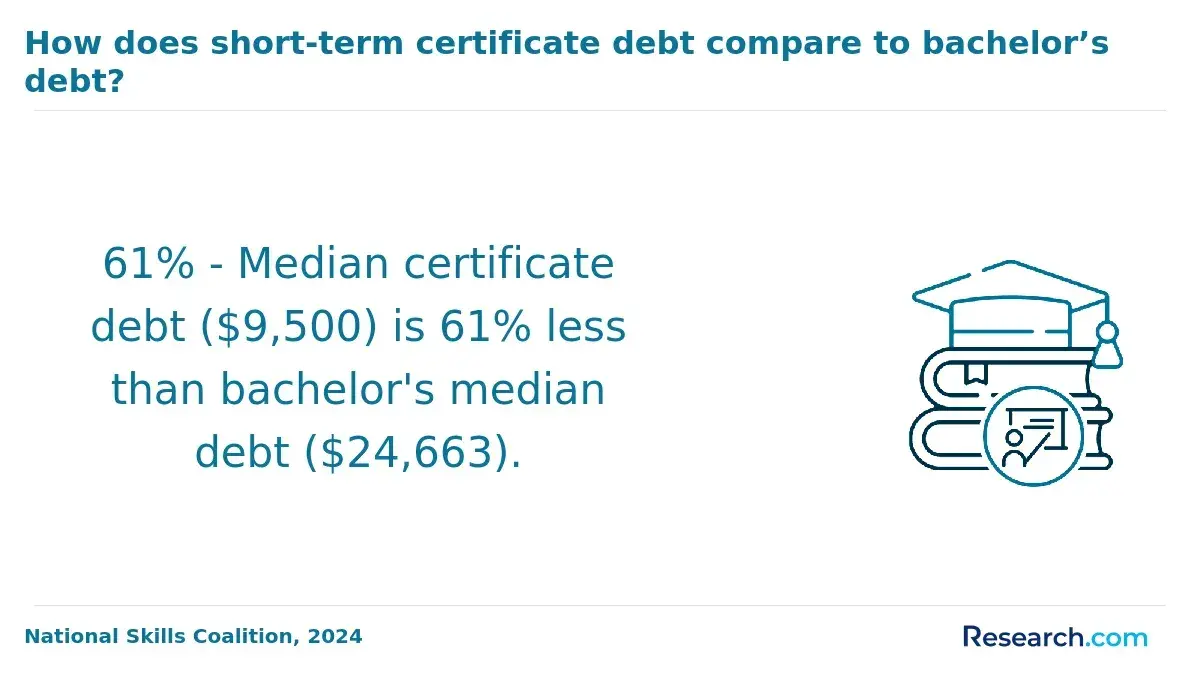
Ask each college for a program-specific estimate based on your residency, accepted credits, intended course load, and aid eligibility. A certificate or apprenticeship may cost less if your target job does not require an associate degree; a transfer-oriented associate may be better value if a bachelor's degree is already your plan.
Which Associate Degrees Offer the Best Career Prospects and Salary Potential?
Nursing and some allied-health degrees offer clearer routes to specific occupations, but often demand the least flexible schedules. Business and IT may offer broader entry-level options, while psychology and general health sciences commonly make more sense as transfer foundations. Career prospects depend on the occupation and local employers - not the degree title alone.
For context, the U.S. Bureau of Labor Statistics reported a 2024 median annual wage of $93,600 for registered nurses. That is an occupation-wide figure, not the expected pay of a new associate degree graduate.
Nursing requires state licensure, and the median includes nurses with different education and experience. Before choosing any field for salary potential, identify actual entry-level job postings, their required credentials, and whether you can meet the program's attendance requirements.
Are Online Associate Degrees Affordable and Accredited?
Online associate degrees can be affordable when they eliminate commuting and offer enough required courses in a format you can attend. Online does not necessarily mean self-paced: courses may have live meetings, fixed deadlines, proctored exams, or required campus visits. Clinical programs may also require in-person placements.
Check the delivery format of every required course, not just the college's online-program label. Confirm that the institution holds accreditation recognized by the U.S. Department of Education and that the specific program meets any applicable professional requirements.
A list of nationally accredited online colleges can be a starting point, not a substitute for checking accreditation and transfer acceptance with your intended destination school. Accreditation alone does not guarantee that a course will satisfy a bachelor's major or state licensing board.
How Long Do Affordable Associate Degree Programs Take to Complete?
Many associate degrees require around 60 semester credits, so full-time study often takes about two academic years. Working adults studying part time may need longer. Prerequisites, courses offered only in certain terms, and clinical sequencing can extend the timeline even when tuition per credit is low. More semesters may mean more fees and a longer wait for career benefits.
Asynchronous classes can make weekly study easier to arrange, but they still have deadlines. If you are considering best online self paced colleges, ask whether that format applies to every course you need and whether financial aid has enrollment or progress requirements. Have an advisor map your remaining courses term by term before relying on an advertised completion time.
What Do You Study in Affordable Associate Degree Programs?
Most associate programs combine general education - such as writing and mathematics - with courses in a major. An AA or AS often emphasizes transfer, while an AAS often emphasizes workplace preparation; the actual curriculum and transfer agreement matter more than the abbreviation.
Business students might study accounting, IT students networking or programming, and healthcare students science prerequisites and supervised practice.
Those differences affect cost. Labs, software, equipment, internships, and clinical placements can add expenses or limit when you can work. Compare the required course sequence with your family calendar, and ask whether prior college coursework satisfies specific degree requirements rather than assuming all accepted credits shorten the program.
What Are the Admission Requirements for Associate Degree Programs?
Community colleges commonly request an application, proof of secondary education or an equivalent credential, and previous college transcripts. Placement processes and prerequisites vary; do not assume a standardized admission test is required.
Nursing and certain allied-health majors may have separate, selective entry requirements, including prerequisite grades and health or background documentation.
Before enrolling, ask for a transfer-credit evaluation and the major's admission checklist. Confirm whether you can enter the intended program immediately or must first complete prerequisites. That distinction matters financially: paying for general courses does not guarantee a later seat in a selective major.
How Much Do Affordable Associate Degrees Cost After Financial Aid?
Net price is the amount left after grants and scholarships; it is not the same as published tuition. Your total budget should also account for mandatory fees, books, supplies, transportation, childcare, and any reduction in work hours.
Pell Grant eligibility depends on your federal aid application and circumstances, so the maximum award is not a promise of what you will receive.
Submit the Free Application for Federal Student Aid (FAFSA), review state and institutional grants, and ask your employer about tuition assistance. Then request a term-by-term cost estimate for your actual enrollment pace.
Check whether aid covers summer courses and whether the college charges different tuition to out-of-district or out-of-state students. Borrowing can cover a gap, but loans increase the eventual cost.
Which Associate Degree Careers Require Licensure or Certification?
Nursing graduates must satisfy their state board's eligibility rules and pass the registered-nurse licensing examination. Other clinical healthcare occupations may require particular program accreditation, examinations, certification, or state licensure.
Criminal justice employers can impose separate academy and hiring requirements. IT certifications may help demonstrate skills, but their value depends on the role and employer. A psychology associate degree does not qualify someone for independent counseling practice.
That goal generally requires further education and state licensure; even one year online masters programs must be evaluated against the specific profession's education and supervised-experience rules. Before paying a deposit for any regulated career path, check the relevant state board's requirements and ask the college how its program meets them.
How Can You Choose a Reputable and Affordable Associate Degree Program?
Choose a program by comparing the cost to finish and the likelihood that its schedule and credential will serve your goal. A cheap per-credit rate is a red flag for your budget if required courses rarely run, travel is substantial, or credits will not apply to your next degree.
Use these checks when speaking with admissions, financial aid, and program staff:
- Request a written degree map and total estimate covering your residency rate, mandatory fees, supplies, and expected semesters.
- Ask which required courses have evening, asynchronous, hybrid, or in-person sections - and how often each runs.
- Get prior-credit decisions in writing, including which credits meet major requirements and which count only as electives.
- Verify institutional accreditation, relevant program approval, transfer agreements, and state licensing eligibility where applicable.
- Compare the remaining cost after grants with the entry requirements of jobs you would actually pursue.
If a college cannot clarify clinical hours, transfer applicability, or major-specific admission rules, resolve those questions before enrolling. The best-value option is one you can afford and complete without derailing work or family responsibilities.
Other Things You Should Know About
No. In-district tuition is often a useful starting point, but aid, fees, commuting, accepted credits, and time to completion determine your actual cost.
Often, yes, particularly through part-time evening or asynchronous study. Check required course availability; labs and clinical placements may have fixed daytime hours.
Some may, but accepted credits do not always fulfill major requirements. Obtain a written course-by-course plan from the intended bachelor's institution.
Choose based on your goal and the specific curriculum. AA and AS degrees often support transfer; AAS degrees often focus on employment. Verify the program's actual transfer and career outcomes before deciding.
References
- DAPIP | Homepage - Office of Postsecondary Education (OPE) https://ope.ed.gov/dapip/
- What is a qualifying educational institution or program? | usajobs.gov https://help.usajobs.gov/faq/application/qualifications/qualifying-education
- Cost of Attendance (Budget) | 2025-2026 Federal Student Aid Handbook https://fsapartners.ed.gov/knowledge-center/fsa-handbook/2025-2026/vol3/ch2-cost-attendance-budget
- Child Care Financial Assistance Options https://childcare.gov/consumer-education/get-help-paying-for-child-care/child-care-financial-assistance-options
- Transfer credit policies - Office of Admissions https://admit.washington.edu/apply/transfer/policies/
- Weekend College Class Schedules - TCC | Tarrant County College District https://www.tccd.edu/academics/courses-and-programs/weekend-college/class-schedule/
- Earn College Credit for Your Experience | SUNY Empire https://sunyempire.edu/academics/get-credits/index.html
- Transfer Student FAQs - Oakland Community College https://www.oaklandcc.edu/transfer/transfer-student-faqs
- Credit for Prior Learning - Wayne State College Nebraska https://www.wsc.edu/records-registration/credit-prior-learning
- Credit for Prior Learning | mnwest.edu https://www.mnwest.edu/admissions-and-aid/credit-for-prior-learning.php





