
2027 Most Affordable Associate Degrees for Students Avoiding Student Debt

Co-Founder and Chief Data Scientist
Choosing an associate degree to avoid debt means comparing the cost of finishing, not just the tuition advertised for one semester. College Board reported average published tuition and fees of $4,050 for in-district students at public two-year colleges in 2024-25. That makes a local college a useful starting point, but books, transportation, program fees, and financial aid can change the result.
This guide is for U.S. students weighing affordable fields against career opportunities. It explains which paths may lead directly to work, which are better for transfer, and what to verify before enrolling.
Key Things You Should Know
- Start with an in-district public college: College Board's 2024-25 average published tuition and fees were $4,050, but your total cost depends on residency, aid, and required expenses.
- Business and IT may offer lower-cost, flexible coursework; nursing and some healthcare programs can offer clearer occupational paths but often add selective admission, labs, clinical hours, and fees.
- Compare the cost to complete each program, not its per-credit price. Confirm accreditation, transfer rules, and any separate license requirements before committing.
Top 10 Most Affordable Associate Degrees for Students Avoiding Student Debt
Business Programs
Business administration and accounting associate degrees can be relatively inexpensive when offered by an in-district community college with few specialized fees. An Associate of Arts (AA) or Associate of Science (AS) may suit students planning to transfer; an Associate of Applied Science (AAS) may emphasize bookkeeping, office systems, or workplace projects. Ask whether courses apply to a bachelor's major before choosing the cheapest option. Entry-level office roles may be possible, but an associate degree alone does not normally qualify someone as an accountant or manager.
Healthcare Programs
Healthcare associate degrees range from transfer-oriented health sciences to career-focused programs such as radiologic technology and respiratory therapy. The lowest advertised tuition may conceal equipment, background-check, testing, and clinical-placement costs. Career-focused programs can be worthwhile when they meet the requirements for a specific occupation and local placements are available. Check programmatic accreditation and state or employer credential rules before enrolling; a general health sciences degree does not substitute for a qualifying clinical program.
Information Technology Programs
IT support, networking, and cybersecurity associate programs often avoid the clinical expenses of healthcare programs, although software, equipment, and certification exams may cost extra. An AAS may prepare students for technical support work, while an AS may make more sense for a planned computer science transfer. Compare hands-on labs, current tools, and local entry-level job requirements - not just a cybersecurity job title. Some employers value certifications and demonstrated skills alongside the degree; advanced security roles often require experience.
Nursing / Pre-Nursing Programs
An Associate Degree in Nursing (ADN) is a career-focused path, but admission is commonly selective and may require prerequisite science courses before nursing coursework begins. Budget for clinical travel, supplies, examinations, and possible waiting time. Completing an approved nursing program is distinct from becoming licensed: graduates must meet state requirements and pass the NCLEX-RN. A pre-nursing AS usually covers prerequisites or transfer preparation; it is not an RN-qualifying degree by itself. Confirm approval, accreditation, and the full sequence before paying.
Criminal Justice Programs
Criminal justice AA, AS, and AAS programs can have modest equipment costs, making local tuition and transferability especially important. They may support applications for public-safety support or private-sector roles, but a degree alone does not confer police authority or guarantee academy admission. Agencies set their own hiring, fitness, background, and training requirements. If a bachelor's degree is the goal, compare transfer agreements; if employment is the goal, check actual entry requirements for positions in your area before paying for a specialized program.
Psychology / Counseling Programs
A psychology AA or AS can be an affordable first step toward a bachelor's degree when its courses fit a transfer agreement. It is generally not a low-cost shortcut to becoming a licensed counselor or psychologist, occupations that require substantially more education and supervised preparation. Some graduates may seek entry-level human-services support work, subject to employer requirements. Choose this path when you have a funded plan for later study, or compare shorter workforce credentials if you need to enter a defined occupation sooner.
What are the most affordable associate degrees with strong career opportunities?
The most affordable field is the one that meets your goal at the lowest realistic cost to completion. For many students, in-district business or IT programs are economical starting points because they may have fewer specialized expenses. Nursing and qualifying allied-health programs can have stronger links to specific occupations, but their additional requirements may raise costs or delay completion. The comparison below is by degree field, not a ranking of colleges or a claim that every program in a field costs the same.
This table separates likely cost pressures from the outcome each path is designed to support. Use it to narrow your choices before requesting itemized program budgets.
| Field | Cost consideration | Best fit to investigate |
| Business | Usually fewer specialized supplies; transfer choices affect later costs | Office-related entry roles or an articulated bachelor's path |
| IT | Possible software, lab, and certification expenses | Technical support preparation with demonstrable skills |
| Nursing | Prerequisites, clinical travel, supplies, and licensure expenses | Students prepared for selective admission and RN licensing steps |
| Allied health | Equipment and clinical requirements vary by occupation | A program qualifying graduates for a clearly identified role |
| Criminal justice | Often limited specialized fees; employer rules remain separate | Transfer or positions with verified entry requirements |
| Psychology | Affordable initial credits may be followed by substantial further study | Students planning and budgeting for transfer |
If flexibility is central to your budget, compare these fields with other online degrees, but check whether the particular associate program offers every required course in that format.
How much do affordable associate degrees cost, and how can students minimize debt?
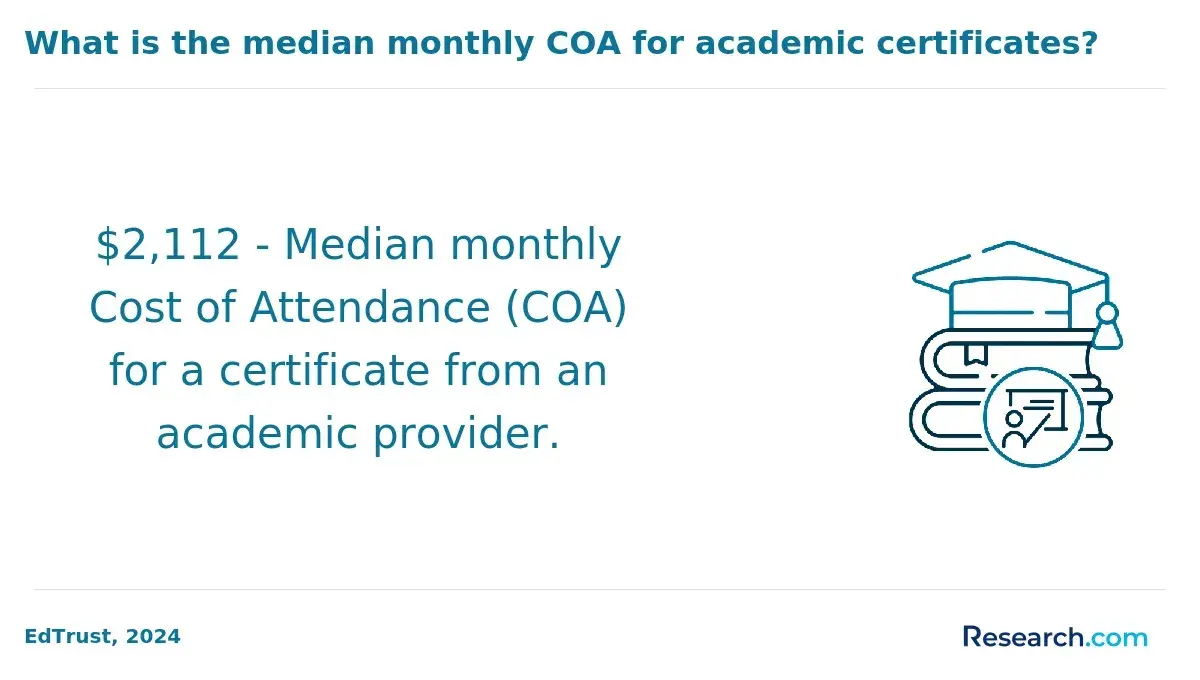
Published tuition is the price before aid. Net price is what remains after grants and scholarships; total program cost also accounts for required fees and expenses across all terms. A typical associate degree requires around 60 semester credits, but prerequisites, repeated courses, and program-specific requirements can increase the credits a student must pay for. College Board's 2024-25 in-district public two-year tuition-and-fees average of $4,050 is therefore a comparison point, not a quote for a complete degree or for out-of-district students.
To estimate borrowing before accepting an offer, take these steps:
- Request a term-by-term degree map and an itemized estimate covering tuition, mandatory program fees, books, equipment, clinical or internship travel, and exams.
- Submit the FAFSA and compare grants, scholarships, employer assistance, and payment plans before deciding whether to borrow.
- Ask for a written transfer-credit evaluation, then calculate the cost of only the courses still required at that school.
- Compare the remaining cost under realistic full-time and part-time schedules, including any extra terms caused by course sequencing.
Federal Pell Grants generally do not have to be repaid, but eligibility and awards depend on the student and institution. Verify that the school and program qualify for federal aid; never assume a low monthly payment means a low total price.
Are online or campus-based associate degrees more affordable and reputable?
Neither online nor campus-based study is automatically cheaper or more reputable. Online classes may reduce commuting expenses while adding technology or distance-education fees. Campus study may provide easier access to labs and equipment. A nursing or allied-health program advertised online may still require in-person labs and local clinical placements; scheduled virtual meetings can also limit flexibility.
Compare the same credits, residency rate, mandatory fees, and required travel for each format. Institutional accreditation matters more than delivery mode; a starting point for evaluating the most reputable online universities should not replace checking the accreditation and requirements of the specific associate program you intend to attend. For a transfer plan, also confirm that the destination school will apply online courses to the intended major.
What accreditation should students verify before enrolling in an associate degree program?
Verify that the institution holds accreditation from an accreditor recognized by the U.S. Department of Education. This is a foundational check for federal financial aid and can affect transfer, although accreditation never guarantees that another school will accept a course.
For a regulated occupation, check a second layer: whether the specific program has any required programmatic accreditation or state approval. Ask the program which credential its graduates may apply for, then confirm the requirements with the relevant state board or certifying body. Nursing applicants, for example, should verify state board approval and investigate program accreditation and licensure eligibility. A schoolwide accreditation claim alone does not establish that a particular clinical program meets those requirements.
What admission requirements apply to affordable associate degree programs?
Many community colleges offer broadly accessible institutional admission to applicants with a high school diploma or equivalent. That does not mean admission to every major. Nursing and some allied-health programs may separately require prerequisite grades, an application, testing, background checks, or proof that a student can participate in clinical training. Requirements and deadlines vary by school.
Request both the college's admission policy and the major's current entry checklist. Ask whether prerequisites are included in the advertised program length, when selective admission decisions occur, and what happens if clinical placement is delayed. For transfer students, obtain an evaluation showing not only which credits are accepted but which satisfy the chosen degree; accepted electives may not shorten the path to graduation.
Which courses and skills do affordable associate degree programs typically include?
Associate degrees generally combine general education - such as writing and quantitative reasoning - with courses in a major. AA and AS plans are often built with transfer in mind; AAS plans often emphasize occupational practice. The label is a clue, not a substitute for checking the actual curriculum and transfer agreement.
Business students may study accounting and spreadsheets; IT students may practice networking, troubleshooting, or scripting. Healthcare and nursing paths add sciences, labs, and supervised clinical work, while criminal justice and psychology may emphasize research, communication, and social systems. Skills worth seeking across fields include clear writing, data literacy, and applied problem-solving. Ask to see the course rotation: a required class offered infrequently can extend both completion time and living costs.
What jobs and salaries can graduates expect from affordable associate degrees?
Career prospects depend on the occupation, location, credentials, and experience - not simply on holding an associate degree. Business programs may support office or bookkeeping applications; IT programs may support technical support roles. Nursing and some allied-health programs are tied to defined licensed or certified occupations, provided the graduate meets every additional requirement. Psychology and many criminal justice degrees may function better as transfer pathways than as tickets to one specific job.
For context, the U.S. Bureau of Labor Statistics reported a May 2024 median annual wage of $93,600 for registered nurses as an occupation. That is not the expected salary of a new ADN graduate: it includes workers with different experience, education, specialties, and locations. When judging value, compare local entry-level postings and their requirements with the program's total cost, rather than applying a national occupational median to your personal budget.
Which affordable associate degrees lead to licenses or professional certifications?
An ADN can provide an educational route toward registered nurse licensure, but graduates must also satisfy state board requirements and pass the NCLEX-RN. Certain allied-health associate programs can lead toward occupation-specific certification or licensure after required examinations and other eligibility checks. In IT, industry certifications may strengthen an application, but the degree does not automatically award them.
Other fields have a different endpoint. A criminal justice degree does not replace an agency's hiring process or academy training. An associate degree in psychology does not qualify its holder for independent counseling or psychologist licensure; those paths require further education and supervised experience. Students considering long-term clinical psychology training can explore the shortest doctoral programs, while checking that any eventual degree - not its advertised speed - meets their state's licensing rules.
How can students compare affordable associate degree programs and choose a reputable school?
Start by deciding whether you need an affordable entry to a specific occupation or affordable credits toward a bachelor's degree. Then compare at least two schools using the same intended major and your actual residency and enrollment status. An in-district price is not useful if you cannot qualify for it, and a low-cost AAS may be expensive to undo if its credits do not meet your transfer goal.
Before enrolling, request written answers to these decision-changing questions:
- What is my estimated cost to finish, including mandatory fees, supplies, exams, and any required travel?
- Which of my previous credits meet degree requirements, and which courses remain in the required sequence?
- Does this program meet the relevant state licensing or certification education requirements, and where are in-person components completed?
- If I plan to transfer, which courses will apply to my intended bachelor's major under a current agreement?
Returning students comparing schedules may also find the best degrees for older adults useful as a broader planning perspective, but should still compare associate programs on their own costs and requirements. Treat missing fee details, vague accreditation claims, promised jobs, and guaranteed transfer claims as reasons to pause and seek documentation.
Other Things You Should Know About
Possibly. In-district tuition, grants, scholarships, employer assistance, and a manageable course load may eliminate the need to borrow. Calculate your own net price and remaining living expenses before deciding.
No. Residency rules, program fees, aid offers, accepted transfer credits, and travel can change the total. Compare written estimates for completing the same goal.
A qualifying nursing or allied-health program may offer a defined occupational route, but it can require selective admission, clinical work, and licensing. IT or business may suit different entry-level goals; check local job requirements first.
It may, but not automatically. Ask the intended bachelor's institution which individual courses satisfy general education and major requirements before choosing the AAS.
References
- .16 Graduation Requirements. | Library of Maryland Regulations https://regs.maryland.gov/us/md/exec/comar/13B.02.02.16
- Research Summary: Education and Lifetime Earnings | ssa.gov https://www.ssa.gov/policy/docs/research-summaries/education-earnings.html
- Financial Aid Programs - Texas Comptroller https://comptroller.texas.gov/programs/education/msp/funding/aid/state-programs/txttp.php
- COE - Loans for Undergraduate Students and Debt for Bachelor's Degree Recipients https://nces.ed.gov/programs/coe/indicator/cub
- Standards for Academic Associate Degree Programs | texas.gov https://reportcenter.highered.texas.gov/agency-publication/miscellaneous/standards-for-academic-associate-degree-programs/
- Value Of A College Degree | triton.edu https://www.triton.edu/admissions-aid/paying-for-college/financial-aid/financial-literacy/the-value-of-a-college-degree.html
- Online Associate Degree Programs: How to Choose the Right Fit | Adelphi University https://onlineprograms.adelphi.edu/resources/article/online-associate-degree-guide/
- Advantages of Starting at a Community College | San Juan College https://www.sanjuancollege.edu/blog/benefits-of-transferring-from-community-college/
- College Price - AACC https://www.aacc.nche.edu/category/news/datapoints/college-price/
- Core Curriculum | Dallas College https://www.dallascollege.edu/study/core-curriculum/


