
2027 Most Affordable Associate Degrees for Mid-Career Professionals

Co-Founder and Chief Data Scientist
Returning to college can be expensive even when a program advertises low tuition. For mid-career professionals, the real question is which associate degree advances a career goal without creating an unmanageable bill or schedule. The College Board reported average published tuition and fees of $4,050 for in-district students at public two-year colleges in 2024-25; books, transportation, and other expenses add to that price. This guide compares six fields, explains their career and transfer trade-offs, and shows how to estimate what you would actually pay before enrolling.
Key Things You Should Know
- Start with an in-district public community college: its published tuition may be low, but compare mandatory fees, required courses, and commuting or clinical expenses to find the lowest total cost.
- Business, information technology, and transfer-oriented programs can offer scheduling flexibility; healthcare and nursing often require in-person labs or clinical hours.
- An AA or AS commonly supports transfer, while an AAS commonly emphasizes job preparation. Verify the actual curriculum and transfer agreement rather than relying on the degree abbreviation.
Top 10 Most Affordable Associate Degrees for Mid-Career Professionals
Business Programs
A business administration AA or AS can be a cost-conscious choice if you plan to apply credits toward a bachelor's degree. An accounting or business operations AAS may be better if you want immediately applicable coursework in bookkeeping, payroll, or supervision. Compare how many courses your employer will reimburse and whether classes meet outside work hours. A general business degree is less compelling if a shorter certificate already teaches the specific skill you need. Neither degree alone normally qualifies someone for a management position; experience remains important.
Healthcare Programs
Healthcare administration and health information programs may suit professionals seeking office-based work. Clinical programs, such as medical laboratory technician or radiologic technology, can require specialized equipment, placements, and additional fees. Those requirements may make a low-tuition program costly in practice, especially if clinical hours reduce your ability to work. Compare the full program budget and check whether graduates are eligible for any required certification or state license. Healthcare administration is not interchangeable with a clinical credential.
Information Technology Programs
An IT support, networking, or cybersecurity associate degree can build on skills gained at work without the clinical costs common in healthcare. Compare software and equipment charges, evening course availability, and whether the curriculum prepares students for industry certifications. An AAS may emphasize hands-on job skills; an AS may provide a clearer transfer route. Entry-level support roles can be realistic targets, but cybersecurity roles often require relevant experience beyond the degree. If you already have strong technical skills, a focused certificate may cost less.
Nursing / Pre-Nursing Programs
An associate degree in nursing can be a direct route toward registered-nurse licensure, but admission is often selective and the price extends beyond tuition to tests, supplies, and clinical travel. Clinical schedules can also conflict with full-time work. A pre-nursing AA or AS generally covers prerequisites; it is not a nursing qualification or a guarantee of admission to a nursing program. Before paying for prerequisites, confirm the receiving program accepts them and ask about clinical scheduling and licensure eligibility.
Criminal Justice Programs
A criminal justice AA or AS may be affordable if it fits a documented bachelor's transfer agreement. An AAS may focus more on workplace procedures and public safety skills. Neither degree guarantees a law enforcement job: agencies may require academy training, background screening, physical standards, or other qualifications. If you already work in the field, ask whether employer training earns evaluated college credit. Compare that potential saving with the value of a degree that transfers if your long-term goal requires further education.
Psychology / Counseling Programs
A psychology AA or AS is usually a transfer pathway, not a low-cost shortcut to becoming a counselor or psychologist. It can make financial sense when a bachelor's program accepts the courses toward the intended major. Some graduates may pursue entry-level human services work, depending on employer requirements, but independent counseling generally requires graduate education and state licensure. Compare transfer agreements before enrolling; an inexpensive associate degree loses value if its credits count only as electives at your destination school.
What Are the Most Affordable Associate Degrees for Mid-Career Professionals?
The most affordable choice is the accredited program that meets your goal at the lowest realistic completion cost - not a universally cheapest major. Public community colleges are a useful starting point, particularly when you qualify for in-district tuition and can keep working. These fields differ in expenses that advertised tuition may not reveal.
The comparison below shows where costs commonly arise. It compares degree fields, not individual colleges or verified price rankings.
| Field | Potential cost advantage | Cost or schedule risk | Best fit |
| Business | Commonly available general education and online courses | Courses may not apply to a target bachelor's major | Transfer or office-based skill development |
| Healthcare | Career-focused options at public colleges | Program fees, equipment, and placements | A clearly identified healthcare role |
| Information technology | Potential to study while employed | Technology charges and certification exam costs | Technical skill development or entry-level support |
| Nursing / pre-nursing | Public-college pathways may limit tuition | Selective admission and clinical-related costs | Applicants prepared for a regulated clinical path |
| Criminal justice | Potential transfer or evaluated training credit | Additional academy or agency requirements | Public safety or transfer goals |
| Psychology / counseling | Transfer-oriented coursework | Further education needed for licensed practice | Students planning beyond the associate degree |
Choose a field only after identifying the job or next degree it supports. A search for easy degrees to get may help you think about academic fit, but an easier-looking curriculum is not a saving if it does not advance that goal.
How Much Do Affordable Associate Degree Programs Cost?
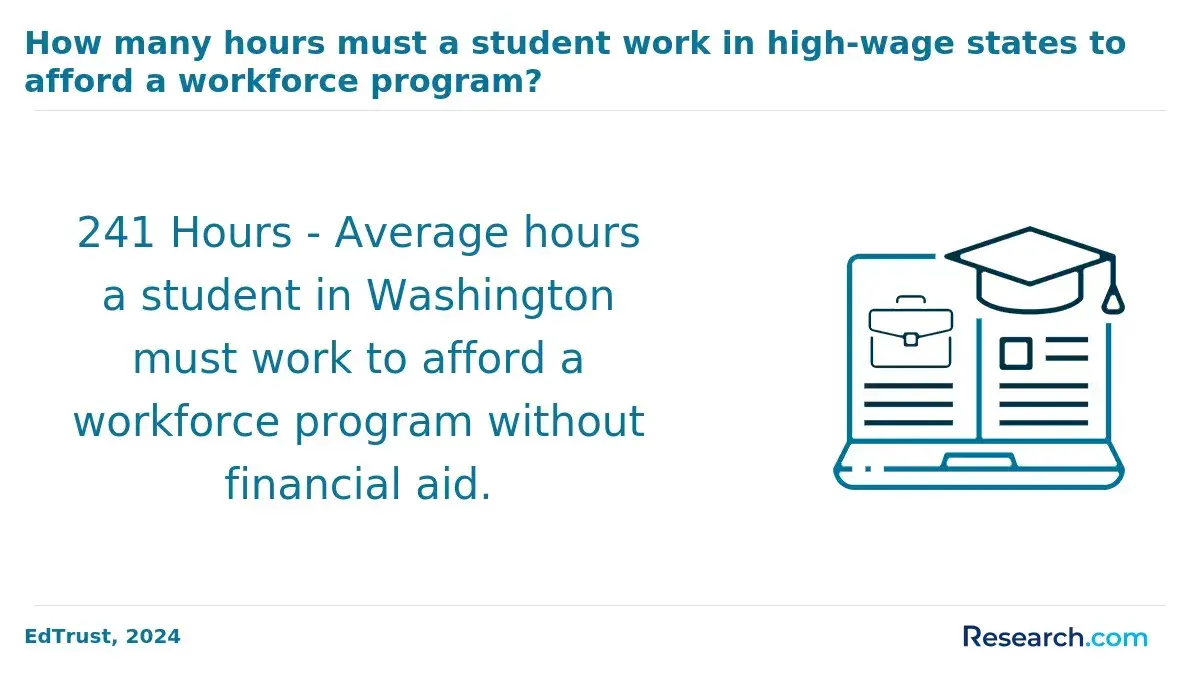
The College Board's $4,050 average published tuition and fees for in-district public two-year students in 2024-25 is a starting benchmark, not an associate degree's total price. Your bill depends on the college, residency classification, remaining credits, and program-specific requirements. Net price is what remains after grants and scholarships; loans reduce what you pay now but must generally be repaid.
These cost components explain why two programs with similar tuition can have different completion costs.
| Cost component | What it can include |
| Tuition and mandatory fees | Charges by credit or term, technology fees, and program fees |
| Learning materials | Books, software, equipment, uniforms, and supplies |
| Attendance expenses | Transportation, parking, childcare, and time away from paid work |
| Career requirements | Background checks, exams, and certification or licensure applications |
Request a written estimate for your remaining courses, including fees and required in-person activities. Ask for a transfer-credit evaluation before assuming previous coursework will lower the bill. Complete the FAFSA to check eligibility for federal aid, and compare employer tuition assistance and state or institutional grants. Confirm that any aid applies to your program and enrollment level.
Are Online Associate Degrees More Affordable Than Campus Programs?
Online study can cut commuting costs, but it is not automatically cheaper: colleges may charge online course or technology fees, and out-of-district tuition may still apply. A fully online business or IT program may be easier to combine with work than a clinical program that requires labs or placements. Even online courses can have live sessions and fixed deadlines.
Before choosing between online and campus study, compare the same number of remaining credits at each college, then add required fees and attendance expenses. Confirm whether courses are asynchronous, whether exams need proctoring, and whether every required course is offered when you need it. When reviewing the most reputable online universities, apply that same cost and scheduling test rather than treating online delivery as proof of affordability.
Which Associate Degrees Offer the Best Career and Salary Potential?
Career potential depends on the occupation and its entry requirements, not the degree title alone. Nursing offers a clear example: the U.S. Bureau of Labor Statistics reported a May 2024 median annual wage of $93,600 for registered nurses. That figure describes workers across the occupation, not the earnings of new associate degree graduates; prospective nurses must also meet licensure requirements.
Business and IT degrees may support entry-level roles or advancement from existing work experience, while a transfer-oriented degree can be valuable when a bachelor's degree is the next requirement. Counseling and psychologist roles require substantially more education; even PhD online programs are graduate pathways, not alternatives to an entry-level associate degree. To judge value, compare the likely cost of all required education with the qualifications employers actually request for your target role.
What Accreditation Should Affordable Associate Degree Programs Have?
Check that the college holds institutional accreditation recognized by the U.S. Department of Education or the Council for Higher Education Accreditation. This matters for educational quality review and may affect federal aid eligibility and transfer decisions, although accreditation alone does not guarantee that another college will accept a course.
For nursing and allied-health programs, also check whether the specific program has the accreditation or approval required for its occupation and state. Ask the relevant licensing board whether the program meets educational eligibility rules where you intend to work. A low price is a red flag if the program cannot support the credential you need.
What Coursework Do These Associate Degree Programs Include?
Most associate degrees combine general education with major courses. An AA or AS may emphasize transferable writing, math, science, and introductory major classes; an AAS may devote more coursework to occupational skills. The label is only a clue - review the required course sequence and any articulation agreement.
Business programs may cover accounting and management; IT programs may include networking and hands-on labs. Healthcare and nursing can add science prerequisites, labs, and supervised clinical work. Criminal justice often examines law and public safety systems, while psychology introduces human behavior and research concepts. Ask which courses are offered in evenings or online and whether prerequisites must be completed before admission to the major.
How Long Does It Take to Earn an Affordable Associate Degree?
Many associate programs are designed around roughly two academic years of full-time study, but working adults often take longer when studying part time. Previously accepted credit can shorten the remaining path; prerequisite sequencing, limited course offerings, and clinical placements can lengthen it. Short online terms do not make the entire degree equally short.
Ask an advisor for a term-by-term plan based on your work schedule and an evaluation of your previous coursework. Check the college's limits on transfer and prior-learning credit, minimum grades, course-age rules, and required credits completed at that institution. Work or military experience may earn credit only through an approved evaluation process; it is not automatic.
What Are the Admission Requirements for Associate Degree Programs?
Colleges commonly ask for a high school diploma or equivalent and prior college transcripts. Placement processes may determine initial English or math courses. Open admission to a college does not necessarily mean open admission to nursing or another selective major, which may have prerequisites, grade standards, testing, or a separate application.
Before applying, request an evaluation of earlier credits and ask whether prior training can be assessed for credit. If a past conviction could affect a placement or occupational license, review the program's disclosures and the relevant state board's rules before paying for courses. Resources on online degrees for felons can help frame the search, but admission and occupational eligibility are separate decisions.
Do These Associate Degrees Require Licensure or Professional Certification?
Some paths do. An approved associate degree in nursing can satisfy an educational step toward registered-nurse licensure, but graduates must meet state requirements and pass the required licensing exam. Certain allied-health occupations also require certification, licensing, or both; requirements vary by role and state.
Business, IT, criminal justice, and psychology degrees do not generally confer a professional license by themselves. An IT certification may be useful for a particular job, while law enforcement agencies may impose academy and screening requirements. Before enrolling, identify your intended occupation and verify its rules with the relevant state board, certifying body, or employer - not just a college's career description.
Other Things You Should Know About
No. In-district tuition makes it a strong place to start, but fees, residency rules, transfer credit, and work-related expenses can change the total. Compare personalized completion estimates.
Start with your next step. AA and AS programs often support transfer; AAS programs often emphasize employment. Confirm how the actual courses apply to your intended job or bachelor's program.
Often, especially with part-time evening or asynchronous study. Check required live meetings and course availability; clinical schedules may make full-time work difficult.
They can if the college accepts them and applies them to degree requirements. Request a formal evaluation and confirm residency-credit rules before estimating your savings.
References
- Tax benefits for education: Information center | Internal Revenue Service https://www.irs.gov/newsroom/tax-benefits-for-education-information-center
- Research Summary: Education and Lifetime Earnings | ssa.gov https://www.ssa.gov/policy/docs/research-summaries/education-earnings.html
- College Credit for Military Training & Experiences | dantes.mil https://www.dantes.mil/credit4training/
- DAPIP | Homepage - Office of Postsecondary Education (OPE) https://ope.ed.gov/dapip/
- Fast Facts: Employment rates of young adults (561) | ed.gov https://nces.ed.gov/fastfacts/display.asp
- Education pays: U.S. Bureau of Labor Statistics https://www.bls.gov/emp/chart-unemployment-earnings-education.htm
- The Federal Work-Study Program - FSA Partner Connect https://fsapartners.ed.gov/knowledge-center/fsa-handbook/2025-2026/vol6/ch2-federal-work-study-program
- Ranking The Best College Degrees for Employment in 2026 | National University https://www.nu.edu/blog/best-college-degrees-for-employment/
- College Price - AACC https://www.aacc.nche.edu/category/news/datapoints/college-price/
- Credit for Prior Learning (CPL) Glossary - NC Community Colleges https://www.nccommunitycolleges.edu/credit-for-prior-learning-glossary/


