
2027 Most Affordable Associate Degrees

Co-Founder and Chief Data Scientist
The least expensive associate degree on a college's website may not be the least expensive one to finish. Fees, residency rules, required equipment, and credits that do not transfer can change the bill. The College Board reported average published in-district tuition and fees of $4,050 at public two-year colleges for 2024-25; that figure excludes living costs and varies by school.
This guide is for students comparing affordable fields and pathways. It explains where costs tend to differ, which credentials fit transfer or career goals, and what to verify before enrolling.
Key Things You Should Know
- Start with an in-district public community college, but compare the cost of completing the entire program - not just its per-credit tuition. The 2024-25 national average for published in-district tuition and fees was $4,050 per year.
- Transfer-oriented business, psychology, and criminal justice programs may avoid some specialized equipment costs; clinical healthcare and nursing programs often add significant required expenses.
- The most affordable choice is the program whose credits, delivery requirements, and career or transfer outcomes fit your goal. Verify those details before paying an enrollment deposit.
Top 10 Most Affordable Associate Degrees
Business Programs
Business administration and accounting associate programs are worth comparing if you want broadly applicable coursework with few laboratory expenses. An AA or AS may emphasize transfer; an AAS may focus on workplace skills such as bookkeeping or office operations. Ask whether accounting software, digital materials, or online-course fees are included in the quoted price. A low-cost transfer degree makes sense only if its courses satisfy your intended bachelor's program. For immediate employment, compare the curriculum with local entry-level job postings rather than assuming the degree qualifies you for management.
Healthcare Programs
Healthcare associate degrees range from transfer-oriented health science to career-focused allied health programs. Clinical placements, background checks, immunizations, uniforms, examinations, and transportation can make a low-tuition program costly to complete. Some occupations also require certification or state licensure after graduation. Ask for a program-specific expense sheet and confirm that required placements are accessible from where you live. If you are exploring healthcare rather than pursuing a specific licensed role, a less specialized transfer program may cost less - but may not prepare you for direct entry into that occupation.
Information Technology Programs
IT associate programs may cover networking, cybersecurity, software development, or technical support. Many courses can be delivered online, potentially reducing commuting costs, but check technology fees, required hardware, software, and any in-person assessments. An AAS may prioritize job skills; an AS may better support transfer, depending on the college. Compare the curriculum with entry-level openings and ask whether certification exam fees are included. An inexpensive degree with outdated tools or few opportunities to practice technical skills may offer poorer value than a somewhat costlier alternative.
Nursing / Pre-Nursing Programs
Distinguish an associate degree in nursing from a pre-nursing transfer pathway. The former can provide the education required to pursue registered nurse licensure, subject to program approval and state requirements; the latter does not itself qualify a student for that license. Nursing admission is often selective even when the college admits students broadly. Compare prerequisites, application cycles, clinical travel, supplies, and examination costs alongside tuition. Before enrolling, confirm state board approval, any relevant nursing accreditation, and whether the program meets requirements in the state where you plan to practice.
Criminal Justice Programs
Criminal justice AA and AS degrees can be affordable transfer routes when courses use standard tuition and require little specialized equipment. An AAS may instead emphasize applied public safety coursework. Neither degree automatically qualifies a graduate for a sworn law-enforcement role: agencies set separate hiring, training, and eligibility rules. Check those rules before choosing a major. If a bachelor's degree is your goal, get written confirmation of how general education and major courses will apply at your intended university; accepted credits do not necessarily fulfill degree requirements.
Psychology / Counseling Programs
A psychology associate degree is generally a transfer foundation, not a qualification to practice as a psychologist or licensed counselor. It may be comparatively inexpensive when it uses general education and introductory courses rather than labs or clinical placements. Confirm that statistics and other prerequisites match your intended bachelor's program. If you want to enter the workforce sooner, investigate specific local support roles and their hiring requirements before committing. Professional counseling and psychology careers generally require substantially more education and, where applicable, licensure.
What are the most affordable associate degrees in the United States?
There is no single cheapest associate degree nationwide. Price depends more on the college, residency status, required courses, and aid than on the major's name. For students eligible for in-district rates, a public community college program with few specialized requirements is often a strong starting point. Business, criminal justice, psychology, and some IT pathways merit comparison; nursing and allied health may have higher required costs but serve different career goals.
Compare fields by purpose as well as price. AA and AS degrees often support transfer, while AAS degrees often emphasize workforce preparation, but colleges use these labels differently. An apparently affordable major is not a bargain if it does not advance your intended job or bachelor's degree. If course difficulty is part of your decision, descriptions of easy degrees can offer perspective, but personal strengths and program requirements matter more than a label.
How much do affordable associate degrees cost?
Use the published price as a benchmark, not a completion quote. The College Board's 2024-25 national average below describes tuition and mandatory fees for an in-district student at a public two-year college. Your actual price depends on your college, enrollment, and eligibility for aid.
- Average published in-district tuition and fees at public two-year colleges: $4,050 per year in 2024-25.
For a usable comparison, request an estimate covering every remaining term. Separate sticker price (published charges), net price (cost after grants and scholarships), and total completion cost (tuition, fees, books, equipment, transportation, and other required expenses). Confirm in-district eligibility, course-specific fees, prerequisite credits, and how long aid is available. Submit the FAFSA to check eligibility for federal aid, and ask about state grants, employer assistance, and payment plans.
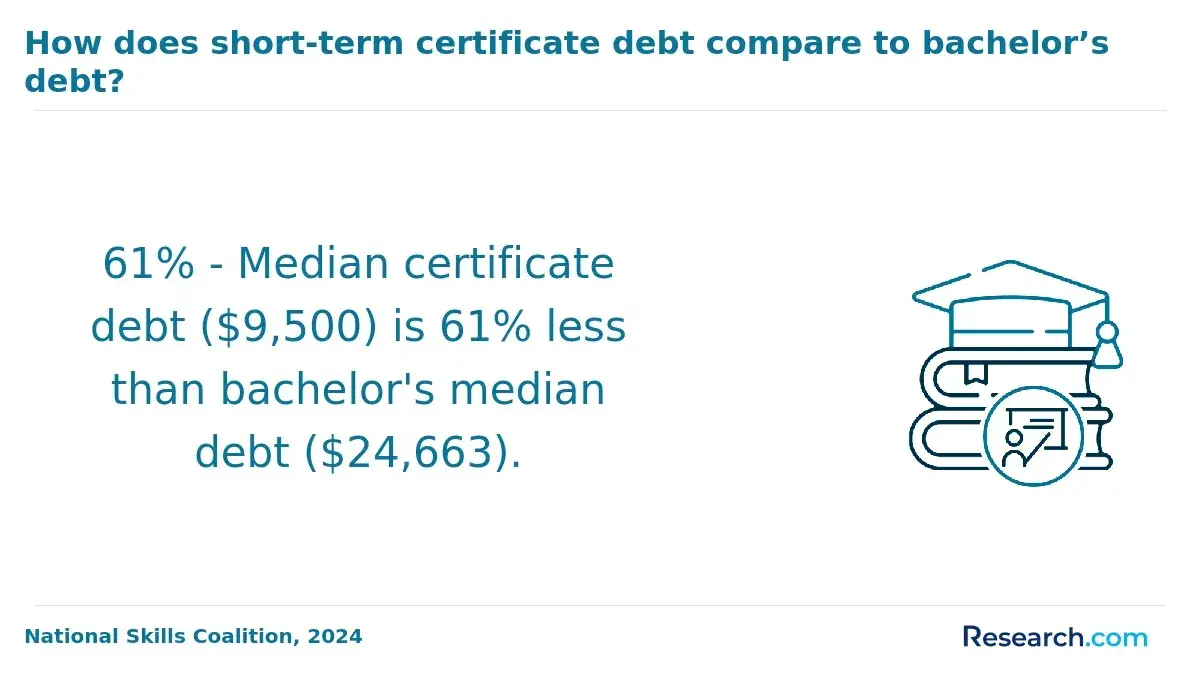
If a particular job accepts shorter training, compare its total cost and required credential with certificate programs that pay well. A certificate can cost less, but it may provide fewer transferable credits or a narrower career path.
Are online associate degrees more affordable than campus programs?
Online is not automatically cheaper. It may reduce commuting and relocation expenses while adding online-course or technology fees. Some colleges charge different tuition by residency even for remote students. Nursing and allied health programs may also require local clinical placements; other programs may require scheduled sessions, proctored exams, or campus visits.
Ask for separate online and campus estimates for the same degree and confirm every attendance requirement. Short terms can help with scheduling, but 6 week college courses online describe individual classes - not the time needed to finish an associate degree. Choose the format in which you can consistently complete the required course sequence.
What accreditation should affordable associate degree programs have?
Choose a college with recognized institutional accreditation; verify its current status through the U.S. Department of Education's accreditation database or the accreditor. This matters for federal aid eligibility and can affect transfer, although accreditation alone does not guarantee that another school will accept a course.
For licensed or certified healthcare careers, also check any programmatic accreditation and state board approval required for your intended occupation and location. Ask the program which examinations graduates are eligible to pursue. A low price is a red flag if the program cannot document the approvals needed for your goal.
What admission requirements apply to affordable associate degree programs?
Many community colleges offer broad institutional access and generally ask applicants for a high school diploma or equivalent, an application, and transcripts. Placement procedures and prerequisites vary. Do not mistake admission to the college for admission to a selective nursing or allied health major, which may have separate coursework, grades, testing, deadlines, and clinical eligibility requirements.
If you have previous college credit, request an evaluation before committing. Ask which credits satisfy degree requirements, what minimum grades apply, and how many credits you must earn at the new college. Credits that appear on a transcript but do not fulfill requirements may not reduce your completion cost.
How long does it take to complete an affordable associate degree?
Many associate degrees require roughly 60 semester credits, making about two academic years possible with a full-time course load. Part-time enrollment, unavailable courses, prerequisites, developmental coursework, and clinical sequencing can extend that timeline. Previously earned credits may shorten it only when the college accepts them toward remaining requirements.
Ask an adviser for a term-by-term plan showing when every course is offered. Before selecting an accelerated schedule, calculate whether its workload is manageable alongside work or caregiving. Finishing steadily at a sustainable pace can be less expensive than withdrawing from classes and paying to repeat them.
What careers can you pursue with an affordable associate degree?
The right career path depends on the specific program and additional requirements, not simply on holding an associate degree. A career-focused IT program may support applications for technical support roles; business coursework may support administrative or bookkeeping work. An approved nursing program can be a route toward registered nurse licensure, but graduates must also meet state examination and licensing requirements. Psychology and other transfer-oriented degrees often serve primarily as steps toward further education.
Compare entry-level job postings with the program's required courses, then check any certifications or experience employers request. If direct employment is the priority, weigh the degree against shorter training and the roles it actually prepares you to pursue. Lists of the easiest online degrees that pay well may suggest fields to investigate, but neither ease nor an occupational wage establishes your likely earnings.
What salaries and job outlooks do associate degree careers offer?
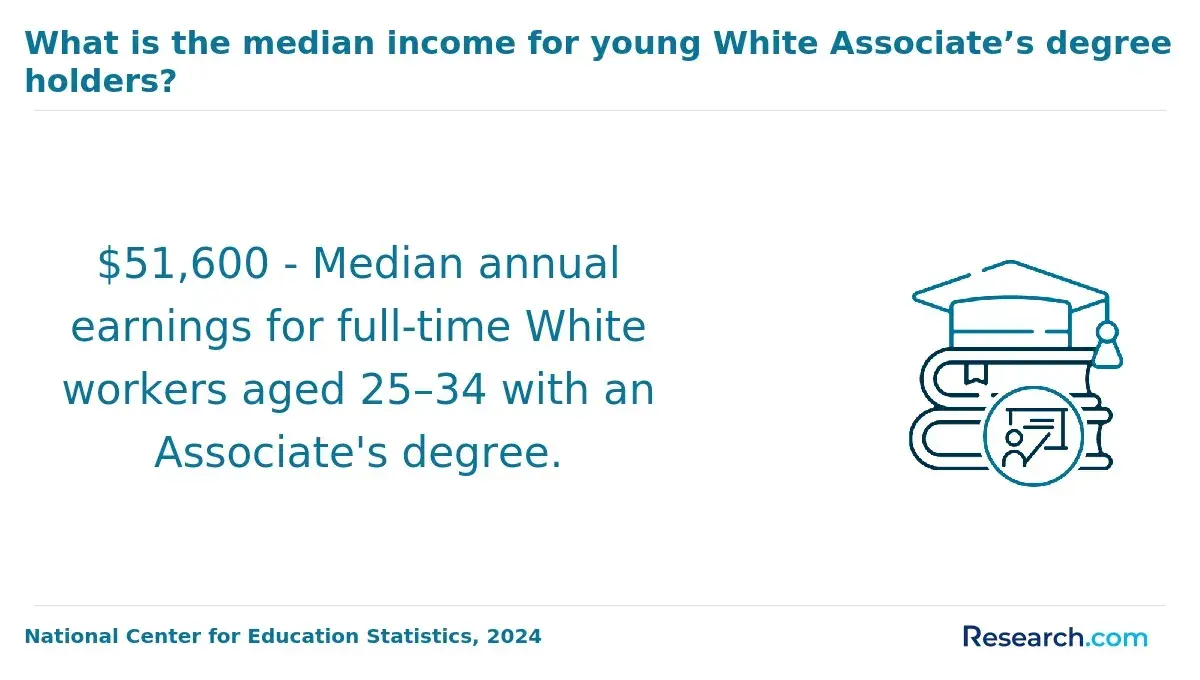
The U.S. Bureau of Labor Statistics reported a 2024 median annual wage of $93,600 for registered nurses and projected 5% employment growth for the occupation from 2024 to 2034. That is an occupational figure across employed registered nurses - not the expected starting salary of an associate degree graduate. Licensure is required, and pay varies by employer, location, and experience.
Use the same distinction for every field: look up the occupation that matches the work you want, check its typical entry requirements and local openings, and then compare those opportunities with the program's total cost. A lower-cost transfer degree may have strong long-term value, but its immediate job options can differ from those of a career-focused program.
How do you choose a reputable affordable associate degree program?
Request written answers from each college before deciding. These checks expose costs and requirements that a headline tuition rate can hide:
- Get a program-specific estimate for all remaining credits, mandatory fees, supplies, and required travel; compare the estimate after grants and scholarships.
- Verify institutional accreditation and, for a regulated occupation, the program approval and licensure eligibility required in your intended state.
- Ask for a written transfer evaluation or articulation plan showing how credits apply to your intended degree - not merely whether they are accepted.
- Confirm course availability, online attendance rules, clinical or campus requirements, and a realistic term-by-term completion plan.
Be cautious of programs that advertise only per-credit tuition, promise a particular salary, or cannot explain their transfer or licensing outcomes. The best-value choice is the one you can afford to complete and use for your next step.
Other Things You Should Know About
Grants, scholarships, or state tuition programs may cover eligible tuition and fees, but eligibility varies and books, transportation, or living expenses may remain.
Not inherently. An AAS may add equipment, lab, or clinical costs; an AA or AS may cost more overall if credits do not apply to your planned bachelor's degree.
Not necessarily. Colleges set residency and online pricing policies separately, so confirm your rate before enrolling.
Choose it only after confirming accreditation, total completion cost, required attendance, and whether it meets your transfer or career goal.
References
- Annual Earnings by Educational Attainment - COE https://nces.ed.gov/programs/coe/indicator/cba/annual-earnings
- DAPIP | Homepage - Office of Postsecondary Education (OPE) https://ope.ed.gov/dapip/
- Types of Financial Aid: Grants, Work-Study, and Loans | studentaid.gov https://studentaid.gov/understand-aid/types
- How Long Does It Take to Get an Associate Degree? | snhu.edu https://www.snhu.edu/about-us/newsroom/education/how-long-is-an-associate-degree
- Tuition & Cost | Houston City College https://www.hccs.edu/paying-for-college/tuition--cost/
- How Much Does an Associate Degree Cost? - SoFi https://www.sofi.com/learn/content/associates-degree-cost/
- Does College Pay Off? A Comprehensive Return On Investment Analysis - FREOPP https://freopp.org/whitepapers/does-college-pay-off-a-comprehensive-return-on-investment-analysis/
- Is College Worth it? | Return on Investment Analysis of College Degree | Education Data Initiative https://educationdata.org/college-degree-roi
- 50 Most Affordable Online Associate Degree Programs | universityhq.org https://universityhq.org/degrees/online-associates/affordable-associate-degrees/


