2027 Monte Carlo Methods in an Online Data Science Master's: Courses, Projects, and Program Selection

Co-Founder and Chief Data Scientist
Monte Carlo methods can be a compelling reason to pursue an online data science master's - but a program may mention simulation without teaching it in depth. This guide is for prospective students who want to model uncertainty, strengthen computational statistics skills, and build credible projects.
It explains what to look for in courses and assignments, then shows how to weigh that technical fit against admissions, cost, format, and career goals.
Key Things You Should Know
- Look beyond a course title: substantive Monte Carlo training includes simulation design, uncertainty assessment, diagnostics, and a project - not just a brief introduction to random sampling.
- A useful portfolio project explains its assumptions, checks whether results stabilize, and communicates what the simulation cannot establish.
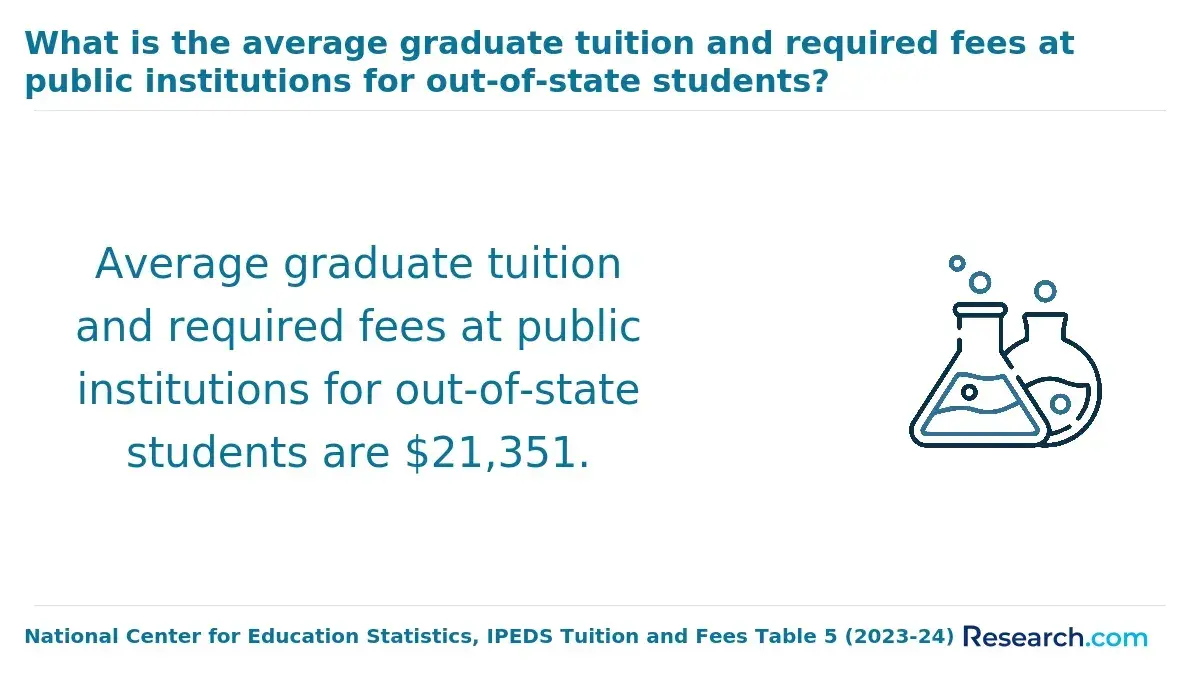
- The U.S. Bureau of Labor Statistics projects 35% employment growth for data scientists from 2025 to 2035; that outlook does not establish demand for Monte Carlo skills in every data science job.
What are Monte Carlo methods in an online data science master's program?
Monte Carlo methods use repeated random sampling to approximate quantities that are difficult to calculate directly. In data science, students might simulate possible outcomes under uncertain inputs, estimate a probability, or evaluate how a statistical method behaves across many datasets.
The method is more than running a model many times. Graduate-level work should ask where input distributions came from, whether assumptions are defensible, how much simulation error remains, and whether the result changes under alternative assumptions. A confidence interval produced by an unjustified model can look precise while answering the wrong question.
Students should expect a foundation in probability, statistical inference, programming, and some linear algebra. More advanced study may include variance reduction, importance sampling, bootstrap methods, or Markov chain Monte Carlo for Bayesian inference. These techniques are related, but a program that teaches one does not necessarily teach them all.
Which courses teach Monte Carlo simulation and computational statistics?
Monte Carlo material may sit in statistics, applied mathematics, machine learning, or domain-specific electives. The table shows common course categories and the evidence to seek in an actual syllabus; these are not promises that a particular program offers each course.
| Course category | Potential Monte Carlo depth | What to verify |
| Probability and statistical inference | Foundations for sampling and uncertainty | Whether students implement simulations or only study the theory |
| Computational statistics | Simulation, resampling, numerical estimation, and diagnostics | Programming assignments and treatment of simulation error |
| Bayesian statistics | Possible Markov chain Monte Carlo work | Coverage of convergence checks and posterior interpretation |
| Operations research or risk analytics | Scenario simulation and decision-making under uncertainty | How assumptions, constraints, and sensitivity are evaluated |
| Machine learning | Possible resampling or probabilistic modeling | Whether Monte Carlo is substantive or a brief supporting topic |
A course title is a starting point, not proof of depth. Ask for recent syllabi and assignment descriptions: a dedicated computational statistics course with coded exercises is stronger evidence than a catalog description that merely says "simulation." If your interests shift toward AI model development rather than simulation-centered inference, compare the curriculum and cost of affordable online study in artificial intelligence before choosing a degree.
What projects can students complete using Monte Carlo methods?
Strong projects use simulation to answer a decision-relevant question, not simply to produce a large number of trials. Possibilities include estimating the chance that a service system exceeds capacity, comparing inventory policies under uncertain demand, or testing how often an estimation method misses the value it is meant to measure.
For example, an operations project could model uncertain daily arrivals and service times, then compare staffing choices. Its value would come from documenting the input data, justifying probability distributions, testing alternative scenarios, and explaining the consequences of choosing too little or too much capacity. A simulation based on assumed inputs should not be presented as a forecast validated against real outcomes.
Before selecting a program for its project opportunities, ask whether students can choose their own topic, obtain instructor feedback on model assumptions, and submit reproducible code with an interpretation for a nontechnical audience. A capstone can provide substantial evidence of skill, but a carefully assessed course project can also work well.
What skills do Monte Carlo courses develop for data science careers?
Monte Carlo coursework can develop probabilistic reasoning, statistical programming, experiment design, model checking, and communication of uncertainty. Those skills matter when a decision depends on a range of plausible outcomes rather than a single prediction - for example, in risk analysis, forecasting, operations, or Bayesian modeling.
Employers may value the ability to explain why a simulation is credible more than the ability to run one quickly. A graduate should be able to distinguish uncertainty in the underlying problem from error caused by using too few simulated draws, check sensitivity to assumptions, and state what the model does not capture. Coding fluency matters, but interpretation makes the work useful.
Monte Carlo expertise is not a substitute for the broader skills required by many roles, such as data preparation, model evaluation, and collaboration with stakeholders. Students comparing data science degree options for career-focused students should look for both statistical depth and opportunities to apply it to realistic data and decisions.
What are the admission requirements for an online data science master's?
Requirements vary by institution. Applicants commonly need to demonstrate readiness for quantitative graduate work, but the required degree background, mathematics, programming experience, tests, and application materials must be checked in each program's current admissions policy. Do not assume that professional coding experience formally satisfies a calculus or statistics prerequisite unless the school says it does.
For Monte Carlo-focused study, compare your preparation with the courses you hope to take. Probability helps you specify random processes; statistics helps you interpret estimates; programming lets you implement and check simulations. If one area is weak, ask an admissions advisor whether a preparatory course is required for admission, recommended before enrollment, or available within the degree.
Applicants from other fields can bring valuable domain questions to simulation projects. An AI master's program fit for non-CS applicants may also be worth comparing if your main goal is AI rather than computational statistics; admission flexibility alone should not decide the choice.
How long does an online data science master's take and cost?
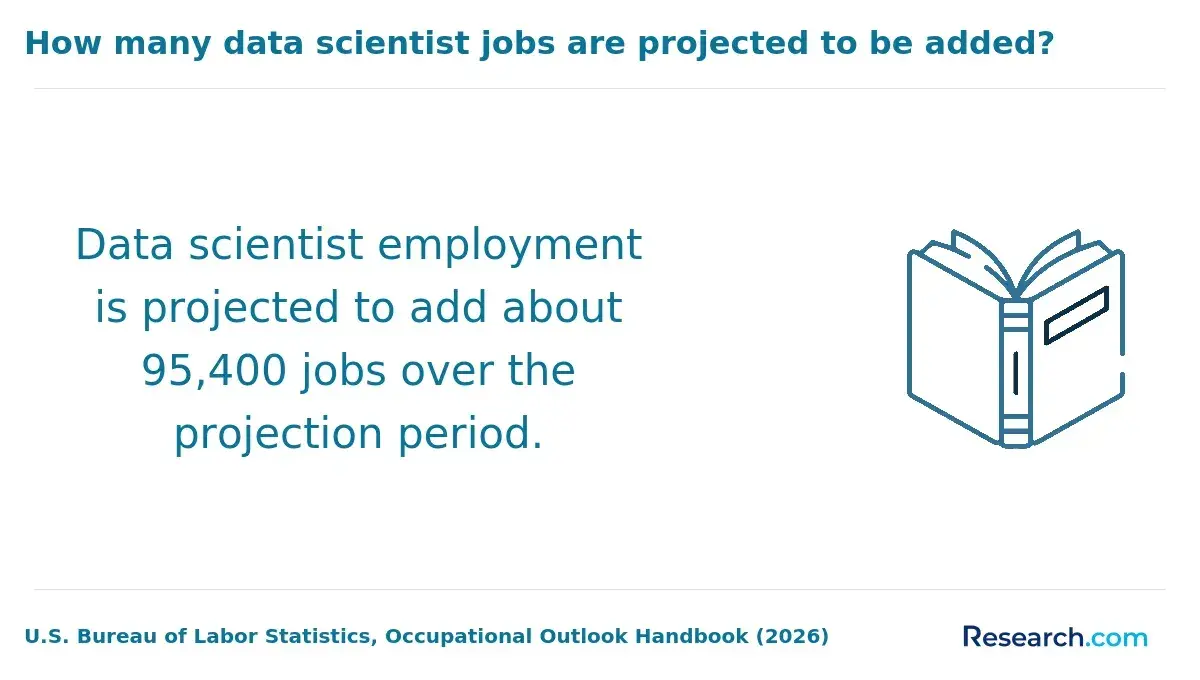
There is no reliable single duration or price for online data science master's programs. Completion time depends on required credits, course availability, prerequisite or bridge work, and how many courses a student can take while working. A Monte Carlo elective offered infrequently could affect the schedule even when the overall program allows flexible pacing.
Request a term-by-term plan showing when the statistics courses, desired elective, and any capstone are offered. For cost, compare the tuition rate that applies to you with mandatory fees and likely expenses for software, materials, or required travel. Ask whether tuition can change before completion and what happens financially if you take a lighter course load or need an extra term.
Before borrowing, check employer assistance, institutional aid, and eligibility rules for data science graduate study funding options. A lower tuition figure is not necessarily the less expensive path if scheduling delays or required extras increase total cost.
How do online and campus data science master's programs compare?
Either format can teach Monte Carlo methods rigorously. The meaningful difference is how students access instruction, computing resources, feedback, and collaborators. An online program may suit someone who needs to keep working or cannot relocate; a campus program may suit someone who wants regular in-person research or peer interaction. Neither format guarantees better technical depth.
Compare equivalent evidence: syllabi, assignment expectations, access to instructors, computing requirements, and opportunities to complete an independent simulation project. For online study, confirm whether advanced statistics courses run asynchronously, require live attendance, or involve group work across time zones. A flexible program is less useful if the course you want is difficult to schedule.
Students with a firm completion deadline can compare time-efficient graduate study in data science, but should confirm that a faster pathway still leaves room for the relevant electives and project work.
How can students verify accreditation and program quality?
Confirm the institution's current accreditation through its stated accreditor and an official accreditor or U.S. Department of Education listing. If a program advertises specialized accreditation, verify exactly which program it covers; institutional accreditation and program-specific accreditation are not the same claim. Online applicants should also confirm that the institution can enroll students in their state of residence.
Accreditation establishes an important baseline, not the depth of Monte Carlo instruction. For that decision, request current syllabi, review faculty expertise, and ask to see examples of the kinds of assignments students complete. A warning sign is a program that promotes "advanced analytics" but cannot clarify where students implement simulation, evaluate uncertainty, or receive feedback on statistical assumptions.
What jobs and salaries can graduates pursue after earning the degree?
Relevant paths may include data scientist, statistical analyst, risk analyst, operations research analyst, or roles focused on probabilistic modeling. Job titles are inconsistent across employers, so read postings for methods, industry knowledge, and experience requirements rather than assuming that every data scientist role uses Monte Carlo methods.
The U.S. Bureau of Labor Statistics reports a median annual wage of $120,230 for data scientists in May 2025. That figure describes workers in the occupation, not the starting salary or expected pay increase for someone completing a master's degree. Prior experience, location, employer, and the specific role all affect an individual outcome.
For a career decision, compare target job descriptions with the projects you could show an employer. Choose a simulation-heavy curriculum if the roles you want call for uncertainty modeling and statistical inference; choose a broader or differently focused curriculum if postings emphasize other skills.
What certifications and professional standards support data science careers?
No single certification is a general requirement for data science or Monte Carlo work. A tool-specific credential may help demonstrate familiarity with a platform, but it does not by itself show that you can choose defensible assumptions, diagnose a simulation, or communicate its limitations.
Use reproducible analytical practice as a stronger standard for your portfolio: retain code and documented inputs, record software versions and random seeds, describe checks for unstable estimates, and make privacy-conscious choices about data. If a target industry has additional rules or professional expectations, verify them for that role rather than assuming the degree covers every requirement.
Other Things You Should Know About Data Science
There is no universal count. Increase the number of runs and check whether the estimate and its simulation-error measure become stable enough for the decision at hand.
It helps, but it is not sufficient. Document the data, code, software versions, assumptions, and computing steps so another person can understand and rerun the analysis.
Simulated data can test methods and explore scenarios. It cannot establish that the assumed model accurately describes a real population without appropriate evidence and validation.
Not on its own. A simulation shows what follows from its model and inputs; a causal claim also needs a defensible research design and assumptions.
References
- A simple introduction to Markov Chain Monte-Carlo sampling | nih.gov https://pmc.ncbi.nlm.nih.gov/articles/PMC5862921/
- Cost of Attendance (Budget) | 2025-2026 Federal Student Aid Handbook https://fsapartners.ed.gov/knowledge-center/fsa-handbook/2025-2026/vol3/ch2-cost-attendance-budget
- 2026 UNC Online Master of Applied Data Science (MADS) https://online.unc.edu/online-masters-programs/masters-data-science/
- Prerequisite Key Topics - UVA School of Data Science https://datascience.virginia.edu/pages/prerequisite-key-topics
- Full article: Teaching Monte Carlo Simulation with Python | tandfonline.com https://www.tandfonline.com/doi/full/10.1080/26939169.2022.2111008
- Data Science and Artificial Intelligence Master's Degree Program | Harvard Extension School https://extension.harvard.edu/academics/programs/data-science-artificial-intelligence-graduate-program/
- Tuition and Financing | Columbia University School of Professional Studies https://sps.columbia.edu/admissions/masters-degree-applicants/tuition-and-financing
- Monte Carlo Methods and Applications | Carnegie Mellon University Computer Science Department https://csd.cmu.edu/course/15860/f24
- In-Person Program - UChicago Data Science Institute https://datascience.uchicago.edu/education/masters-programs/in-person-program/
- Master's in Data Science | utexas.edu https://cdso.utexas.edu/msds