2027 Master's in Data Science vs. Master's in Artificial Intelligence: Choosing Your Graduate Path

Co-Founder and Chief Data Scientist
A master's in data science and a master's in artificial intelligence can lead to overlapping work, but they usually emphasize different problems. If you want to turn varied data into decisions, data science may be the stronger fit; if you want to build and evaluate AI systems, an AI-focused program may serve you better.
This comparison helps prospective students test those distinctions against actual curricula, admissions requirements, costs, and target jobs - rather than choosing by degree title alone.
Key Things You Should Know
- Choose data science for broader training in statistics, data management, and analysis; favor AI when your target work centers on developing and evaluating intelligent systems. Actual course requirements matter more than the title.
- The U.S. Bureau of Labor Statistics projects 35% employment growth for data scientists from 2025 to 2035. That outlook describes an occupation, not a hiring guarantee for either degree.
- Compare required courses, projects, prerequisites, and total attendance costs at each school before applying; an AI program may have more demanding computing prerequisites, but requirements vary.
What is the difference between a master's in data science and artificial intelligence?
The central distinction is the work each degree prepares you to do. Data science generally combines statistics, computing, and subject-matter knowledge to extract useful conclusions from data.
Artificial intelligence generally concentrates on systems that learn, predict, generate, or make decisions. Machine learning can be central to both, so neither title defines a uniform curriculum.
The comparison below is a guide to emphasis, not a substitute for checking a particular school's required courses and projects:
| Decision criterion | Master's in data science | Master's in artificial intelligence |
| Typical emphasis | Preparing data, statistical inference, modeling, and communicating findings | Designing, training, evaluating, and sometimes deploying AI models or systems |
| Questions you may work on | What happened, what is likely to happen, and what should an organization measure? | How can a system perform a task, and how well and safely does it perform? |
| Potential trade-off | Broad analytical coverage may leave less room for advanced AI engineering. | Deeper model or systems work may leave less room for inference and business analysis. |
Choose by the work you want to demonstrate at graduation. A program labeled "data science" can still offer substantial AI electives, while an "AI" program can include rigorous statistics. Inspect the transcript you would actually earn, including which advanced courses are guaranteed to be offered during your enrollment.
Which degree has better career opportunities: data science or artificial intelligence?
Neither degree has a universal career advantage. Data science may give applicants more ways to present themselves for analytics, experimentation, and modeling roles across organizations. An AI degree may be more directly relevant to roles involving model development or AI-enabled products.
Employers can assess programming, statistical judgment, software engineering, and project evidence regardless of the credential's name.
The Bureau of Labor Statistics projects 35% growth in U.S. data scientist employment from 2025 to 2035. That is a strong outlook for the data scientist occupation, but it does not compare graduates of the two degrees or establish demand for every job advertised as "AI engineer."
For an AI-focused choice, match program work to specific target job descriptions; this AI degree selection by career objective framework can help organize that comparison.
What courses do data science and artificial intelligence master's programs include?
Expect overlap in programming, mathematics, and machine learning, but compare required depth. A data science curriculum might emphasize probability, statistical modeling, data engineering, visualization, and experimental design.
An AI curriculum might emphasize algorithms, deep learning, natural language processing, computer vision, or AI systems. These are examples of possible offerings, not requirements shared by all schools.
Read course descriptions and prerequisites, then inspect the capstone or thesis. A data science project that defines a measurable question, handles messy data, and tests uncertainty develops different evidence than an AI project that trains a model, benchmarks it, and examines deployment constraints.
If responsible deployment matters to your goals, look for substantial evaluation and governance work rather than a passing ethics unit; responsible AI tracks in graduate programs are one way to investigate that depth.
What are the admission requirements for each master's degree?
Requirements vary by institution. Both fields can expect evidence of programming and quantitative readiness; individual AI programs may additionally expect stronger preparation in algorithms, linear algebra, or software development.
Individual data science programs may place more weight on statistics. Do not assume that a non-computer-science degree rules you out - or that professional experience automatically replaces a stated prerequisite.
Check each program's published policy for prerequisite courses, minimum grades, application materials, and whether missing preparation can be completed before or after admission.
If your background is outside computing, identify the specific gaps between your transcript and the required courses, then ask admissions whether your proposed coursework formally satisfies them.
Preparation advice and an admissions requirement are not the same thing; AI master's degrees for non-CS graduates can provide a starting point for identifying programs to investigate.
How long do these master's programs take, and how much do they cost?
Neither degree title establishes a reliable completion time or price. Required credits, prerequisite or bridge courses, full-time versus part-time enrollment, and whether a thesis extends the schedule all affect duration. Compare the school's published course sequence with the pace you can sustain, especially if an elective essential to your goal is offered infrequently.
For cost, request an estimate for your entire planned program, not just a per-credit tuition figure. Include mandatory fees, any additional prerequisite courses, materials or computing needs, travel for required campus activities, and financing costs if you borrow.
Employer support and scholarships may change your net cost. Compare like with like: an online tuition-only quote is not equivalent to another school's full attendance estimate. These online master's in data science cost comparisons can help create a shortlist, but confirm current prices and fees with each institution.
Do not treat an occupational salary as the return on your tuition. A useful personal comparison considers what you already earn, the jobs you could plausibly pursue, the time spent studying, and whether a less costly course of study would close the same skills gap.
Are online or campus-based programs better for data science and artificial intelligence?
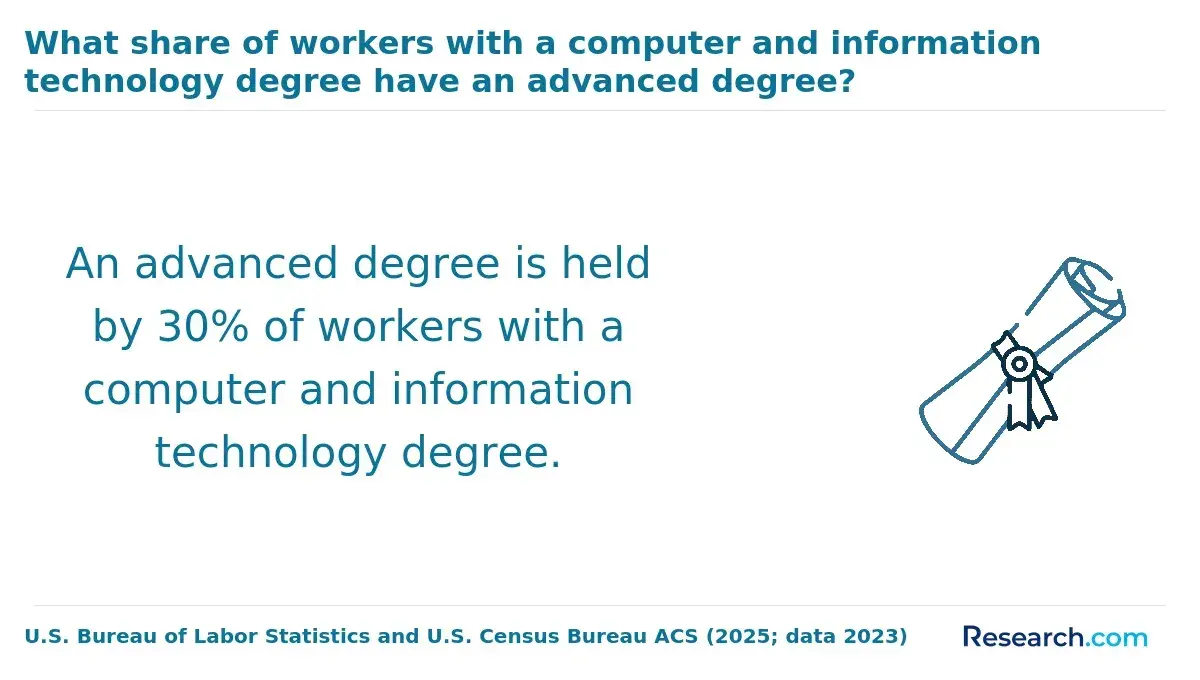
Either format can work if it gives you access to the courses, feedback, and project resources your goals require. Online study can reduce travel and make continued employment easier, but check for live meetings, group-project coordination, proctored exams, and any campus visits.
Campus study may make in-person collaboration or research supervision easier to arrange, but it can impose commuting or relocation costs.
Format matters particularly if you need specialized computing resources, close thesis supervision, or a team-based capstone. Ask how remote students access those resources, not merely whether lectures are recorded.
If schedule is your binding constraint, compare the actual course rotation and enrollment rules; AI master's options for a shorter study schedule are worth considering only if their pace and prerequisite demands are feasible for you.
How can you verify a reputable and accredited graduate program?
Accreditation applies to an institution or a specific program under a particular accreditor; do not assume that an advertisement for "accredited AI training" establishes the graduate degree's status. Before paying an application deposit, use this short verification sequence:
- Confirm that the institution and the accreditor appear in the U.S. Department of Education's or the Council for Higher Education Accreditation's recognized-accreditation records, and check the status and dates.
- Verify in the official catalog that the degree, required courses, delivery format, and graduation requirements match what the program advertises.
- Ask the school about authorization to enroll students in your state if you will study online, and request written clarification of any advertised career or placement outcomes.
Accreditation is a baseline check, not proof of curriculum quality or employment results. A stronger final test is whether qualified faculty, accessible courses, and completed student projects support your intended specialization.
What jobs can you get with a master's in data science or artificial intelligence?
Possible data science-aligned targets include data scientist, decision scientist, and analytics-focused roles. AI-aligned targets may include machine learning engineer, AI engineer, or research-oriented roles. These are directions for a job search, not jobs conferred by either degree; titles and technical expectations vary by employer.
Compare job postings against your prospective program's required work. A role centered on experiments, uncertainty, and stakeholder recommendations calls for different project evidence than one centered on model pipelines, software integration, and testing.
Research-oriented positions may also ask for experience beyond a taught master's. Choose a program that lets you produce credible examples of the tasks in your target postings, rather than relying on the degree name to explain your skills.
How much do data science and artificial intelligence graduates earn?
The Bureau of Labor Statistics reports a May 2025 median annual wage of $120,230 for U.S. data scientists. That figure describes workers in the occupation, not recent master's graduates, not an entry-level offer, and not the added earnings caused by a degree.
There is no single comparable official wage for every role called "AI engineer": employers use that title for different kinds of work. For either path, assess pay using the occupation, experience level, location, and employer relevant to you.
If a school publishes graduate salaries, check who responded, whether they had prior experience, when the data was collected, and whether the figure is a salary level or a salary increase.
Do these careers require licenses, certifications, or professional credentials?
Data scientist and AI engineer roles generally do not have a universal U.S. professional license attached to the job title. Particular employers or regulated settings may impose additional qualifications, security requirements, or rules governing the work. Check the requirements of your target role rather than assuming the degree satisfies them.
Vendor certifications can demonstrate familiarity with a specific platform, but they are not substitutes for a graduate degree's coursework or evidence that you can solve an employer's problem.
If a program promotes certification preparation, verify whether it is included in tuition and whether employers in your target roles actually request that credential.
Other Things You Should Know About Data Science
Potentially. If doctoral study is your aim, look for research-methods training, opportunities to work with faculty, and a thesis option. Confirm the prerequisites of the doctoral programs you would consider; a master's title alone does not establish eligibility.
No. AI includes a broader range of methods and applications. Check required courses before assuming a program offers either extensive generative AI work or the broader training you want.
Not necessarily. Compare your existing skills with the work you want to do. Targeted courses and substantial projects may address a narrow gap; another degree makes more sense when you need structured, extensive training.
Often, but the program decides what meets its project requirements. A strong public-data project still needs a clear question, appropriate evaluation, reproducible work, and honest discussion of data limitations.
References
- MS in Data Science and Artificial Intelligence | FIU College of Engineering & Computing https://cec.fiu.edu/degrees-programs/graduate/ms-in-data-science-artificial-intelligence/
- Academics - UVA School of Data Science https://datascience.virginia.edu/degrees/info/academics
- What Is an Artificial Intelligence Degree? | American Public University https://www.apu.apus.edu/area-of-study/intelligence/resources/what-is-an-artificial-intelligence-degree/
- MS in Data Science Curriculum & Course Descriptions | Eastern University https://www.eastern.edu/academics/colleges-seminary/college-health-and-sciences/departments/department-mathematical-5
- Career Outcomes - Data Science & Artificial Intelligence, MS | University of San Francisco https://www.usfca.edu/arts-sciences/programs/graduate/data-science-artificial-intelligence/career-outcomes
- Career Outcomes | DSI - UChicago Data Science Institute https://datascience.uchicago.edu/education/masters-programs/ms-in-applied-data-science/career-outcomes/
- AI Degrees - Kahlert School of Computing https://www.cs.utah.edu/ai-degrees/
- Machine Learning Engineer vs. Data Scientist | Coursera https://www.coursera.org/articles/machine-learning-engineer-vs-data-scientist
- Master's in Artificial Intelligence vs. Data Science | datascienceprograms.com https://datascienceprograms.com/grad-school/ms-artificial-intelligence-vs-ms-data-science/