
2027 Low-Cost Online Business Administration Associate Degree Programs with Financial Aid: FAFSA, Grants, and Scholarships

Co-Founder and Chief Data Scientist
Choosing an online business administration associate degree is often a cost decision before it is an academic one. The maximum federal Pell Grant is $7,395 for the current award year, which can cover a major share of tuition at many community colleges and public online programs.
This guide is for working adults, first-time college students, transfer planners, and career changers who want a practical way to compare FAFSA eligibility, grants, scholarships, fees, transfer value, and realistic out-of-pocket cost before enrolling.
Key Things You Should Know
- A FAFSA-eligible online associate degree must be offered by a Title IV-participating institution; FAFSA access is not automatic just because a program is online or accredited.
- The federal Pell Grant maximum is $7,395 for the current award year, so the lowest net-price programs are often public community colleges with low tuition, transfer pathways, and limited online fees.
- The best financial choice is usually the program with the lowest total net cost after grants and scholarships, not necessarily the school with the lowest advertised tuition or the largest aid package.
Which Low-Cost Online Business Administration Associate Degree Programs Offer Financial Aid?
Low-cost online business administration associate degree programs that offer financial aid are usually found at public community colleges, technical colleges, and regionally accredited public institutions with online divisions. The key requirement is that the school participates in federal student aid programs and that the associate degree is an eligible program, not simply a continuing education certificate or noncredit training option.
Most online business administration associate programs fall into three broad degree types. An Associate of Arts or Associate of Science is often designed for transfer into a bachelor's degree, while an Associate of Applied Science is usually more career-focused and may include courses in accounting, management, marketing, office systems, or entrepreneurship. Students comparing a future online business degree should pay close attention to transferability because the cheapest associate program can become more expensive later if credits do not apply toward a bachelor's degree.
The table below shows the main types of affordable online associate programs and how financial aid usually fits each option. Use it as a screening tool before requesting a school's official cost of attendance and financial aid estimate.
| Program type | Common degree format | Typical financial aid access | Best fit | Cost issue to verify |
| Public community college online business administration program | AA, AS, AAS | Often FAFSA-eligible if the college participates in Title IV aid | Students seeking the lowest tuition and local transfer pathways | Out-of-district or out-of-state online tuition rates |
| State technical or career college business program | AAS or career-focused AS | Often FAFSA-eligible for degree programs | Students preparing for entry-level administrative, bookkeeping, sales, or operations roles | Whether credits transfer beyond applied bachelor's pathways |
| Public university online associate pathway | AA or AS | Usually FAFSA-eligible if the associate degree is approved for aid | Students who want a direct bachelor's continuation at the same institution | Higher per-credit tuition than community colleges |
| Private nonprofit online college | AA, AS, AAS | May be FAFSA-eligible if Title IV-approved | Adults who need flexible terms, frequent start dates, or strong student support | Net price after institutional aid, not advertised tuition alone |
| Noncredit business certificate or bootcamp-style program | Certificate, badge, or continuing education credential | Usually not FAFSA-eligible | Students needing a short skills update rather than a degree | No federal grants or federal student loans in many cases |
A strong low-cost program should publish tuition, mandatory fees, course materials costs, online learning fees, transfer agreements, accreditation status, and financial aid procedures. Red flags include vague tuition pages, unclear program eligibility, pressure to enroll before an aid offer is available, or claims that "financial aid is available" without explaining whether that means federal grants, loans, private financing, or institutional discounts.
How Does FAFSA Work for Online Business Administration Associate Degree Programs?
FAFSA is the application used to determine eligibility for federal grants, federal student loans, and many state or institutional aid programs. For an online business administration associate degree, FAFSA works the same way it does for on-campus programs, but the school and program must be eligible, and the student must meet enrollment and academic requirements.
The practical FAFSA process is straightforward, but each step matters because a small mistake can delay aid or produce an incomplete cost estimate. Students should complete these steps before committing to a program:
- Confirm that the institution participates in federal student aid and that the online business administration associate degree is an eligible degree program.
- Create or access a StudentAid.gov account and complete the FAFSA using the correct school code for every program being compared.
- Review the Student Aid Index, dependency status, and any school requests for verification or additional documents.
- Wait for each school's official financial aid offer before deciding whether the program is affordable.
- Compare grants, scholarships, work-study, and loans separately instead of treating the full aid package as free money.
- Ask the financial aid office how aid changes if enrollment drops below full-time or half-time status.
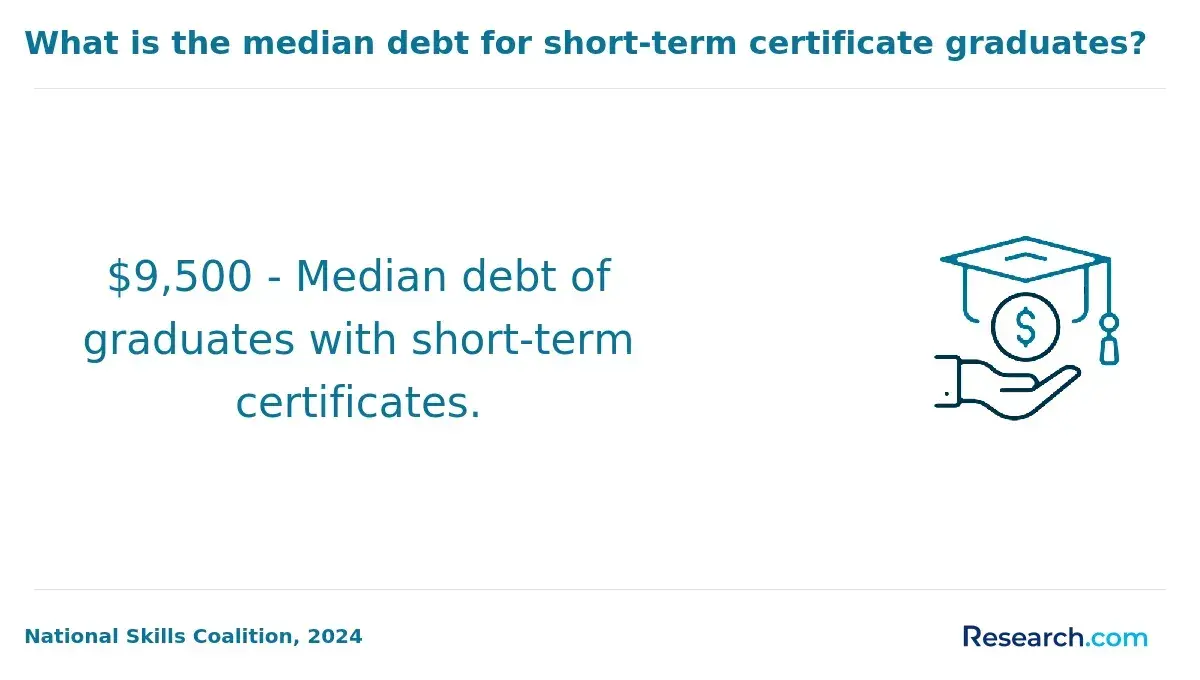
FAFSA eligibility is not the same as guaranteed free tuition. A student may qualify for a Pell Grant, state grant, subsidized loan, unsubsidized loan, work-study, or no need-based grant at all, depending on financial circumstances, enrollment level, program cost, and remaining lifetime eligibility. For associate degree students, the most important distinction is between gift aid that does not usually need to be repaid and loans that reduce the bill now but create repayment obligations later.
Students should also ask whether online courses have different billing rules. Some colleges charge distance education fees, proctoring fees, course material fees, or nonresident online rates. These costs can make a seemingly low tuition rate less affordable after the full cost of attendance is calculated.
What Grants Can Help Pay for an Online Business Administration Associate Degree?
Grants are usually the most valuable form of aid because they generally do not need to be repaid if the student remains eligible and follows program rules. For low-cost online business administration associate degree students, grants can come from the federal government, state agencies, colleges, or workforce-development programs.
The most important grant options are summarized below. Availability and award amounts vary, so students should verify current rules with the school and state aid agency.
| Grant type | Who may qualify | Why it matters for affordability | Common limitation |
| Federal Pell Grant | Undergraduate students with financial need who have not earned a bachelor's degree | The maximum award is $7,395 for the current award year, which can substantially reduce tuition at low-cost colleges | Prorated by enrollment intensity and limited by lifetime eligibility |
| Federal Supplemental Educational Opportunity Grant | Students with exceptional financial need at participating schools | Can add gift aid on top of Pell at some institutions | Funds are limited and not every college participates |
| State need-based grant | Residents who meet state rules for income, enrollment, and institution type | Can make a community college or in-state online program much cheaper | May require state residency, deadlines, or in-state attendance |
| Workforce or adult learner grant | Adults, displaced workers, or students in approved career pathways | Can support students returning to school for employable business skills | May be tied to specific programs, regions, or employment goals |
| Institutional grant | Students selected by the college based on need, merit, or enrollment goals | Can reduce the net price at higher-tuition schools | May require minimum credits, GPA, or renewal conditions |
The best strategy is to file the FAFSA early, then look for state and institutional grant deadlines that may close before federal aid deadlines. Students who wait until after admission to ask about grants may miss priority funding windows, especially at colleges where campus-based aid is limited.
A common mistake is assuming grants will cover every cost. Even when tuition is mostly covered, students may still owe for books, software, technology, transportation for any required in-person activity, graduation fees, or prior balances that prevent registration. A realistic affordability plan should include both tuition and non-tuition costs.
Scholarships can further reduce the cost of an online business administration associate degree, but they are not all designed the same way. Some are awarded by the college, some by local foundations, some by employers or professional groups, and some by state or community organizations that support adult learners, first-generation students, veterans, parents, or students entering business-related fields.
Scholarship searches work best when students match the award to their profile instead of applying randomly. The following categories are especially relevant for online associate students in business administration:
- College foundation scholarships for community college students in business, accounting, entrepreneurship, management, or transfer pathways.
- State and local scholarships for residents attending public colleges or workforce-aligned associate degree programs.
- Adult learner and returning student scholarships for students who have been out of school, work full time, or support dependents.
- First-generation, low-income, military-connected, and underrepresented student scholarships that may apply across majors.
- Career-focused scholarships from chambers of commerce, business associations, credit unions, banks, and local employers.
- Transfer scholarships that become available after completing the associate degree and moving into a bachelor's program.
Students planning to continue into an online business administration degree should ask whether the associate program has transfer scholarships or articulation agreements with four-year colleges. A small scholarship at the associate level is helpful, but a guaranteed transfer pathway can save more over time if it prevents credit loss.
Scholarship renewal rules deserve close attention. Some awards require full-time enrollment, a minimum GPA, specific business courses, continued financial need, or annual reapplication. Students taking one or two classes per term should ask whether part-time online enrollment qualifies before counting a scholarship in the budget.
Financial aid can reduce the cost of an online business administration associate degree significantly, but the actual reduction depends on the school's tuition, fees, the student's enrollment level, grant eligibility, and whether scholarships are renewable. The most accurate number is net price: total cost of attendance minus grants and scholarships.
The table below illustrates how net price thinking works. It does not represent a promise from any college; it shows why students should compare final out-of-pocket cost rather than tuition alone.
| Cost factor | Lower-cost public online associate program | Higher-tuition online associate program | Decision point |
| Advertised tuition | Often lower before aid | Often higher before aid | Low tuition is helpful, but it is only the starting point |
| Mandatory fees | May include technology or online course fees | May include platform, graduation, or course material fees | Fees can narrow the gap between schools |
| Federal grants | Can cover a larger share of tuition when tuition is low | May cover a smaller share of total cost | Pell has the same federal maximum regardless of tuition level |
| Institutional scholarships | May be limited at very low-cost colleges | May be larger but tied to higher tuition | A larger scholarship does not always mean a lower net price |
| Loans needed | May be avoidable for some students | More likely if grants do not cover the full cost | Borrow only after comparing repayment burden |
For example, the Pell Grant maximum of $7,395 can be more powerful at a low-tuition community college than at a higher-priced online institution because it may cover a larger share of direct charges. Students should still budget for books, software, a reliable computer, internet access, and any course-specific materials.
The strongest affordability test is simple: compare the remaining balance after gift aid, then estimate whether loans, payment plans, work income, employer assistance, or savings will cover that balance without creating financial stress. If a school's aid offer makes the first term affordable but leaves later terms uncertain, ask for a full-program estimate before enrolling.
Financial aid packages can look similar on the surface while producing very different out-of-pocket costs. A school may advertise a large aid package, but if much of it is loans, the student's true cost is still high. Another school may offer a smaller package but require little or no borrowing because tuition is lower.
When comparing aid offers, separate each category and calculate the amount you would actually have to pay or borrow. The comparison below shows what to review in every offer letter.
| Aid package item | How to interpret it | Question to ask the school |
| Federal Pell Grant | Gift aid based on eligibility and enrollment intensity | Will the award change if I take fewer credits? |
| State grant | Gift aid that may depend on residency, deadlines, and eligible institutions | Is this renewable for online and part-time students? |
| Institutional scholarship | School-funded aid that may be merit-based, need-based, or program-specific | What GPA, credit load, or reapplication is required? |
| Federal work-study | Eligibility to earn wages through approved employment | Are remote or flexible work-study jobs available? |
| Subsidized loan | Federal loan for eligible students with interest benefits while enrolled at least half time | How much would I owe at graduation if I accept it each term? |
| Unsubsidized loan | Federal loan that is not based on financial need and accrues interest | Can I reduce or decline this portion? |
A useful rule is to rank programs by net cost after grants and scholarships first, then by loan amount second. This helps prevent a common mistake: choosing the aid offer with the highest total number even though it includes more debt.
Students should also compare academic fit alongside aid. A transfer-oriented AA or AS may be better for students planning a bachelor's degree, while an AAS may be better for students seeking immediate workplace skills. If speed is a major factor, students comparing an accelerated business degree online should confirm whether faster terms change financial aid disbursement, workload, or eligibility.
Employer tuition assistance can make an online business administration associate degree much more affordable, especially for students already working in retail, banking, logistics, healthcare administration, insurance, hospitality, customer service, or office support. Business administration is often a practical match for employer benefits because courses in communication, accounting, supervision, project coordination, and data-informed decision-making can apply across many workplaces.
Before relying on employer benefits, students should understand the reimbursement rules. Many employers pay after a course is completed, which means the student may need to cover the bill upfront and wait for repayment.
- Ask whether the benefit pays tuition only or also covers fees, books, software, and required technology.
- Confirm whether the degree must be job-related, preapproved, or completed at a partner school.
- Find out whether payment is upfront, deferred billing, direct-to-school payment, or reimbursement after grades are posted.
- Check grade requirements, annual benefit limits, employment status rules, and repayment obligations if you leave the job.
- Coordinate employer benefits with FAFSA so grants are not accidentally reduced or delayed because of reporting errors.
Other benefits may also help. Veterans education benefits, workforce training funds, union education benefits, AmeriCorps education awards, and local workforce board programs can reduce the need for loans. The rules vary widely, so students should ask both the school and benefit provider how funds are applied to tuition and whether unused grant aid can help with other educational costs.
Employer assistance is most valuable when it fills the gap after grants and scholarships. It is less useful if it locks the student into a program with poor transfer value, high fees, or limited relevance to the student's long-term career goal.
Accreditation and enrollment status can determine whether a student can receive and keep financial aid. For federal student aid, the institution must be accredited by an agency recognized for Title IV purposes and must participate in federal aid programs. Programmatic business accreditation is not always required for an associate degree, but institutional accreditation is essential for aid access, transfer credit, and employer recognition.
Enrollment status also matters because many grants and loans are prorated based on the number of credits taken. Full-time students may receive a larger term award, but part-time students may reduce work disruption and avoid overloading themselves. Half-time enrollment is often important for federal loan eligibility, while grant amounts can vary based on enrollment intensity.
The table below explains how common academic choices affect financial aid and total value. It is especially important for online students who may change course loads from term to term.
| Factor | Financial aid impact | Value impact | What to verify |
| Institutional accreditation | Required for federal aid participation when recognized for Title IV purposes | Affects transfer, employer acceptance, and future degree options | Accreditor and Title IV participation status |
| Eligible degree program | Noncredit or short certificate options may not qualify for FAFSA aid | Degree credits may carry more long-term value than noncredit training | Whether the exact online associate degree is aid-eligible |
| Full-time enrollment | May maximize term-based grant amounts | Can shorten completion time but increase weekly workload | Credit load, pacing, and satisfactory academic progress rules |
| Part-time enrollment | May reduce grant disbursement and delay completion | Can help working adults persist without dropping courses | Minimum credits for each grant, scholarship, or loan |
| Transfer credits | May reduce remaining aid eligibility needed | Can lower total cost and shorten the degree timeline | Maximum transfer credits and residency requirements |
Satisfactory academic progress is another common issue. Students usually must complete a minimum share of attempted credits and maintain a required GPA to keep financial aid. Withdrawing from online courses may protect a GPA in some cases, but it can still affect completion rate, aid eligibility, and future balances owed.
A low-cost online business administration associate degree with financial aid is most valuable for students who need a flexible, affordable credential that can either support entry-level advancement or serve as the first half of a bachelor's pathway. It is often a strong fit for working adults who need online access, students who want to avoid large loans, and learners who are still deciding which business specialty to pursue.
The degree may benefit several groups, but the reason varies by student goal. Students should choose the program type that matches their next step, not just the cheapest option on the list.
- First-time college students who want a lower-risk start before committing to a four-year business program.
- Working adults seeking advancement into team lead, office coordinator, customer service supervisor, sales support, bookkeeping support, or operations assistant roles.
- Students planning to transfer into accounting, management, marketing, supply chain, finance, human resources, or general business bachelor's programs.
- Adult learners who qualify for Pell Grants, state grants, employer tuition assistance, or local workforce funding.
- Students who need a broad business foundation before choosing a specialized major or certificate.
The degree may not be the best choice for students who already have substantial college credit toward a bachelor's degree, need a profession that requires a bachelor's degree immediately, or are pursuing fields with strict licensure requirements outside general business. It may also be less useful if the program has weak transfer policies or if the student's target employer prefers a bachelor's degree for advancement.
Career value depends on local labor markets, experience, and the student's existing work history. The U.S. Bureau of Labor Statistics reports a May 2024 median annual wage of $49,210 for bookkeeping, accounting, and auditing clerks, a common business-support occupation related to associate-level skills. That figure should be used as context, not a guaranteed outcome, because job duties, geography, software skills, and prior experience strongly affect pay.
Students interested in administrative operations rather than broad business transfer may also compare an office administration degree online. That path may emphasize records management, office technology, scheduling, customer communication, and administrative systems more directly than a general business administration curriculum.
How Should Students Minimize the Total Cost of an Online Business Administration Associate Degree?
The best way to minimize total cost is to treat program selection and financial aid comparison as one decision. A program is not truly low-cost unless tuition, fees, transfer value, time to completion, and likely borrowing all make sense together.
Use this step-by-step approach before enrolling. It is designed to help students move from advertised tuition to a realistic full-program cost estimate.
- Shortlist only accredited schools where the exact online associate degree is eligible for federal student aid.
- Request the full cost of attendance, including tuition, mandatory fees, online fees, books, software, exams, graduation fees, and any in-person requirements.
- File the FAFSA and list every school under serious consideration so each can prepare an aid offer.
- Apply for state grants, institutional scholarships, and local scholarships before priority deadlines.
- Ask how aid changes for full-time, three-quarter-time, half-time, and less-than-half-time enrollment.
- Compare net price after grants and scholarships, then separately compare how much borrowing would be needed.
- Submit prior transcripts for transfer evaluation before enrolling, not after the first term begins.
- Check whether the AA, AS, or AAS aligns with transfer or career goals, and get transfer promises in writing when possible.
- Estimate completion time based on a realistic weekly schedule, especially if working full time or caring for family.
- Decline or reduce loan amounts that are not needed after grants, scholarships, employer benefits, and payment plans are applied.
Students should be cautious of programs that appear affordable only because they show monthly payments instead of total cost. A low monthly payment can hide a longer repayment period, higher total borrowing, or private financing terms that are less flexible than federal student loans.
Another common mistake is ignoring transfer-credit loss. If a student completes an inexpensive associate degree but later discovers that many credits do not count toward a bachelor's degree, the long-term cost can rise. Students planning further education should ask for transfer agreements, course equivalency guides, and bachelor's pathway maps before choosing a school.
A good final decision balances affordability and completion probability. The lowest-cost program is not always the best value if it lacks advising, online tutoring, predictable course availability, or a workable schedule. The goal is the lowest realistic cost for a degree the student can complete and use.
Other Things You Should Know About Business Administration
Yes, many online associate programs are designed for working adults. The safest plan is usually part-time enrollment unless the student has enough weekly study time for full-time coursework. Ask whether courses are asynchronous, how often classes start, and whether required exams or presentations must happen at fixed times.
Common courses include financial accounting, business communication, principles of management, marketing, economics, business law, spreadsheet applications, entrepreneurship, and general education classes. Transfer-oriented programs may include more math, writing, and liberal arts requirements than career-focused AAS programs.
At many accredited colleges, the diploma and transcript do not label the degree as online. Policies vary, so students can ask the registrar how the credential appears and whether online courses are identified differently on transcripts.
Certifications are not always required, but they can strengthen job applications for specific roles. Depending on goals, students may consider credentials in bookkeeping, Microsoft Excel, project management fundamentals, customer service, payroll, or office software after checking which skills local employers request.
- 2025 Most Affordable Online Associate Degrees in Business https://www.onlineu.com/most-affordable-colleges/business-associate-degrees
- Tuition-Free Distance Learning Program in Business Administration - UNYBT https://unybt.com/tuition-free-program-business-administration/
- Top 148 Business Scholarships to Apply for in December 2025 https://bold.org/scholarships/by-major/business-scholarships/
- Can You Get Financial Aid for Online College? Finding Out https://beal.edu/can-you-get-financial-aid-for-online-college/
- Associate Degree - Business Administration - Online | Monroe University https://www.monroeu.edu/academics/undergraduate-programs/monroe-online/school-business-and-accounting/online-associate-0
- FAFSA Eligibility: Requirements & Income Limits | Ascent Funding https://www.ascentfunding.com/blog/fafsa-eligibility/
- Average Cost of College [2025]: Yearly Tuition + Expenses https://educationdata.org/average-cost-of-college
- FAFSA Guide for Business Schools | Accounting.com https://www.accounting.com/resources/fafsa-guide/
- What Is Financial Aid and How Do I Qualify? https://freemannews.tulane.edu/2025/01/23/what-is-financial-aid-and-how-do-i-qualify
- Free Application for Federal Student Aid (FAFSA) | USAGov https://www.usa.gov/fafsa


