
2027 Low-Cost Online Animation Associate Degree Programs with Financial Aid: FAFSA, Grants, and Scholarships

Co-Founder and Chief Data Scientist
Choosing an online animation associate degree is mainly a cost-and-fit decision: tuition is only the starting number, and financial aid can change the real price dramatically. The College Board reported average published tuition and fees of $4,050 at public two-year colleges for 2024-25, making associate programs a lower-cost entry point than many four-year options.
This guide is for students comparing online animation, digital media, game art, and multimedia programs. You will learn how FAFSA, grants, scholarships, accreditation, enrollment status, and transfer options affect what you actually pay.
Key Things You Should Know
- FAFSA can unlock federal Pell Grants of up to $7,395 for 2024-25, but only if the school participates in federal student aid and the student meets eligibility and enrollment rules.
- The lowest advertised tuition is not always the lowest net price; online fees, software, books, portfolio expenses, transfer-credit limits, and scholarship renewal rules can change the total cost.
- The Bureau of Labor Statistics lists 2024 median pay for special effects artists and animators at $99,800, but entry-level outcomes vary widely by portfolio quality, software skills, location, employer type, and whether students continue into a bachelor's degree.
Which Low-Cost Online Animation Associate Degree Programs Offer Financial Aid?
Low-cost online animation associate degree programs that offer financial aid are usually offered by accredited public community colleges, technical colleges, public online campuses, and some accredited private nonprofit or for-profit colleges that participate in federal student aid. In practice, many affordable programs use titles such as animation, digital media, game art, multimedia design, visual communications, or graphic communications with animation coursework.
The most important distinction is not whether the program is online; it is whether the institution is accredited by an agency recognized for federal aid purposes and participates in Title IV federal student aid. Students comparing creative technology degrees may also want to compare animation with adjacent computing pathways, such as the cheapest online computer science degree, because programming-heavy career goals may be better served by a different low-cost major.
The table below summarizes the main types of online associate programs that can lead to animation-related skills and how their financial-aid profiles usually differ. Use it to narrow your search before requesting official cost-of-attendance and aid estimates from schools.
| Program type | Common degree names | Typical aid access | Best fit | Cost watchpoint |
| Public community or technical college | AA, AS, or AAS in digital media, animation, multimedia, game art, or visual communications | Often FAFSA-eligible if the college participates in federal student aid | Students seeking the lowest tuition, local residency rates, and possible transfer pathways | Out-of-state online tuition, course fees, and whether all animation courses are fully online |
| Public online college or statewide online campus | Associate in digital media, creative media, web and multimedia design, or game design | Often FAFSA-eligible through the parent institution | Working adults who need flexible scheduling and broader online course availability | Technology fees, proctored exam fees, and limited studio-course availability |
| Accredited private online art or design college | AA or AAS in animation, illustration, digital media, or visual development | May be FAFSA-eligible if the institution participates in Title IV aid | Students who want a more specialized art-school environment and portfolio-focused courses | Higher tuition may require institutional scholarships or loans to become affordable |
| Career certificate provider or bootcamp | Animation certificate, 3D art certificate, motion graphics certificate | Often not FAFSA-eligible unless connected to an eligible institution and program | Students needing short-term skill training rather than a degree | Low upfront length can still be expensive if no grants or transferable credits are available |
A low-cost program is most attractive when it combines federal-aid eligibility, a clear credit requirement, reasonable online fees, portfolio-building courses, and transferability. A program that costs less per credit but does not accept FAFSA, does not transfer well, or requires expensive software and hardware may be less affordable than it appears.
How Does FAFSA Work for Online Animation Associate Degree Programs?
FAFSA is the Free Application for Federal Student Aid. It is not a grant by itself; it is the application that schools use to determine eligibility for federal Pell Grants, federal work-study, federal Direct Loans, and sometimes state or institutional aid. Online students can use FAFSA for eligible associate degree programs if the school participates in federal student aid and the program leads to an eligible credential.
For online animation students, FAFSA matters because it can convert a listed tuition price into a lower net price. The FAFSA result is sent to the schools you select, and each school calculates a financial-aid offer based on its cost of attendance, your eligibility, enrollment intensity, dependency status, and other rules.
Follow these steps before assuming an online animation associate degree is FAFSA-eligible:
- Confirm that the school is institutionally accredited by an agency recognized for federal student aid purposes.
- Ask the financial aid office whether the specific online associate degree program participates in Title IV federal student aid.
- Use the school's official name and federal school code when adding it to the FAFSA.
- Review the school's cost of attendance, including tuition, fees, books, supplies, technology, software, and estimated personal expenses.
- Compare the aid offer by separating grants and scholarships from loans, because loans reduce upfront cost but must usually be repaid.
- Ask how your aid changes if you enroll part time, take summer courses, pause enrollment, or repeat a course.
One common mistake is assuming that "online" and "degree-granting" automatically mean FAFSA-eligible. Another is assuming that FAFSA eligibility guarantees a grant large enough to cover the full program. FAFSA opens the door to aid, but the final out-of-pocket price depends on the school's cost, your grant eligibility, enrollment status, and whether you accept loans.
What Grants Can Help Pay for an Online Animation Associate Degree?
Grants are usually the most valuable form of aid because they generally do not need to be repaid if students meet the conditions attached to the award. For low-income and moderate-income students, grants can make a FAFSA-eligible online animation associate degree significantly more affordable than a non-eligible certificate program.
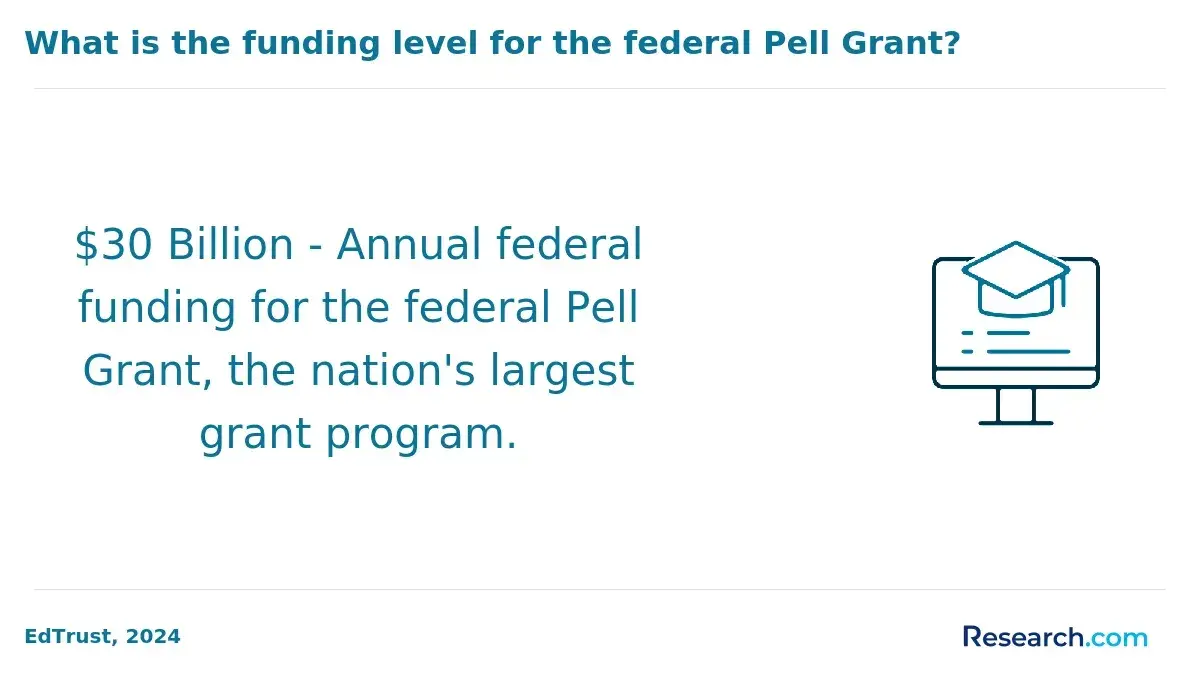
The major federal benchmark is the Pell Grant. For 2024-25, the maximum Pell Grant is $7,395, which can cover a large share of tuition at many public two-year colleges. That does not mean every student receives the maximum or that the grant covers all costs, but it shows why FAFSA participation should be one of the first affordability filters.
The table below explains the main grant categories animation associate students should investigate. The availability and exact amount will vary by school, state, residency status, income, and enrollment level.
| Grant source | How it may apply to online animation students | Why it matters for net price | Key question to ask |
| Federal Pell Grant | Available to eligible undergraduate students at participating schools | Can reduce or, at lower-cost colleges, potentially exceed tuition and mandatory fees | What Pell amount would I receive at my planned enrollment level? |
| Federal Supplemental Educational Opportunity Grant | Campus-based grant for students with high financial need at participating schools | Can add grant aid beyond Pell, but funds are limited | Does the college award this grant to online associate students? |
| State need-based grants | May support residents attending eligible in-state colleges, including online programs in some states | Can make a public online program cheaper than an out-of-state option | Do online students in this program qualify for my state grant? |
| Institutional grants | School-funded grants for need, merit, adult learners, transfer students, or specific programs | Can make a higher-tuition college competitive after aid | Is the grant renewable, and what GPA or credit load is required? |
| Workforce or career-training grants | May apply through local workforce boards or state programs if the credential is approved | Can help students changing careers or recovering from job loss | Is this animation or digital media degree on an approved training list? |
Students should prioritize grants before loans because grants reduce the actual price of attendance. The main red flags are grants that require full-time enrollment when you can only attend part time, grants that are not renewable, and grants that disappear if you switch from an AA or AS transfer plan into an AAS career program.
Scholarships for online animation associate students may come from colleges, community foundations, professional associations, art organizations, local employers, and portfolio competitions. Unlike grants, scholarships often focus on merit, talent, identity, career goals, community service, or a specific creative field.
Animation students should look beyond awards with "animation" in the title. Relevant scholarship searches can include digital media, game design, motion graphics, illustration, visual arts, graphic design, film, interactive media, and technology. Students considering future education in learning media can also compare how animation skills align with e-learning pathways, including the best online instructional design master's programs later in their academic planning.
Use the following scholarship categories to build a realistic search list instead of applying randomly:
- Institutional scholarships: Awards offered by the college for online students, creative majors, adult learners, first-generation students, veterans, transfer students, or high academic performance.
- Portfolio-based scholarships: Awards that require an animation reel, digital art samples, storyboards, character designs, motion graphics, or a visual-development portfolio.
- Local scholarships: Community foundation, high school alumni, city arts council, and local business awards that may have less competition than national contests.
- Career-field scholarships: Awards connected to game development, film, digital arts, media production, user experience, and visual communications.
- Identity- and access-focused scholarships: Awards for students from underrepresented groups, students with disabilities, women in technology or media, rural students, and returning adults.
The strongest scholarship strategy is to match the award to your evidence. For animation, that evidence is often a portfolio, a short artist statement, a clear career goal, and proof that you can complete courses successfully. Before relying on any scholarship, confirm whether it is renewable, whether it applies to online students, whether it can be combined with Pell Grants, and whether it is paid to you or directly to the school.
Financial aid reduces cost differently for each student because schools package aid against their own cost of attendance. The key number is net price: total cost of attendance minus grants and scholarships. Loans can reduce what you pay now, but they do not reduce the true cost because repayment usually follows.
A useful way to think about affordability is to compare grant aid against the published tuition benchmark for public two-year colleges. With average published tuition and fees at $4,050 for 2024-25 and a maximum Pell Grant of $7,395, some high-need students at low-cost colleges may see tuition and mandatory fees mostly or fully covered. Students at higher-cost private online art programs may still have a sizable balance even after Pell.
The table below uses simple illustrative scenarios to show how net price can differ before loans. These are not school quotes; they show how to read an aid offer once you receive one.
| Scenario | Annual billed tuition and fees | Grant and scholarship aid | Estimated annual net price before loans | Decision takeaway |
| Low-cost public online program with high grant eligibility | $4,050 | $7,395 | $0 for billed tuition and fees, with remaining aid potentially applied under school rules | Strong affordability if the program is online, transferable, and aligned with goals |
| Public online program with moderate grant eligibility | $4,050 | $2,000 | $2,050 before books, software, and personal expenses | May still be affordable, especially with state aid, payment plans, or employer help |
| Higher-cost specialized online art program | $12,000 | $7,395 | $4,605 before books, software, and personal expenses | Can be worthwhile if portfolio support and outcomes justify the remaining cost |
| Non-FAFSA certificate or unapproved program | $6,000 | $0 in federal grants | $6,000 before supplies and financing charges | Lower sticker price may be less affordable if grants and transferable credits are unavailable |
The most expensive mistake is comparing only tuition. Animation programs can require a computer capable of running creative software, drawing tablet, cloud storage, portfolio hosting, subscription tools, and course materials. Ask each school whether these costs are included in tuition, billed separately, or only estimated in the cost of attendance.
Financial aid packages can look generous while still leaving a high balance. A school may list a large total aid package because it includes loans, while another school may offer less total aid but more grants and scholarships. For a low-cost online animation associate degree, the best offer is usually the one with the lowest net price, the least required borrowing, and the strongest fit for your academic and career goals.
Use this comparison framework when you receive aid offers from multiple schools. It separates true discounts from financing so you can avoid choosing a program based on the largest headline number.
| Comparison factor | What to compare | Why it affects affordability | Red flag |
| Cost of attendance | Tuition, fees, books, software, hardware, supplies, and estimated living expenses | Financial aid is calculated against the full cost, not just tuition | The school advertises low tuition but does not clearly list course or technology fees |
| Grant and scholarship aid | Federal, state, institutional, and private awards that do not usually require repayment | These reduce net price directly | Award is one-time only or requires full-time enrollment you cannot maintain |
| Loans | Subsidized, unsubsidized, parent, or private loans | Loans help cash flow but increase long-term cost | The package looks affordable only after large borrowing |
| Enrollment assumptions | Full-time, three-quarter-time, half-time, or less-than-half-time status | Aid can change when credit load changes | The offer assumes more credits than you can realistically take |
| Program length | Total credits, term structure, and required course sequence | More terms can mean more fees and delayed employment or transfer | Required courses are not offered often enough online |
| Transfer value | Articulation agreements and bachelor's pathways | Transferable credits can reduce future bachelor's costs | AAS credits do not transfer well to the bachelor's program you want |
When comparing packages, ask each financial aid office for the net price after grants and scholarships, the amount you would need to pay without loans, and what happens if you change enrollment status. Also ask the academic department whether the online format includes portfolio reviews, animation labs, career support, and access to industry-standard tools.
Yes, employer tuition assistance can help pay for an online animation associate degree, especially when the program connects to design, training, marketing, video production, user experience, game development, or internal communications. Employer benefits are not limited to large media companies; retailers, hospitals, manufacturers, government agencies, and education providers often need digital media and motion content.
The Internal Revenue Service allows employers to provide up to $5,250 in educational assistance per employee per year on a tax-free basis under qualifying plans. For a low-cost associate program, that amount can cover a meaningful portion of annual tuition, but employees should confirm the employer's rules before enrolling.
Ask your employer these questions before counting tuition assistance in your budget:
- Does the benefit cover associate degrees, online programs, and creative or animation-related majors?
- Is payment made upfront, reimbursed after grades are posted, or paid directly to the school?
- What grade, employment status, work-hours, or service commitment is required?
- Can employer assistance be combined with Pell Grants, state grants, scholarships, or payment plans?
- Are books, software, hardware, portfolio fees, and certification exams covered?
- Will the employer require repayment if you leave your job shortly after using the benefit?
Employer aid works best for students who can manage the timing. If reimbursement arrives after the term ends, you may still need a payment plan, savings, or temporary financing. If you are using animation skills for workplace learning, dashboards, or digital training content, you may also want to compare long-term pathways that combine creative media with analytics, such as an online masters in data science after completing higher-level credentials.
Accreditation and enrollment status are two of the biggest financial-aid gatekeepers. Accreditation helps determine whether a school can participate in federal student aid, while enrollment status affects how much aid you can receive and whether you remain eligible during the program.
For degree-seeking students, institutional accreditation is usually the first item to verify. Programmatic accreditation is less common for animation associate degrees than for fields such as nursing or engineering, so students should focus on whether the institution is accredited, whether the specific program is aid-eligible, and whether credits transfer to intended bachelor's programs.
Enrollment status is equally important. Full-time students may receive larger term-based aid amounts, but full-time study is not always realistic for working adults. Part-time students may preserve work income and reduce borrowing, but they may take longer to graduate and may receive prorated aid.
Before enrolling, confirm these financial-aid conditions in writing:
- Minimum credit load: Ask how Pell Grant amounts, loans, scholarships, and state grants change at full-time, three-quarter-time, half-time, and less-than-half-time enrollment.
- Satisfactory academic progress: Schools typically require students to maintain a minimum GPA and complete a required share of attempted credits to keep aid eligibility.
- Course eligibility: Financial aid may apply only to courses required for the declared degree, not extra electives or noncredit portfolio classes.
- Repeat and withdrawal rules: Dropping, failing, or repeating animation courses can affect aid, pace of completion, and repayment obligations.
- Modality rules: Verify that online sections are eligible for the same aid as campus sections and that required studio or lab components can be completed remotely.
AA and AS programs are often designed for transfer, while AAS programs are usually more career-focused. Neither option is automatically better. The right choice depends on whether you want to enter the workforce quickly, transfer into a bachelor's degree, build a stronger portfolio, or combine animation with technical fields such as programming, web design, or interactive media.
A low-cost online animation associate degree with financial aid is most valuable for students who need an affordable, structured way to build entry-level creative technology skills without committing immediately to a four-year degree. It can also be a practical first step for students who want to test the field, build a portfolio, or complete general education credits at a lower cost.
The Bureau of Labor Statistics lists 2024 median pay for special effects artists and animators at $99,800, but that figure should be interpreted carefully. It reflects workers across experience levels and industries, not a guaranteed outcome for associate graduates. For students, the practical lesson is that portfolio quality, software fluency, internships, freelance samples, and transfer options matter as much as the credential name.
This degree path may fit especially well for these students:
- First-time college students: An affordable associate degree can reduce risk while building foundational drawing, design, storytelling, editing, and animation skills.
- Working adults: Online coursework can make it easier to study while keeping income, especially when paired with part-time enrollment or employer assistance.
- Students planning to transfer: An AA or AS with strong articulation agreements can lower the cost of the first two years of a bachelor's degree.
- Career changers: An AAS can provide structured training in digital media, motion graphics, 2D or 3D animation, and portfolio development.
- Budget-conscious creative students: FAFSA, state grants, and local scholarships can make a public online option less expensive than private art-school tuition.
Some students should consider a different route. If your goal is software engineering, simulation, technical direction, or graphics programming, an accelerated computer science degree online may align better than a studio-focused animation associate degree. If your goal is immediate freelance work, a shorter certificate plus a strong portfolio may be enough, but it may not offer the same financial aid or transfer value.
How Should Students Minimize the Total Cost of an Online Animation Associate Degree?
Students should minimize total cost by comparing net price, not tuition; maximizing grants and scholarships before borrowing; choosing an aid-eligible accredited school; and selecting a degree type that matches their next step. The cheapest program is not always the best value if credits do not transfer, courses are not offered online when needed, or the program lacks portfolio support.
Use this sequence to turn program pricing into a realistic affordability decision:
- Shortlist only accredited schools and confirm that the specific online associate program is eligible for federal student aid.
- Request the full cost of attendance from each school, including tuition, online fees, books, supplies, software, hardware, portfolio costs, and graduation fees.
- Complete the FAFSA early and add every school you are seriously considering.
- Search for state grants, institutional scholarships, local awards, and portfolio-based scholarships before accepting loans.
- Ask whether prior college credits, dual enrollment, CLEP, AP credit, military training, or portfolio assessment can reduce required credits.
- Compare aid offers by net price after grants and scholarships, then calculate how much cash or borrowing is still required.
- Check whether scholarships and grants require full-time enrollment, a minimum GPA, specific course completion, or continuous attendance.
- Verify transfer agreements if you plan to pursue a bachelor's degree, because lost credits can make a cheap associate program more expensive later.
- Choose the lowest realistic out-of-pocket cost that still supports your portfolio, transfer plan, schedule, and career goal.
Also think beyond the first degree. Animation students who want to move into interactive media, educational technology, software, or analytics-heavy creative roles should plan transfer credits carefully. If your long-term goal shifts toward computing, comparing associate transfer routes with bachelor's pathways and master's options can prevent wasted credits and unnecessary debt.
The best questions to ask a school are specific: What will I pay after grants and scholarships? What aid changes if I attend part time? Which courses require paid software? What percentage of required courses is available online? Which credits transfer to named bachelor's programs? What portfolio support is included? Clear answers to those questions are stronger evidence of affordability than a low sticker price alone.
Other Things You Should Know About Animation
Many community college associate programs do not require a portfolio for admission, but some specialized art schools or scholarship programs may request one. Even when it is not required, keeping samples of drawing, design, editing, motion graphics, or 3D work can help with placement, scholarships, internships, and transfer applications.
Useful software depends on the program and career target, but students commonly benefit from learning digital drawing, video editing, motion graphics, 3D modeling, storyboarding, and portfolio presentation tools. The specific tools matter less than demonstrating strong fundamentals, clean workflow, and finished projects.
AI is changing parts of animation production, especially ideation, editing, asset generation, and workflow automation. It does not remove the need for storytelling, timing, visual judgment, design fundamentals, ethics, and production management. Students should look for programs that teach both creative fundamentals and responsible use of emerging tools.
An associate degree can support entry-level, freelance, assistant, or production-related opportunities when paired with a strong portfolio. Some employers prefer or require a bachelor's degree for more competitive animation, game, film, or visual effects roles. Students should compare job postings in their target market before deciding whether to stop at the associate level or transfer.
- WHICH ANIMATION SCHOOL PREPARES YOU BETTER FOR A CAREER IN ANIMATION? — Hollywood Animation Academy https://www.hollywoodanimationacademy.com/the-animation-school-blog/comparison-of-top-anmation-schools-in-the-us
- How Much to Become an Animator: Costs and Financial Aspects https://ianimate.net/more/articles/how-much-to-become-an-animator-costs-and-financial-aspects
- Do Online Colleges Accept FAFSA? | Ascent Funding https://www.ascentfunding.com/blog/do-online-colleges-accept-fafsa/
- Scholarships for non European students https://www.gobelins-school.com/welcome-gobelins/how-finance-your-studies/scholarships-non-european-students
- Animation https://www.aims.edu/degrees-certificates/animation
- Best Online Animation Schools 2026: Accredited Guide https://www.animationeducations.com/online-animation-schools.php
- Guide to Financial Aid for Online Students https://www.onlineu.com/resources/financial-planning/financial-aid
- Average Cost of College [2025]: Yearly Tuition + Expenses https://educationdata.org/average-cost-of-college
- 10 Most Affordable Schools to Score an Animation Degree | Animation Career Review https://www.animationcareerreview.com/articles/10-most-affordable-schools-score-animation-degree
- The 2026 Animation Scholarship | Vancouver Film School https://vfs.edu/content/the-2026-animation-scholarship


