2027 Liberal Arts Master's Degree vs Graduate Certificate: Which Is Better?

Co-Founder and Chief Data Scientist
Choosing between a liberal arts master's degree and a liberal arts graduate certificate often poses a dilemma-particularly when balancing cost, duration, and career goals. The master's degree typically demands a higher financial investment and longer commitment but can yield a 15% average salary increase within five years, according to 2024 labor market data.
Graduate certificates, by contrast, offer quicker completion and lower entry barriers but generally provide limited employer recognition and modest salary gains. This article explores these credentials' differences in cost, time-to-completion, admission standards, employer value, salary impact, and career usefulness to guide informed decisions.
Key Things to Know About Which Is Better: A Liberal Arts Master's Degree or a Liberal Arts Graduate Certificate
- A liberal arts master's degree generally demands higher tuition-averaging 2 to 3 times the cost of a graduate certificate-posing greater financial commitment but potentially yielding better long-term returns.
- Graduate certificates often require 6 to 12 months to complete versus 2 years for master's degrees, appealing to career changers seeking faster credentialing without extensive time investment.
- Employers tend to recognize master's degrees more broadly, associating them with advanced expertise and leadership potential-while certificates mainly support skill enhancement in niche areas.
What Is the Difference Between a Liberal Arts Master's Degree and a Liberal Arts Graduate Certificate?
A liberal arts master's degree and a liberal arts graduate certificate represent distinct academic credentials that serve different purposes for recent undergraduates, working professionals, and career changers exploring their next step. A liberal arts master's degree requires completing 30 to 60 graduate credit hours and provides a broad, comprehensive curriculum encompassing critical thinking, research, and synthesis across multiple disciplines or a focused subfield. Its academic objectives center on preparing students for advanced professional roles, academic research, or doctoral study.
In contrast, a liberal arts graduate certificate typically entails 12 to 18 credit hours concentrated on specialized skills or topics within liberal arts. These certificates offer a faster, more focused pathway often designed for professionals needing quick reskilling or niche knowledge, usually taking less than a year to complete. A common misconception is that certificates are simply shorter versions of master's degrees; however, their academic standing differs, as certificates are non-degree credentials, although many institutions allow these certificates to be stackable toward a master's degree, complicating straightforward comparisons.
- Credit Hours: Master's degrees demand extensive coursework across broader subjects, while certificates focus narrowly on specific areas.
- Curriculum Scope: Master's programs foster deep theoretical knowledge and scholarly skills, unlike certificates that offer targeted expertise.
- Academic Objectives: Master's degrees emphasize scholarly contribution, opposed to certificates aimed at career enhancement and specialization.
- Academic Standing: Master's degrees hold graduate-level prestige; certificates are considered supplemental credentials.
- Intended Audience: Master's suits those invested in multi-year study and research, while certificates appeal to adults seeking flexible, rapid credentialing.
- Duration and Commitment: Master's programs usually span two years full-time; certificates often conclude within a year.
This guide further examines the comparative benefits of liberal arts master's degree versus graduate certificate in cost, time-to-completion, admission standards, employer recognition, salary effect, and career utility. Prospective students may also explore related pathways such as 2 year accelerated bachelor degrees online to tailor their academic journey to career goals.
What Are the Typical Admission Requirements for a Liberal Arts Master's Program Compared to a Liberal Arts Graduate Certificate?
Admission standards for liberal arts master's programs tend to be more rigorous and formalized than those for liberal arts graduate certificates-reflecting the greater depth and commitment expected. This contrast is important for prospective students navigating typical admission requirements for liberal arts master's programs versus those for certificates.
- Undergraduate GPA: Master's programs commonly require a minimum GPA-often around 3.0 on a 4.0 scale-to demonstrate academic readiness. Graduate certificates typically offer more flexible GPA criteria or no strict minimum, welcoming students from diverse academic backgrounds.
- Prerequisite Coursework: Applicants to master's programs usually must have completed specific undergraduate courses relevant to liberal arts, ensuring foundational knowledge. By contrast, certificate programs often accept students without this background, providing introductory or foundational content instead.
- Standardized Test Scores: Though some liberal arts master's programs still request GRE or similar test scores, many have made them optional or eliminated the requirement. Certificates rarely require standardized tests, simplifying the application process.
- Letters of Recommendation: Letters remain a key component for master's admissions, attesting to academic and professional potential. Graduate certificate applicants may face fewer or no letter requirements, facilitating access for working professionals or those with limited academic contacts.
- Personal Statement: Both pathways commonly request a personal statement, but master's applications expect detailed essays articulating academic goals and research interests. Certificate statements tend to focus on professional objectives or reasons for enrollment and are generally shorter.
This comparison of admission criteria for liberal arts graduate certificates highlights how certificates can serve as an academic on-ramp for students who don't meet full master's admission standards. Certificates allow individuals to strengthen their credentials before pursuing a master's degree, providing an accessible entry point.
Moreover, the lighter admissions barrier means quicker entry to advanced study, benefiting career changers and working professionals seeking a focused skills upgrade without the long-term commitment of a master's program. For those exploring educational pathways, an understanding of these differences is key to informed decision-making-especially when considering the impact on employer recognition, salary, and career utility.
For students also interested in related fields, exploring the cheapest criminal justice degree online can offer insight into affordable options in analogous disciplines.
What Is the Minimum GPA Requirement for a Liberal Arts Master's Program?
Minimum GPA requirements for liberal arts master's programs vary considerably but generally fall between 3.0 and 3.5 on a 4.0 scale, depending on the institution's selectivity and academic emphasis. Regionally accredited programs often set a baseline near 3.0, while more competitive or research-intensive universities may expect applicants to have at least a 3.3 GPA. These thresholds serve as initial filters, ensuring candidates meet a standard level of academic achievement.
- Range: Most accredited liberal arts master's programs publicly require about a 3.0 GPA, but more selective options may demand higher grades for admission.
- Competitive vs Open Enrollment: Elite programs enforce stricter GPA cutoffs focused on academic excellence, whereas open-enrollment or professionally oriented programs may admit students with slightly lower GPAs to foster broader access.
- Actual Admitted Profiles: Published minimum GPAs typically represent the lowest acceptable scores, with average incoming student GPAs often exceeding these numbers.
- Provisional Admission: Some institutions provide conditional admission for candidates just below the GPA threshold, requiring satisfactory performance in initial courses or completion of remedial work.
- Applicant Advice: Prospective students should consider minimum GPA requirements as starting points and bolster their applications through strong recommendations, personal statements, and relevant experience.
A professional who completed a liberal arts master's program shared that overcoming a slightly underwhelming undergraduate GPA meant focusing on building a compelling narrative through other aspects of his application. He noted, "I was initially worried my GPA would hold me back, but the program allowed conditional acceptance with a plan to demonstrate my capabilities early on. The first semester was intense but validating, and I learned how to leverage my strengths beyond grades. The experience reinforced that persistence and preparation can open doors even when numbers aren't perfect."
How Long Does It Take to Complete a Liberal Arts Master's Degree Versus a Liberal Arts Graduate Certificate?
Completing a liberal arts master's degree typically requires about two years of full-time study. Part-time students may take between three and four years, while accelerated programs can shorten this to roughly one year. Graduate certificate programs in liberal arts generally range from six months to a year full-time; part-time enrollment often extends completion to one or two years. These differences reflect the intensive nature of master's curricula versus the streamlined design of certificates.
- Program Structure: Master's degrees demand 30 to 36 credit hours alongside comprehensive exams, theses, or capstone projects, fostering comprehensive subject mastery. Certificates usually require 12 to 18 credits focused on specific skills without major research components, enabling faster finish times.
- Working Professionals: Those currently employed often prioritize quicker paths-favoring certificates for timely upskilling. Yet, for career advancement that values depth and long-term credentials, the master's degree's extended timeline offers significant returns.
- Life Factors: Students must align choices with employment demands, family responsibilities, and financial resources. For example, full-time study suits recent graduates, while part-time or certificate routes better accommodate ongoing work or caregiving.
- Career Impact: The credential selected affects recognition and salary potential differently; certificates often open doors to high paying certificate jobs, whereas master's degrees confer broader academic and professional opportunities.
Understanding how long does it take to complete a liberal arts master's degree versus the time to finish a liberal arts graduate certificate program helps learners match their academic pursuits with realistic timelines and career objectives.
How Much Does a Liberal Arts Master's Degree Cost Compared to a Liberal Arts Graduate Certificate?
Tuition for a liberal arts master's degree varies considerably depending on the institution. Public universities charge in-state students roughly $20,000 to $40,000 for the full program, while out-of-state learners generally pay between $35,000 and $60,000. Private schools tend to be more expensive, with costs ranging from $40,000 to over $70,000. By contrast, graduate certificates in liberal arts are more affordable-public in-state programs usually fall between $5,000 and $10,000, and out-of-state or private certificates can cost between $7,000 and $15,000.
Cost Drivers: The higher price of master's degrees largely comes from longer program lengths and more credit hours, often 30 to 36 credits compared to 9 to 15 credits for certificates. Added expenses include institutional overhead such as faculty pay, facilities, and student support services. Master's programs also provide more extensive advising, research access, and campus resources, all contributing to greater tuition fees. Certificates focus on concise, skill-oriented curricula, which helps keep overhead and costs lower.
Financial Aid: Graduate assistantships, fellowships, and employer tuition reimbursement tend to be much more accessible for master's candidates than for certificate students. This can significantly reduce net costs for master's learners, whereas certificate pursuers usually pay closer to full sticker price. Prospective students should carefully explore aid options to understand the true financial impact.
Hidden Costs: Master's students often face opportunity costs such as lost wages from studying full-time and postponed career advancement. Certificates are shorter and often pursued part-time, allowing students to maintain employment and minimize these indirect expenses. However, certificates may not offer the same long-term salary growth potential as a master's degree.
Return on Investment: Determining which credential offers better financial value requires calculating net cost after aid and weighing it against future earnings. Free online calculators can assist candidates in estimating their individualized return on investment by incorporating program duration, funding, and career outlook-helping move beyond surface-level tuition comparisons.
A professional who completed a liberal arts master's reflected on her experience: "Balancing work and study was challenging-the extended time commitment and tuition felt daunting at first. But the access to faculty mentorship and research opportunities made a real difference. I often used assistantships to offset costs, which helped me stay focused on my goals. Looking back, the credential opened doors in ways the certificate never could, even though it required more upfront investment." This perspective highlights the trade-offs typical of those weighing a master's degree against a shorter certificate path.
How Does Earning a Liberal Arts Master's Degree Affect Salary Compared to a Liberal Arts Graduate Certificate?
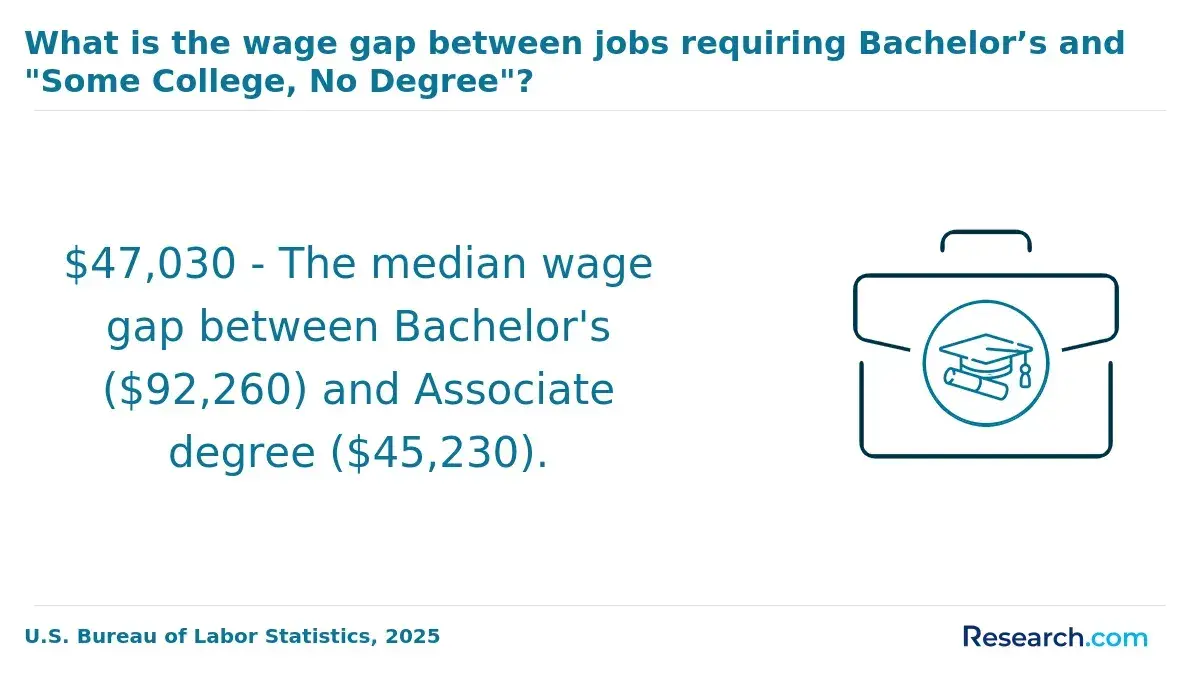
Recent data from the Bureau of Labor Statistics, NACE salary surveys, and Georgetown University highlights clear differences in median earnings between those holding a Liberal Arts master's degree and peers with graduate certificates.
- Salary Premium: A master's degree generally leads to a 20-35% higher median salary compared to graduate certificate holders. This advantage is most evident in sectors like higher education, government agencies, and cultural organizations where analytical and research abilities are critical.
- Senior Roles: Advanced degrees unlock leadership positions-such as senior policy analysts or program directors-with pay packages rarely accessible to certificate holders.
- Targeted Certificates: In specialized fields like technical writing, digital content strategy, or editing, carefully selected certificates can offer salaries on par with master's holders due to strong market demand for niche expertise.
- Return on Investment: While master's programs take about two years and involve greater tuition costs, their longer time commitment is balanced by higher earning potential. Certificates typically finish within a year at lower costs, appealing to professionals seeking swift upskilling rather than broad academic credentials.
- Employer Recognition: Academia and public sector employers favor master's degrees more consistently, whereas private and nonprofit sectors increasingly value specific graduate certificates aligned with evolving industry needs.
According to a 2024 NACE survey, the median salary increase for Liberal Arts master's graduates rose by 3% compared to 2023, underscoring continuing market appreciation for the degree.
Which Liberal Arts Career Paths Favor a Master's Degree Over a Graduate Certificate?
Several liberal arts career tracks distinctly favor a master's degree over a graduate certificate due to the complexity, depth, and formal recognition required in these roles. Employers and licensure boards often mandate or strongly prefer candidates with a master's degree where comprehensive theoretical knowledge and sustained academic research are essential.
- Leadership Roles: Positions in education administration, cultural program management, and nonprofit leadership commonly require a master's degree as a formal credential. These roles demand strategic thinking and a broad understanding of policy and organizational theory that certificates typically cannot provide.
- Research-Intensive Positions: Careers in social research, public policy analysis, and academic scholarship emphasize the need for rigorous research design and methodology skills. A master's degree offers the necessary training in critical analysis and original research that graduate certificates generally lack.
- Licensed Professions: Fields such as school counseling, social work, and certain specialized educational roles legally require a master's degree to qualify for licensure and practice. Certificates cannot substitute for these statutory requirements.
- Promotion and Specialization: Many liberal arts career ladders use a master's degree as a minimum threshold for advancement or specialization-whether moving from teaching to administration or from entry-level to senior analyst roles-making it structurally essential.
The U.S. Bureau of Labor Statistics projects an 8% growth in roles requiring a master's degree in education and social sciences over the next decade, which further highlights the strong market demand and employer preference for the advanced credential. Those targeting leadership, specialized research, or licensure-dependent positions should plan their education with the master's degree as a critical milestone that supports long-term career growth and formal recognition.
Which Liberal Arts Career Paths Favor a Graduate Certificate Over a Master's Degree?
Certain liberal arts career paths clearly favor a graduate certificate over a master's degree-especially where employers emphasize demonstrated technical skills or applied knowledge rather than broad academic study. Fields such as digital marketing, data analytics, and user experience design often show strong hiring preferences for certificates as proof of specific competencies that can be immediately applied on the job. These roles represent some of the best liberal arts career paths for graduate certificate holders seeking practical, career-relevant credentials.
Technical Specialization: Employers in communications, cultural management, and digital humanities frequently seek candidates with focused expertise, such as social media analytics or content management systems. Graduate certificates efficiently validate this expertise without the extended commitment of a master's program.
Rapid Skill Upgrades: Many working professionals with bachelor's or master's degrees in related liberal arts fields choose certificates to quickly fill skill gaps. For example, an English literature graduate transitioning into technical writing may pursue a certificate in professional writing to expedite workforce reentry rather than enrolling in a full degree program.
Cost and Time Efficiency: Graduate certificates offer a more affordable and faster credential option, appealing to those targeting short-term career boosts or transitions. This is especially true in applied fields like museum studies or grant writing, where practical skills strongly influence employer demand.
Employer Recognition: Job posting data and employer surveys from platforms like Lightcast and LinkedIn Workforce Insights show that in public relations, nonprofit management, and digital content creation, certificates are often viewed as equivalent-or sometimes preferred-due to their alignment with current industry standards and tools.
Career-Changing Professionals: Individuals pivoting into liberal arts from unrelated sectors find certificates useful because they foreground targeted knowledge and reduce academic redundancy, enabling faster adaptation to new vocational demands. This focus makes them ideal for those researching which liberal arts careers benefit from graduate certificates.
Those interested in exploring flexible credential options may also find valuable insights in degrees for remote jobs that integrate online learning with practical skill acquisition.
Is a Liberal Arts Graduate Certificate Stackable Toward a Master's Degree?
Graduate certificates in liberal arts can sometimes be stacked toward a master's degree-meaning that completed coursework may count as credit within a related master's program. However, this option depends on individual university policies and is not a universal standard. Many accredited institutions allow such stacking but with specific conditions to maintain academic integrity and relevance.
- Institutional Policy: Whether a graduate certificate is stackable depends on the rules of the university offering both credentials. Some institutions permit stacking only if the certificate and master's degree align closely within liberal arts disciplines.
- Grade Requirements: Only courses completed with a minimum grade-often a B or higher-qualify for transfer, ensuring a high academic standard in the master's program.
- Time Limits: Certificates typically must have been earned within a recent timeframe, such as the past five years, to remain stackable and relevant.
- Program Alignment: Stackability usually requires that certificate credits correspond with the curriculum of the target master's degree to support cohesive degree objectives.
- Lower-Risk Entry Point: This pathway allows prospective master's students to explore graduate coursework and evaluate their readiness and financial investment before committing fully to a longer program.
- Verification Needed: Because policies vary widely, students should always verify graduate certificate credit transfer policies for liberal arts master's directly with graduate admissions before enrolling.
For those considering gradual advancement, stacking certificates into a master's degree can be an effective strategy-especially for career-changers or working professionals seeking focused skills. Researching online colleges that start immediately may also offer flexible options for quickly beginning coursework while assessing stackability.
How Do Employers in the Liberal Arts Field Perceive a Master's Degree Versus a Graduate Certificate?
Employer views on a master's degree compared to a graduate certificate in liberal arts shift notably across industries and role types. Data from prominent surveys-including the NACE Job Outlook Report, Council of Graduate Schools employer research, and LinkedIn Talent Insights-show that attitudes toward these credentials depend largely on sector demands and job expectations.
Industry Variation: Technology and consulting sectors often value graduate certificates as practical, targeted skill enhancements that quickly prove relevant abilities. In contrast, regulated professions and academic roles usually prioritize master's degrees as the established indicators of deep expertise and professional commitment.
Role Specificity: For entry-level or cross-disciplinary positions, certificates paired with work experience can hold significant value. More advanced or research-driven roles generally require the comprehensive training provided by a master's degree to remain competitive.
Institution Reputation: The prestige and accreditation of the credentialing institution heavily influence employer perception. A certificate from a respected university can carry more weight than a master's from a lesser-known program, impacting how candidates' readiness and quality are judged.
Expectation Management: Candidates should recognize that employer preferences are shaped by industry norms and institutional standing-making the optimal credential highly context-dependent. Knowing how one's target sector views these qualifications is essential to aligning education choices with realistic career goals.
Can a Liberal Arts Graduate Certificate Help Someone Transition Into the Field From a Different Background?
A graduate certificate in liberal arts offers professionals moving from unrelated fields a quicker, less expensive way to gain subject-specific credentials without the time investment of a master's degree. Workforce development research reveals many certificate programs now address career changers' needs-with accelerated schedules, stackable units, and practical coursework designed to build relevant skills efficiently while producing a portfolio that illustrates competency.
- Speed: These certificates demand fewer courses and less overall study time, helping candidates establish credibility faster than master's programs.
- Affordability: They typically cost significantly less in tuition and fees, making them accessible for those exploring new career directions without large financial commitments.
- Career-Focused Design: Curricula emphasize applied projects and real-world skills, giving students tangible outcomes to showcase to employers.
- Limitations: While valuable for entry or mid-level roles, certificates lack the comprehensive depth and broad credential recognition required for senior or highly specialized positions.
- Enhancing Outcomes: Complementing the certificate with internships, volunteer work, or project-based experiences greatly improves job prospects by demonstrating applied expertise beyond academic credentials.
Ultimately, a liberal arts graduate certificate can act as an efficient foundational credential for career-switchers, but progressing toward advanced roles often means pursuing a full master's degree or additional experiential learning to deepen expertise and increase professional leverage.
What Graduates Say About Which Is Better: A Liberal Arts Master's Degree or a Liberal Arts Graduate Certificate
- Callen: "Choosing between the liberal arts master's degree and the graduate certificate was tough at first, but I realized that the certificate's shorter time-to-completion suited my busy schedule perfectly. I appreciated that it required less upfront commitment-both in terms of time and tuition-making it a more cost-effective option for me. From what I've seen in the job market, employers respect both credentials, but the certificate was a great way to boost my qualifications quickly. "
- Koen: "Reflecting on my journey, the liberal arts master's degree offered me a depth of knowledge and a more robust credential that really resonated with my employer. Although the admission requirements were more stringent, I felt that hurdle was worth it because a master's degree enhanced my salary potential and opened doors to leadership roles I wouldn't have accessed otherwise. If you're looking for greater career utility, investing the extra time and effort into a master's can pay off significantly in the long run."
- Owen: "From a professional standpoint, I saw the graduate certificate as the smarter, faster route-less pricey, more accessible in terms of admissions, and ideal for demonstrating specialized skills without committing to years of study. However, I also came to understand that a master's degree carries more weight when it comes to long-term salary impact and industry recognition-particularly in academic or research-oriented careers. It really depends on your goals and how quickly you want to see returns."
Other Things You Should Know About Liberal Arts Degrees
Online liberal arts master's programs generally offer a more comprehensive and rigorous curriculum than graduate certificates. This depth typically leads to higher recognition from employers and academic institutions, especially for roles requiring advanced critical thinking and research skills. Graduate certificates are often viewed as useful for skill enhancement but may not carry the same weight for career advancement or further academic pursuits.
Accreditation is crucial for both credentials, as it ensures that the program meets certain academic standards. A regionally accredited master's degree is often required for admission to doctoral programs and is more widely accepted by employers. Graduate certificates from accredited institutions can add value but may have limited transferability if the issuing institution lacks recognized accreditation.
The ideal candidate for a liberal arts master's degree is someone seeking deep expertise, potential careers in academia, or leadership roles requiring analytical skills. Those who need focused skill upgrades, want a shorter time-to-completion, or are exploring liberal arts careers without committing to a full degree may find graduate certificates more suitable.
References
- Average Cost of a Master's Degree: 2025 Analysis https://educationdata.org/average-cost-of-a-masters-degree
- Liberal Arts https://www.lsus.edu/academics/graduate-studies/master-of-arts-in-liberal-arts
- Liberal Arts Graduates: Where Can This Journey Take You? - Indira University https://indirauniversity.edu.in/blogs/liberal-arts-graduates-where-can-this-journey-take-you
- What Can You Do with a Liberal Arts Degree? https://www.campion.edu.au/blog/from-campus-to-career-what-can-you-do-with-a-liberal-arts-degree/
- Can My Liberal Arts Degree Get Me a Job in Tech? - tripleten.com/blog https://tripleten.com/blog/posts/can-my-liberal-arts-degree-get-me-a-job-in-tech
- Master of Liberal Arts - Wikipedia https://en.wikipedia.org/wiki/Master_of_Liberal_Arts
- What the Numbers Tell Us: Re-Engineering the Liberal Arts Degree – A Baseline for the New Economy | UNBOUND https://unbound.upcea.edu/research-and-policy/re-engineering-the-liberal-arts-degree-a-baseline-for-the-new-economy/
- Arts vs. Liberal Arts vs. Liberal Studies: Key Differences https://www.upes.ac.in/blog/liberal-studies/difference-between-arts-liberal-arts-and-liberal-studies
- Liberal Arts Degrees: Online https://www.snhu.edu/online-degrees/liberal-arts
- Why a Liberal Arts Degree Can Be More Valuable Than a Specialized Degree in Today's Job Market - Liberal Arts https://liberalartsedu.org/blog/why-a-liberal-arts-degree-can-be-more-valuable-than-a-specialized-degree-in-todays-job-market/