
2027 Liberal Arts Degree Careers Ranked by Salary, Growth, and Work-Life Balance

Co-Founder and Chief Data Scientist
Choosing a career path with a liberal arts degree can be challenging when trying to balance high salary, strong job growth, and a healthy work-life balance-key factors for long-term professional satisfaction. Many graduates find it difficult to identify which roles align well with their values and financial needs, especially since liberal arts jobs vary widely in these aspects.
Recent data shows that only 38% of liberal arts careers rank above the national median in combined salary, growth rate, and work-life quality. This article analyzes and ranks these careers holistically-offering clear insights to help readers make informed decisions that align with their goals.
Key Things to Know About Liberal Arts Degree Careers Ranked by Salary, Growth, and Work-Life Balance
- Liberal arts careers show median salaries of $55,000 to $85,000 annually—higher pay often comes with experience or specialization in communication, research, or management roles.
- Employment growth is projected at about 3–5% through 2030—demand remains steady across education, business, media, and public service sectors.
- Work-life balance varies; nonprofit and academic roles offer flexibility, while corporate and media positions may involve faster deadlines and heavier workloads.
How Are Liberal Arts Degree Careers Evaluated and Ranked Across Salary, Growth, and Work-Life Balance?
A comprehensive ranking of liberal arts degree careers must consider salary, career growth, and work-life balance-three critical dimensions that together create a fuller picture of career quality than compensation alone. This three-pillar framework incorporates objective financial data alongside projections of job demand and subjective yet vital well-being factors, enabling a nuanced salary growth comparison for liberal arts degree careers.
- Salary: Median earnings come from the Bureau of Labor Statistics (BLS) Occupational Employment and Wage Statistics, providing a reliable financial baseline for typical incomes within each profession.
- Career Growth: Using BLS ten-year employment projections, this metric reflects expected demand, future opportunities, and job security in various liberal arts fields, helping job seekers gauge their potential for advancement and stability over time.
- Work-Life Balance: This pillar aggregates data from the American Time Use Survey, Glassdoor employee reviews, and industry-specific workforce satisfaction studies. By quantifying elements like flexible scheduling, workload, stress, and overall satisfaction, the analysis highlights essential work-life balance metrics in liberal arts professions that impact long-term career sustainability.
These rankings are intended as an informed decision-making tool rather than a rigid hierarchy, recognizing that personal priorities vary-some may value flexibility over salary, while others focus on rapid advancement. This approach empowers individuals to align career choices with their unique goals.
In the following sections, five liberal arts careers will be examined with evidence-based insights: marketing managers, human resources specialists, writers and authors, public relations specialists, and social workers. For readers interested in further education options, exploring one year doctoral programs can also provide valuable pathways for career growth and specialization.
Which Liberal Arts Degree Career Paths Offer the Highest Starting and Mid-Career Salaries?
Careers reflecting the liberal arts degree highest paying careers in the United States demonstrate notable growth in earnings from entry-level to mid-career roles. Data from the BLS Occupational Employment and Wage Statistics and the NACE annual salary survey reveal which fields combine strong salaries with meaningful advancement and balanced work-life dynamics.
- Management Consulting: Starting salaries often exceed $65,000, rising beyond $120,000 mid-career. The compensation premium results from the blend of critical thinking, business acumen, and a competitive selection process. Large private firms in metropolitan areas generally offer the highest pay.
- Marketing and Advertising: Median starting salaries near $50,000 grow to over $100,000 with experience. Specialists in digital marketing and data analytics command premiums due to demand outstripping supply. Top-paying positions exist at agencies and tech firms in urban hubs.
- Human Resources Management: Entry-level pay averages around $48,000, advancing to approximately $95,000. These roles carry significant responsibility for talent acquisition and employee relations. Public sector jobs trade slightly lower salaries for steadier work-life balance.
- Communications and Public Relations: Salaries start near $45,000 and rise to about $90,000. Expertise in media relations and crisis management drives compensation. Pay varies with firm size and geography.
- Technical Writing: Starting at about $55,000 and exceeding $95,000 mid-career, this field benefits from the scarcity of writers who can clearly document complex technical material, especially in technology and healthcare sectors concentrated in innovation centers.
Rewards in these top earning liberal arts careers reflect not only salary but a balance of career growth outlook and lifestyle sustainability. Regional and employer differences are pronounced-public institutions often pay less than sizable private companies, and urban centers typically outpace rural areas in wages. For those evaluating job offers or pivoting careers, assessing these factors holistically is essential.
For high school seniors, current undergraduates, recent graduates, or mid-career professionals seeking the easiest college majors with high pay, this overview provides essential insights grounded in reliable data and balanced career considerations. More details on geographic salary variation can be explored in the dedicated analysis section.
Explore further details at easiest college majors with high pay.
What Do the Bureau of Labor Statistics Job Growth Projections Reveal About the Future of Liberal Arts Degree Careers?
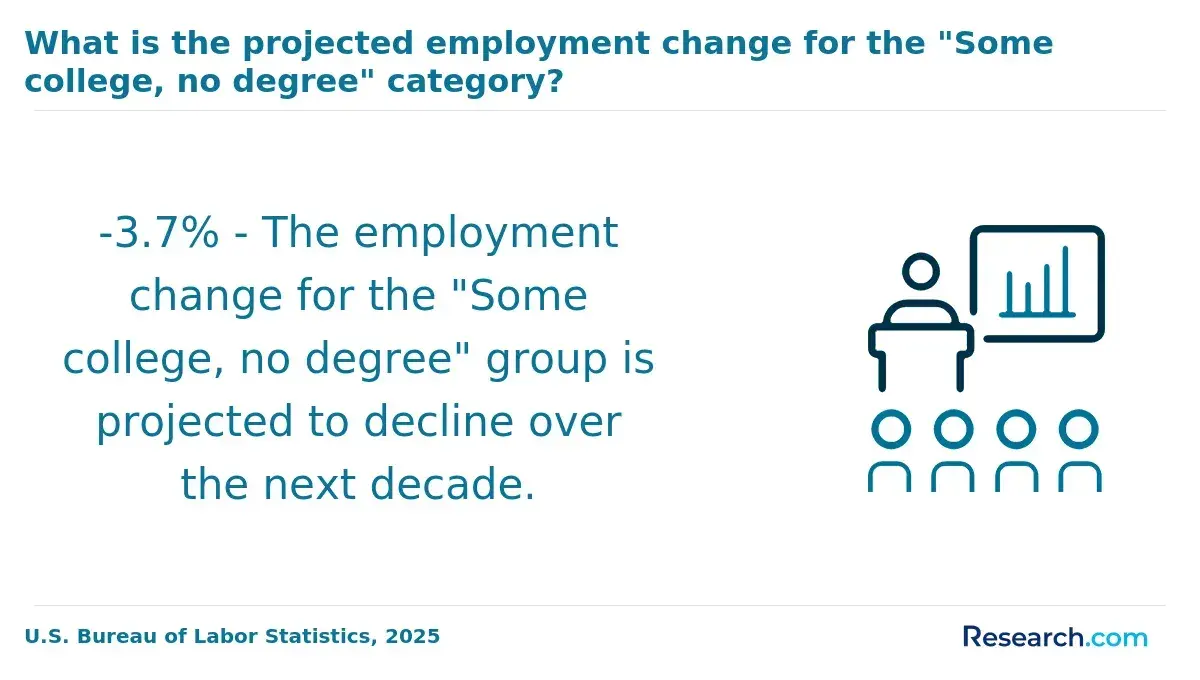
The Bureau of Labor Statistics projects varied growth rates across liberal arts careers over the next decade, with some fields expanding significantly faster than the 5% average for all occupations. Careers linked to social and community services, market research analysis, and healthcare specialties such as counseling and mental health are expected to grow by over 10%, fueled by demographic changes like an aging population and increased prioritization of mental well-being.
This growth reflects greater funding and expansion in healthcare and social service industries.
- Technology Integration: Careers that blend liberal arts skills with digital competencies, including user experience research and digital content creation, benefit from rapid technological advances and the rise of online communication platforms. Graduates who develop both traditional critical thinking and technical expertise find enhanced opportunities.
- Stable but Challenged: Fields such as traditional print journalism, media roles, and some administrative positions face slow growth or decline due to automation and industry shifts. Professionals sustain momentum by transitioning into digital media, data analytics, or specialized niches where creative and analytical talents remain valuable.
- Geographic Variability: These national projections may mask significant regional differences in job availability and industry health. Local economies and specific sectors may diverge considerably, highlighting the importance of examining state and city-level data when planning careers.
- Resilience Through Specialization: Even where employment growth is limited, liberal arts graduates who pursue continuous learning, interdisciplinary approaches, and professional development often find rewarding paths by adapting to emerging roles that utilize communication, cultural insight, and problem-solving strengths.
Work-life balance involves multiple factors reflecting how individuals allocate time and energy between professional and personal roles. To measure work-life integration in liberal arts degree jobs, this article relies on specific indicators from trusted sources like the BLS American Time Use Survey and employer review platforms.
- Average Weekly Hours Worked: Early-career roles in fields such as journalism or advertising often require 50+ hours weekly, while education and government positions tend to stay within 35-40 hours.
- Schedule Predictability: Jobs with consistent hours, such as museum curators or educators, usually provide better balance than roles in nonprofit leadership or public relations, where deadlines and events can be irregular.
- Remote or Hybrid Work Availability: Flexible arrangements vary greatly across liberal arts sectors and employers, influencing the day-to-day work-life fit.
- Paid Time Off Norms: Larger organizations commonly offer more generous PTO, supporting recovery and balance, compared to smaller nonprofits or startups.
- Employee Satisfaction Scores: Aggregated data from Glassdoor, Indeed, and Payscale show higher satisfaction aligns with stable schedules and flexible work options.
Work-life balance varies not just by job title but by sector, employer type, and career stage. Early-career professionals often face heavier workloads, while mid-career individuals benefit from greater schedule stability and seniority. Importantly, balance is also shaped by strategic choices-selecting employers carefully, negotiating flexible terms, and planning career moves.
Treating work-life balance as an active career design element empowers liberal arts graduates. Whether deciding on your first job or considering a pivot, understanding and shaping this multidimensional concept can lead to more sustainable and satisfying career paths. For a practical view of options, explore fields beyond traditional roles, including construction management programs, which may offer different work-life profiles.
To rank liberal arts career paths fairly, we apply an equal weighting model across three critical aspects: salary, career growth potential, and work-life balance. This composite framework mirrors the balanced priorities of many graduates aiming for sustainable, rewarding employment. It reveals which roles combine competitive earnings with promising advancement and manageable workloads.
- Technical Writer: Excels through a blend of solid pay, strong job growth, and exceptional work-life balance, making it a reliable choice for those seeking a steady career without common high-stress job demands.
- Market Research Analyst: Offers attractive salaries and robust growth prospects alongside moderate lifestyle flexibility-ideal for analytically minded individuals focused on upward mobility.
- Human Resources Specialist: Delivers above-average compensation and growth prospects while prioritizing positive work-life balance, appealing to those who enjoy people-centered environments with reasonable hours.
- Archivist or Curator: Despite lower salary levels, this role stands out with superior growth opportunities and some of the best balance ratings, suited for candidates valuing meaningful work with less pressure.
- Postsecondary Education Administrator: Provides solid pay and career advancement potential with slightly less balance, fitting those interested in academic leadership and organizational roles.
- Public Relations Specialist: Maintains balanced scores in all categories, skewing slightly higher in pay and growth, attractive to professionals who thrive in dynamic, network-driven roles.
- Content Strategist: Known for strong growth and good balance, this career fits creative thinkers focusing on evolving industries, although it offers moderate salary.
Those who place greater emphasis on income may prioritize roles like market research analyst or public relations specialist, while individuals focusing on lifestyle sustainability might lean toward archivist or technical writer positions. Adjusting the weight of each pillar can personalize these rankings to better match individual goals and values.
Specializing within liberal arts disciplines clearly influences salary, career trajectory, and work-life balance, setting apart those who pursue focused expertise from broader generalists. Data from the U.S. Bureau of Labor Statistics and professional surveys reveal that targeted specializations often yield higher pay but also involve lifestyle trade-offs.
Fields such as data analytics in psychology, technical writing in communications, and user experience research in sociology tend to report earnings well above general liberal arts roles-typically 15-25% higher starting salaries-due to highly sought-after skill sets. Meanwhile, areas like cultural studies or philosophy may not offer top salaries but provide other forms of career satisfaction.
Growth prospects vary notably. Technology-driven specializations like digital humanities, policy analysis, and roles integrating tech often exceed the average 8% growth rate seen in liberal arts careers. Advancement in these sectors frequently requires early professional certification or advanced degrees. Conversely, traditional or niche paths may experience slower expansion but present leadership chances within academia and nonprofits.
Work-life balance also reflects these contrasts. High-paying roles in market research or digital content strategy often demand long hours and tight deadlines. In contrast, careers in library science or education generally offer steadier schedules and less stress, appealing to those seeking lifestyle stability alongside meaningful work.
- Timing: Early focus on a specialization-backed by graduate courses or specialized internships-greatly shapes salary growth and career advancement. Waiting to specialize might restrict niche opportunities but can cultivate broad skills valuable in senior leadership.
- Versatility vs. Specialization: Generalists who develop wide-ranging strategic and leadership abilities sometimes surpass specialists in long-term income and job security, particularly at executive levels requiring cross-disciplinary insight.
- Trend: According to a 2023 report from the National Association of Colleges and Employers, liberal arts graduates incorporating digital skills experience 20% faster salary growth within five years than purely generalist peers.
Geographic location significantly influences median salaries, employment growth, and work-life balance for liberal arts graduates across the U.S., shaping both financial and lifestyle outcomes. According to BLS sub-national Occupational Employment and Wage Statistics and state workforce development data, regional differences reveal varied opportunities.
- Northeast: Metropolitan hubs like New York City, Boston, and Washington, D.C. offer the highest median salaries, yet elevated housing costs and taxes reduce net purchasing power. Work-life balance often suffers due to long commutes and intense work environments.
- Southeast: Cities such as Atlanta and Charlotte provide moderate salaries paired with lower living expenses, improving net financial benefits. This region shows strong employment growth particularly in education and cultural sectors, with favorable work-life balance supported by shorter commutes and access to green spaces.
- Midwest: Places like Chicago and Minneapolis feature stable job growth and balanced salaries. Moderate housing and tax rates contribute to a reasonable cost of living, while the slower-paced community focus enhances work-life balance.
- Southwest: Markets including Dallas and Austin exhibit robust growth in media, design, and tech-related liberal arts fields. Competitive salaries combined with moderate living costs and flexible work arrangements support a positive lifestyle balance.
- West: West Coast metros such as San Francisco, Seattle, and Los Angeles lead in salaries but bear very high living costs. Adjusted earnings often lag behind mid-tier markets, though remote and hybrid jobs let many professionals align high compensation with affordable, flexible living options.
Comparing metropolitan and smaller markets reveals that lower headline salaries can translate to stronger financial outcomes after accounting for regional living expenses. The rise of remote and hybrid work partially decouples location and pay, particularly benefiting liberal arts professionals whose roles accommodate flexibility. Career planning should integrate these economic factors with personal preferences-commute, community, housing, and family proximity-to select paths that optimize salary, growth prospects, and sustainable work-life balance.
When comparing public sector versus private sector liberal arts careers salary, growth, and balance, distinct differences become clear that influence long-term career decisions. Entry, mid, and senior level private sector roles generally offer higher base salaries-often 10 to 25 percent more than public sector pay-but public roles provide significant benefits such as defined-benefit pension plans, loan forgiveness eligibility, and comprehensive health coverage.
These perks appreciably narrow the total compensation gap, enhancing financial security over time despite nominal salary differences.
- Salary: Private sector jobs lead in base pay across levels, yet public sector compensation packages add considerable value through benefits. This makes direct salary comparisons incomplete without accounting for long-term total rewards, a crucial factor for liberal arts graduates weighing public versus private opportunities.
- Growth: Several public sector agencies are expanding liberal arts hiring to meet policy priorities, especially in social services, education, and infrastructure investment. Meanwhile, private sector growth concentrates in tech-driven areas where skills in communication, content strategy, and user experience design are prized. Consulting and corporate social responsibility also foster demand for liberal arts expertise.
- Work-Life Balance: Public sector employees typically report greater schedule predictability, better leave policies, and stronger job security, contributing to higher satisfaction scores. However, work-life balance varies within both sectors by role and career stage, with entry-level private sector communications roles often demanding longer hours and senior public roles sometimes involving considerable administrative duties. Flexible hours and telework options appear in both sectors depending on organizational culture.
Considering this multifaceted comparison helps liberal arts graduates evaluate career trajectories beyond paycheck size-balancing advancement potential and sustainable lifestyles. Those interested in urban planning or development might explore programs featuring a master of urban planning online to enhance career prospects aligned with public sector growth areas.
Advanced degrees and professional certifications significantly impact salary growth, career advancement, and work-life balance for liberal arts professionals. According to research from NACE and BLS, obtaining a master's or doctoral degree often results in a salary premium of 20-40% over a bachelor's degree alone, though individual outcomes vary by field and credential type. Professional certifications typically yield smaller but meaningful salary increases of 5-15%, especially when combined with relevant work experience, enhancing career prospects in specialized roles.
- Master's Degree: Usually requires 1-3 years of full-time study and tuition investment; salary boosts generally range from 15% to 30%. It opens pathways to managerial and specialized positions. Work-life balance may initially suffer during study but often improves afterward due to increased autonomy and career control.
- Doctoral Degree: Involves 3-7 years of rigorous research and study, with salary premiums up to 40%. It enables access to academic, research, or senior policy roles that bachelor's or master's degrees cannot offer. These positions may involve intense workloads and pressure, potentially reducing work-life balance despite heightened prestige and compensation.
- Professional Certifications: Completed within months at lower costs, certifications grant salary increases around 5-15%. They enable entry into consulting or technical specialties and often support better work-life balance through greater job flexibility.
- Credentialing Return on Investment: Choosing the right advanced degree or certification should align strictly with career goals such as leadership, academia, or technical expertise. Pursuing credentials without strategic focus may dilute progress and delay advancement.
- Work-Life Trade-Offs: While advanced credentials can unlock senior roles with greater schedule control, some high-level positions carry amplified responsibility and stress. Candidates must weigh these lifestyle implications alongside salary and career growth benefits.
For those looking to optimize salary growth and career advancement, selecting a targeted credential rather than accumulating multiple qualifications is prudent. Liberal arts professionals exploring options may also consider programs like a degree in human services, which balances practical skills with career flexibility-an increasingly relevant path given current workforce trends in liberal arts careers.
Careers in communication, education, and writing within liberal arts fields show a substantial prevalence of remote or hybrid options, with availability ranging between 40% and 60%. In contrast, professions such as social work and counseling tend to require a strong in-person presence, with less than 15% of roles offering remote flexibility. This variation reflects the differing nature of client interactions and institutional dependencies across roles.
Remote-eligible liberal arts positions generally offer salaries on par with their on-site counterparts, although creative and digital communication jobs often provide a modest premium due to strong demand. Geographic arbitrage plays a role for many remote workers-allowing them to earn salaries aligned with high-cost urban markets while living in more affordable regions, effectively increasing their purchasing power. This advantage is less accessible in roles necessitating physical presence.
The career growth landscape is evolving: hybrid and remote work are increasingly normalized in sectors like marketing, publishing, and higher education, reducing past disadvantages related to lower visibility. Still, positions requiring heavy client engagement or hands-on collaboration frequently prioritize in-person networking for advancement, maintaining some disparity.
Remote arrangements yield clear work-life balance benefits, including less commuting, greater scheduling flexibility, and enhanced autonomy. However, challenges persist, such as blurred boundaries between professional and personal time and the pressures of an "always-on" culture. These effects vary based on individual temperament and home environment quality. Data from the American Time Use Survey highlights that remote liberal arts professionals save about 1.5 hours daily previously spent commuting, adding valuable time for personal activities.
- Remote Work Prevalence: Communication, education, and writing show 40-60% remote/hybrid availability; social work and counseling under 15%.
- Salary Impact: Comparable or slightly higher pay in remote roles; geographic arbitrage boosts real earnings for some.
- Career Growth: Hybrid norms reduce advancement gap in many fields; face-to-face roles emphasize onsite presence.
- Work-Life Balance: Flexibility and shorter commutes weigh against boundary challenges and stress risk.
- Statistic: Remote liberal arts workers cut daily commute by 1.5 hours on average (American Time Use Survey).
Certain liberal arts careers stand out by delivering strong work-life balance alongside competitive salaries and promising growth, according to combined insights from Glassdoor, PayScale, and the BLS American Time Use Survey. These roles usually feature predictable workloads, structured deadlines, and employer support for flexible or remote work-factors that collectively foster well-rounded satisfaction.
- Technical Writer: Employed by tech companies, government bodies, and healthcare firms, technical writers craft clear, detailed documentation. Their project-focused tasks often come with set deadlines and options for remote work, facilitating steady schedules and good pay supported by consistent industry demand.
- Corporate Communications Specialist: Found in large corporations and nonprofit sectors, these individuals handle internal and external messaging. Their jobs commonly align with standard office hours and may allow telecommuting, combining transparency-driven growth with balanced workloads.
- Academic Advisor: Typically working within colleges and universities, academic advisors guide students through course and career choices. Their roles follow academic calendars that naturally accommodate breaks, delivering a routine conducive to balance while experiencing moderate salary increases.
- Market Research Analyst: This group analyzes data to inform business strategies, often balancing remote and in-office work. Their flexible hours mesh with project timelines, and strong salary growth reflects the escalating value of data analytics across fields.
These careers often benefit from defined deliverables and workplace flexibility policies, but individual experiences differ based on management styles and personal boundaries. It's important to view balance scores as one factor to guide employer selection rather than guarantees of uniform lifestyle quality.
Recent findings reveal that over 65% of professionals in communications and advisory roles report above-average satisfaction with their work-life balance, underscoring a wider shift toward flexible employment norms in these fields.
What Graduates Say About the Liberal Arts Degree Careers Ranked by Salary, Growth, and Work-Life Balance
- Landen: "Choosing a liberal arts degree was a decision I never regretted because it opened doors with solid salaries that exceeded my expectations. What really stands out is the long-term career growth-your potential only expands as you gain experience and diversify your skills. The best part is the day-to-day work-life balance; I've found a rhythm that allows me to thrive both professionally and personally without burnout."
- Nicholas: "Reflecting on my time with a liberal arts degree, I noticed that salary is often underestimated compared to more technical fields, but it's steadily improving as graduates carve unique career paths. The long-term career growth is somewhat unpredictable but rewarding if you stay adaptable and curious. Work-life balance is often the highlight-many roles allow for flexibility that supports a well-rounded lifestyle, something I truly value."
- Maverick: "From a professional standpoint, liberal arts careers offer competitive salaries that reflect the broad skill sets we bring to the table-critical thinking and communication are prized assets. The trajectory for career growth is promising, especially when you leverage networking and continual learning. Day-to-day work-life balance tends to be better than many expect, providing ample opportunity to pursue passions outside of the office."
Other Things You Should Know About Liberal Arts Degrees
Analytical writing, public speaking, research, and stakeholder communication are the most marketable liberal arts skills in 2027. Employers in consulting, nonprofit leadership, publishing, and policy roles often screen for evidence of these skills through portfolios, case interviews, or writing samples, plus 1–3 years of relevant internship or project experience.
The industry sector plays a significant role in shaping key career factors for liberal arts graduates. For example, those working in technology or finance-related roles often experience higher salaries and faster growth but may face more demanding work schedules. Alternatively, careers in education or nonprofit sectors usually offer better work-life balance but comparatively lower salaries and slower advancement.
Choosing internships and entry-level positions in high-growth industries can set liberal arts graduates up for better long-term outcomes. Gaining skills in data analysis, communications, or management early on enhances both salary potential and upward mobility. Additionally, targeting employers known for flexible work policies can preserve work-life balance while building career momentum.
- CIPD | Flexible and hybrid working practices in 2025 https://www.cipd.org/en/knowledge/reports/flexible-hybrid-working/
- The Rise of Hybrid Work: Redefining Work-Life Balance https://blog.radancy.com/2025/02/06/the-rise-of-hybrid-work-redesigning-work-life-balance/
- The Benefits of a Liberal Arts Education | Coalition for College https://www.coalitionforcollegeaccess.org/mycoalition-counselor-all/the-benefits-of-a-liberal-arts-education
- How a Liberal Arts Degree Helps You Advance Your Career - Bethany College https://www.bethanywv.edu/how-a-liberal-arts-degree-helps-you-advance-your-career/
- Work-Life Balance https://www.simpplr.com/glossary/work-life-balance/
- Remote work, Job Quality and Work-life Balance: A Comparative Study of European Men and Women https://papers.academic-conferences.org/index.php/icgr/article/view/3317
- Keeping the Value of the Liberal Arts in Mind as "Workforce Pell" Becomes Reality - Ithaka S+R https://sr.ithaka.org/blog/keeping-the-value-of-the-liberal-arts-in-mind-as-workforce-pell-becomes-reality/
- What the Numbers Tell Us: Re-Engineering the Liberal Arts Degree – A Baseline for the New Economy | UNBOUND https://unbound.upcea.edu/research-and-policy/re-engineering-the-liberal-arts-degree-a-baseline-for-the-new-economy/
- What drives the geography of new graduates? - Centre for Cities https://www.centreforcities.org/reader/great-british-brain-drain/drives-geography-new-graduates/
- Liberal Arts Degrees: The Value of Lifelong Skills https://www.keg.com/news/liberal-arts-programs-the-value-of-lifelong-skills


