2027 Is an Online Operations Management Doctorate Worth It? ROI, Salary Growth, and Career Impact

Co-Founder and Chief Data Scientist
An online operations management doctorate can be a smart investment, but only if it helps you reach a role that actually rewards doctoral-level expertise. Recent BLS wage data places median pay for general and operations managers at $101,280, while senior executive and specialized analytics roles can pay more but are highly competitive.
This guide is for experienced managers, consultants, supply chain leaders, and aspiring faculty who want to compare cost, salary growth, time, career impact, and alternatives before committing.
Key Things You Should Know
- An online operations management doctorate is most likely to pay off when it supports a move into executive leadership, consulting, analytics-driven operations strategy, or higher education-not when it simply duplicates experience you already have.
- BLS May 2024 data shows median wages of $101,280 for general and operations managers, $122,860 for industrial production managers, and $101,190 for management analysts, which makes ROI highly dependent on the role you pursue after graduation.
- The break-even point depends on net program cost, employer funding, debt interest, time to completion, and realistic annual salary lift; a lower-cost program with strong completion support can outperform a prestigious but expensive option.
What Is the ROI of an Online Operations Management Doctorate?
ROI for an online operations management doctorate is the financial and career return you receive compared with the total cost of earning the degree. In practical terms, it asks whether the doctorate helps you earn more, advance faster, qualify for better roles, build consulting credibility, or enter teaching and research positions at a level that justifies tuition, fees, time, and debt.
The simplest ROI calculation is: net doctoral cost divided by annual post-degree earnings increase. Net cost should include tuition, required fees, residencies, technology, books, dissertation continuation fees, loan interest, and any lost income if you reduce work hours. The annual earnings increase should be conservative and based on your target role, not the highest salary you find online.
The table below shows how ROI changes depending on whether the doctorate produces a modest, moderate, or major income shift. Use it as a decision framework rather than a prediction, because actual outcomes vary by employer, industry, region, and prior leadership experience.
| ROI scenario | What usually creates the return | How to interpret it |
| Low financial ROI | The degree does not change your role, employer, consulting rate, or promotion path | The doctorate may still have personal or scholarly value, but it may not be a strong salary investment |
| Moderate financial ROI | The degree supports promotion into director-level leadership, process transformation, or specialized consulting | The investment can make sense if tuition is controlled and you keep working while enrolled |
| High financial ROI | The degree helps you move into executive leadership, high-value consulting, tenure-track or full-time faculty work, or advanced analytics strategy | The degree is more likely to justify the cost when the role requires or strongly values doctoral expertise |
A common mistake is comparing a doctoral outcome with an entry-level salary. Most online doctoral students are already experienced professionals, so the better question is: What additional career doors does the doctorate open beyond a master's degree and experience?
How Much Can Salaries Increase After an Online Operations Management Doctorate?
Salary growth after an online operations management doctorate is usually indirect. Employers rarely raise pay simply because an employee earns a doctorate; instead, salary increases tend to come from moving into higher-responsibility positions, specialized consulting, academic roles, or executive decision-making jobs where advanced expertise has market value.
The BLS May 2024 Occupational Employment and Wage Statistics provide a useful baseline for roles related to operations management. These figures are national medians, so they should be adjusted for your industry, location, employer size, and years of experience.
| Role related to operations management | Median annual wage | How a doctorate may affect salary potential |
| General and operations managers | $101,280 | May support advancement into larger operating units, enterprise transformation, or senior leadership |
| Industrial production managers | $122,860 | Can strengthen credibility in manufacturing systems, productivity improvement, quality, and automation strategy |
| Management analysts | $101,190 | May help experienced consultants justify higher-level advisory work, especially in process redesign or operations strategy |
| Logisticians | $80,880 | May be most valuable when paired with senior supply chain leadership, analytics, or consulting responsibility |
| Operations research analysts | $91,290 | Can be useful for professionals focused on optimization, simulation, forecasting, and AI-supported decision models |
| Business teachers, postsecondary | $101,640 | Often required or strongly preferred for full-time college teaching, depending on institution type and discipline |
The strongest salary gains usually occur when the doctorate changes your labor market category. For example, a mid-career operations manager who becomes a vice president of operations, senior consultant, or full-time faculty member is not receiving a salary bump from the credential alone; they are using the credential to compete for a different kind of job.
Which Career Paths Offer the Strongest Financial Return With an Online Operations Management Doctorate?
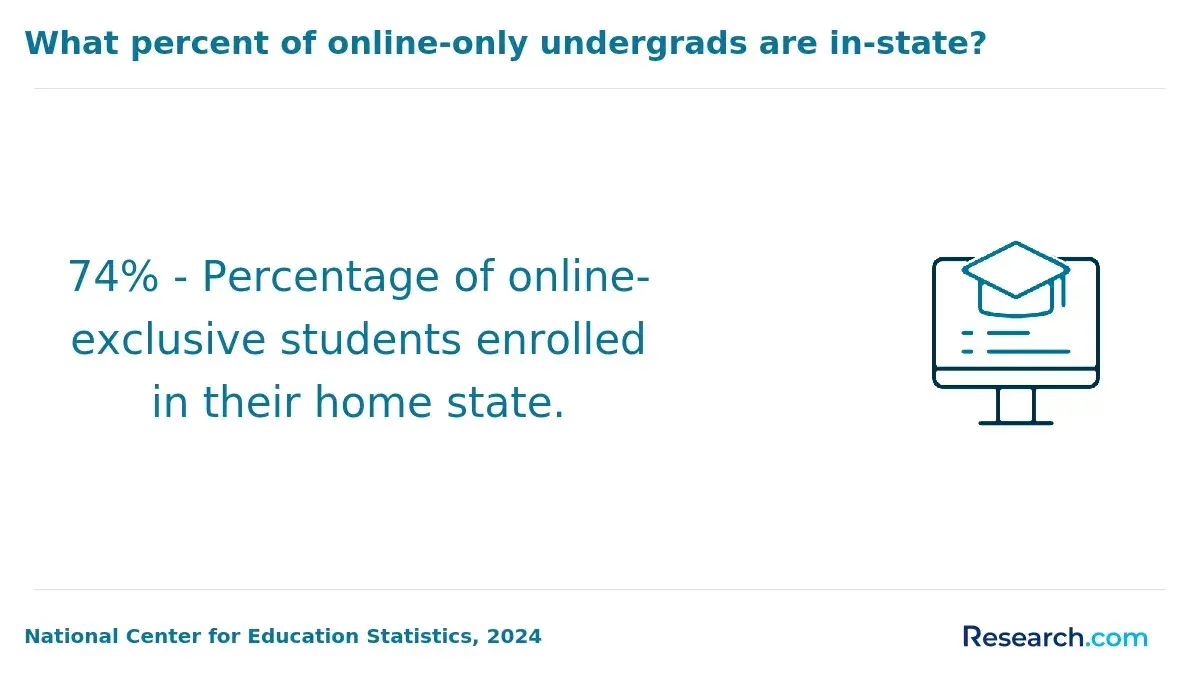
The best financial return usually comes from career paths where doctoral-level analysis, leadership credibility, and applied research have direct value. BLS employment projections published in 2024 showed particularly strong 2023-2033 growth for operations research analysts at 23% and logisticians at 19%, which reflects demand for data-driven optimization, resilient supply chains, and better planning systems.
The table below compares common career directions by how strongly a doctorate can contribute to financial return. It is most useful if you already know your target role and want to test whether the degree is necessary, helpful, or excessive.
| Career path | Doctorate ROI potential | Why the return may be strong or weak |
| Executive operations leadership | High for experienced leaders | The degree can strengthen credibility for enterprise strategy, but experience and measurable results still matter more than the credential alone |
| Operations and supply chain consulting | High for professionals with a client base or niche expertise | A doctorate can support premium positioning, research-backed frameworks, and thought leadership |
| Postsecondary teaching | Moderate to high depending on institution | A doctorate may be required for full-time faculty roles, but salaries and job availability vary widely by school type |
| Analytics, optimization, and process modeling | Moderate to high | The degree can help if the program builds quantitative, research, AI, and decision-science skills valued by employers |
| Middle management in operations | Low to moderate | A master's degree, certifications, or performance outcomes may be enough for promotion in many organizations |
| Early-career operations roles | Usually low | Doctoral study is often premature if you have not yet built management experience or a clear specialization |
The biggest red flag is pursuing the doctorate before identifying the job market you want to enter. If your target employers do not require, prefer, or financially reward a doctorate, the return may be weaker than a lower-cost credential or targeted leadership experience.
How Does an Online Operations Management Doctorate Affect Career Advancement?
An online operations management doctorate can affect advancement by helping professionals move from managing daily operations to shaping systems, strategy, and evidence-based decision-making. Typical doctoral-level work may include applied research, quality improvement models, supply chain resilience, operations analytics, organizational performance, forecasting, risk management, and process innovation.
The career value is strongest when the program builds capabilities that are hard to develop through routine management experience. These are the advancement signals employers and clients are most likely to value:
- Ability to diagnose complex operational problems using data, research methods, and systems thinking
- Credibility to lead enterprise-wide process improvement, digital transformation, supply chain redesign, or productivity initiatives
- Capacity to translate AI, automation, analytics, and forecasting tools into practical operating decisions
- Evidence of persistence and executive communication through a dissertation, capstone, or applied research project
- Preparation for teaching, academic leadership, corporate training, or research-informed consulting
AI and automation are changing the value of the credential. Routine reporting and scheduling tasks are easier to automate, but employers still need leaders who can evaluate trade-offs, redesign workflows, govern data quality, and manage change. A doctorate is more valuable when it teaches you to use advanced tools to improve decisions, not merely to describe operations theory.
The degree is less likely to accelerate advancement if you choose a program with weak research support, limited quantitative coursework, unclear accreditation, or no connection to your target industry. Prestige alone is not enough; the curriculum must match the problems you want to solve.
How Much Does an Online Operations Management Doctorate Cost Compared With Its Potential Benefits?
The cost of an online operations management doctorate varies by institution, credit requirements, transfer policy, residency requirements, and dissertation timeline. Published tuition is only the starting point. The more important number is total net cost after employer assistance, scholarships, transfer credits, and loan interest.
Debt cost is especially important for doctoral students. For the 2024-2025 award year, federal Direct Unsubsidized Loans for graduate students carried an 8.08% fixed interest rate, while Grad PLUS Loans carried a 9.08% fixed rate. That means a program funded mostly through loans can cost substantially more than its tuition price if repayment stretches over many years.
When comparing programs, include every cost category that can change the break-even point. For operations leaders in construction-related roles, comparing doctoral study with a lower-cost pathway such as a cheapest online construction management degree can also clarify whether the doctorate is the right next credential or an unnecessary leap.
- Tuition per credit and the total number of required credits
- Mandatory university, technology, library, graduation, and dissertation fees
- Residency, travel, lodging, and time-away-from-work expenses
- Books, software, data tools, and research materials
- Continuation fees if the dissertation or doctoral project takes longer than expected
- Loan origination fees, interest, and repayment timeline
- Employer tuition reimbursement rules, service commitments, and annual reimbursement limits
The table below shows how cost factors affect ROI. It can help you compare programs beyond the advertised tuition rate.
| Cost factor | Why it matters for ROI | What to ask the school |
| Credit requirement | More credits generally increase tuition and time in school | How many credits are required after my master's degree? |
| Residencies | Short in-person requirements can still add travel and missed-work costs | Are residencies required, optional, virtual, or embedded in tuition? |
| Dissertation support | Weak advising can extend enrollment and increase continuation fees | What is the typical time from proposal to completion? |
| Employer assistance | Reimbursement can materially reduce net cost | Will the program's accreditation and format qualify under my employer's policy? |
| Loan financing | Interest can reduce or delay ROI | What is my estimated debt at graduation under a realistic completion timeline? |
How Does the Time Required for an Online Operations Management Doctorate Affect Its ROI?
Time affects ROI because every extra term can add tuition, fees, interest, and personal strain. Many online professional doctorates are designed for working adults and commonly take several years, but the real timeline depends on transfer credits, course load, dissertation progress, faculty availability, and whether you can protect research time while employed.
The most important time-related question is not "How fast can I finish?" but "How soon can this credential start changing my career options?" A faster program may improve ROI if it is well-supported and accredited, but an unrealistic pace can raise the risk of burnout or non-completion. Professionals comparing shorter management pathways in adjacent fields may also look at an accelerated construction management degree when their goal is faster advancement rather than doctoral-level research.
Use this sequence to estimate the time effect on ROI before enrolling:
- Confirm the minimum and typical completion time, not just the advertised fastest timeline.
- Ask how many credits you can transfer from a relevant master's degree.
- Identify when dissertation or capstone planning begins and how often students meet with advisors.
- Estimate how many work hours you may need to reduce during heavy research periods.
- Calculate the cost of one extra term so you understand the financial risk of delays.
- Compare the timeline with the promotion, consulting, or faculty hiring cycle you are targeting.
A common mistake is ignoring opportunity cost because online students often keep working. Even if you do not leave your job, doctoral study can reduce overtime, consulting availability, family time, networking, or leadership bandwidth. Those trade-offs should be part of the ROI calculation.
Does an Online Operations Management Doctorate Have the Same Career Value as a Campus-Based Degree?
An online operations management doctorate can have similar career value to a campus-based doctorate when the institution is properly accredited, the curriculum is rigorous, faculty support is strong, and the degree title does not signal a lower-quality credential. Many employers care more about accreditation, relevance, applied skills, leadership record, and measurable accomplishments than whether courses met online or on campus.
However, format still matters. Online study may produce better financial value for working professionals because it can reduce relocation and lost-income costs. Campus programs may offer stronger face-to-face research communities, assistantships, and faculty networking, which can matter for academic careers.
The table below compares the two formats from an ROI perspective rather than a convenience perspective.
| Factor | Online doctorate | Campus-based doctorate |
| Ability to keep working | Usually stronger, especially for asynchronous programs | May be harder if classes, research, or assistantships require daytime presence |
| Relocation cost | Usually lower | Can be substantial if relocation is required |
| Networking | Depends on cohort model, residencies, faculty access, and alumni engagement | Often stronger for daily faculty interaction and academic community |
| Employer perception | Strong when accredited and tied to relevant professional outcomes | Strong when institution reputation and program fit align with career goals |
| Academic career preparation | Possible, but students should verify research expectations and teaching preparation | Often better suited for research-intensive academic pathways |
Red flags include vague accreditation language, limited faculty profiles, no clear dissertation process, pressure-heavy admissions calls, unusually short completion claims, and programs that cannot explain where graduates work. Online delivery is not the problem; weak academic structure is.
How Does an Online Operations Management Doctorate Compare With Other Career Advancement Options?
An online operations management doctorate is not the only way to advance. For many professionals, a master's degree, MBA, graduate certificate, Lean Six Sigma credential, PMP, analytics certificate, or employer-sponsored leadership program may produce a faster and less expensive return.
The most direct comparison is often a doctorate versus an MBA. If your goal is executive mobility, finance, strategy, and broad business leadership rather than research or faculty work, an MBA operations management online program may be a more efficient path. If your goal is research-backed consulting, doctoral-level credibility, or teaching, the doctorate may be more appropriate.
The table below summarizes when each option may offer the stronger return.
| Career advancement option | Best fit | When it may beat a doctorate for ROI |
| Online operations management doctorate | Senior leaders, consultants, aspiring faculty, and research-oriented professionals | When doctoral-level credibility is needed for the target role |
| MBA in operations management | Managers seeking broader executive, financial, and strategic business training | When promotion depends more on business leadership than research expertise |
| Specialized master's degree | Professionals needing deeper supply chain, analytics, industrial management, or project leadership skills | When technical depth is needed but a doctorate is not required |
| Graduate certificate | Professionals filling a specific skill gap | When a short credential can solve the career problem |
| Professional certifications | Managers in project, quality, supply chain, or process improvement roles | When employers value applied proof of skill more than another degree |
The doctorate makes the most sense when the credential is tied to a specific role requirement or market signal. It makes less sense when the problem is narrower, such as needing better budgeting skills, project management tools, analytics software training, or industry certification.
Which Professionals Are Most Likely to Benefit From an Online Operations Management Doctorate?
The professionals most likely to benefit are those who already have substantial operations, supply chain, manufacturing, logistics, healthcare operations, technology operations, construction operations, or consulting experience. For them, the doctorate can add research depth and credibility to a track record that already demonstrates leadership results.
The degree is usually a stronger fit for these groups:
- Directors, senior managers, and executives who want to lead larger operating systems or enterprise transformation
- Consultants who need deeper authority in process improvement, supply chain resilience, quality, productivity, or operational analytics
- Experienced professionals who want to teach operations, supply chain, project management, or business courses at the college level
- Managers working in data-intensive environments where optimization, forecasting, simulation, and AI-enabled decision support are central to advancement
- Professionals whose employer offers meaningful tuition assistance and recognizes the degree in promotion or compensation decisions
The doctorate may not be worth it for professionals who are early in their careers, unsure of their target role, primarily seeking an immediate pay raise, or already able to reach their next promotion through performance and a master's degree. It may also be a poor fit if the student would need to take on high debt without a realistic plan for higher earnings.
Admissions requirements vary, but online doctoral programs commonly expect a master's degree, professional experience, transcripts, recommendations, a statement of purpose, and sometimes a writing sample or interview. Strong applicants usually have a clear research or applied problem they want to study, not just a general desire to earn the highest credential.
How Can Students Determine Whether an Online Operations Management Doctorate Is Worth It?
The best way to decide whether an online operations management doctorate is worth it is to build a personal ROI case before applying. That case should connect the degree to a target role, a realistic salary range, a funding plan, and a completion timeline you can sustain.
Follow these steps to make the decision more concrete:
- Define the exact role you want after the doctorate, such as executive operations leader, consultant, faculty member, or analytics strategist.
- Review job postings for that role and note whether a doctorate is required, preferred, or rarely mentioned.
- Estimate your total net cost, including tuition, fees, residencies, research expenses, and loan interest.
- Estimate your realistic annual earnings increase using salaries for your target occupation, region, and industry.
- Calculate your break-even point by dividing net cost by expected annual earnings lift.
- Ask employers, mentors, alumni, and recruiters whether the doctorate would change your competitiveness.
- Compare the doctorate with lower-cost options, including certificates, an MBA, employer training, or an accelerated project management degree if your goal is faster project leadership advancement.
- Choose the lowest-cost accredited program that still offers the research support, faculty expertise, and career alignment you need.
Before enrolling, ask each school direct questions about completion rates, average time to finish, dissertation support, faculty availability, residency costs, alumni outcomes, transfer credits, and career services for doctoral students. If a program cannot answer these clearly, that uncertainty becomes part of your financial risk.
The most important mistake to avoid is treating the doctorate as an automatic upgrade. It is worth it when it solves a specific career problem that cheaper credentials cannot solve. It is less likely to be worth it when the goal is vague prestige, a guaranteed raise, or a promotion that your employer would grant based on experience alone.
Other Things You Should Know About Operations Management
Not exactly. Operations management focuses on designing, improving, and controlling the systems that produce goods or services. Supply chain management is closely related but focuses more specifically on sourcing, logistics, distribution, supplier relationships, and the movement of materials or information across organizations.
Most operations management roles do not require a state license. However, some industries may require specialized compliance knowledge, safety training, security clearance, healthcare administration credentials, or professional certifications depending on the employer and job duties.
Employers commonly value process improvement, data analysis, budgeting, forecasting, quality management, project leadership, communication, change management, and the ability to use technology to improve efficiency. Senior roles also require strategic judgment and cross-functional leadership.
Some operations roles can be remote or hybrid, especially in analytics, consulting, planning, technology operations, and supply chain coordination. Roles tied to manufacturing floors, warehouses, healthcare facilities, construction sites, or transportation networks often require regular on-site work.
References
- Earning an Online Doctorate in Supply Chain Management https://www.gograd.org/online-phd-programs/best-supply-chain-management-degrees/
- Online PhD Programs in Management: Scope and Best Career Options 2026 - GTR Blogs | Career Guidance Articles https://gtracademy.org/blog/online-phd-programs-in-management/
- Online Doctorate vs Traditional PhD: 7 Reasons to Choose Online in 2026 https://tmguni.com/top-7-reasons-to-choose-an-online-doctorate-over-a-traditional-on-campus-phd-in-2026/
- Enhancing Career Advancement with an Online PhD in Management https://dblp.ucnedu.org/blog/career-advance-with-online-phd-in-management/
- How Long Does It Take to Get a PhD After a Master's Degree? https://streamlinedai.app/blog/how-long-phd-after-masters
- Doctorate of Business Administration Salary: An Overview https://lsmt.org.uk/blog/doctorate-of-business-administration-salary-an-overview
- Online Degree ROI in 2026: Which Programs Actually Pay Off https://www.globalminds-education.com/blog/online-degree-roi-2026/
- Quantic School of Business and Technology https://quantic.edu/blog/2021/09/28/operations-management-career-path-best-mba-to-advance/
- Operations Management Careers & Salary Outlook | Highest Paying Jobs https://www.businessstudent.com/careers/operations-management-careers/
- How long should a PhD take today - Swiss School of Business Research https://ssbr-edu.ch/how-long-should-a-phd-take-today/