2027 Is an Online IT Management Doctorate Worth It? ROI, Salary Growth, and Career Impact

Co-Founder and Chief Data Scientist
Deciding whether to pursue an online IT management doctorate usually comes down to one question: will the degree improve your career enough to justify the cost and time? The stakes are real, the U.S. Bureau of Labor Statistics reports a May 2024 median wage of $171,200 for computer and information systems managers, with much faster-than-average projected growth.
This guide is for experienced IT, cybersecurity, data, and technology leaders who want a practical ROI framework for comparing salary growth, advancement, debt risk, and alternatives.
Key Things You Should Know
- An online IT management doctorate is most financially defensible when it helps an experienced professional move into executive technology leadership, consulting, applied research, or higher education; it is rarely the fastest path for entry-level IT workers.
- The May 2024 BLS median wage for computer and information systems managers was $171,200, but the degree itself does not guarantee that salary; ROI depends on role change, employer demand, location, industry, and prior experience.
- A realistic ROI calculation should include tuition, fees, technology costs, residencies, loan interest, time to completion, and opportunity cost, then compare those costs with a conservative estimate of post-degree salary growth.
What Is the ROI of an Online IT Management Doctorate?
The ROI of an online IT management doctorate is the financial and career return you receive after accounting for the full cost of earning the degree. In practical terms, ROI asks whether the doctorate helps you earn more, move into higher-level roles, build stronger professional credibility, or access work that would otherwise be difficult to obtain.
An IT management doctorate is usually designed for experienced professionals, not beginners. Depending on the school, the credential may be a Doctor of Information Technology, Doctor of Business Administration with an IT or information systems concentration, PhD in Information Systems, or a related applied doctorate. Coursework commonly covers technology strategy, enterprise architecture, cybersecurity governance, digital transformation, analytics, research methods, and executive decision-making.
ROI is strongest when the doctorate changes the type of work you can credibly pursue. For example, a senior IT manager who uses the degree to compete for CIO-track roles may see a different return than a systems administrator who earns the degree without first building management experience.
The table below shows the main ROI drivers and how each one affects the value of the degree. Use it to separate benefits that are likely to show up in earnings from benefits that are more about credibility or long-term positioning.
| ROI factor | Why it matters | What to verify before enrolling |
| Role change | The strongest financial return usually comes from moving into higher-responsibility leadership, consulting, or academic roles. | Ask whether graduates move into roles you actually want, not just whether they receive promotions. |
| Employer recognition | Some employers value doctoral-level credentials for executive, research, or teaching roles; others prioritize experience and certifications. | Review job postings and talk with hiring managers in your target field. |
| Total program cost | Tuition is only one part of cost; fees, residencies, books, technology, and financing can change the payback period. | Request a full cost-of-attendance estimate through completion. |
| Time to completion | A longer program can delay career benefits and increase opportunity cost. | Ask for typical completion time, dissertation or capstone timelines, and stop-out policies. |
| Existing experience | A doctorate usually adds more value when paired with substantial IT leadership experience. | Compare your current resume with requirements for target roles. |
A common mistake is treating the doctorate as an automatic salary multiplier. The better question is whether the degree solves a specific career bottleneck: limited executive credibility, a need for research expertise, a desire to teach, or a move into high-level technology consulting.
How Much Can Salaries Increase After an Online IT Management Doctorate?
Salary growth after an online IT management doctorate varies widely because the degree usually affects earnings indirectly. It may help you qualify for senior roles, strengthen your case for promotion, or support a pivot into consulting or academia, but employers still weigh experience, leadership record, technical depth, industry, and performance.
For context, the BLS reported a May 2024 median annual wage of $105,990 for computer and IT occupations overall, while computer and information systems managers had a median wage of $171,200. That gap shows why moving from technical execution into management can be financially significant, but it does not prove that a doctorate alone causes the increase.
The table below compares common salary contexts. It is most useful for understanding where a doctorate may align with higher-paying work, not for predicting an individual graduate's pay.
| Career context | Relevant BLS May 2024 salary benchmark | How a doctorate may affect earning potential |
| Computer and IT occupations overall | $105,990 median annual wage | May provide limited immediate salary lift unless it leads to a higher-level role. |
| Computer and information systems managers | $171,200 median annual wage | Can support advancement into strategic leadership when paired with management experience. |
| Information security analysts | $124,910 median annual wage | May help cybersecurity professionals move toward governance, risk, executive, or teaching roles. |
| Postsecondary teachers | $83,980 median annual wage across postsecondary teaching roles | Often relevant for teaching eligibility, but pay depends heavily on institution type, rank, discipline, and full-time status. |
Professionals should estimate salary growth conservatively. If you currently earn a strong salary in cloud architecture, cybersecurity engineering, or data leadership, the doctorate may not increase pay quickly. If it helps you cross into director, VP, CIO, governance, or specialized consulting work, the long-term return may be stronger.
One practical way to estimate salary impact is to compare actual job postings in your target market. Focus on postings that list doctoral education as preferred or valuable, then compare compensation ranges with roles you already qualify for today.
Which Career Paths Offer the Strongest Financial Return With an Online IT Management Doctorate?
The strongest financial return usually appears in roles where doctoral-level thinking supports high-stakes technology decisions. These roles often require the ability to connect systems, security, data, budgets, people, risk, and business strategy.
The table below summarizes career paths where an online IT management doctorate may have relatively strong, moderate, or limited ROI. The point is not that every role requires a doctorate, but that some roles are more likely to reward the credential than others.
| Career path | Typical responsibilities | Doctorate ROI potential | Why the return may be strong or weak |
| CIO, CTO, or senior IT executive | Set enterprise technology strategy, manage budgets, oversee teams, align IT with organizational goals. | Strong for experienced leaders | The degree can strengthen executive credibility, but leadership results and industry experience remain essential. |
| Cybersecurity governance or risk leader | Oversee security policy, compliance, risk management, incident readiness, and board-level reporting. | Moderate to strong | Doctoral work can support strategic governance roles, especially where research, policy, and executive communication matter. |
| Technology management consultant | Advise organizations on digital transformation, systems modernization, IT governance, and operating models. | Strong if paired with a client base | The credential may improve credibility, but consulting revenue depends on reputation, network, and business development. |
| Postsecondary faculty or academic administrator | Teach, conduct research, supervise students, lead academic programs, or manage curriculum. | Moderate | A doctorate is often expected, but pay and job availability vary by institution and appointment type. |
| Mid-level IT manager | Manage teams, projects, vendors, systems, and service delivery. | Limited to moderate | A master's degree, certifications, or experience may be enough for many roles. |
IT management doctorate ROI tends to be weaker when the target job is primarily hands-on technical work. For example, employers hiring for network engineering, software development, systems administration, or cloud operations may value certifications, portfolios, and direct technical experience more than a doctorate.
Current technology trends also matter. AI adoption, cloud migration, cybersecurity risk, data governance, and digital transformation have increased demand for leaders who can make complex technology decisions. A doctorate can help if it builds applied research, strategy, and organizational leadership skills rather than only adding academic theory.
How Does an Online IT Management Doctorate Affect Career Advancement?
An online IT management doctorate can affect career advancement by signaling advanced expertise, persistence, research ability, and strategic thinking. It may also help professionals become more competitive for executive, teaching, consulting, policy, or research-oriented roles.
In day-to-day work, doctoral-level IT management training may strengthen skills that are hard to develop through technical certifications alone. These skills often become more important as professionals move from implementation into decision-making.
Career advancement benefits are most likely when the program helps you build the following capabilities and apply them at work:
- Technology strategy: connecting IT investments to revenue, risk reduction, efficiency, compliance, or service quality.
- Governance and risk management: creating policies, controls, accountability structures, and technology oversight processes.
- Research and evidence-based decision-making: evaluating technology problems with data instead of relying only on vendor claims or intuition.
- Executive communication: translating technical issues into business language for boards, senior leaders, and nontechnical stakeholders.
- Organizational change leadership: managing resistance, adoption, training, and process redesign during major technology initiatives.
However, advancement is not automatic. A doctorate may not overcome weak leadership experience, poor communication skills, limited business understanding, or a lack of measurable achievements. Employers promoting technology leaders usually want evidence that the candidate can manage people, budgets, vendors, security risk, and organizational change.
A useful test is whether you can connect the doctorate to a promotion narrative. For example: "I led cloud modernization projects, managed multimillion-dollar technology budgets, and used my doctoral research to improve enterprise governance." That story is stronger than simply listing the degree as a credential.
How Much Does an Online IT Management Doctorate Cost Compared With Its Potential Benefits?
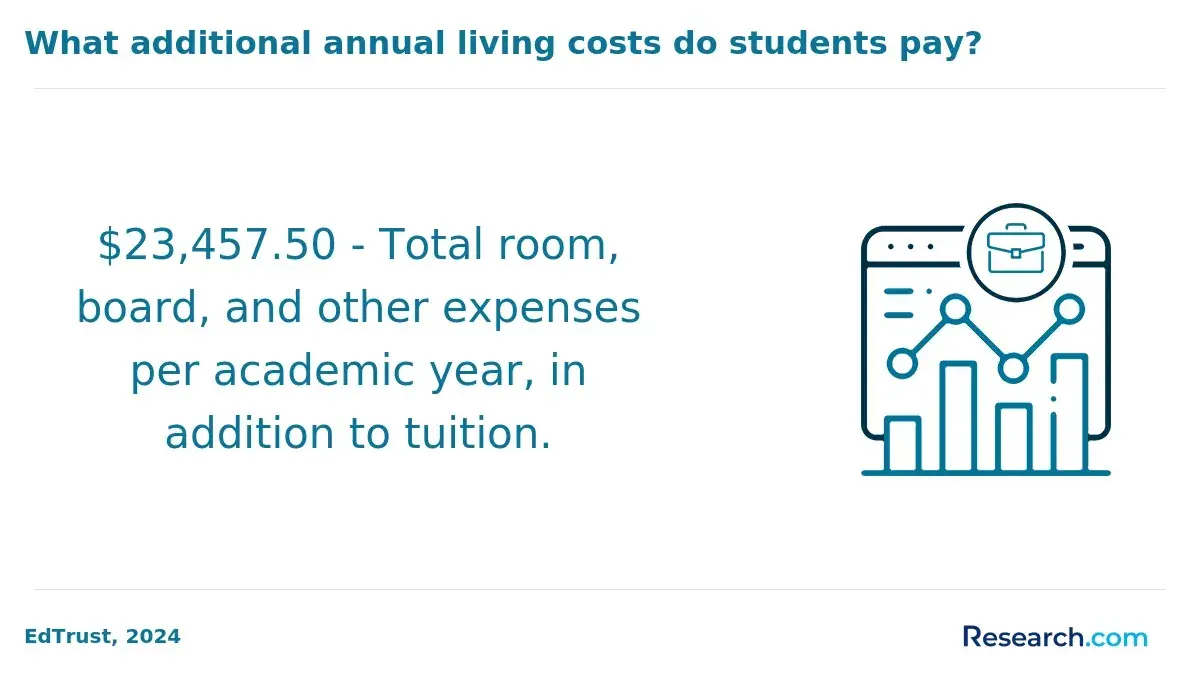
The cost of an online IT management doctorate depends on tuition structure, credit requirements, program length, fees, residency requirements, dissertation or capstone expenses, and financing. Because schools price doctoral programs differently, applicants should compare the full cost through graduation rather than the per-credit rate alone.
Graduate borrowing can also affect ROI. Federal Student Aid currently lists the Direct Unsubsidized Loan annual limit for graduate or professional students at $20,500, while Grad PLUS Loans may cover additional eligible cost of attendance after credit approval. That matters because interest and fees can turn a manageable tuition bill into a longer repayment obligation.
The table below shows the major cost categories to include in a realistic ROI estimate. It is designed to help you avoid undercounting expenses that are easy to miss during program research.
| Cost category | What to include | Why it affects ROI |
| Tuition | Per-credit or per-term charges multiplied by required credits or terms. | This is usually the largest direct cost and the baseline for comparison. |
| Mandatory fees | Technology, graduation, library, doctoral support, or student service fees. | Fees can materially increase the cost beyond advertised tuition. |
| Residencies or travel | Campus visits, lodging, transportation, meals, or conference-style requirements. | Some online programs still require in-person components. |
| Books and research costs | Texts, software, data tools, transcription, survey tools, or research materials. | Doctoral research may involve expenses not common in shorter programs. |
| Financing costs | Loan interest, origination fees, and repayment timeline. | Borrowing can extend the break-even period even when salary increases later. |
| Opportunity cost | Reduced overtime, consulting income, job mobility, or personal time while enrolled. | Time spent studying has economic value, especially for high-earning professionals. |
Cost comparisons should also include alternative degrees. Someone still building technical foundations may get a better near-term return from a cybersecurity degree online, specialized certification, or master's program before considering doctoral study.
A simple break-even formula can keep the decision grounded: divide total net cost by expected annual salary increase. For example, if your total net cost is $60,000 and the degree helps you earn $15,000 more per year, the simple payback period is four years before taxes, interest, and lifestyle changes. This is only a planning example, not a guaranteed outcome.
How Does the Time Required for an Online IT Management Doctorate Affect Its ROI?
Time is one of the biggest hidden factors in doctoral ROI. Many online IT management doctorates are designed for working adults, but part-time study can still affect evenings, weekends, family time, consulting opportunities, and career mobility.
Program length varies by credit requirements, research expectations, transfer policy, dissertation or capstone structure, and how quickly the student completes milestones. The most important question is not only "How long is the program?" but "How long do students like me usually take to finish?"
The table below explains how timeline differences affect ROI. Use it when comparing programs that appear similar on tuition but differ in structure.
| Timeline factor | Potential ROI effect | Question to ask the school |
| Coursework pace | Faster pacing can shorten time to benefits but may increase workload and burnout risk. | Can working professionals realistically complete the recommended course load? |
| Dissertation or capstone process | Delays during proposal, data collection, committee review, or revisions can extend cost and time. | What is the typical time from coursework completion to final approval? |
| Transfer or prior doctoral credits | Accepted credits may reduce tuition and shorten completion time. | How many credits can transfer, and how are they evaluated? |
| Residency requirements | Travel requirements can add cost and scheduling friction. | Are residencies required, optional, virtual, or embedded in courses? |
| Leave-of-absence policy | Life and work disruptions can affect completion and total cost. | What happens if I pause enrollment for a term? |
Time also affects motivation. A doctorate may be worth it for someone with a long runway in leadership, consulting, or teaching. It may be less attractive for someone who needs an immediate salary increase, expects to retire soon, or is already near the top of the compensation range for their target role.
Before enrolling, map the degree timeline against real career events: promotion cycles, relocation plans, family obligations, major work projects, and certification renewals. A lower-cost program is not automatically a better value if its structure makes completion unlikely.
Does an Online IT Management Doctorate Have the Same Career Value as a Campus-Based Degree?
An online IT management doctorate can have comparable career value to a campus-based degree when it is properly accredited, academically rigorous, transparent about outcomes, and aligned with the student's career goals. Employers increasingly evaluate online graduate credentials by institution quality, accreditation, relevance, and the candidate's experience rather than delivery format alone.
The online format can improve ROI because it may allow students to keep working full time, avoid relocation, and apply doctoral projects to real workplace problems. For experienced IT professionals, maintaining income during study can be one of the biggest financial advantages of online learning.
Campus programs may offer advantages in areas where in-person networking, research assistantships, faculty access, or academic hiring pipelines matter. This can be especially relevant for students targeting full-time tenure-track academic roles or highly research-intensive careers.
When comparing online and campus options, evaluate quality signals instead of assuming one format is better. Important signals include regional or institutional accreditation, faculty qualifications, dissertation or capstone support, student services, career outcomes, alumni roles, and employer reputation.
Red flags include unclear accreditation, vague graduation requirements, aggressive admissions pressure, no transparent faculty information, unusually short doctoral timelines, and unwillingness to provide written cost estimates. An online doctorate should be flexible, not academically shallow.
How Does an Online IT Management Doctorate Compare With Other Career Advancement Options?
An online IT management doctorate is only one path to career advancement. For some professionals, it is the right investment; for others, a master's degree, certificate, vendor certification, executive education program, or targeted technical degree may produce a faster and less expensive return.
The table below compares common advancement options. Use it to match the credential to the career outcome you want, rather than assuming the highest degree is always the best degree.
| Option | Best fit | Relative cost and time | When it may beat a doctorate |
| Online IT management doctorate | Experienced leaders seeking executive credibility, consulting authority, applied research roles, or teaching options. | Highest time commitment and often highest total cost. | Best when doctoral-level credibility is directly tied to the target role. |
| Master's in IT, MIS, cybersecurity, analytics, or MBA | Professionals seeking management advancement without doctoral research expectations. | Usually shorter than a doctorate. | Often better for director-level advancement where a doctorate is not valued by employers. |
| Graduate certificate | Professionals needing targeted knowledge in cybersecurity, cloud, data governance, AI, or project leadership. | Shorter and narrower. | Better when the skill gap is specific and urgent. |
| Vendor or industry certification | Professionals needing proof of hands-on technical or governance competence. | Typically lower cost and faster. | Better for roles where employers require specific platforms, frameworks, or security credentials. |
| Executive education | Senior professionals seeking leadership development, networking, or board-level strategy exposure. | Short and intensive. | Better when the main need is leadership polish rather than a degree credential. |
If your goal is to move quickly into software, analytics, or technical leadership, a cheapest online computer science degree pathway or a focused master's-level credential may be more practical than a doctorate, especially if you do not yet have a strong technical foundation.
The biggest mistake is choosing a doctorate because it feels like the most impressive option. The smartest option is the one that changes your employability, compensation, or credibility in the specific market where you plan to compete.
Which Professionals Are Most Likely to Benefit From an Online IT Management Doctorate?
An online IT management doctorate is most likely to benefit professionals who already have meaningful technology experience and want to move into roles that reward strategic judgment, research ability, and organizational leadership. It is usually not the best first graduate credential for someone still trying to enter IT.
The degree may be a strong fit for several types of professionals. These groups are more likely to turn doctoral study into measurable career value because their goals align with the credential's strengths:
- Senior IT managers who want to compete for director, VP, CIO, CTO, or enterprise technology strategy roles.
- Cybersecurity, data, cloud, or systems leaders who want to move from technical execution into governance, risk, policy, or transformation leadership.
- Consultants who need stronger authority for advising organizations on technology modernization, security governance, or digital strategy.
- Professionals who want to teach IT, information systems, cybersecurity management, or technology leadership at the college level.
- Military, government, healthcare, or regulated-industry technology leaders whose work involves compliance, security, data governance, and complex systems.
The degree may be a poor fit if you need fast entry into IT, lack management experience, are unsure which career outcome you want, or would need to borrow heavily without a clear salary path. In those cases, a more targeted credential may reduce risk.
Professionals in specialized sectors should also consider domain-specific alternatives. For example, someone leading clinical data systems or healthcare technology operations may find that a health information management degree online aligns better with healthcare compliance, informatics, and records governance than a broad IT management doctorate.
How Can Students Determine Whether an Online IT Management Doctorate Is Worth It?
The best way to decide whether an online IT management doctorate is worth it is to build a personal ROI model. That model should compare your current career trajectory with the most realistic post-degree path, using conservative assumptions and verified program costs.
Use the following process before applying. Each step reduces the risk of overpaying for a credential that does not match your goals:
- Define the exact role you want after the degree, such as CIO, cybersecurity governance leader, consultant, professor, or technology strategy executive.
- Collect job postings for that role and note whether a doctorate is required, preferred, optional, or not mentioned.
- Request a written total cost estimate from each school, including tuition, fees, residencies, books, and expected time to completion.
- Estimate your net cost after employer tuition assistance, scholarships, savings, and expected borrowing.
- Compare your current salary path with a conservative post-degree salary scenario based on target roles, not broad averages.
- Calculate a simple payback period by dividing net cost by expected annual earnings increase.
- Ask each program for completion data, dissertation or capstone support, alumni outcomes, faculty access, and career services for doctoral students.
- Compare the doctorate with lower-cost alternatives, including master's degrees, certifications, certificates, and executive education.
Be especially careful with programs that emphasize speed more than rigor, avoid transparent cost discussions, or imply that the degree will automatically lead to executive pay. Doctoral education can be valuable, but it should be evaluated like any major investment.
If your priority is faster completion and technical advancement rather than doctoral research, an accelerated computer science degree online may be a better fit. The right choice depends on whether you need deeper technical preparation, management development, academic credibility, or executive positioning.
A good final test is this: if the doctorate disappeared from your resume, would your experience still make you a competitive candidate for the role you want? If yes, the doctorate may enhance your profile. If no, you may need experience, leadership achievements, or technical credentials before doctoral study will produce a strong return.
Other Things You Should Know About IT Management
IT management focuses on leading technology teams, budgets, infrastructure, security, vendors, and strategy. Information systems is often broader and may emphasize how people, processes, data, and technology work together to support organizational goals.
Many programs do not require heavy programming, but students may need enough technical fluency to evaluate systems, data, cybersecurity, analytics, and enterprise architecture. Requirements vary, so applicants should review prerequisites and course descriptions carefully.
Many online programs are designed for working professionals, but the workload can still be demanding. Students should ask about weekly time expectations, synchronous sessions, residency requirements, research milestones, and flexibility during busy work periods.
Common requirements include a master's degree, resume, statement of purpose, transcripts, references, and sometimes writing samples or interviews. Some programs expect professional IT or management experience, especially for applied doctorates.
References
- Master vs. PhD: Salary, Jobs & Time, The Big Differences https://www.applykite.com/blog/phd-guide-master-vs-phd
- Career Switch ROI: Best Online Degrees in 2026 https://courseconnect.in/blogs/real-roi-career-switch-after-graduation
- Is a Doctorate in Business Administration Online Worth it? https://imetworldwide.com/blogs/is-a-doctorate-in-business-administration-worth-it/
- Is Grad School Worth It? A Comprehensive Return on Investment Analysis - FREOPP https://freopp.org/whitepapers/is-grad-school-worth-it-a-comprehensive-return-on-investment-analysis/
- ROI in IT projects: How to measure efficiency of an investment in IT systems https://programa.pl/en/2017/04/ROI_in_IT_projects_How_to_measure_efficiency_of_an_investment_in_IT_systems
- How Much Does a PhD Cost https://aituedu.org/how-much-does-a-phd-cost/
- Are Employers Choosing PhDs Over MBAs? https://shooliniuniversity.com/blog/are-employers-choosing-phds-over-mbas/
- 6 Benefits of a PhD for Working Professionals - The Thames International University https://thethamesuniversity.fr/6-benefits-of-a-phd-for-working-professionals/
- Earn Your PhD in Information Technology Online: A Comprehensive Guide https://higherednewshub.com/phd-in-information-technology-online/
- Doctorate Costs: What a PhD Really Costs https://studienfluesterer.com/en/blog/doctorate-costs/