2027 Is a More Expensive Data Science Master's Worth It for a Career Changer?

Co-Founder and Chief Data Scientist
A more expensive data science master's can be worth it for a career changer - but only if the additional cost buys preparation or opportunities that a cheaper path cannot provide. For someone leaving another field, the central challenge is not simply earning a credential; it is building technical evidence and finding an attainable first data role. This guide shows how to compare programs by total cost, skill gaps, projects, career support, and likely outcomes before committing.
Key Things You Should Know
- Pay a premium only for a meaningful advantage, such as prerequisite support, substantial projects, or career connections relevant to your target role, not for a recognizable name alone.
- Compare tuition with fees, financing, travel, and lost earnings; a higher salary after graduation would not, by itself, prove the degree caused an increase.
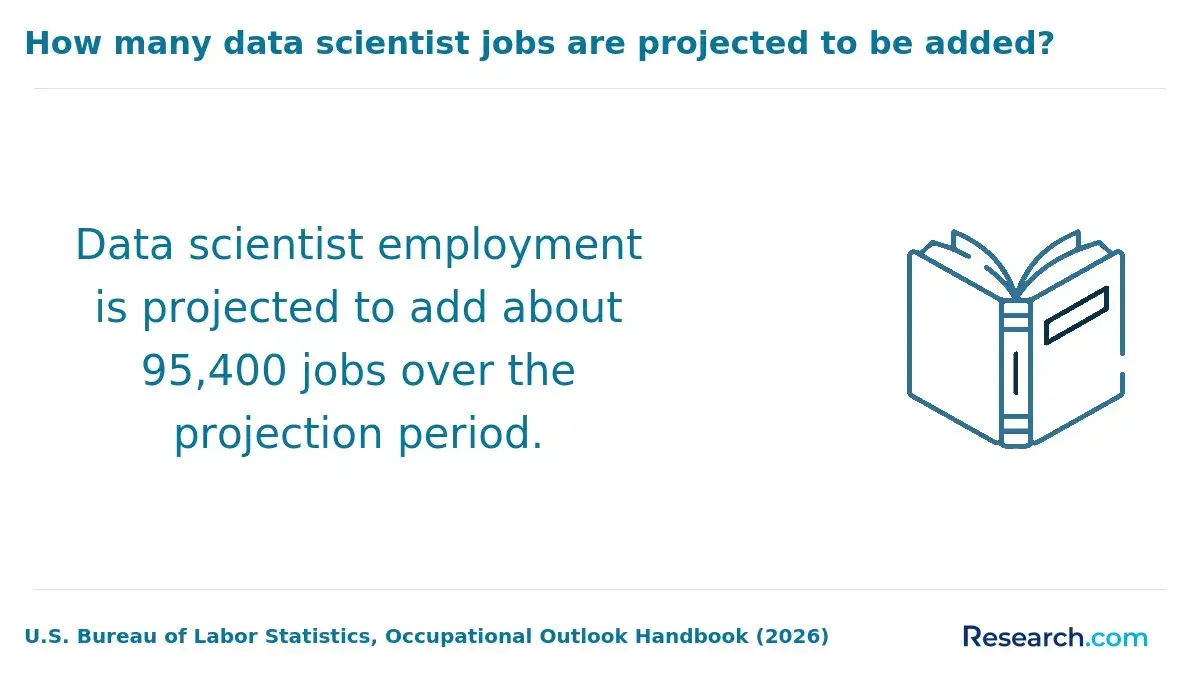
- The U.S. Bureau of Labor Statistics projects 35% growth in data scientist employment from 2025 to 2035, but that occupation-wide forecast does not predict a new graduate's chances of landing a job.
Is an Expensive Data Science Master's Worth It for Career Changers?
Sometimes - but the premium needs a specific purpose. A costly program is more defensible when it helps you cross a gap that would otherwise block your transition: rigorous statistics or programming instruction, accessible faculty support, an employer-connected project, or career services that work with students changing fields.
Ask each school for evidence of those features rather than assuming its price or reputation provides them.
Start with your current occupation and a realistic next role. A healthcare professional pursuing healthcare analytics, for example, may be able to pair existing domain knowledge with new SQL, statistical, and modeling skills.
An experienced analyst may need less introductory instruction and more advanced projects. In either case, an adjacent analyst role may be a more practical first move than applying exclusively for data scientist positions.
Choose the expensive option if its demonstrable advantages address your particular gaps and you can finance the full cost without depending on a speculative salary increase. Choose a lower-cost master's, targeted coursework, or an employer-supported transition if comparable projects and skills are available for less. The degree is one route to evidence of ability, not a prerequisite for every data job.
What Are the Benefits of a Data Science Master's for Career Changers?
A well-matched master's provides a structured way to develop technical skills while producing work employers can assess. For career changers, its most valuable benefit may be the combination of feedback, sustained practice, and projects that connect a previous industry to a new analytical role.
Access matters more than a long list of advertised services. Ask whether career advisers help students with no prior data-science title, whether projects involve external organizations, and whether alumni in your target industry are willing to speak with prospective students.
If you are comparing data science with AI-focused study, graduate AI programs with active alumni communities provide a useful comparison point - but verify how students actually use those connections.
How Much Does a Data Science Master's Degree Cost?
There is no reliable single price for a data science master's: schools charge and package costs differently. The comparison below separates expenses that can make a lower advertised tuition rate less affordable in practice:
| Cost component | What to compare |
| Tuition | Published charge for the credits required to graduate, including any different rates for residency or enrollment format |
| Mandatory fees | Technology, student-service, and other required charges across the expected enrollment period |
| Situational expenses | Materials, software, travel, campus visits, and equipment your circumstances may require |
| Financing and lost earnings | Potential borrowing costs and income forgone if study requires reduced work hours |
Request a written, program-specific estimate and subtract only scholarships or employer support you can reasonably expect to receive. Then compare the additional cost of the expensive program with its additional benefits, not with the salary of a data scientist.
If you are also considering an AI credential, compare affordable AI graduate degrees using the same total-cost approach rather than tuition alone.
Can Career Changers Get Into Data Science Master's Programs?
Yes, depending on the program and the applicant's preparation. A previous job title or non-computing bachelor's degree does not establish either eligibility or readiness.
Check each school's stated requirements for programming, calculus, linear algebra, and statistics, and distinguish a required prerequisite from knowledge the school merely recommends.
Before paying an application fee, compare your transcript and work samples with those requirements. Ask admissions whether recent coursework or professional experience can satisfy a prerequisite and how to document it; self-study may improve readiness without formally fulfilling a course requirement.
Applicants deciding between technical fields can also examine guidance on a master's in AI after a non-CS bachelor's, while checking the data science program's own policies directly.
What Do You Learn in a Data Science Master's Program?
Relevant programs typically combine programming, data management, statistics, and modeling with applied work. For a career changer, the deciding issue is depth: seeing machine learning on a course list is less useful than having to clean data, choose and evaluate a method, explain uncertainty, and communicate a result to a stakeholder.
Read course descriptions and recent project examples against your target job postings. Someone moving from operations into analytics may benefit most from SQL, experimentation, and decision-focused projects; someone pursuing model-development roles may need more substantial mathematics, software, and model-evaluation work.
Check whether a capstone or comparable project lets you demonstrate those skills without assuming every program offers an industry placement.
Is an Online or Campus Data Science Master's Better?
Neither format is automatically the better investment. Online study may make it easier to keep earning while you transition; campus study may make in-person collaboration and local networking easier. Compare the actual schedule, access to instructors, group-project demands, and career services - not just the delivery label.
Ask whether online classes require live attendance, whether campus visits are mandatory, and whether remote students can use the same project and recruiting resources. If your intended work centers more on AI systems than broader data analysis, you can also find an online AI degree program to compare curriculum fit before deciding on a format.
How Long Does a Data Science Master's Take to Complete?
Completion time depends on required credits, prerequisites, course availability, and whether you study full time or part time. A shorter path is not necessarily cheaper if it forces you to leave work; a longer path may add fees or delay your transition.
Request a course-by-course plan for the schedule you can actually sustain. Confirm when prerequisite and capstone courses run, whether there is a maximum completion period, and what happens if you need a break. Use that plan when estimating both total cost and the date you could begin applying with completed projects.
What Jobs Can You Get With a Data Science Master's Degree?
Possible targets include data analyst, business intelligence analyst, analytics-focused roles in your existing industry, and data scientist. Which is realistic first depends on your prior work, technical evidence, and the employer's requirements.
A career changer's industry experience may be especially valuable in a role where interpreting the business problem matters alongside writing code.
Work backward from job postings: identify recurring tools and responsibilities, then check whether a program gives you a project that demonstrates them. Resources on online data science study for sought-after data roles can help frame that comparison. Avoid treating projected demand across an occupation as a promise of entry-level openings in your preferred location.
How Much Can Data Science Master's Graduates Earn?
The U.S. Bureau of Labor Statistics reports a $120,230 median annual wage for data scientists in May 2025. That is a wage for workers in the occupation, not a starting salary for master's graduates. It includes people with different education, experience, employers, and locations, so it should not be used as your expected post-degree pay.
For a personal return-on-investment estimate, compare plausible compensation in your current job and attainable next roles, then account for full program cost and any earnings you give up while studying.
If a school publishes graduate salaries, ask who responded, how many already worked in data roles, when outcomes were measured, and whether it reports salary increases rather than salary levels alone. An attractive outcome is not proof that the degree caused it.
How Do You Choose an Accredited Data Science Master's Program?
First verify the institution's accreditation through its official accreditation information and the accreditor's current directory. Accreditation is an essential check, but it does not establish that a particular curriculum, project experience, or price suits your transition.
Use a short final comparison before paying a deposit. The questions below test whether the premium addresses a need you can identify:
- Which specific skill gap does this program close better than the less expensive alternative, and where is that instruction visible in the required courses?
- Can I review recent projects and speak with a career changer who completed the program?
- What will I pay through graduation under my likely pace, including required fees and any campus travel?
- What outcome information is available for students with backgrounds and target roles similar to mine?
Be wary of a program that promotes salary figures without explaining whom they represent, or that cannot clarify required costs and scheduling. If the answers do not reveal a material advantage, the lower-cost route is usually the more defensible starting point.
Other Things You Should Know About Data Science
Only with appropriate permission and safeguards. Check your employer's confidentiality rules and the school's project policies; public or synthetic data may be a safer way to show your methods.
No. Employers may still assess coding, statistics, problem-solving, and communication. Practice explaining the decisions and limitations in your projects, not just listing the methods used.
No. A smaller selection that clearly states the problem, your contribution, methods, and results is more useful than a collection of unfinished work. Share code or data only when you have the right to do so.
Possibly. Transfer-credit limits, eligible courses, and approval procedures vary by program. Get a written evaluation before assuming previous coursework will reduce your time or cost.
References
- Industry Outlook | Master of Science in Data Science | University of Miami https://msdatascience.as.miami.edu/about/industry-outlook/index.html
- Is a Master's in Data Science Worth It? Explore the Facts. | Bellevue University https://www.bellevue.edu/articles/is-a-masters-in-data-science-worth-it/
- What is a Good Master's in Data Science Salary? | Elmhurst University https://www.elmhurst.edu/blog/masters-in-data-science-salary/
- Cost of Attendance | UCLA MASDS https://master.stat.ucla.edu/cost-of-attendance.html
- Data Science Bootcamp vs Master's Degree | University of San Diego Online Degrees https://onlinedegrees.sandiego.edu/data-science-bootcamp-vs-masters-degree/
- Data Science Salary 2026: Trends, ROI & Career Guide | Syracuse University https://ischool.syracuse.edu/data-science-salary/
- Alumni Perspective: Do I Need a Master's Degree for Data Science? - School of Data Science https://datascience.virginia.edu/news/alumni-perspective-do-i-need-masters-degree-data-science
- Cost of Attendance | Cal State LA https://www.calstatela.edu/financialaid/cost-attendance
- What Early-Career Earnings and Unemployment Rates Tell Us About the Returns on Bachelor's Degree Majors - CEW Georgetown https://cew.georgetown.edu/resource/cew-blog-major-payoff/
- Cost of Attendance - USC Financial Aid https://financialaid.usc.edu/graduate-professional-financial-aid/cost-of-attendance/