2027 Is a Global Studies Degree Better Than Experience Alone? Salary, Hiring, and Career Growth Compared

Co-Founder and Chief Data Scientist
Entering the global studies industry without a degree poses significant challenges, as most employers require formal education for qualified candidate pools. Salary comparisons reveal that degree holders typically earn 25% more than those relying solely on experience or self-teaching, according to a 2025 workforce report. Moreover, employment rates favor graduates with a global studies degree, with 78% securing roles within a year-compared to 54% for non-degree professionals. Career growth also appears faster with formal credentials, offering clearer pathways to leadership positions.
This article examines these factors in depth to guide readers on whether a global studies degree outweighs experience for long-term success.
Key Points About Having Global Studies Degrees vs Experience Alone
- Global studies degree holders typically access higher starting salaries, with a 15% premium over experienced non-degree workers reported in 2025 industry salary surveys.
- Employers prefer degree credentials for complex roles, increasing hiring chances for global studies graduates over self-taught candidates in competitive markets.
- Degree holders show faster promotion rates to managerial and leadership roles, benefiting from specialized training and networking opportunities unavailable through experience alone.
What technical proficiencies can you gain from having Global Studies degrees vs self-teaching?
Professionals can acquire foundational principles and practical applications both through global studies degrees and on-the-job experience, but the depth and structured approach in degree programs often provide a more comprehensive skill set. Below are five key technical proficiencies illustrating the advantages of formal education versus self-taught knowledge or work experience alone.
- Advanced geopolitical analysis: Degree programs offer systematic training in understanding complex international relations and geopolitical dynamics, while experience alone may only provide fragmented insights without the theoretical frameworks needed for deeper analysis.
- Quantitative data interpretation: Formal studies integrate statistical tools with international political and economic theory, enabling graduates to interpret data rigorously. Self-taught professionals might lack exposure to diverse analytical models and their applications.
- Geographic information systems (GIS): Academic programs provide hands-on instruction with GIS software alongside spatial theory, whereas learning GIS solely through work may limit understanding of its broader methodological and technical contexts.
- Cross-cultural research methodologies: Guided academic settings teach ethical considerations and diverse research designs essential for credible results, which can be difficult to master through self-teaching or isolated job tasks.
- International policy evaluation: Access to expert feedback and updated case studies in degree programs enhances the ability to critically assess policies, a benefit often missing when gaining experience only through professional roles.
The technical skills developed through global studies programs exceed what many can acquire solely by practical experience. A 2025 survey by the International Education Association found that 68% of employers prefer candidates with formal global studies education for roles requiring advanced technical proficiency. This reflects the value of a verified and comprehensive skill set in navigating complex global challenges.
While it is possible to learn certain skills independently, the advantages of formal global studies education versus self-taught skills lie in the integration of theory with applied learning, which supports career growth and employability. Students interested in pursuing cost-effective options might consider exploring the cheapest online masters in artificial intelligence, as interdisciplinary approaches become increasingly valuable.
Are there certifications or licenses that only Global Studies degree holders can obtain?
Continuing education and additional professional credentials can greatly enhance career prospects, especially as more employers adopt skills-based hiring practices. Various certifications and licenses require a formal degree, particularly in fields tied to global operations and international relations. Here are some key credentials exclusive to global studies graduates:
- Certified International Trade Professional (CITP): This credential is designed for professionals involved in global commerce and trade compliance. Candidates typically must hold a bachelor's degree in global studies or a related field, along with relevant work experience and passing a rigorous exam. Obtaining the CITP often leads to better job opportunities in multinational corporations and government trade agencies.
- Diplomacy and Negotiation Certificate: Offered through certain graduate programs, this certificate requires completing advanced coursework and negotiation simulations. It is highly respected in international relations and governmental sectors, helping candidates qualify for roles in diplomacy, conflict resolution, and policy advising. Holding this certificate typically necessitates a specialized degree background.
- Global Risk Management Professional (GRMP): This certification demands demonstrated expertise in risk analysis, often requiring a combination of a global studies degree and professional experience. It significantly boosts credibility for careers in security analysis, international development, and humanitarian work.
- Certified Cultural Intelligence Professional (CCIP): Focused on language and cultural competency, the CCIP requires formal education in global studies topics and passing assessments. This license is valuable for international NGOs and global consultancy roles requiring cross-cultural communication skills.
These certifications and professional licenses that are available only with a global studies degree provide measurable benefits in competitive sectors. According to an International Career Institute survey, 68% of employers in global fields prefer candidates with formal degrees and certifications over those with experience alone.
For students considering whether to invest time in degree programs or rely on experience and self-teaching, exploring specialized credentials linked to a global studies degree is essential. Pursuing such credentials can accelerate salary growth and hiring prospects. Additionally, those interested in expanding their education options might consider complementary programs such as an accelerated psychology degree online to broaden their skill set further.
Will a degree in Global Studies make you more employable?
Job prospects for individuals with a global studies degree generally surpass those relying solely on on-the-job experience. Employers in sectors like NGOs, government, and multinational firms often require a formal degree, valuing its emphasis on interdisciplinary knowledge, cultural insight, and analytical skills. Data indicates graduates with this degree tend to receive more interview opportunities and are viewed as better prepared for roles involving complex international issues compared to those with only practical experience.
Several factors influence this advantage. While work experience, internships, and language skills remain important, they are often considered supplementary to formal education. A global studies degree signals comprehensive training in global affairs that is tough to match through self-teaching alone. However, for many positions, a combination of degree credentials and relevant experience offers the strongest foundation. Ultimately, career ambitions and the specific demands of target roles determine whether investing in a degree is essential.
When discussing employability, I asked a professional who graduated from an online global studies bachelor's program about his experience. He recalled feeling uncertain navigating the competitive job market without a traditional campus network, but found that the degree helped open doors that experience alone hadn't. "The course work challenged me to think critically and speak confidently about international policies," he said. He acknowledged that internships were crucial but emphasized, "Having the degree gave me credibility during interviews that my work history couldn't provide by itself." He described moments of doubt but felt that formal education ultimately strengthened his career path.
Certain careers related to global studies require candidates to have a formal degree, while others prioritize specific skills and job-readiness gained through experience. Understanding these distinctions helps clarify which paths benefit most from academic credentials. Below are key roles commonly pursued by degree holders and the importance of formal education for each.
- International Development Specialists: These professionals collaborate with governments, NGOs, and multilateral organizations to launch projects focused on poverty reduction, health improvement, and sustainable growth. A global studies degree is often essential due to the need for in-depth knowledge of cultural and economic diversity that can't be fully acquired through experience alone.
- Foreign Service Officers: Serving in diplomatic missions abroad, foreign service officers handle trade negotiations, conflict resolution, and bilateral relations. Candidates with formal degrees possess stronger skills in international law, political economy, and intercultural communication, making them more competitive in this sector despite some openings for experienced non-degree candidates through exams.
- Global Policy Analysts: These analysts work in think tanks, government agencies, and international organizations to research and recommend policies on security, trade, and migration. The analytical rigor and comprehensive understanding provided by a global studies education give graduates an edge, especially in entry-level roles where self-taught professionals may face challenges.
- Humanitarian Aid Workers: Active in crisis zones, humanitarian workers coordinate relief efforts and deliver essential assistance. While field experience counts heavily, organizations favor candidates with academic training to grasp the complex political and cultural factors at play in affected areas, making degrees valuable for career advancement.
A 2025 study by the Global Education and Employment Institute found that 68% of employers in international development and diplomacy prefer formal global studies degrees over experience alone. This preference stems from the greater preparedness of degree holders to meet the complex demands of these careers. For students balancing educational goals with practical skills, pursuing office administration classes alongside a degree can also enhance career readiness and open complementary opportunities.
A global studies degree provides structured networking advantages that often exceed those available to individuals relying solely on work experience or independent learning. Degree programs connect students with peers, faculty, and alumni engaged in international sectors, creating pathways to internships, conferences, and mentorships that strengthen professional ties. In contrast, those without formal education frequently depend on broader social networks or workplace relationships, which may lack specialized connections required in global affairs.
Networking resources for degree holders typically include access to university career fairs targeting NGOs and international organizations, student organizations like Model United Nations, and faculty-led research collaborations. Alumni groups and online platforms dedicated to global studies further enhance opportunities. Professionals without a degree usually rely on immediate contacts or company networks, which can be narrower and less tailored to global issues.
The global studies field values credible connections and verified credentials, making these networks essential for career advancement. While self-taught and experienced professionals can develop contacts over time, the formal networks associated with a global studies degree often accelerate entry into competitive roles by providing trusted referrals and industry partnerships that are less accessible otherwise.
A degree in global studies can increase a professional's eligibility for leadership and promotion in industries focused on international relations. Below are key reasons why having such a degree may offer an advantage compared to relying solely on experience.
- Demonstrated expertise: Holding a global studies degree shows employers a validated knowledge base in cultural dynamics, policy analysis, and international affairs, which often serves as a prerequisite for managerial roles in diplomacy, business, and development sectors.
- Access to leadership programs: Degree holders are frequently eligible for specialized training in negotiation, strategic planning, and intercultural communication that are designed to groom future leaders, providing skills that are harder to acquire through experience alone.
- Perceived commitment: Many hiring managers view formal education as evidence of dedication and the capacity to address complex global issues, making degree holders more competitive candidates for promotions than those with experience but no credential.
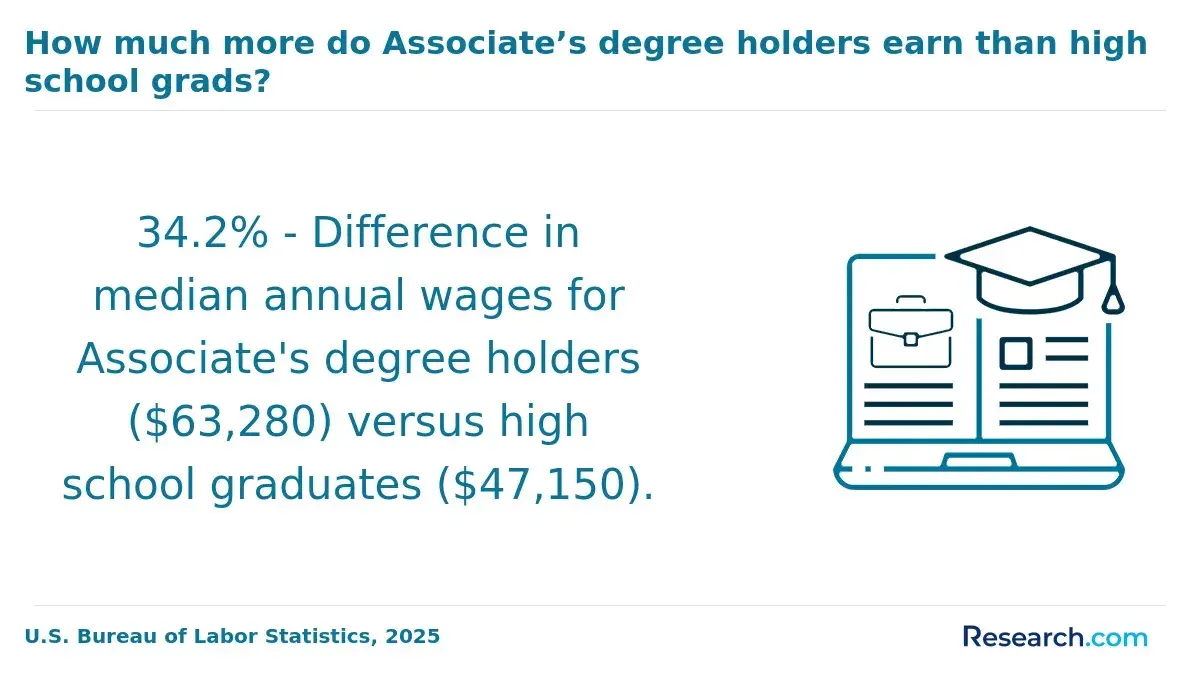
Professionals holding a global studies degree tend to earn higher starting salaries than those relying solely on experience. Entry-level global studies degree holders average approximately $48,000 annually, compared to about $41,500 for individuals without formal education but similar work experience. Over time, this wage gap widens, with mid-career global studies graduates earning over $80,000 while non-degree counterparts often plateau near $68,000. This indicates that a global studies degree can significantly impact income outlook in the United States, especially in sectors like international development and policy analysis where credentials open doors to leadership roles and higher pay.
However, non-degree professionals can still enhance their income potential by acquiring targeted skills and qualifications. Improving income growth without a degree might be challenging but not impossible. For those seeking to boost their career salary growth within global studies fields, continuous learning is crucial.
For those considering their educational path, reviewing options such as the best associate degrees can be a strategic starting point to enhance skills and income opportunities in global studies careers.
The average tuition cost for a global studies degree ranges from $30,000 to $60,000, varying based on the institution's prestige and location. Despite this significant investment, graduates typically see a return on investment (ROI) within 7 to 10 years through increased earning potential. Data shows that entry-level salaries for global studies graduates are about 15% higher than those relying solely on work experience or self-teaching in related fields.
Financial aid and scholarships specifically aimed at global studies students can substantially reduce upfront costs. Additionally, enrolling in accelerated programs and securing internships or part-time work during studies help minimize debt and provide valuable experience. Networking with alumni and global organizations also plays a key role in accessing higher-paying, growth-oriented job opportunities early in a career.
While practical experience is beneficial, combining it with a global studies degree tends to enhance long-term career growth and salary prospects. Thoughtful strategies to maximize ROI ensure that the cost of tuition is outweighed by future earnings and professional advancement.
The job market for global studies professionals is evolving as industries increasingly adopt AI and automation. While routine tasks are more vulnerable to being automated, roles requiring a deep understanding of international relations, cultural nuances, and policy frameworks remain essential. These areas demonstrate less susceptibility to automation because they involve complex decision-making and human judgment. Economic fluctuations can still affect job stability, especially in entry-level or repetitive positions, but global studies graduates often benefit from broader skill sets that allow them to adapt to changing geopolitical landscapes and shifting global economic conditions.
Research shows that holding a global studies degree reduces the risk of job displacement compared to relying solely on experience or self-learning. Degree programs typically cultivate interdisciplinary abilities such as critical thinking and cross-cultural communication, which are difficult to automate. In volatile markets, graduates are generally more resilient to layoffs than those without formal education, as their training offers better preparation for diverse and evolving employer needs. Conversely, self-taught workers might find it harder to remain current with industry developments and maintain job security in uncertain times.
Talking to a professional who graduated from an online global studies bachelor's program helps illustrate these points. He shared that after completing his degree, he felt more confident navigating market shifts and new technology integration in his field. "There were moments during economic slowdowns when many colleagues without degrees faced layoffs," he recalled. "Having the degree gave me not only knowledge but also access to networks and internships that helped me stay employed. It's not just what you know but how you can apply it strategically." The experience left him convinced that a formal education provided a significant advantage in weathering automation and economic challenges.
What Graduates Say About Their Global Studies Degrees
- Tony: "Graduating with a degree in global studies truly set me apart in a competitive job market. The interdisciplinary approach helped me develop critical thinking and cultural awareness, which employers highly value. It not only made me job-ready but also opened doors for international opportunities I hadn't considered before."
- Denver: "Reflecting on my career, I realize how pivotal my global studies degree was in building a foundation for advancement. The exposure to diverse political and economic systems gave me insights that proved invaluable during my promotions. It's encouraging to see how studying global issues can translate directly into a better salary outlook and professional growth."
- Kai: "My global studies education equipped me with unique skills in analysis and communication that have been essential throughout my career. It gave me an advantage by fostering adaptability and a broad worldview, which employers in the international sector respect deeply. This degree definitely helped in staying competitive and advancing swiftly in my field."
Other Things You Should Know About Global Studies Degrees
Many global studies programs require 2–4 semesters of a foreign language and may add a study-abroad term lasting one semester. Some universities also require an international internship or capstone project. These requirements are set by the department and often tied to 30–45 major credits.
A global studies degree is often seen by employers as an indicator of long-term dedication and the ability to complete rigorous academic programs. Experience alone can show commitment in a practical setting, but the discipline required to earn a degree might positively influence perceptions during hiring, especially in competitive fields.
Global studies programs typically include coursework specifically aimed at developing cultural sensitivity and awareness, which can be structured and comprehensive. Professionals relying solely on experience may acquire cultural competency more incidentally, depending on the diversity and scope of their real-world interactions.
- Networking While Studying Abroad: Building Global Connections - https://www.ffsd.ng/2025/11/28/networking-while-studying-abroad-building-global-connections/
- 9.4: What Can You Do with a Global Studies Degree? https://socialsci.libretexts.org/Workbench/International_1/09%3A_Fast_Forward_-_Futures_Thinking_and_Globalization/9.04%3A_What_Can_You_Do_with_a_Global_Studies_Degree
- Admission & Selection Criteria | European Master in Global Studies https://globalstudies-masters.eu/admission/application/admission-and-selection-criteria/
- School VS Self-Taught Programmer Part 1: Knowledge https://giannisakritidis.com/blog/School-Vs-Self-Taught-Part1/
- What Can You Do with an International Studies Degree [2022] https://potomac.edu/benefits-majoring-international-studies/
- EFFECT - Translation from English into Polish https://en.pons.com/translate/english-polish/effect
- Beyond your transcripts: why global experience matters as much as your degree https://thepienews.com/beyond-your-transcripts-why-global-experience-matters-as-much-as-your-degree/
- The value of advanced education in a competitive job market - Keele University - Study online https://online.keele.ac.uk/the-value-of-advanced-education-in-a-competitive-job-market/
- International graduate employability: whose job is it anyway? https://www.eaie.org/resource/international-graduate-employability.html
- Degree vs Self Taught vs Boot Camp https://dev.to/snickdx/degree-vs-self-taught-vs-boot-camp-3bo7