
2027 Is a BS in Business Administration Useful for Running A Travel Service Business? Degree Fit and Opportunity Cost
Audited and Verified:
Our Editorial and Data Verification Process
Research.com uses government datasets, official education statistics and primary institutional information to support its career and degree guides. Our review process checks factual accuracy, occupational definitions, source dates and the requirements associated with the credentials discussed.
How This Article Was Fact-Checked
Our editorial team verifies salary estimates, employment projections, education requirements and program information against original data providers and official organizations. Salary figures are checked against the relevant occupational definitions and reporting periods. Information about licensure, accreditation and required in-person training is reviewed separately.
Fact-checked and verified on:

Co-Founder and Chief Data Scientist
Running a travel service business takes more than knowing destinations. Owners must price services, manage cash flow, work with suppliers, protect customer information, and resolve disruptions. A BS in Business Administration can strengthen those skills, but completing one may delay a launch or divert money from building the business. This guide is for aspiring owners and travel professionals deciding whether a degree is worth that trade-off. It explains what the degree teaches, what it does not replace, and how to compare it with industry experience and targeted training.
Key Things You Should Know
- A BS in Business Administration is useful for budgeting, marketing, operations, and growth decisions, but it is not a prerequisite for owning a travel service business.
- Check seller-of-travel and other applicable rules before operating; a degree does not replace required registrations, supplier agreements, or industry credentials.
- Compare the degree's remaining cost and study time with the value of launching sooner. The Bureau of Labor Statistics reports a $61,160 May 2025 median wage for meeting and event planners, but that occupation-wide figure is not a forecast of travel-business owner income.
Is a BS in Business Administration useful for running a travel service business?
Yes - particularly if you need a broad foundation for making financial and operating decisions. A BS in Business Administration typically combines accounting, finance, marketing, management, and quantitative coursework. Those subjects can help an owner evaluate whether commissions cover overhead, which customers are profitable to serve, and when hiring makes sense. A degree does not, however, teach every reservation system or establish supplier relationships for you.
The best route depends on the business you intend to run. The comparison below separates general business preparation from the travel-specific experience needed to put it to work.
| Path | Strongest fit | Main limitation |
| BS in Business Administration | Owners who want broad financial, marketing, and management preparation, especially with a substantial number of credits already completed | Requires significant time and expense; travel operations still need to be learned |
| Travel-industry work plus targeted training | People ready to test a service, learn booking workflows, and build supplier knowledge | May leave gaps in financial analysis and business management |
| Hospitality or tourism degree | Students seeking deeper exposure to guest services or tourism operations | Curricula vary; it may offer less general business depth |
If your venture centers on complex vendor sourcing rather than retail trip planning, a specialized operations pathway may deserve comparison. For instance, compare supply chain degrees by cost and length before assuming general business is the best fit. For most prospective agency owners, though, travel-industry experience is the more immediate complement to business coursework.
What education and licensing does a travel service business owner need?
There is no universal US requirement to hold a business bachelor's degree to open a travel agency or offer travel-planning services. The legal requirements depend on where the business operates, where it sells, what it sells, and whether it books through a host agency or under its own supplier relationships. Some states regulate sellers of travel through registration or related consumer-protection rules. Ordinary business formation, tax, and local licensing obligations may also apply.
Before taking payments, identify the business model and ask the relevant state regulators which rules apply to sales into their states. Confirm whether your host agency's arrangements cover your activities or whether you must register separately. Review contracts for payment handling, cancellations, insurance, customer disclosures, and responsibility when a supplier fails to deliver. Airline ticketing accreditation or cruise-industry credentials may matter for particular services, but neither is a general substitute for checking legal obligations.
If formal education is mainly a way to build leadership skills, shorter online bachelor's pathways in organizational leadership offer another comparison. They do not, by themselves, satisfy travel-industry requirements either.
What business administration skills help travel service entrepreneurs succeed?
Financial judgment is essential because a sale is not the same as available cash. Owners need to track commissions or planning fees, payment timing, refunds, recurring software costs, and the margin left after servicing a booking. Accounting and finance courses can help them build a cash-flow forecast, then revise it as actual results arrive.
Marketing and customer experience help an agency define a viable niche, explain its fees, and understand why customers return. Operations and management skills become more important when the owner coordinates multiple suppliers, documents disruption procedures, or supervises staff. None of these capabilities comes from coursework alone: a useful test is whether you can apply them to a realistic service budget and booking workflow.
Travel planning also involves deadlines and handoffs. Economical project management education online may be worth considering if coordinating complex group trips is the main skill gap. A focused course or supervised project may be more proportionate than another full degree.
Look beyond the degree title to the required courses and available projects. Managerial accounting can support service-level costing; marketing can inform customer research and acquisition; business law can introduce contracts and consumer obligations; and operations can help map bookings, changes, and complaints. Statistics or analytics can help an owner interpret inquiry-to-booking rates without mistaking a small sample for a reliable trend.
Entrepreneurship electives are most useful when students can test assumptions in a business plan rather than simply describe an appealing destination niche. Ask whether the program offers relevant electives, whether they are regularly available, and whether an approved capstone could examine a travel-service idea using public or properly authorized data. A course project is not evidence that a proposed agency will be profitable.
For a business built around negotiating and coordinating many suppliers, supply chain bachelor's options focused on completion speed provide a useful curriculum comparison. Check actual course requirements: a supply chain degree and a general business degree do not offer interchangeable preparation.
Neither format is inherently better. Online study may let an owner keep serving clients while enrolled; campus study may make scheduled collaboration and local networking easier. The deciding factor is whether required activities fit the business's operating hours. "Online" does not necessarily mean self-paced: live classes, group projects, proctored exams, and fixed deadlines can collide with customer calls or travel disruptions.
Ask each program which courses require live attendance, whether any internship or campus visit is mandatory, and whether a proposed business-based project can meet academic requirements. If continuing to work is essential, study business administration without leaving your job as one program-search starting point, then verify the schedule and policies directly. Existing ownership does not automatically earn internship or capstone credit.
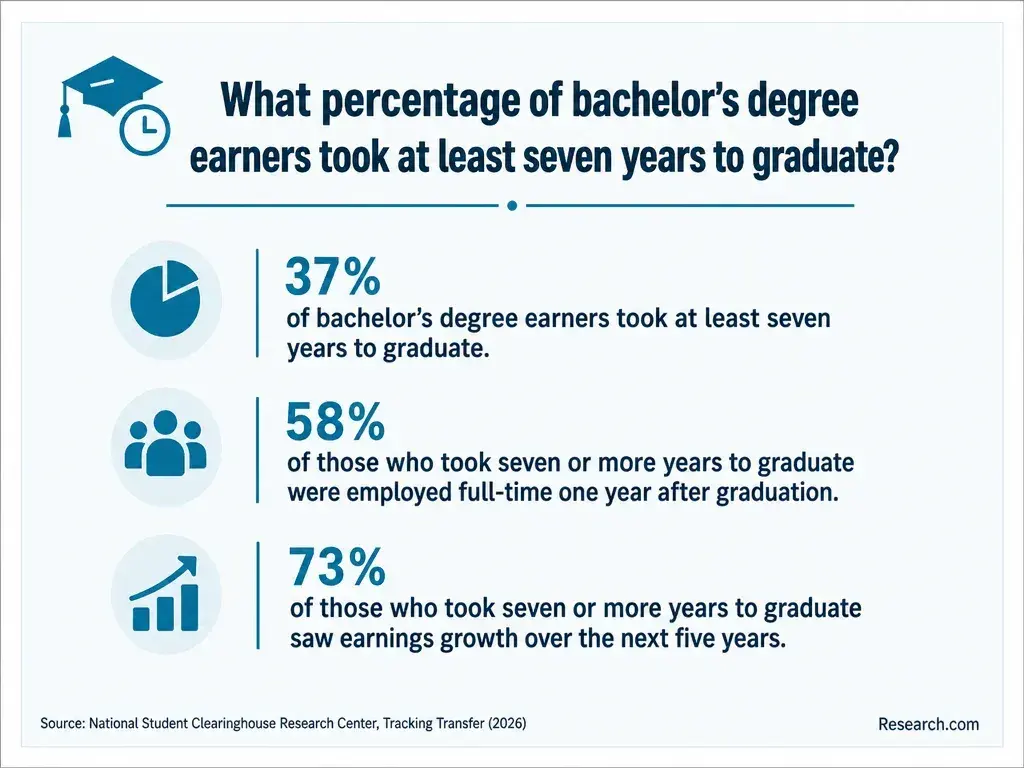
A conventional full-time bachelor's path is often planned around four academic years, but a transfer student's remaining time depends on an official degree audit, required course sequencing, and enrollment pace. Cost varies by institution and cannot be inferred from an advertised tuition rate alone. Compare tuition and mandatory fees for remaining required credits, then include books, software, travel, borrowing costs, and any earnings or client work you would forgo.
For an owner, opportunity cost is concrete: a required class may occupy the same hours needed to develop supplier relationships or serve customers. Conversely, studying part time while the business operates can spread the expense and let you apply coursework immediately. Do not assume an accelerated program saves money unless its total required charges are lower. Low-cost business administration degrees with federal aid options can help identify candidates, but request a personalized cost estimate and confirm aid eligibility with each school.
Requirements vary by institution and by whether you apply as a first-year or transfer student. Schools commonly request prior academic records; a business major may also have separate admission or progression rules. Mathematics, accounting, or economics courses may be entry requirements at one school and degree requirements completed after admission at another. Prior business ownership does not automatically waive them.
Send transcripts for an official evaluation and request a degree audit showing which credits satisfy general education, the business core, electives, and any residency rule. Ask about application fees and deadlines before applying; online college application fee savings may reduce an upfront expense, but should not outweigh curriculum fit or total completion cost. The admitting school has final authority over both admission and credit application.
A graduate might start or expand an agency, work in travel sales or operations, coordinate supplier relationships, or pursue adjacent work in events and hospitality. Responsibilities matter more than titles: a travel advisor handles client needs and bookings, while an operations coordinator may manage processes and exceptions. Owning a business or supervising staff requires operational judgment and results that a degree alone cannot establish.
If your interests shift toward managing employees across a larger travel or hospitality organization, compare the relevant job requirements with HR education costs and career planning. General business preparation may support a transition, but specialist HR roles can require different experience and knowledge. Customer-service work, relevant software practice, and documented projects can make either route more credible.
There is no dependable salary figure for a new travel-service owner. Owner income depends on booking volume, fees or commissions, supplier payment timing, refunds, overhead, and whether the owner draws pay before the business is consistently profitable. An employee travel agent's occupational wage is a different measure from an owner's profit and should not be used as a startup forecast.
Build a conservative cash-flow model using your proposed prices and documented costs, and test what happens if bookings arrive later than expected. Compare that risk with the pay available from jobs you could realistically obtain. If you are also considering project coordination as an employment alternative, accredited project management degree cost breakdowns can inform the education-cost side of that comparison; a different degree does not guarantee a particular job or wage.
What job outlook and certifications affect travel service business opportunities?
Labor-market projections describe occupations, not demand for a particular agency. For an adjacent example, the Bureau of Labor Statistics projects 6% employment growth for meeting and event planners from 2025 to 2035. That figure may interest an owner considering group travel or event services, but it does not predict travel-agent hiring or the number of customers a new business will win.
Voluntary travel-industry training or certifications can help demonstrate product knowledge or meet a supplier's participation conditions. Check the issuing organization's eligibility rules, renewal costs, and recognition among the suppliers you intend to use. Keep these credentials separate from legally required registrations and from academic accreditation. When comparing degrees, compare leading American online business degree schools, then verify each institution's accreditation, the exact program offered, and its current requirements directly.
Other Things You Should Know About Business Administration
Possibly. Ask for an official audit of remaining requirements and compare the completion cost with the skills you still need. A nearly finished degree can be a different decision from starting one from scratch.
No. Both are undergraduate business degrees, but required courses and quantitative emphasis vary by school. Compare curricula rather than assuming one title is more useful for travel services.
Only if the program approves the project and its learning objectives. Confirm supervision, data-use permissions, and what business information you may submit or show publicly.
Define the travel service you want to sell, identify your largest skill gaps, obtain a personalized degree audit and cost estimate, and compare those findings with relevant work experience or targeted training.
- Sellers of Travel | Florida Department of Agriculture & Consumer Services https://www.fdacs.gov/Business-Services/Sellers-of-Travel
- Seller of Travel | State of California - Department of Justice https://oag.ca.gov/travel
- Sellers of Travel Services Registration | maryland.gov https://labor.maryland.gov/license/op-travel-sellers.shtml
- Sellers of Travel - Washington Department of Revenue - WA.gov https://dor.wa.gov/manage-business/state-endorsements/sellers-travel
- What Can You Do with a Business Administration Degree? | American InterContinental University https://www.aiuniv.edu/blog/what-can-you-do-with-a-business-administration-degree
- Travel Agent Training (Exam Cost Included) | Northwest Florida State College https://careertraining.nwfsc.edu/training-programs/travel-agent/
- Transferable skills in tourism and hospitality | sciencedirect.com https://www.sciencedirect.com/science/article/pii/S0160738324001312
- Online Travel Agent Certification Training | University of Houston https://careertraining.uh.edu/training-programs/travel-agent/
- What Can You Do With a Business Administration Degree? | American Military University https://www.amu.apus.edu/area-of-study/business-administration-and-management/resources/what-can-you-do-with-a-business-administration-degree-exploring-options/
- 10 Key Subjects Taught in a Bachelor of Business Administration Program | Carson-Newman University https://www.cn.edu/cps-blog/10-key-subjects-taught-in-a-bachelor-of-business-administration-program/


