
2027 How to Use a Data Science Master's Capstone in an Internal Promotion Case

Co-Founder and Chief Data Scientist
A data science master's capstone can strengthen an internal promotion case, but a technically impressive project is not the same as evidence that you are ready for a larger role. If you are studying while employed, the key decision is whether you can shape your capstone around a legitimate business need, measure its contribution, and show what you personally led. This guide explains how to build that evidence, present it within your employer's promotion process, and choose a program whose project requirements make the work possible.
Key Things You Should Know
- Build the promotion case around the responsibilities of the target role: document the business problem, your decisions, the result, and what remains unproven.
- Secure permission to use company data and share results before committing to an employer-sponsored topic; a strong capstone needs both academic approval and a usable promotion artifact.
- A degree is not a promotion guarantee. The U.S. Bureau of Labor Statistics projects 35% growth in data scientist employment from 2025 to 2035, but your employer's role criteria and openings determine your internal opportunity.
How can a data science master's capstone support an internal promotion case?
Use the capstone as evidence of next-level work, not simply as proof that you completed a degree. Start with your employer's promotion rubric or the job description for the role you want. Identify the expectations you can demonstrate through a project - such as defining an ambiguous problem, working across teams, evaluating risk, or putting an analysis into use.
Then agree on a project scope with both an academic adviser and a workplace sponsor. Your manager may value operational savings, while your program may require a defensible method and reproducible evaluation. A viable topic must satisfy both without making confidential information available to classmates or the public.
Keep an evidence record throughout the project: the original problem statement, decisions you made, feedback you incorporated, results against a baseline, and written confirmation of any operational adoption. Before the review, ask your manager what evidence the promotion committee accepts and whether the target role or level is available. That conversation prevents a common mistake: finishing an excellent capstone that does not address the employer's actual promotion criteria.
What should a data science capstone project include to demonstrate business impact?
A promotion-focused capstone should answer a business question with an analysis someone can evaluate and potentially use. For example, a demand-forecasting project is more persuasive when it explains which planning decision the forecast could improve, how the current approach performs, and what a pilot would require.
Use the following checklist when proposing the topic. It separates a credible project from a model that looks promising only in a classroom presentation.
- Decision and baseline: Name the decision owner, the existing process, and the outcome the project is intended to improve.
- Permitted data: Confirm access, privacy restrictions, retention rules, and what the university may review or publish.
- Method and evaluation: Explain why the method fits the problem; use an appropriate holdout period or comparison and report relevant error, cost, or operational measures.
- Limits and reproducibility: Record assumptions, data quality issues, versioned code or procedures, and where the approach may fail.
- Implementation path: Identify the owner, workflow changes, monitoring needs, and a realistic pilot or handoff.
Distinguish measured impact from projected impact. If the capstone ended at an offline test, report the test result and describe the proposed business benefit as a hypothesis - not as savings already achieved. If a team piloted the work, document what changed, over what period, and whether other changes could explain the result.
How do you present capstone results to decision-makers and hiring managers?
Prepare a short promotion brief rather than asking reviewers to read the full academic report. Open with the business decision, your role, the evidence, and the recommendation. Keep technical details available in an appendix so a data science reviewer can inspect the method without making a nontechnical committee work through it.
A useful presentation sequence follows the questions a promotion committee is likely to ask:
- State the target role requirement the project demonstrates and the business problem you addressed.
- Show the prior approach, your intervention, and the strongest comparable result; label pilot results and forecasts separately.
- Explain your individual contributions, collaborators' contributions, trade-offs, and how you responded to feedback.
- Describe adoption, remaining risks, and the next decision an owner would need to make.
Ask your sponsor to verify factual claims, not to endorse conclusions the evidence cannot support. Obtain permission before sharing slides, code, or even screenshots outside the authorized audience. A concise, approved brief is usually more useful in an internal review than a public portfolio piece containing restricted material.
Which data science master's programs offer capstone-based learning?
Programs use different names for substantial final projects, including capstone and practicum. The examples below illustrate project-bearing options rather than a ranking; check the current catalog and project rules for the cohort and format you are considering.
| Program | Published project component | Promotion-focused question to resolve |
| Georgia Institute of Technology, Master of Science in Analytics | Applied analytics practicum | Can you propose a project with your employer, and what permissions and deliverables will it require? |
| University of California, Berkeley, Master of Information and Data Science | Capstone project | Can an employer problem meet the program's team and project requirements? |
Do not assume that a listed project component means you can use proprietary workplace data or work alone. Ask the program who approves topics, whether projects involve teams, what must be shared with faculty, and whether a sanitized deliverable is acceptable. If your target role is closer to analytics leadership than model development, comparing best master's programs in data analytics may reveal better project fit than relying on degree titles alone.
How do online and campus-based data science master's capstones differ?
Neither format automatically produces a better promotion artifact. The practical difference is how easily you can coordinate with a workplace sponsor, faculty, teammates, and any required project presentations. Requirements vary by program, so compare the actual capstone rules rather than assuming every online option is asynchronous.
| Format | Potential advantage for an employed student | Constraint to check |
| Online | May let you remain in your job and test a project in a familiar workflow. | Scheduled meetings, group coordination, presentation times, and employer-data rules may still limit flexibility. |
| Campus-based | May provide more in-person access to faculty, peers, and campus project partners. | Travel or relocation and daytime activities may make an employer-sponsored project harder to sustain. |
Choose based on your ability to complete the specific project, not just attend classes. Request a sample capstone calendar and ask who owns the final deliverable. If you are weighing a different technical credential against a data science degree, a separate look at online graduate ML programs with lower total tuition can help clarify whether the master's capstone is worth the additional commitment for your promotion goal.
What coursework best prepares students for a promotion-focused capstone?
Look for coursework that helps you make a defensible business decision, not merely train a sophisticated model. Statistics and experimental design support credible comparisons; data management makes results reproducible; communication helps you explain uncertainty; and ethics or privacy work helps you handle employer data responsibly. The most useful mix depends on whether your target role emphasizes research, production systems, or decision-making with stakeholders.
Review course descriptions and prior project examples for substantial work with messy data, model evaluation, and implementation constraints. A catalog mention of a tool does not establish that you will use it in depth. If your proposed project depends on reliable pipelines or production handoffs, examine data infrastructure skills in artificial intelligence graduate programs as a comparison point when assessing curriculum depth.
What are the admission requirements for data science master's programs?
Admission rules differ by institution and sometimes by program format. Programs commonly ask for an undergraduate degree and evidence that you can handle quantitative and computational work, but required prior courses, tests, professional experience, and application materials must be checked on each program's current admissions page. Do not treat work experience or self-study as a formal substitute for a prerequisite unless the program confirms it.
For a promotion-focused application, describe a real workplace problem you want to learn to solve and identify the preparation you already have in programming, statistics, and working with stakeholders. If a prerequisite is unclear, ask admissions whether your transcript meets it before paying an application fee. Also ask the project office - not just admissions - whether an employed student can propose a company-based capstone.
How much do data science master's programs cost and how long do they take?
There is no reliable single price or completion time for a data science master's: credit requirements, tuition schedules, fees, enrollment pace, and project timelines differ. Calculate cost from the current official tuition and fee schedule for your intended format and residency status. Add required technology or materials, travel where applicable, and borrowing costs; then subtract only employer assistance or aid for which you are eligible.
For an internal promotion case, time matters as much as tuition. Ask when the capstone begins, whether it can align with your employer's review cycle, and how long you may take to finish it while working. A less expensive or faster degree is not necessarily the better choice if its project cannot produce evidence relevant to your target role. If you are also considering an AI credential, compare AI master's tuition and duration using the same total-cost and scheduling assumptions.
How should you verify accreditation for a data science master's program?
Check that the institution has recognized institutional accreditation; do not assume that a data science program has separate programmatic accreditation. Confirm the institution's current status through its named accreditor or the U.S. Department of Education's accreditation database, and verify that the exact degree and delivery format appear in the university's current catalog.
Accreditation is a necessary check, not proof that a capstone will suit your employer. Separately confirm project supervision, employer-data policies, and any state authorization rules that affect where you will study. If your employer reimburses tuition, ask human resources whether its policy requires a particular type of accreditation or advance approval.
What careers, salaries, and job growth can follow a data science master's degree?
For someone seeking an internal promotion, the most relevant outcome may be expanded responsibility in their existing organization: owning analytical projects, leading stakeholders, or moving into a data scientist or analytics lead role. The degree and capstone may help demonstrate readiness, but neither establishes that a position exists or that your employer will promote you.
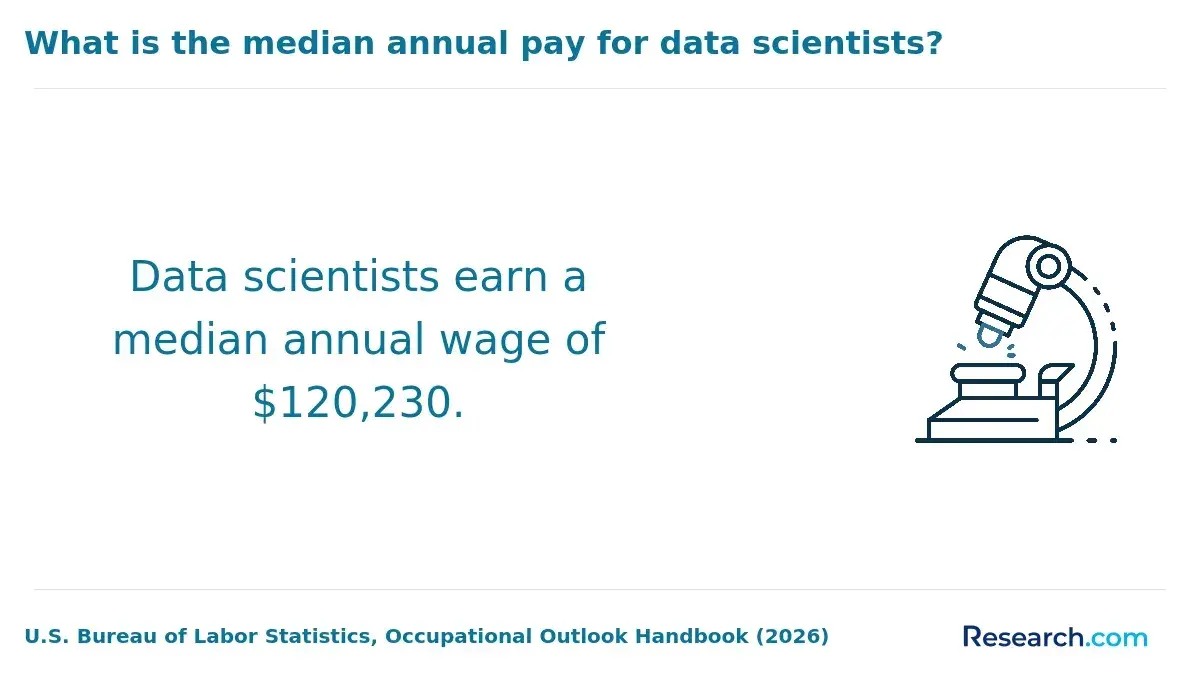
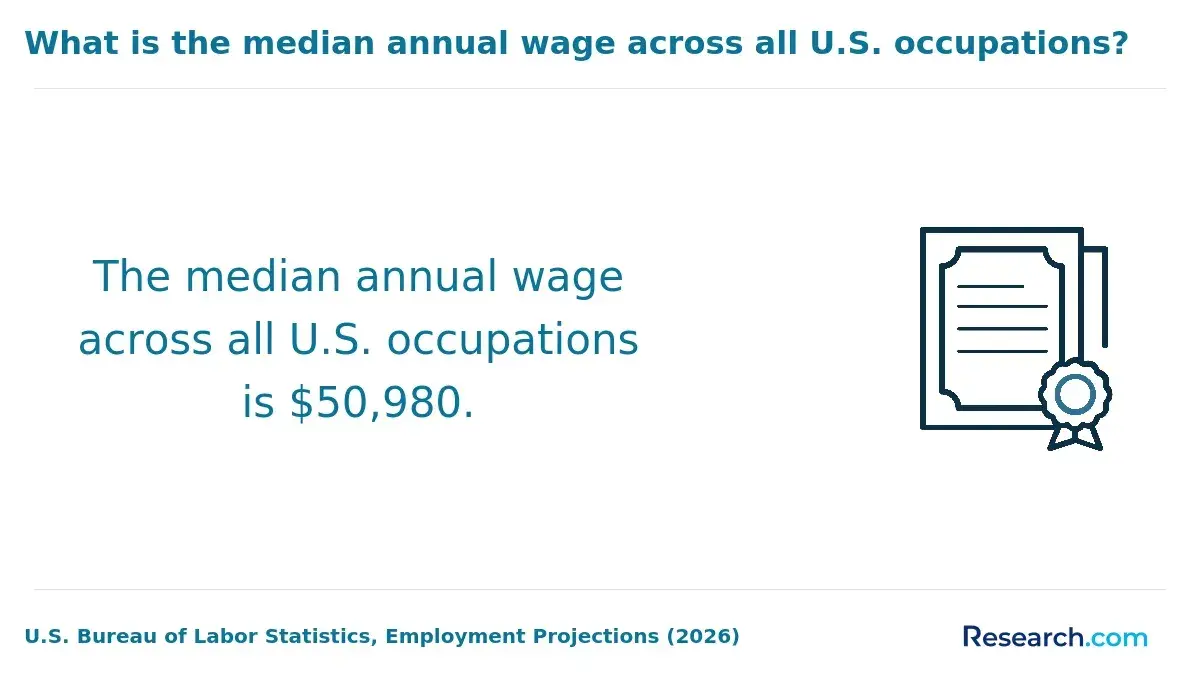
The U.S. Bureau of Labor Statistics reports a $120,230 median annual wage for data scientists in May 2025. That is a national occupation-wide figure, not a forecast for new master's graduates or a measure of the raise a capstone might produce. Compare the duties and compensation band of your target internal role with your current position; industry context can also matter when reviewing pay comparisons for graduates entering data science industries.
If the promotion depends on an open position, discuss the timing with your manager before making a degree investment. A capstone can still create valuable evidence for future internal or external applications, but projected salary gains should not be treated as guaranteed returns.
Other Things You Should Know About Data Science
Yes, if you can identify your own decisions and deliverables and credit teammates accurately. Keep a record of responsibilities and obtain permission before sharing group work in a review.
Not necessarily. A well-evaluated negative result can show sound judgment if you explain what you tested, why the result matters, and what decision it helped the organization avoid or improve.
It can demonstrate transferable skills, but connect it to the requirements of the new team's target role. Recent examples from your current work may be needed to show sustained performance.
Keep an approved, dated record of the project's scope, your contributions, and sponsor feedback. Brief the new manager on how the work maps to the role criteria rather than assuming the capstone speaks for itself.
References
- What Is a Capstone Project? - Boston University Questrom https://www.bu.edu/questrom/blog/what-is-a-capstone-project/
- Capstone Sponsorships - Columbia's Data Science Institute https://datascience.columbia.edu/partnerships/engage/capstone-sponsorships
- Capstone Projects - UVA School of Data Science https://datascience.virginia.edu/degrees/info/capstone-projects
- Capstone Projects FAQ | Engineering | Hard Work U. https://www.cofo.edu/Academics/Majors-Minors/Engineering/Capstone-Projects-FAQ
- Data Science Capstone Experience | jhu.edu https://engineering.jhu.edu/ams/academics/graduate-studies/masters-data-science/data-science-capstone-experience/
- How to use competency frameworks for business success | Profiles Asia Pacific, Inc. https://www.profilesasiapacific.com/2022/05/24/competency-frameworks/


