
2027 How to Choose an Online Strategic Management Doctorate Program: Accreditation, Cost, Format, and Career Fit

Co-Founder and Chief Data Scientist
The hardest part of choosing an online Strategic Management doctorate is knowing which program is credible, affordable, and realistic for your life. NCES data released in 2024 shows average graduate tuition and required fees at $12,596 for public institutions and $29,931 for private nonprofit institutions in 2022-23, before program fees and travel.
This guide is for working professionals comparing DBA, PhD, and related doctoral options. You'll learn how to verify accreditation, estimate total cost, compare online formats, and judge whether a program supports your long-term leadership, consulting, teaching, or research goals.
Key Things to Know About Choosing Strategic Management Doctorate Programs
- Start with accreditation: institutional accreditation recognized by the U.S. Department of Education or CHEA is the minimum screen, while business accreditations such as AACSB, ACBSP, or IACBE can add employer and academic credibility.
- Use total cost, not advertised tuition, to compare programs; federal 2024 graduate loan rules allow up to $20,500 per academic year in Direct Unsubsidized Loans for eligible students, but fees, residencies, and dissertation extensions can change affordability.
- Most online Strategic Management doctorates require roughly 45 to 60 credits and often take about three to five years, so format, pacing, dissertation support, and faculty fit matter as much as the degree title.
What criteria should you use to assess an online Strategic Management doctorate program?
Assess an online Strategic Management doctorate the same way you would assess a major business investment: first confirm legitimacy, then compare fit, cost, structure, and outcomes. A strong program should help you build advanced expertise in competitive strategy, organizational analysis, innovation, executive decision-making, research methods, and evidence-based management.
Strategic Management doctorates usually appear as a Doctor of Business Administration, PhD in Business Administration, Doctor of Management, or a leadership doctorate with a strategy concentration. A DBA is commonly more applied and practice-oriented, while a PhD is usually more research-intensive and may be better for academic research careers. If you are still deciding between graduate business pathways, comparing a doctorate with an online business degree can clarify whether you need doctoral-level research preparation or a less intensive credential.
Use the following criteria to build a shortlist. The point is not to find the program with the most features, but the one with the fewest mismatches for your goals, schedule, and budget.
- Confirm institutional accreditation before reviewing price, curriculum, or rankings.
- Check whether the program is a DBA, PhD, Doctor of Management, or leadership doctorate, because each degree type can signal a different balance of research and practice.
- Compare total program cost, including tuition, fees, residencies, dissertation continuation charges, technology fees, books, and travel.
- Review the curriculum for strategy-specific depth, not just general leadership or management courses.
- Evaluate the online format, including whether courses are asynchronous, synchronous, hybrid, cohort-based, or self-paced.
- Look at dissertation, capstone, or doctoral project requirements and ask how students are supported through completion.
- Research faculty credentials, publications, consulting experience, and alignment with your intended research area.
- Ask admissions how many credits are required, whether transfer credits are accepted, and how long students typically take to finish.
- Compare student services, including library access, statistical software, writing support, research advising, and career services.
- Judge career fit by mapping the program's outcomes to your target roles in executive leadership, consulting, higher education, entrepreneurship, or strategy research.
The most common mistake is choosing a program because it is fast, inexpensive, or heavily advertised. A doctorate should be judged by credibility and completion support first; otherwise, a low tuition rate can become expensive if poor advising or unclear dissertation expectations delay graduation.
The table below summarizes major comparison criteria and what each one tells you. Use it to organize notes when reviewing websites, catalogs, and admissions materials.
| Criterion | What it signals | Why it matters |
| Institutional accreditation | Baseline legitimacy of the university | Can affect federal aid eligibility, transferability, employer acceptance, and academic credibility |
| Business accreditation | External review of business programs | May matter for teaching, academic hiring, and employer perception in business-related roles |
| Degree type | Applied, research, or leadership orientation | Helps determine whether the program fits consulting, executive, faculty, or research goals |
| Credit requirement | Expected academic load | Influences time to completion, tuition, and workload alongside employment |
| Delivery format | Level of scheduling flexibility | Determines whether the program can fit work, travel, family, and time-zone constraints |
| Dissertation or project model | Type of final scholarly work | Shapes the skills you develop and the time needed to finish |
| Faculty fit | Availability of mentors in your topic area | Can affect dissertation quality, research direction, and completion support |
How do you check if an online Strategic Management doctorate program is accredited?
Accreditation is the first credibility test. For U.S. students, the minimum expectation is that the institution holds accreditation from an agency recognized by the U.S. Department of Education or the Council for Higher Education Accreditation. Program websites may use broad language such as "accredited," so you should verify the claim independently before applying.
Follow this sequence before you submit an application or pay a fee. It helps you separate recognized accreditation from marketing language that sounds official but may not carry real academic value.
- Find the institution's exact legal name, not just the brand name used in advertising.
- Search the U.S. Department of Education's Database of Accredited Postsecondary Institutions and Programs for the school.
- Confirm the accrediting agency, accreditation status, and any notes about probation, warning, or recent action.
- Check the school's accreditation page and compare the agency name with the federal database entry.
- If the program claims business-specific accreditation, verify it directly with the accreditor's public member directory.
- Ask admissions whether the online doctoral program is covered by the institution's accreditation and whether any program-specific approvals are pending.
- Save screenshots or PDF documentation before enrolling, especially if tuition reimbursement or employer approval depends on accreditation.
Accreditation rates for online Strategic Management doctorates are not published in a single official U.S. dataset, so avoid any source that claims a precise national percentage without showing its methodology. The safer approach is program-level verification. Either the institution and relevant business unit appear in recognized accreditor directories, or they do not.
The table below clarifies the difference between recognized accreditation and weaker signals. This distinction matters because a professional-looking website is not evidence of academic recognition.
| Signal | How to interpret it | Level of confidence |
| Institution appears in a recognized accreditation database | The university has undergone external institutional review | High |
| Business school appears in AACSB, ACBSP, or IACBE directories | The business unit or program has additional external review | High, depending on your career goal |
| School says it is "licensed" or "authorized" by a state | Authorization to operate is not the same as accreditation | Moderate to low |
| Program advertises "international accreditation" without a recognized agency | The label may not be meaningful for U.S. employers or federal aid | Low |
| Program refuses to identify its accreditor | A serious transparency problem | Very low |
Also check whether the institution is on warning, probation, or show-cause status. A school can remain accredited during a monitoring period, but that status may signal financial, academic, or compliance concerns that deserve careful review.
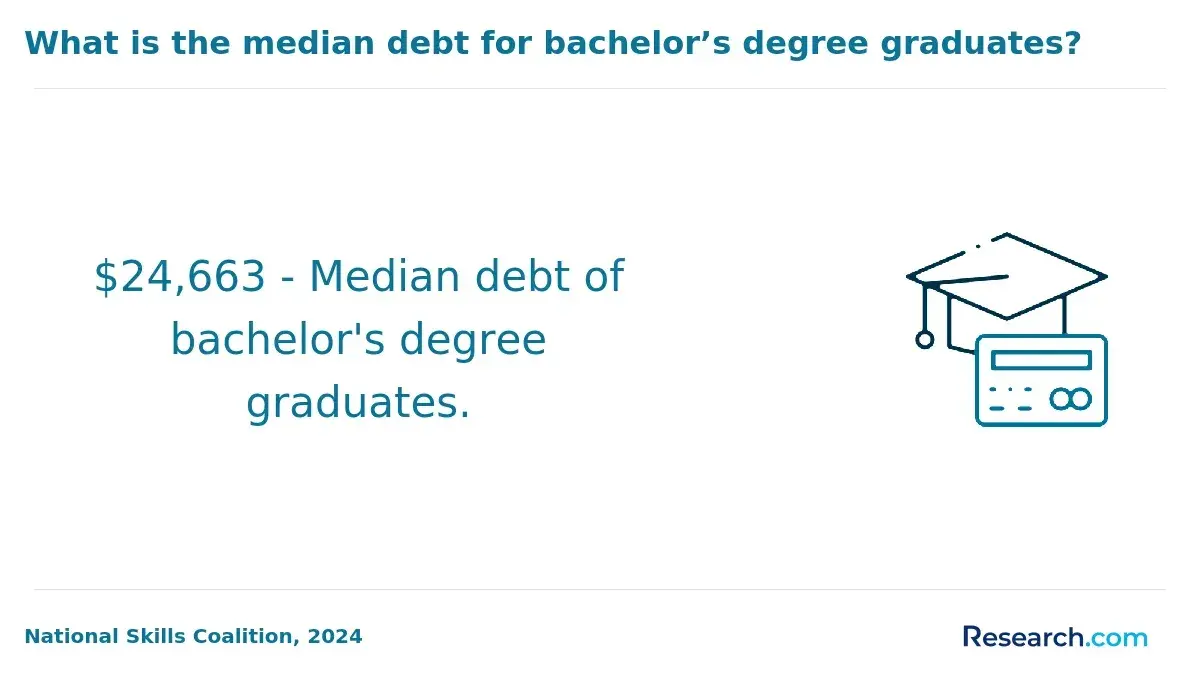
What programmatic accreditations matter most for an online Strategic Management doctorate?
Programmatic accreditation is not always mandatory for a Strategic Management doctorate, but it can influence how the degree is perceived by business schools, employers, and professional networks. The most relevant business accreditors in the U.S. market are AACSB, ACBSP, and IACBE.
Think of programmatic accreditation as a second layer of review. Institutional accreditation tells you the university meets broad standards, while business accreditation focuses more directly on the quality, outcomes, faculty, and governance of business programs.
| Accreditation | Typical emphasis | When it may matter most |
| AACSB | Research quality, faculty qualifications, continuous improvement, and business school standards | Academic careers, research-heavy programs, and roles where business school prestige is important |
| ACBSP | Teaching quality, student learning outcomes, and applied business education | Practice-focused doctoral study, teaching-oriented institutions, and applied management careers |
| IACBE | Outcomes assessment, mission alignment, and continuous improvement | Programs emphasizing measurable learning outcomes and applied business education |
| No business-specific accreditation, but recognized institutional accreditation | Baseline university legitimacy without a business-specific review layer | May still be acceptable for some employers, but requires closer review of faculty, curriculum, and outcomes |
AACSB is often viewed as the strongest signal for research-oriented business education, but that does not automatically make it the best choice for every student. A working executive seeking applied strategy tools may prefer a well-supported DBA with ACBSP or IACBE accreditation over a research-intensive program that does not fit their schedule or goals.
Before choosing, ask how accreditation connects to your intended outcome. If you hope to teach full time at a business school, business accreditation and faculty research strength may matter more. If you plan to remain in corporate leadership or consulting, employer recognition, applied curriculum, and dissertation relevance may carry more practical value.
You should also confirm whether the doctoral program itself is included within the accredited business unit. Sometimes a university has accredited undergraduate or MBA programs, but a newer doctoral concentration may not be listed in the same way. Ask admissions to explain the scope of accreditation in writing.
Assess cost by calculating the full cost to finish, not the cost per credit alone. Online Strategic Management doctorates often require about 45 to 60 credits, so even a modest per-credit difference can become significant across the whole program.
No federal dataset isolates average tuition specifically for online Strategic Management doctorates, which is why a careful buyer should use both national graduate tuition benchmarks and program-specific tuition sheets. NCES data released in 2024 reported average graduate tuition and required fees of $12,596 at public institutions and $29,931 at private nonprofit institutions for 2022-23. These figures are useful benchmarks, but doctoral business programs can cost more depending on credit load, residency requirements, and dissertation fees.
The table below shows common cost categories. Use it to compare programs line by line rather than relying on a single advertised tuition number.
| Cost component | How it usually appears | Why it affects the final bill |
| Tuition | Per credit, per term, or flat program price | Main cost driver, especially in 45- to 60-credit programs |
| Mandatory fees | Technology, student services, library, registration, or course fees | Can add recurring charges each term |
| Residency costs | Travel, lodging, meals, and local transportation | Can make a mostly online program more expensive than expected |
| Books and materials | Textbooks, case studies, databases, and software | Often excluded from tuition estimates |
| Dissertation or doctoral project fees | Continuation credits, committee fees, editing, or research costs | Can increase costs if the final project takes extra terms |
| Graduation and administrative fees | Application, transcript, graduation, or records fees | Small individually, but worth including in a total-cost comparison |
Financial aid depends on institutional eligibility, enrollment status, credit load, and your own borrowing history. Under current federal rules, eligible graduate students may borrow up to $20,500 per academic year through Direct Unsubsidized Loans, and some may use Grad PLUS Loans after meeting federal requirements. This availability does not mean borrowing is automatically wise; it simply gives you a framework for comparing out-of-pocket cost, employer support, scholarships, and debt risk.
Use this process to estimate affordability before you commit. It is especially useful when schools quote tuition differently.
- Multiply tuition by the total number of required credits, not by one term of enrollment.
- Add mandatory fees for every term you expect to be enrolled.
- Include at least one realistic estimate for books, research tools, software, and dissertation-related expenses.
- Ask whether dissertation continuation credits are charged after coursework ends.
- Calculate travel costs for residencies, orientations, intensives, or dissertation defenses.
- Subtract confirmed grants, scholarships, tuition discounts, employer reimbursement, or military benefits.
- Compare the remaining cost with your expected career benefit, not with a generic salary promise.
Be cautious with "affordable" claims that do not show the credit requirement. A program with low per-credit tuition can still cost more than expected if it requires more credits, charges multiple dissertation terms, or includes required travel.
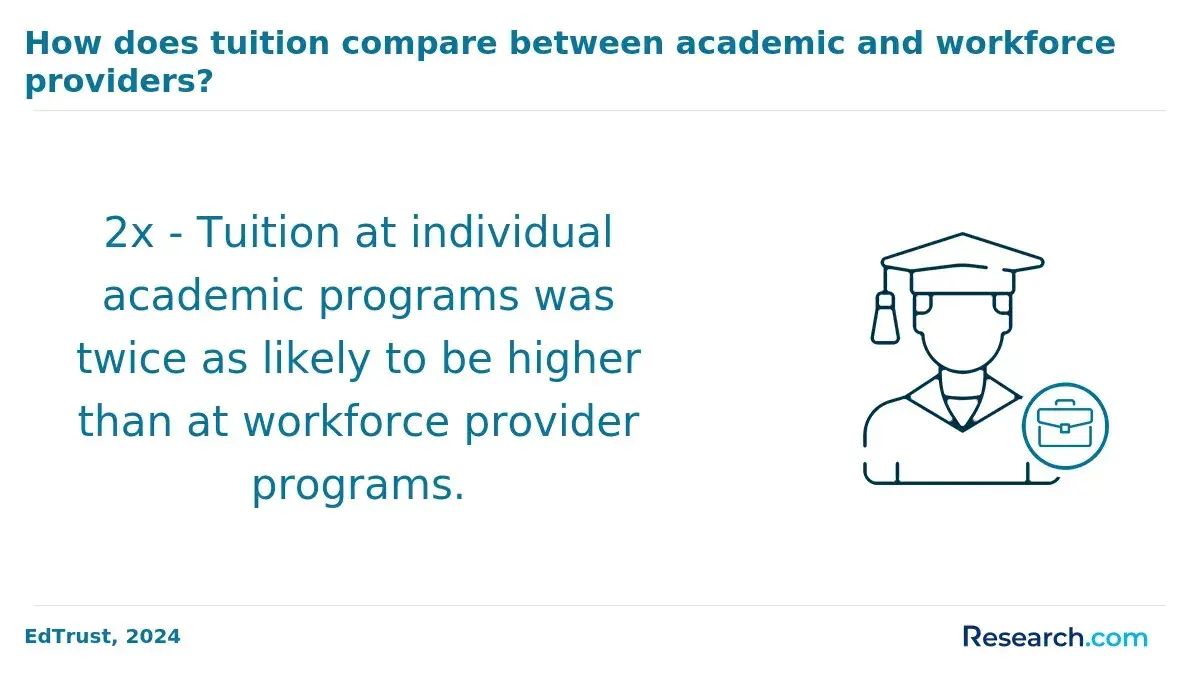
Online Strategic Management doctorate programs are not all equally flexible. The format determines how often you must be online, whether you move with a cohort, whether you can pause, and how much control you have over weekly study time.
The most common online formats for working adults are asynchronous courses, scheduled synchronous courses, hybrid or low-residency models, and cohort-based structures. Fully asynchronous delivery has become more visible as universities compete for working professionals, but many doctoral programs still include live research seminars, residencies, or synchronous dissertation sessions because advanced research benefits from direct faculty interaction.
The table below compares the main online formats. Use it to identify which structure fits your work schedule and learning preferences.
| Format | How it works | Best fit | Main trade-off |
| Fully asynchronous | Coursework can be completed within weekly deadlines without scheduled class meetings | Professionals with variable work hours, travel, or family obligations | Requires strong self-discipline and proactive communication |
| Synchronous online | Students attend live virtual classes at set times | Learners who want discussion, accountability, and real-time faculty access | Less flexible for shift workers or frequent travelers |
| Hybrid or low-residency | Most coursework is online, with required campus or destination-based sessions | Students who value networking and intensive faculty interaction | Travel costs and time away from work can be significant |
| Cohort-based | Students progress through courses with the same group | Learners who benefit from peer support and a structured timeline | Less ability to accelerate, slow down, or customize sequencing |
| Self-paced or competency-based elements | Some coursework can move faster if requirements are met | Experienced professionals with strong independent study skills | May provide less peer interaction and may not apply to dissertation work |
Format choice should match your actual weekly routine, not your ideal schedule. If you lead teams across time zones or travel frequently, a fully asynchronous format may be best. If you learn through discussion and want regular contact with professors, synchronous or cohort-based programs may be worth the scheduling trade-off.
Students considering adjacent business leadership paths sometimes compare strategy doctorates with specialized master's or MBA options. For example, an MBA operations management online program may be a better fit if your immediate goal is operational leadership rather than doctoral research, dissertation work, or academic-level strategy inquiry.
Pacing determines how quickly you can finish and how much pressure the program places on your weekly schedule. Many online Strategic Management doctorates are designed for working professionals, but "online" does not always mean self-paced.
Typical doctoral business programs require about 45 to 60 credits and often take about three to five years, depending on course load, transfer credits, dissertation progress, and whether the program uses year-round terms. The dissertation or doctoral project is often the biggest variable; a student can complete coursework on time and still need extra terms to finish proposal approval, data collection, analysis, and defense.
The table below explains common pacing models. It can help you decide whether a program's structure is realistic for your responsibilities.
| Pacing model | Typical structure | Who it fits best |
| Lockstep cohort | Students take the same sequence at the same pace | Professionals who want structure and accountability |
| Part-time flexible | Students take fewer courses per term and may adjust load | Working adults balancing leadership roles, caregiving, or travel |
| Accelerated | Shorter terms, heavier course loads, or year-round enrollment | Students with protected study time and strong academic preparation |
| Extended dissertation timeline | Coursework ends before additional research terms begin | Students whose research requires complex data collection or organizational access |
To avoid choosing the wrong pace, estimate your weekly capacity before speaking with admissions. Doctoral reading, writing, research design, and data analysis usually require sustained blocks of attention, not just spare time after work.
- Choose a lockstep cohort if you need deadlines, peer accountability, and a predictable graduation path.
- Choose a part-time option if your workload changes by season or you have significant family responsibilities.
- Be cautious with accelerated programs if you have not recently completed graduate-level research or statistics coursework.
- Ask whether you can reduce your course load without losing financial aid eligibility, cohort access, or dissertation support.
- Ask how long students may remain enrolled before reaching maximum time-to-degree limits.
A common mistake is assuming that the fastest program is the best value. A compressed schedule can be efficient for some students, but it can also increase the risk of burnout, lower research quality, or delayed dissertation progress if the pace is not sustainable.
The curriculum should show that the program is genuinely about strategic management, not simply a general leadership doctorate with one strategy course. A strong curriculum connects theory, analytics, organizational behavior, innovation, competitive positioning, corporate governance, and research methods.
Look for a balance between strategy content and doctoral research preparation. Strategic leaders need to interpret markets and organizations, but doctoral students also need to design studies, evaluate evidence, and communicate findings at an advanced level.
The table below outlines curriculum areas that typically matter in a high-quality Strategic Management doctorate. Use it to identify depth rather than count course titles.
| Curriculum area | What it should cover | Why it matters |
| Strategic management theory | Competitive advantage, industry analysis, firm capabilities, and strategic positioning | Builds the foundation for executive-level decision-making and scholarly inquiry |
| Organizational behavior and change | Culture, leadership, decision processes, and change implementation | Strategy fails without organizational execution |
| Innovation and entrepreneurship | Growth strategy, disruption, new ventures, and business model design | Supports roles in consulting, corporate strategy, and transformation |
| Global and ethical strategy | Governance, stakeholder analysis, risk, and responsible leadership | Prepares students for complex, high-stakes decisions |
| Quantitative and qualitative research methods | Research design, statistics, interviews, case study methods, and data interpretation | Essential for dissertation or doctoral project completion |
| Applied analytics | Data-driven decision-making, performance metrics, and strategic evaluation | Reflects current employer demand for evidence-based strategy |
| Dissertation or doctoral project sequence | Proposal development, literature review, methodology, analysis, and defense | Provides structure for finishing the doctorate |
Current program trends include more emphasis on data analytics, digital transformation, artificial intelligence in decision support, innovation strategy, and organizational resilience. These topics are useful when they are integrated into research and strategy courses, not simply added as buzzwords in course descriptions.
Review electives and concentration options carefully. If your interest is organizational change rather than corporate strategy, you may also want to compare related pathways such as the best organizational development master's programs online before committing to a doctoral program. A doctorate makes the most sense when you need original research, advanced consulting authority, or senior-level scholarly preparation.
Before applying, request the full catalog and course descriptions. Then check whether the program includes enough research preparation to support your final project. Weak methods training is a major risk because dissertation delays often begin when students cannot translate an idea into a feasible study.
A Strategic Management doctorate is the right investment only if the degree helps you reach a goal that requires doctoral-level expertise. It can be useful for senior executives, consultants, entrepreneurs, corporate strategists, management educators, and professionals who want to conduct applied research on organizational performance.
Start by naming your target outcome. A student who wants to teach at a university should evaluate faculty research, dissertation rigor, and business accreditation differently from a student who wants to strengthen credibility as an executive consultant. If your main goal is broad leadership and organizational change rather than strategy research, a doctorate in organizational leadership online may be a closer match.
Labor market data can provide context, but it should not be treated as a promise. The Bureau of Labor Statistics Occupational Outlook Handbook projects faster-than-average growth for management analysts over the 2023-33 period, reflecting ongoing demand for organizational improvement and efficiency expertise. For a prospective doctoral student, this suggests that applied strategy and consulting skills may remain relevant, but individual outcomes still depend on experience, network, industry, and role level.
Use these questions to test career fit before enrolling. They help you connect the program's structure with the work you actually want to do after graduation.
- Do I need a doctorate for my target role, or would a master's degree, MBA, certificate, or experience be sufficient?
- Does the program's degree type match my goal: applied executive work, academic research, teaching, consulting, or organizational transformation?
- Are faculty members active in research or consulting areas related to my dissertation idea?
- Will the dissertation or doctoral project produce something useful for my field, organization, or consulting practice?
- Does the program provide research, writing, and career support for working adults?
- Will employers, academic institutions, or clients in my target market recognize the school and accreditation?
- Can I manage the time and cost without undermining my current career progress?
You should also compare opportunity cost. A doctorate can deepen expertise and credibility, but it also requires time that could be spent building a business, taking a promotion, publishing, consulting, or earning a shorter credential. The best-fit program is the one that advances your goal without creating unnecessary debt, delay, or misalignment.
What red flags should I watch out for in an online Strategic Management doctorate program?
Red flags usually appear when a program makes the decision feel urgent, simple, or guaranteed. A legitimate doctorate should be transparent about accreditation, cost, faculty, workload, research expectations, and time to completion.
The table below compares warning signs with healthier indicators. Use it when reviewing admissions emails, program pages, and enrollment agreements.
| Red flag | Why it is concerning | Better sign |
| Accreditation claims are vague or hard to verify | Unrecognized accreditation can limit aid, transfer, and employer acceptance | The school names its recognized accreditor and appears in official databases |
| Admissions promises unusually fast completion | Doctoral research usually takes sustained time and faculty review | The program explains typical timelines and dissertation milestones |
| Total cost is not disclosed clearly | Fees and continuation charges can change affordability | The school provides a full tuition-and-fee schedule |
| No clear dissertation or doctoral project process | Students may face delays without structured research support | The catalog explains proposal, committee, IRB, analysis, and defense requirements |
| Faculty information is limited | You cannot judge research fit or mentoring quality | Faculty profiles show credentials, publications, and areas of expertise |
| Pressure to enroll immediately | High-pressure sales tactics are inappropriate for a major academic investment | Admissions gives time to compare options and review documents |
| Career claims sound guaranteed | No degree can guarantee a title, salary, promotion, or consulting income | Outcomes are described carefully with limitations and context |
Several common mistakes lead students into poor-fit programs. Avoid them by slowing down the selection process and documenting what each school tells you.
- Do not choose a program before independently verifying institutional accreditation.
- Do not assume "online" means fully asynchronous or residency-free.
- Do not compare tuition without including total credits and dissertation continuation costs.
- Do not rely on rankings, ads, or brand reputation without checking curriculum and faculty fit.
- Do not enroll before confirming whether your employer, target universities, or professional market will recognize the degree.
- Do not ignore maximum time-to-degree policies, leave-of-absence rules, or dissertation support limits.
If a program refuses to answer basic questions in writing, move on. A doctorate is too expensive and time-intensive to choose on trust alone.
Other Things You Should Know About Strategic Management
Not always. Some programs prefer or require a master's degree in business or a related field, while others accept applicants with different graduate backgrounds. If you do not have an MBA, expect the school to review your professional experience, quantitative preparation, writing ability, and readiness for doctoral-level business coursework.
A DBA is usually better for applied executive, consulting, or practitioner-focused goals. A PhD is usually better for research-intensive academic paths. The better option depends on whether you want to solve practical organizational problems, produce scholarly research, teach, consult, or move into senior strategy roles.
Many online programs are designed for working professionals, but full-time work still requires careful planning. Before enrolling, ask how many hours students typically spend each week, whether live sessions are required, and how the dissertation phase affects workload.
Common requirements include graduate transcripts, a resume, recommendation letters, a statement of purpose, and sometimes a writing sample or interview. Some programs may ask for a research interest statement to determine whether faculty expertise aligns with your proposed topic.
- Accreditation as a Strategic Driver of Alignment Across Higher Education and Industry https://acbspjournal.org/2026/05/22/accreditation-as-a-strategic-driver-of-alignment-across-higher-education-and-industry/
- Course Delivery Formats 101: Synchronous, Asynchronous, and Blended/Hybrid Learning Explained https://www.iacet.org/events/iacet-blog/blog-articles/course-delivery-formats-101-synchronous-asynchronous-and-blended-hybrid-learning-explained/
- Accreditation WCI & ISO | Quality Standards | Selinus University https://businessschool.uniselinus.education/accreditation
- EU Ranked #3 Among Forbes’ Best Online Doctorates in Organizational Leadership https://www.eastern.edu/news/phd-management-forbes
- What Makes a PhD Program in Organizational Development the Best https://vinuni.edu.vn/best-phd-programs-in-organizational-development/
- A Doctorate Degree in Management - Strategic Innovation and Change https://www.tuw.edu/school-news/doctorate-degree-management-strategic-innovation-and-change/
- Educational Funding https://phdproject.org/educational-funding/
- Higher Education Accreditation Consulting Services | The Change Leader https://changinghighered.com/higher-education-consulting/accreditation/
- Doctorate in Strategic Management and Lead... | ABMS Academy https://www.abms.ch/doctorate-in-strategic-management-and-lead
- International Universities: Comparing Systems, Degrees, And Costs https://eurotast.eu/international-universities-comparing-systems-degrees-and-costs


