
2027 How Fast Can You Earn an Online Social Work Bachelor's Degree? Timelines & Completion Options

Co-Founder and Chief Data Scientist
If you are considering an online bachelor's degree in social work, the real question is not just whether you can study online. It is how long the degree will take once transfer credits, work schedules, field requirements, course availability, and enrollment pace are factored in. For adults balancing employment, caregiving, and financial limits, a one-year difference can affect tuition costs, income plans, and when you can qualify for entry-level human services roles or prepare for graduate study.
Most online social work bachelor's programs are built around the standard four-year undergraduate timeline, but that is not the only path. With 45% of online social work students taking accelerated courses, many schools now offer shorter terms, multiple start dates, transfer-friendly policies, and part-time options. Some students may finish in as little as two to three years, while others take longer because of reduced course loads or required field placements.
This guide explains the main timeline options for an online social work bachelor's degree, including traditional, accelerated, part-time, self-paced, and scheduled formats. It also covers what can speed up or slow down completion, how transfer credits work, and how to judge whether a faster path is realistic for your budget, schedule, and career goals.
Key Things to Know About Online Social Work Bachelor's Degree Timelines & Completion Options
- Many online social work bachelor's programs offer flexible scheduling, allowing students to balance coursework with professional and personal commitments for more efficient progress.
- Accelerated formats, such as 8-week terms or year-round courses, can reduce completion time by up to 30%, helping students graduate faster than traditional semesters.
- Transfer credits from prior college work or relevant certifications frequently shorten degree timelines, with some programs accepting up to 90 credits, nearly half the degree requirement.
What is the typical timeline for an online social work bachelor's degree?
The typical timeline for an online bachelor's degree in social work is four years for a full-time student entering with no prior college credit. This mirrors the standard undergraduate structure in the United States: general education courses, social science foundations, major coursework, electives, and field education or practicum requirements.
Data from educational institutions show that the average completion time for an online bachelor's degree in social work is approximately four years. That timeline gives students enough room to complete both classroom-based learning and applied training in areas such as human behavior, social welfare policy, ethics, research methods, and practice with individuals, families, groups, and communities.
For many students, four years is the planning baseline rather than a guarantee. Your actual completion date can change depending on course sequencing, whether required classes are offered every term, how quickly you can complete any field placement obligations, and whether you transfer credits into the program. Students comparing timelines across fields may also want to review online degrees that may lead to strong pay outcomes, since some programs outside social work have different credit structures and fewer placement requirements.
Before enrolling, ask the school for a sample degree map for your intended pace. A published four-year plan is useful, but a personalized plan is better because it shows when you would take prerequisites, major courses, electives, and fieldwork based on your transfer evaluation and availability.
What are accelerated online social work bachelor's degree programs?
Accelerated online social work bachelor's degree programs are designed for students who want to complete degree requirements faster than the traditional four-year schedule. They usually do this by shortening academic terms, offering year-round coursework, allowing heavier credit loads, or accepting a larger amount of eligible transfer credit.
These programs can be a good fit for disciplined students with predictable weekly study time. They may be less suitable for students who are new to college, working long or irregular hours, or unsure whether they can manage intensive reading, writing, discussion, and field-related expectations.
- Condensed course schedules: Instead of traditional 15-week semesters, accelerated programs often use shorter sessions. The content is not necessarily easier; it is delivered faster, so weekly assignments can be more concentrated.
- Shorter terms: Academic terms typically last between 5 to 8 weeks. This can help students complete more courses across a calendar year, but it also means falling behind for even one week can be difficult to recover from.
- Year-round enrollment: Multiple start dates allow students to begin sooner and avoid waiting for a fall or spring semester. This is especially useful for transfer students who already have credits and want to maintain momentum.
- Increased credit load: Some accelerated students take more credits per term or stack terms back-to-back. This can reduce the total time to graduation but may create pressure if work or family responsibilities increase.
- Flexible delivery: Programs may be fully online or hybrid. Hybrid formats can provide more direct support, but they may also require campus visits or local scheduling flexibility.
Fieldwork is the main timeline issue to examine closely. Even if online coursework is accelerated, practicum or field placement requirements may follow agency schedules, require daytime availability, or depend on approved placement sites near your location. A fast academic calendar does not always mean field education can be rushed.
Students evaluating the long-term value of an accelerated degree should compare cost, time, and career direction rather than speed alone. Resources on the highest-paying college majors can provide context, but social work decisions should also account for mission fit, licensure goals, graduate school plans, and local job requirements.
Can I transfer credits to an online social work bachelor's degree?
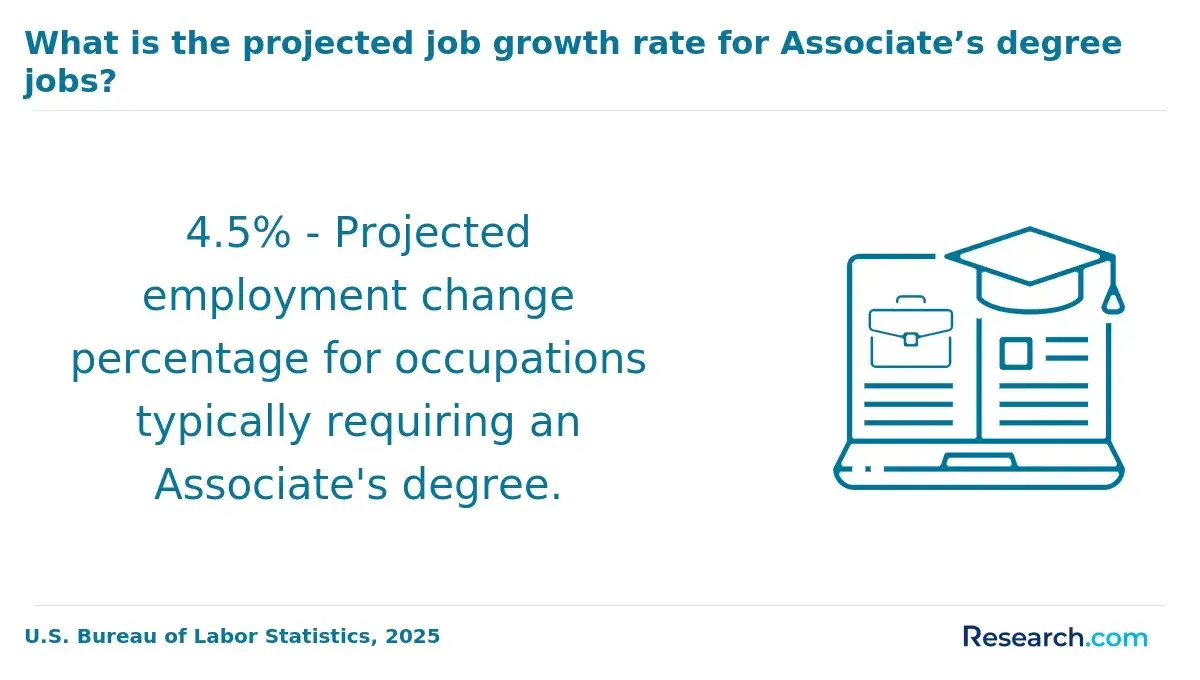
Yes. Transfer credit is one of the most common ways to shorten an online social work bachelor's degree. Nearly 60% of students enrolled in online bachelor's degrees report transferring courses from previous institutions, and students with community college credits, prior university coursework, or an associate degree may be able to reduce their remaining time significantly.
Transfer policies vary by school, so do not assume every previous course will apply to the degree. General education credits are often easier to transfer than upper-level social work courses because professional programs may have strict accreditation, curriculum, and sequencing requirements.
- Eligibility requirements: Transferred credits generally must come from regionally accredited universities, and many schools require grades of C or better. Some programs may apply stricter rules for major prerequisites or professional courses.
- Accepted coursework: English, math, social sciences, humanities, and general education courses are commonly accepted. Introductory psychology, sociology, statistics, or human development courses may also be useful, depending on the curriculum.
- Professional course limits: Social work practice courses, field seminars, and practicum-related credits may be harder to transfer because programs need to verify that prior coursework matches their learning outcomes.
- Review procedure: Admissions or registrar staff usually evaluate official transcripts. For uncertain courses, the program may request course descriptions, syllabi, learning objectives, or credit-hour details.
- Transfer limits: Institutions typically cap transferable credits between 60 and 90 semester hours so students complete a meaningful portion of the degree at the awarding school.
To avoid surprises, request an official transfer evaluation before committing to a program. Ask which credits count toward general education, which count toward the major, which count only as electives, and which do not apply at all. A program that accepts many credits as electives may still leave you with several required social work courses, so the total number of accepted credits is not the only measure that matters.
When asked about transferring credits, a recent graduate said the process felt overwhelming at first because he had to gather detailed course information and wait for evaluations. His main advice was to stay in regular contact with advisors, keep copies of every syllabus, and ask for a written degree plan once the evaluation was complete. The transfer process took patience, but it helped him finish faster than expected.
A part-time online social work bachelor's degree often takes five to six years, depending on how many credits a student completes each term and whether the program allows continuous enrollment. Research indicates that part-time students generally take about 5.5 years on average to complete their degree compared to full-time students.
Part-time study is slower, but it can be the more realistic option for students working full time, raising children, caring for family members, or returning to school after a long break. A manageable pace can reduce burnout and make it easier to sustain progress over several years.
- Choose part-time if: your work schedule is demanding, your income depends on maintaining full-time employment, or you need flexibility for caregiving responsibilities.
- Be cautious if: required courses are not offered every term. Taking fewer classes can create delays if you miss a prerequisite or a course is offered only once per year.
- Plan for fieldwork early: Part-time students may still need to complete field education hours on a schedule that does not perfectly match evenings or weekends.
- Watch total costs: A longer timeline may increase term-based fees, technology fees, or other recurring expenses even if per-credit tuition stays the same.
A graduate of an online social work bachelor's degree program described the part-time route as challenging but sustainable. She balanced coursework with a full-time job and childcare by studying during evenings and weekends. The pace was slower, but it allowed her to keep moving without sacrificing family responsibilities.
Her reflection captures the main advantage of part-time study: “It wasn't about rushing but about staying committed and making steady progress at a pace that fit my life.” For many students, that steady progress is more valuable than an aggressive timeline that cannot be maintained.
What Graduates Say About Online Social Work Bachelor's Degree Timelines & Completion Options
- : "Choosing an online social work bachelor's program was the right fit for me because I could keep my full-time job while making steady progress toward the degree. The flexible timeline reduced stress, and the online format made the cost easier to manage than relocating or pausing work for a campus program. — Isabel"
- : "Affordability mattered because I had responsibilities at home, but I also wanted a program that would not take longer than necessary. The accelerated options helped me finish sooner than I expected and gave me access to broader opportunities in community outreach and support services. — Evan"
- : "I needed structure, not just flexibility. A part-time online program gave me deadlines, support, and enough room to stay employed while completing a rigorous curriculum. Finishing the degree strengthened my credibility and expanded my career options in human services settings. — Viola"
Other Things You Should Know About Social Work Degrees
Yes, online social work bachelor's degrees from accredited institutions are widely respected by employers. Graduates must ensure their program holds accreditation from recognized bodies such as the Council on Social Work Education (CSWE), which confirms that the degree meets industry standards.
Most online social work bachelor's degree programs require fieldwork or internships as part of their curriculum. These practical components are essential for gaining hands-on experience and must typically be completed in person at approved agencies or organizations near the student's location.
Yes. CSWE-accredited BSW programs require supervised field education, and many placements are overseen by a licensed social worker or a similarly qualified site supervisor. Students usually complete about 400 hours of practicum, plus seminars or internship coursework tied to the placement.
- 7 Insider Tips for Online Social Work Students https://www.socialworker.com/feature-articles/education--credentials/7-insider-tips-online-social-work-students/
- 8 Tips for Succeeding in Your Online Social Work Course https://www.onlinecoursesaustralia.edu.au/online-education-blog/tips-for-succeeding-in-your-online-social-work-course/
- How Long to Become a Social Worker? 2025 Timeline Guide https://www.socialworkdegrees.org/faq/how-long-does-it-take-to-become-a-social-worker
- Online BSW Programs https://socialworklicensemap.com/social-work-degrees/bachelor-of-social-work-programs/online-bsw/
- Online Social Work Degree Programs for 2023 https://mastersinsocialworkonline.org/online/
- How Long Does It Take to Become a Social Worker? | Education & Licensure Timeline https://aatbs.com/blog/post/how-long-does-it-take-to-become-a-social-worker
- Bachelor's in Social Work Online (BASW) | UK College of SW | UK https://socialworkonline.uky.edu/programs/basw-bachelors-social-work/
- BSW Online https://socialwork.ucalgary.ca/future-students/bachelor-social-work/two-year-bsw-program/online-bsw
- Online BSW Degree | A Solid Foundation for Social Work Careers https://www.tuw.edu/health/online-bsw-degree-social-work-careers/


