
2027 Harvard Extension Data Science and AI ALM vs. Grand Canyon Online MS in Data Science: Cost, Curriculum, Admissions, and Format

Co-Founder and Chief Data Scientist
Harvard Extension's data science and AI ALM and Grand Canyon University's online MS in Data Science offer different credentials and enrollment experiences. For prospective students, the decision turns on more than the Harvard or GCU name: the relevant questions are what you will study, how you qualify, whether the schedule works, and what you will actually pay. This comparison separates confirmed labor-market context from program details - especially current prices and policies - that you should check directly before applying or enrolling.
Key Things You Should Know
- Harvard Extension awards an ALM through its extension school; GCU's option is an MS. Compare the exact degree names and required courses rather than treating the credentials as interchangeable.
- Do not compare advertised tuition rates alone. Confirm each program's current required courses or credits, tuition, fees, and any travel or campus costs before calculating a total.
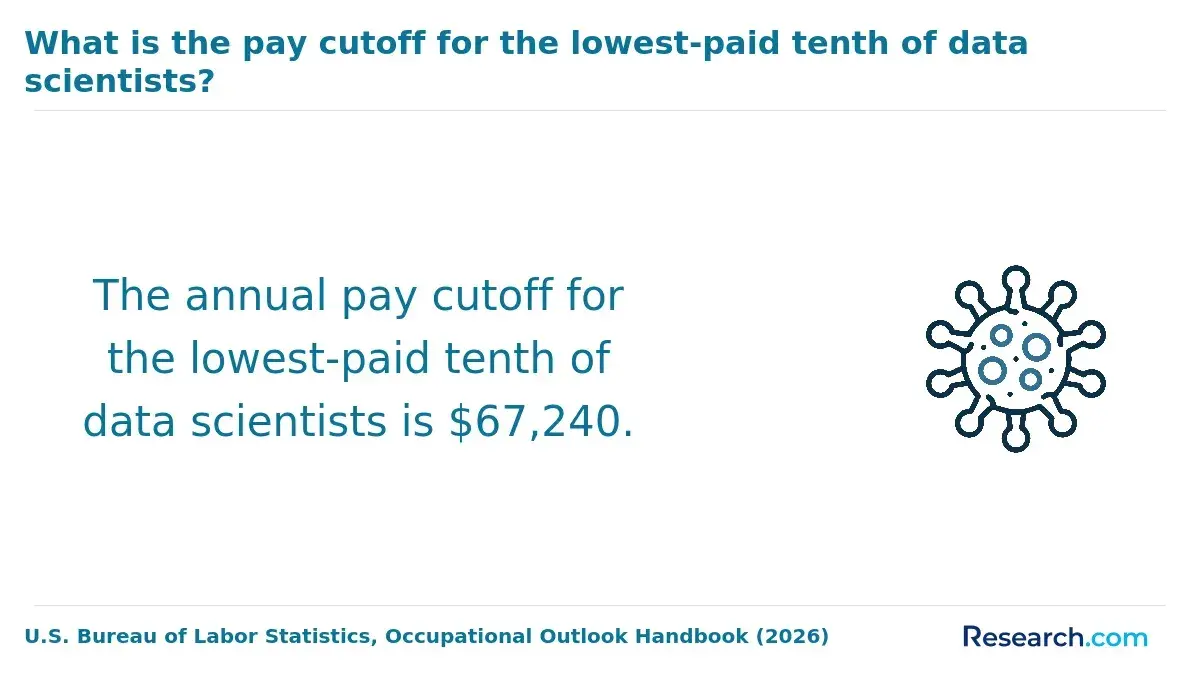
- The US median annual wage for data scientists was $120,230 in May 2025, according to the Bureau of Labor Statistics (BLS). That occupational figure is not an earnings estimate for graduates of either program.
How do Harvard Extension and Grand Canyon's data science master's programs compare?
The clearest distinction is the credential and the route to earning it: Harvard Extension's option is an ALM, while GCU's is an MS offered online. Neither title alone establishes which program teaches more advanced material or produces better career outcomes.
This comparison identifies the questions that matter most when reviewing the schools' current catalogs and enrollment terms.
| Decision factor | Harvard Extension | Grand Canyon University |
| Credential | ALM through Harvard Extension School; confirm the precise field and transcript wording | MS in Data Science; confirm the precise catalog title |
| Admissions approach | Review the current performance-based admission pathway and its qualifying-course rules | Review the current graduate application, academic eligibility, and prerequisite rules |
| Academic fit | Compare required work with available data science and AI electives | Check the prescribed sequence, available choices, and applied project requirements |
| Format | Check which requirements can be completed online and whether campus attendance applies | Review online course scheduling and any in-person exceptions |
| Cost comparison | Calculate tuition across all required courses, plus fees and possible travel | Calculate tuition across all required credits, plus fees and materials |
Use the same standard for both schools: compare the required path to graduation, not an appealing elective at one school against a required course at the other. Also distinguish Harvard Extension School from Harvard's other graduate schools when assessing the credential.
Which program costs less: Harvard Extension ALM or Grand Canyon's online MS?
A defensible current total-cost winner cannot be established without a verified tuition schedule and degree plan for each program. A per-course price at Harvard and a per-credit price at GCU are not comparable until they are multiplied by the requirements that apply to you. Published rates can also change before you finish.
Ask both schools for an itemized estimate covering tuition, mandatory fees, required materials, and any courses needed before admission or beyond the standard degree plan. Add travel and lodging if Harvard's campus requirements apply to your path, then subtract only aid or employer benefits you have confirmed. For a part-time student, the number of terms can affect expenses even when the academic tuition is unchanged.
A common mistake is counting Harvard admission-qualifying courses as an extra expense without checking whether successful courses also count toward the ALM. The opposite mistake is assuming every preliminary course will count. Ask for that determination in writing. If affordability is the deciding factor, machine learning master's tuition and required fee comparisons can provide additional options, but verify what each quoted total includes.
How do the curricula differ between Harvard Extension and Grand Canyon?
Evaluate the curricula by the work you must complete, not by the presence of "AI" or "data science" in a program name. For each school, mark which current required courses teach statistical inference, programming, machine learning, data management, and responsible use of data. Then look at electives separately: an advanced AI topic available as an elective is not training every graduate receives.
Harvard Extension's ALM may appeal to a student who can use elective choices to shape a particular data science or AI focus; GCU's MS may appeal to a student who prefers the sequence set out for its online degree. The actual difference depends on the current catalog and the courses available during your enrollment. Compare course descriptions, prerequisites, assessment methods, and whether a substantial final project is required before treating either path as more technical or more applied.
For an engineering-oriented goal, look beyond model-building courses for substantial work in data pipelines, databases, and implementation. Data engineering learning paths within AI graduate programs offer a useful lens for checking whether those skills are taught in depth rather than mentioned briefly.
Are Harvard Extension and Grand Canyon's data science programs accredited?
Both Harvard University and Grand Canyon University hold institutional accreditation. Institutional accreditation applies to the university; it does not, by itself, mean that a particular data science master's has separate programmatic accreditation or that employers will regard the two degrees identically.
Before paying an enrollment deposit, verify each institution's current standing in its official accreditation disclosures or the relevant accreditor's directory. If an employer, scholarship provider, or future doctoral program specifies an accreditation standard, ask whether it accepts the exact ALM or MS credential. Do not assume that a data science degree needs a field-specific accreditation merely because another profession does.
What are the admission requirements for each data science master's program?
Harvard Extension's graduate degrees use a performance-based route in which specified coursework and grades matter to admission. GCU uses a graduate admissions review; applicants should check its current degree, transcript, academic-standing, and any program-specific prerequisite requirements. Neither description should be substituted for the rules published for the term in which you intend to apply.
For Harvard, identify the exact qualifying courses, required grades, registration eligibility, and deadlines before paying for a course. For GCU, request an evaluation of your previous study and ask whether a programming, mathematics, or statistics gap must be resolved before starting. Preparation through work or self-study can make coursework easier, but it does not automatically satisfy a formal prerequisite.
Admission is not assured at either school. If you are changing fields, compare the cost and time of addressing any gaps as part of your program decision - not as an afterthought.
How long does each data science master's program take to complete?
Neither school's advertised pace can tell you your personal completion date without a course plan. The practical timeline depends on required coursework, the number of courses you take at once, course availability, admission steps, and any project or campus requirement.
Ask each school to map a start-to-graduation schedule using the workload you can actually sustain. Harvard applicants should include any courses taken on the way to admission and check when required courses are offered. GCU applicants should ask whether the online sequence permits a lighter pace or a break without delaying access to the next required course. Compare those individualized calendars rather than assuming that "online" means self-paced.
What are the online and campus requirements for each program?
GCU markets its MS as an online program, but online delivery does not necessarily mean that every activity is asynchronous or available at any hour. Harvard Extension students should confirm the ALM's current campus or in-person rules and identify exactly which courses or activities satisfy them. Do not book travel - or rule Harvard out - based on a general description of the school's online offerings.
For either program, request sample schedules and ask about live meetings, group work, proctored assessments, and the weekly demands of a typical course. This is especially important if your job has variable hours or you live far from Cambridge. Advice on choosing a data science master's alongside a full-time job can help you test whether a proposed course load is realistic.
What careers can graduates pursue after earning either degree?
Either degree can be relevant to data science and related analytical work, but suitability for a specific role depends on skills demonstrated, prior experience, and the employer's requirements. A candidate targeting data scientist roles should be able to explain modeling decisions and evaluate results; an analytics-focused candidate may need strong communication and business problem-framing; an engineering-oriented candidate should show experience building dependable data workflows.
Compare each program's required projects with job postings you would realistically pursue. If the coursework does not produce evidence of a target skill, plan how you would develop and demonstrate it elsewhere. Industry also changes the problems and compensation a role may involve; comparing industry pay for data science roles is more useful than assuming one degree title leads to a particular salary.
How do data science salaries and job prospects compare for graduates?
There is no verified, directly comparable graduate salary or placement figure here that establishes an advantage for either program. The BLS reports a $120,230 median annual wage for US data scientists in May 2025. That is an occupational midpoint across workers with different education, experience, employers, and locations - not a starting salary or a result caused by either master's degree.
BLS projects 35% employment growth for data scientists from 2025 to 2035. Growth supports the relevance of the occupation, but it does not measure demand for graduates of these two programs or remove competition for individual openings. If a school shares outcomes, ask which graduates were surveyed, how many responded, whether they already worked in the field, and whether the figure describes salary level or salary change.
Which program best fits your data science career goals?
Choose Harvard Extension for closer consideration if the ALM credential, its qualifying-course pathway, and its available curriculum fit your goals - and you can meet any campus requirements. Choose GCU for closer consideration if you specifically want an online MS and its required sequence, admissions terms, and full cost fit your circumstances. Neither choice is a universal winner.
Before deciding, obtain a current degree plan and itemized cost estimate from both schools. Match required coursework to several roles you would apply for, confirm your likely admission path, and put the actual course and campus commitments on your calendar. Then compare the remaining trade-offs: credential preference, skills you would gain, total expense, and time to completion. If your primary aim is specialized AI rather than a broader data science degree, online artificial intelligence program comparisons can help you assess whether either option is the right category of program.
Other Things You Should Know About Data Science
No. Employers may also assess programming, statistical reasoning, project work, domain knowledge, and professional experience. Use the degree to develop evidence of those abilities, not as a substitute for demonstrating them.
Possibly, but obtain your employer's permission and follow the school's project rules before using confidential or personal information. A public or appropriately anonymized dataset may be safer for a portfolio.
Not necessarily. Doctoral admissions requirements vary. If research is a serious goal, ask prospective doctoral departments what research preparation they expect and check whether either master's provides suitable opportunities.
No. A degree and a vendor or professional certification are different credentials. Check the current curriculum for any included certification preparation, and judge its value against the tools used in your target roles.
References
- Admissions Eligibility | Colorado Department of Higher Education Home https://cdhe.colorado.gov/admissions-eligibility
- The Basics of School Accreditation | Study in the States https://studyinthestates.dhs.gov/schools/apply/the-basics-of-school-accreditation
- Accreditation in the U.S. | ed.gov http://www.ed.gov/laws-and-policy/higher-education-laws-and-policy/college-accreditation/accreditation-in-the-us
- Complete Courses and Requirements | ohio.gov https://education.ohio.gov/Topics/Ohio-s-Graduation-Requirements/Ohio%E2%80%99s-Graduation-Requirements/Complete-Courses-Classes
- Semester Course Load and Student Performance - PMC - NIH https://pmc.ncbi.nlm.nih.gov/articles/PMC7568764/
- Graduation Requirements | SBE | Washington State Board of Education https://sbe.wa.gov/our-work/graduation-requirements
- Paying for School - Harvard Extension School https://extension.harvard.edu/paying-for-school/
- Data Science and Engineering | UC Template 2014 https://computing.engineering.uconn.edu/undergraduate/major-programs/data-science-engineering/
- Tuition, Fees, & Aid - UChicago Data Science Institute https://datascience.uchicago.edu/education/tuition-fees-aid/
- MSDS Course Requirements | ucsd.edu https://datascience.ucsd.edu/msds-course-requirements/


