2027 From School Office Work to Business Operations: When Does a BS in Business Administration Make Sense?
Audited and Verified:
Our Editorial and Data Verification Process
Research.com uses government datasets, official education statistics and primary institutional information to support its career and degree guides. Our review process checks factual accuracy, occupational definitions, source dates and the requirements associated with the credentials discussed.
How This Article Was Fact-Checked
Our editorial team verifies salary estimates, employment projections, education requirements and program information against original data providers and official organizations. Salary figures are checked against the relevant occupational definitions and reporting periods. Information about licensure, accreditation and required in-person training is reviewed separately.
Fact-checked and verified on:

Co-Founder and Chief Data Scientist
School office work can involve purchasing, scheduling, records, and communication across an entire organization. Moving from those responsibilities into business operations may require more than a new job title - but not always a new degree.
This guide is for school office professionals weighing a BS in Business Administration against experience, targeted training, and specialized programs. It connects familiar school-office tasks to business roles, identifies the skills employers may still expect, and shows how to check whether the degree's time and cost support a realistic next step.
Key Things You Should Know
- A BS in Business Administration makes the most sense when a target operations role calls for a bachelor's degree and broader budgeting, analysis, or process-management skills than your current work demonstrates.
- School office experience is relevant evidence, but a degree alone does not qualify someone to manage staff or budgets; a typical bachelor's program requires about 120 semester credits before applicable transfer credit is considered.
- Compare the degree with a direct job move or targeted training before enrolling. The Bureau of Labor Statistics reports a May 2025 median wage of $75,940 for human resources specialists, but occupation-wide pay is not a starting-salary promise for career changers.
What is a BS in Business Administration, and how can it lead to business operations careers?
A BS in Business Administration is an undergraduate degree combining general education with subjects such as accounting, management, operations, and business analysis. Requirements vary by institution; a BS, a BBA, and a specialized project management degree should not be treated as interchangeable.
Business operations is the work of keeping an organization's processes, resources, and services functioning. A school office professional might already coordinate vendors, track purchase requests, maintain schedules, or resolve service problems. Those tasks can support a move into operations coordination when the applicant can explain their scope and results. Coursework can add the financial and analytical context needed to take on more responsibility, but hiring decisions still depend on the specific job.
If project scheduling and delivery - not general operations - is the goal, compare the business curriculum with explore transfer-friendly undergraduate project management schools. A specialized program is useful only if its required courses and accepted credits fit the work you want to do.
When does a BS in Business Administration make sense for school office professionals?
The degree is most compelling when it removes a documented hiring barrier or fills a substantial skill gap. For example, someone who processes school purchases but wants to compare vendor costs, help build budgets, and improve purchasing workflows could benefit from accounting, operations, and data coursework. Someone seeking a similar office-coordination job may get there faster by documenting existing responsibilities and applying directly.
Use the target job - not the degree title - as the test. Review several postings from the employers and locations that interest you, then compare their requirements with your experience. A BS is a stronger investment when those postings consistently require a bachelor's degree, the program teaches missing skills, and the remaining cost is manageable. If postings emphasize a particular software system, school-district procedures, or demonstrated experience instead, employer training or a focused course may be more direct.
School office work also has sector-specific limits. Familiarity with student records or district purchasing does not automatically translate into private-sector finance or procurement authority. When comparing inexpensive business administration degree options, check whether applied assignments will help you demonstrate skills outside the school setting - not just whether tuition appears low.
What jobs can you get with a BS in Business Administration?
For a school office professional, adjacent coordinator and specialist roles are generally more realistic first targets than management jobs. The table distinguishes what your experience may already show from what you may need to demonstrate next.
| Potential role | Relevant school office experience | Likely evidence to add |
| Operations or administrative coordinator | Scheduling, purchasing requests, service coordination | Process measures, spreadsheet analysis, vendor coordination |
| Project coordinator | Tracking deadlines and communicating with multiple teams | Project schedules, risk tracking, documented deliverables |
| HR assistant or specialist | Confidential records and employee-facing communication, if part of the role | HR procedures, employment-law fundamentals, relevant HR experience |
Titles vary across employers. Some HR specialist positions accept a bachelor's degree in business, while others seek HR-specific study or experience. If that is your target, investigate human resources bachelor's residency and transfer rules alongside the job requirements; a specialized degree could fit better than general business study.
The Bureau of Labor Statistics projects 6% growth for HR specialists from 2025 to 2035. That is occupation-wide demand, not a forecast that a particular graduate will obtain an HR job. Relevant responsibilities, hiring conditions, and competition still matter.
Common subjects include financial and managerial accounting, economics, management, marketing, statistics, business law, finance, and operations. Programs differ in quantitative depth, elective choice, and whether an operations or project management concentration is formally offered. An elective cluster is not necessarily an official concentration.
For a move from school office work, prioritize courses that produce usable evidence: an operations course that maps a workflow, an accounting course that explains costs, and an analytics course that turns spreadsheet data into a defensible recommendation. Ask whether a capstone can address a school-office problem, and obtain institutional approval and workplace permission before using internal records. Student, employee, and vendor information may be confidential.
Course order affects completion as much as the course list. Accounting or statistics may precede advanced work, and a required capstone may run only in certain terms. When you compare fast-paced online business degrees, request a term-by-term plan showing prerequisites and required-course availability. A short advertised timeline is not a personal graduation plan.
A typical bachelor's degree comprises about 120 semester credits and is designed around four years of full-time study. Your remaining time depends on which prior credits satisfy general education, business core, electives, and the school's residency requirement - not merely how many credits it accepts. Part-time enrollment can make study feasible alongside school office hours but extends the calendar timeline.
To compare costs, request an official degree audit and an itemized estimate of remaining tuition, mandatory fees, books, software, and any travel or proctoring charges. Include the cost of reduced work hours or delayed completion if either is likely. Confirm whether employer assistance is paid upfront or reimbursed after a course and whether grade or continued-employment conditions apply.
If a project management degree is the alternative, compare its remaining requirements and aid separately rather than assuming the same funding applies. FAFSA planning for project management bachelor's students can help frame those questions, but each school's financial aid office must confirm eligibility and the actual award.
Schools commonly request a high school credential or prior college transcripts. Transfer applicants may also face institution-level admission rules, separate business-major requirements, and prerequisites in mathematics, accounting, or other subjects. Requirements and accepted alternatives differ, so prior school employment should not be mistaken for automatic admission or academic credit.
Gather transcripts from every previous college and ask admissions whether you can enter the business major directly. Then ask the transfer office or academic adviser for a written evaluation showing where accepted credits apply. A course counted as a free elective has not necessarily satisfied a business requirement. For a fuller checklist of possible prerequisites, see business administration degree entry requirements; confirm the rules for your intended school and enrollment term.
Neither format is inherently better for someone working in a school office. Online study can remove a commute, while campus classes may offer a predictable meeting time and easier in-person access to classmates. The decisive question is whether required activities fit your work calendar, especially busy enrollment, purchasing, and year-end periods.
Ask each program about live sessions, weekly deadlines, group meetings, proctored exams, internship or campus visits, and leave policies. "Online" does not mean self-paced. Also check when required courses run: missing a single infrequently offered course can delay graduation in either format.
Compare the full bill, not just the advertised online tuition rate. Compare tuition for online business colleges, then verify fees, transfer-credit applicability, and your likely enrollment pace directly with each institution.
First, verify the institution's accreditation status through the accreditor and the U.S. Department of Education's recognized-accreditor information. Then check any claimed business accreditation - such as AACSB, ACBSP, or IACBE - against the accreditor's directory and confirm whether it covers the school and program you would attend. Institutional and business accreditation have different scopes; neither guarantees a job.
Quality for this career move also means accessible advising, reliable course scheduling, useful applied work, and career support for employed students. Ask how the program helps students translate existing administrative experience into operations-focused projects and applications. If comparing specialized programs, cheapest accredited online project management options are a starting point for questions, not a substitute for verifying each institution's current accreditation and program details.
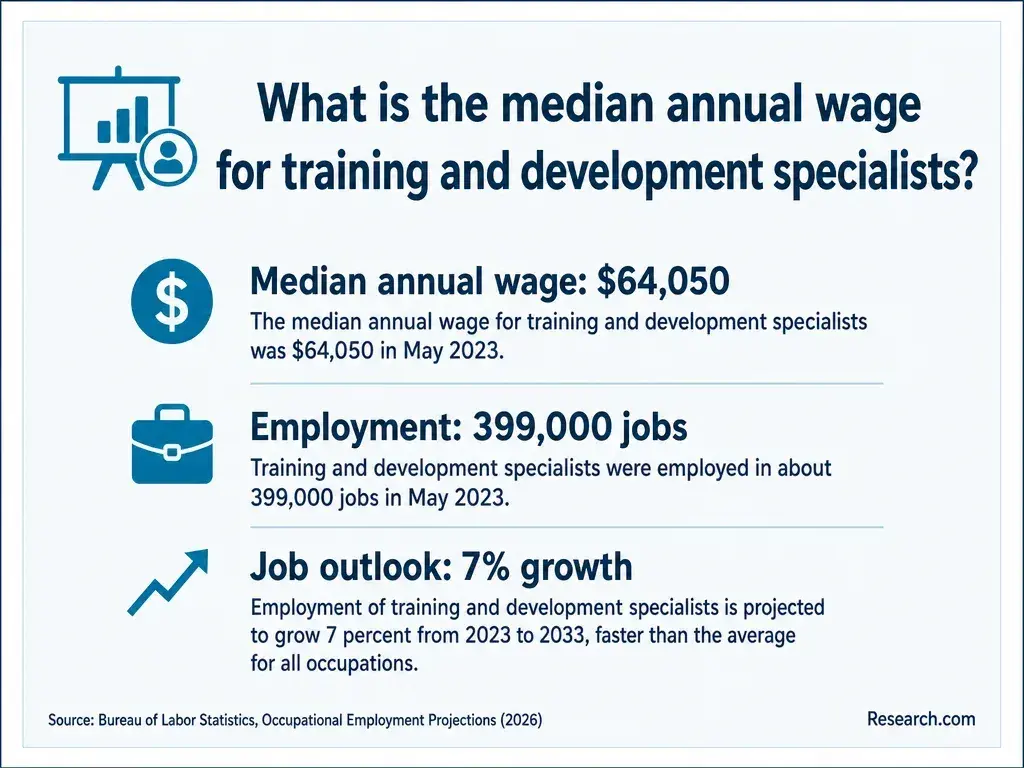
There is no single salary for the degree. Pay attaches to an occupation, employer, location, and level of responsibility - not to the diploma alone. As one reference point, the Bureau of Labor Statistics reports a May 2025 median annual wage of $75,940 for human resources specialists. That median covers workers across experience levels and should not be used as the expected starting pay of a school office professional entering HR.
For a useful financial comparison, find local pay ranges for roles you could plausibly enter soon after graduation and compare them with your current compensation. Set those ranges against your estimated remaining degree cost and any borrowing; do not assume a promotion or raise. FAFSA planning for affordable business administration study can inform the funding side, while the school's aid offer establishes what assistance you would actually receive.
Do business administration careers require licenses or professional certifications?
Operations and administrative coordinator roles generally do not have a universal professional license. Some specialized work does: accounting licensure and certain financial-services activities have separate requirements. Voluntary HR or project management certifications have their own eligibility rules. A BS in Business Administration, concentration, or introductory course does not automatically meet them.
Check credentials only after identifying a target role and employer. If job postings primarily ask for project coordination skills, supervised project work or focused training may be more useful than pursuing a credential immediately. If a full specialized degree remains under consideration, compare its curriculum and total cost with low-cost project management degree options. Do not pay for a second broad qualification when a narrower skills gap is the actual obstacle.
Other Things You Should Know About Business Administration
Describe the work performed, its scale, and your responsibility: for example, coordinating schedules across teams or tracking purchasing requests. Use accurate, shareable measures where available, and avoid implying you approved budgets or supervised staff if you did not.
Possibly, but employment alone does not award internship credit. Ask the program whether the role meets its learning objectives, supervision rules, and approval deadlines before relying on it in a graduation plan.
Only if your employer permits it and you protect confidential information. A redacted process map or clearly labeled fictional example may be safer than sharing actual student, employee, vendor, or financial records.
Apply where your evidence matches the work. District and education-adjacent roles may value your sector knowledge; other industries may offer broader operations opportunities but require you to explain transferable processes without relying on school-specific terminology.
- Manage your business - Small Business Administration https://www.sba.gov/counseling/manage-your-business/
- General Schedule Qualification Policies | U.S. Office of Personnel Management https://www.opm.gov/policy-data-oversight/classification-qualifications/general-schedule-qualification-policies/
- Get Occupational Trends | Georgia Department of Labor https://dol.georgia.gov/get-occupational-trends
- Labor market information | Metro State University https://www.metrostate.edu/students/support/career/finding-a-path/labor-market
- BS in Business Administration | Online Bachelor's Degree | Capella University https://www.capella.edu/online-business-degrees/bs-business-program/bachelors-business-administration/
- Online Bachelor's Degree in Business Administration | Purdue Global https://www.purdueglobal.edu/degree-programs/business/bachelor-business-administration/
- How Long Does it Take to Get a Business Degree Online? | stevenson.edu https://www.stevenson.edu/online/about-us/news/how-long-does-it-take-to-get-a-business-degree-online/
- Operations Management Career Path | Roles, Skills & Salary | YSU https://online.ysu.edu/degrees/undergraduate/bsba/management/operations-manager-career-path/
- What Is Supply Chain Management? A Guide to Careers, Salaries & Certifications | UW-Stout Polytechnic https://www.uwstout.edu/programs/bs-supply-chain-management/what-is-supply-chain-management-guide
- Career Path for Business Operations Managers in the USA | Edgewood College https://online.edgewood.edu/blog/business-operations-manager-career-path-in-the-usa/