2027 From a Narrow Technical Role to Business Management: When Does a BS in Business Administration Make Sense?
Audited and Verified:
Our Editorial and Data Verification Process
Research.com uses government datasets, official education statistics and primary institutional information to support its career and degree guides. Our review process checks factual accuracy, occupational definitions, source dates and the requirements associated with the credentials discussed.
How This Article Was Fact-Checked
Our editorial team verifies salary estimates, employment projections, education requirements and program information against original data providers and official organizations. Salary figures are checked against the relevant occupational definitions and reporting periods. Information about licensure, accreditation and required in-person training is reviewed separately.
Fact-checked and verified on:

Co-Founder and Chief Data Scientist
You may know a technical process inside out yet have little responsibility for its budget, staffing, customers, or business results. If you want to move from specialist work into operations or management, a BS in Business Administration could fill some of those gaps - but it is not the only route. This guide is for working technical professionals weighing a degree against targeted training and experience. It explains what the degree teaches, which career moves it can support, and what to verify before committing time and money.
Key Things You Should Know
- A business administration BS makes the strongest case when your target role requires broad business judgment and a bachelor's degree you do not already have; it is less compelling if you need only one targeted skill.
- Technical expertise remains valuable, but advancement depends on evidence that you can work across budgets, people, customers, and operations - not on the degree title alone.
- The U.S. Bureau of Labor Statistics projects 6% employment growth for human resources specialists from 2025 to 2035, illustrating opportunity in one business function, not a guaranteed path from technical work.
What is a BS in Business Administration, and what can it prepare you for?
A Bachelor of Science in Business Administration is an undergraduate degree that combines general education with a broad business core. Depending on the school, that core may cover accounting, finance, marketing, management, economics, operations, and business analytics. The "BS" label does not guarantee identical quantitative requirements or concentrations across institutions; compare actual course lists.
For a technical employee, the value is learning to explain how a sound technical decision affects cost, service, risk, and organizational goals. That preparation can support a move toward project coordination, business operations, or supervisory responsibility. It does not replace industry knowledge or prove readiness to manage staff. If you are comparing curricula and delivery options, leading US colleges for online business study can provide a starting list, but check each school's current degree requirements.
When does a BS in Business Administration make sense for career advancement?
The degree makes sense when you can name a reachable next role, identify the business responsibilities it adds, and see that a bachelor's degree or broad business preparation would close a real gap. For example, a technician who already coordinates vendors and schedules may be closer to an operations role than someone seeking an immediate jump into department management.
The distinction is between learning a missing business function and qualifying for a wider change in responsibility. These pathways meet different needs:
| Pathway | Best fit | Main limitation |
| BS in Business Administration | No bachelor's degree; several business knowledge gaps; target employers value a bachelor's | Substantial time and cost; management experience still matters |
| Targeted course or certificate | Established specialist with a specific gap, such as budgeting or supervision | May not satisfy a bachelor's-degree requirement |
| Employer project or stretch assignment | Worker who needs evidence of cross-functional responsibility | Access and promotion depend on the employer |
If your employer offers tuition assistance, compare its eligible programs, reimbursement timing, and work commitments before choosing a path. Those terms matter as much as sticker price; project management bachelor's tuition assistance options offer a useful adjacent comparison for a project-focused goal.
What careers can you pursue with a BS in Business Administration?
Start with roles adjacent to your technical experience rather than assuming graduation leads directly to a manager title. A manufacturing specialist, for instance, may be able to demonstrate process knowledge in an operations coordinator application; an IT support employee may have relevant experience for project coordination.
The following examples distinguish plausible transitions from roles that usually demand further functional experience:
| Role direction | Typical work | What technical applicants may need to demonstrate |
| Operations or project coordinator | Track schedules, resources, vendors, and progress | Clear reporting, budgeting basics, and coordination across teams |
| Procurement or supply chain staff | Support purchasing, inventory, or supplier processes | Cost comparisons, documentation, and relevant systems experience |
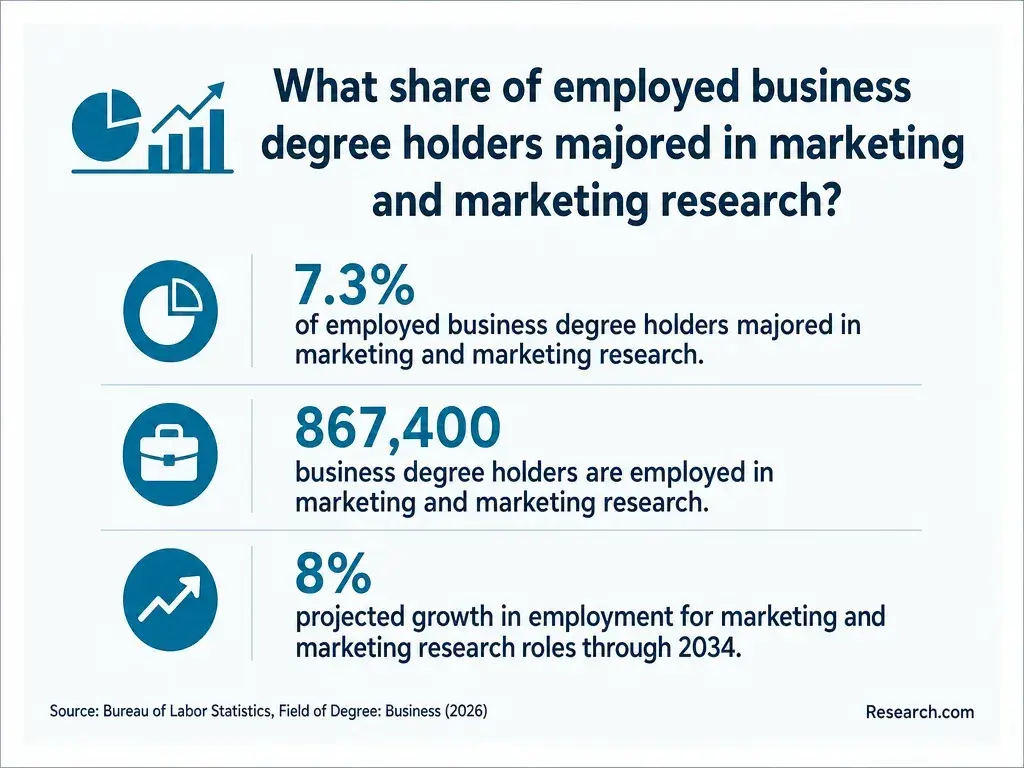
| HR or marketing specialist | Carry out function-specific processes and analysis | Relevant coursework plus direct projects or entry-level functional experience |
| Operations manager | Own performance, staffing, and operational decisions | A record of leadership and results beyond coursework |
If purchasing or logistics is the clear destination, compare the breadth of business administration with the functional depth of economical study options for supply chain careers. A specialized program may be more direct, but its value still depends on your prior experience and target job postings.
Common courses introduce financial and managerial accounting, economics, marketing, management, business law, statistics, and operations. For a technical professional, accounting can help translate process changes into costs, while organizational behavior and operations courses can clarify how staffing, workflow, and service measures interact. Courses provide a foundation, not proof that you have handled a real budget or led a team.
Look beyond the core for an official concentration, relevant electives, and applied work. A project management course may help you plan and communicate work, but it is not a professional certification. If project leadership is your specific goal, compare the curriculum with affordable online project management degrees rather than assuming a general business program goes as deep. Ask whether a capstone can address an approved workplace problem and what permissions are required to use employer information.
Online study can reduce commuting and make it easier to remain employed. Campus study may offer more predictable in-person interaction and easier access to local recruiting. Neither format is automatically more flexible: online courses can still require live discussions, group presentations, scheduled exams, or fixed weekly deadlines.
For a technical worker with shifts or on-call duties, request a sample course schedule and check assessment times, team assignments, software requirements, and any campus visits. Then compare a pace you can sustain while working with the advertised speed of completion. national rankings of fast-paced business bachelor's programs can identify programs to investigate, but a shorter advertised calendar does not establish that their weekly workload will fit your job.
First, confirm that the institution holds recognized institutional accreditation. Then check whether any advertised business accreditation - such as AACSB, ACBSP, or IACBE - covers the relevant business school or program. Institutional and business accreditation have different scopes; neither guarantees a job or promotion.
Check the institution's and accreditor's current records, especially if a program page makes a broad accreditation claim. This applies to specialized alternatives too: when reviewing low-cost project management schools and aid options, verify the specific institution and program rather than relying on "accredited" in a listing. Also ask your employer whether it has separate rules for reimbursable schools.
Requirements depend on whether you apply as a first-year student, transfer student, returning student, or second-degree applicant. Schools commonly request prior academic transcripts; a business major may also have its own GPA or prerequisite rules. Technical employment can strengthen an application, but it does not automatically replace required coursework.
If you have college credit, request an official evaluation showing which courses satisfy general education, business core, electives, and any residency requirement. Credit accepted by a school is not necessarily credit applied to the major. Ask specifically about your mathematics, statistics, and accounting preparation and whether prior learning can be assessed. If an HR transition interests you, human resources degree options for college transfers provide an adjacent pathway to compare after you receive a school-specific credit evaluation.
Completion time depends on remaining requirements, transferred credits that actually apply, course availability, and the pace you can manage alongside work. A part-time schedule may protect earnings while extending the time you pay for technology, books, or other recurring needs. An accelerated schedule may shorten the calendar without reducing coursework.
For a useful cost comparison, request a degree audit and price the remaining courses at each school. Include mandatory fees, materials, possible travel, financing costs, and any lost work time. Compare when employer reimbursement arrives with when tuition is due; reimbursement may not solve an immediate cash-flow problem. economical online business administration college programs can help build a shortlist, but advertised tuition is not your personal completion cost.
There is no single salary or growth rate for business administration graduates. Pay follows the occupation, location, industry, responsibilities, and experience. As one example, the U.S. Bureau of Labor Statistics reports a May 2025 median annual wage of $75,940 for human resources specialists. That occupation-wide median is not a starting salary for someone moving from a technical job into HR.
Use labor-market figures only after identifying realistic target roles. Compare local job postings with your existing skills, then weigh the likely entry route and degree cost - not an experienced manager's wage - when estimating potential returns. lower-priced college options for business majors may improve the cost side of that comparison, provided the program fits the role and your credits apply.
Do business administration graduates need certifications or professional licenses?
A general business administration BS does not itself confer a professional license, and many coordination and operations roles do not require one. Some specialized work has separate rules: accounting licensure, certain financial services activities, and other regulated responsibilities may require specified education, exams, supervised experience, or state approval. Voluntary HR and project management certifications also have their own eligibility rules.
Check the credential requirements of the precise role before choosing electives or assuming a certificate will help. If your goal is supervising a technical team rather than entering a regulated profession, employer leadership training and documented responsibility may matter more than a new credential. explore shorter organizational leadership bachelor's programs as an alternative, while confirming that their curriculum and actual completion requirements fit your goal.
Other Things You Should Know About Business Administration
Yes. Some roles combine technical judgment with responsibility for schedules, vendors, service quality, or team coordination. Review the actual duties: a role may offer broader influence without requiring you to stop doing technical work altogether.
Possibly. Ask the school to evaluate official military learning records and show where any awarded credit applies in the degree audit. Accepted elective credit may not replace a required business course.
Only if the school approves the project and your employer permits the proposed use of information. A public or synthetic-data version may be safer when records contain customer, employee, or proprietary details.
Diploma wording is set by the institution. Ask the registrar for the exact diploma and transcript wording rather than assuming online and campus versions are recorded identically.
- General Schedule Qualification Policies | U.S. Office of Personnel Management https://www.opm.gov/policy-data-oversight/classification-qualifications/general-schedule-qualification-policies/
- Understanding College Costs | studentaid.gov https://studentaid.gov/resources/prepare-for-college/students/choosing-schools/consider-costs
- Job Levels Descriptions | Boise State Online https://www.boisestate.edu/hrs-job-levels-job-standards/
- Equivalences for Education and Experiences | Human Resources https://www.etsu.edu/human-resources/hiring/equivalences.php
- Is Business Administration a Good Major? | The University of Olivet https://www.uolivet.edu/is-business-administration-a-good-major-and-why/
- 10 Best Business Degrees for High Pay and Career Growth | Pace University New York https://www.pace.edu/news/best-business-degrees-undergrad-grad
- What's the Difference Between Business Administration and Business Management? | Husson University https://www.husson.edu/online/blog/2022/02/business-administration-vs-business-management
- 11 Types of Business Degrees and Career Pathways | National University https://www.nu.edu/blog/types-of-business-degrees/
- College Credit for Work and Life Experience | Purdue Global https://www.purdueglobal.edu/transfer-students/work-life-experience/
- Business Administration vs. Management Degrees | CMU https://www.calmu.edu/news/business-administration-vs-management