2027 Fastest Accredited Online Sports Psychology Degree Programs That Accept Transfer Credits

Co-Founder and Chief Data Scientist
Transfer credits can turn an online sports psychology degree from a four-year plan into a much shorter degree-completion path, but only if the credits apply to the right requirements. Recent NCES data shows that more than half of U.S. undergraduates took at least one distance education course, making online transfer pathways a mainstream option.
This guide is for transfer students, adult learners, athletes, coaches, and degree completers who want the fastest legitimate route to graduation. You'll learn how to compare accredited programs, transfer limits, residency rules, cost, and realistic completion timelines.
Key Things You Should Know
- The fastest realistic route is usually a regionally accredited bachelor's program in sport psychology, psychology with a sport psychology concentration, or performance psychology that accepts up to 90 semester credits or 135 quarter credits and requires about 30 semester credits or 45 quarter credits in residence.
- Transfer-friendly options commonly include Southern New Hampshire University, Liberty University, Grand Canyon University, National University, and similar accredited online programs, but the fastest choice depends on how many credits satisfy general education, major, upper-division, and elective requirements.
- A student entering with about 60 applicable credits may need roughly 18 to 24 months; a student entering with about 90 applicable credits may finish in about 8 to 12 months if the school offers frequent starts, accelerated terms, and the remaining major courses in the right sequence.
What Are the Fastest Accredited Online Sports Psychology Degree Programs That Accept Transfer Credits?
The fastest accredited online sports psychology degree programs are not always the ones with the highest advertised transfer-credit maximum. The better question is: which program will accept your previous credits, apply them efficiently to the degree plan, offer the remaining courses online, and let you complete the residency requirement without unnecessary delays?
Sports psychology is usually offered in one of three undergraduate formats: a dedicated sport psychology degree, a psychology degree with a sport psychology concentration, or a related performance psychology program. For students who plan to become licensed psychologists, a bachelor's degree is only an early step; doctoral study and state licensure are typically required. For students interested in coaching, wellness, athletic performance support, recreation, graduate school preparation, or human performance roles, an online bachelor's program can be a practical foundation.
The comparison below focuses on accredited U.S. online bachelor's options that are commonly relevant to sports psychology and transfer students. Policies can change, so students should always request an official transfer evaluation before enrolling.
| Program type | Common online examples | Accreditation to verify | Typical transfer-friendly feature | Fastest-fit student |
| BA or BS in psychology with sport psychology concentration | Southern New Hampshire University; Liberty University | Institutional accreditation from a recognized accreditor such as NECHE or SACSCOC | Often allows up to about 90 semester credits toward a 120-credit bachelor's degree | Students with completed general education credits, psychology prerequisites, and elective credits |
| Dedicated sport psychology or performance psychology degree | National University; Grand Canyon University-style performance and sport psychology pathways | Institutional accreditation such as WSCUC or HLC | May offer accelerated course blocks, monthly starts, or structured online sequencing | Students who want the transcript and curriculum to clearly emphasize sport, performance, or applied psychology |
| Psychology degree with related electives | Regionally accredited public or private online universities | Institutional accreditation listed in federal recognition databases | May accept broad lower-division transfer credit but require specific major courses in residence | Students planning for graduate psychology, counseling, kinesiology, coaching, or health-related master's programs |
A transfer-friendly program is usually best for students who already have college credit, an associate degree, military training, standardized exam credit, or professional learning that can be documented. Students starting from zero credits may still benefit from accelerated terms, but they should compare these options with a broader accelerated bachelor's degree search because the fastest sports psychology-labeled program may not be the fastest route to a psychology-related credential.
Before choosing, separate marketing speed from academic speed. A school may advertise eight-week courses, monthly starts, or a generous transfer cap, but your actual timeline depends on the number of credits that apply, the order in which upper-level courses are offered, and whether prerequisites block you from taking multiple courses at once.
How Fast Can You Complete an Online Sports Psychology Degree With Transfer Credits?
With strong transfer credit, an online sports psychology bachelor's degree can be completed much faster than a traditional four-year path. However, the realistic timeline depends less on the school's maximum transfer policy and more on your remaining credits, course load, term length, and whether your required major courses are offered every term.
The table below shows practical completion estimates for a 120-semester-credit bachelor's degree. These are planning ranges, not promises, because every school evaluates credits differently.
| Applicable transfer credits | Credits remaining | Realistic full-time accelerated timeline | Best case for this timeline | Main risk |
| 0 to 30 credits | 90 to 120 credits | 30 to 48 months | Student can take full-time loads year-round | Starting with few credits limits how much acceleration is possible |
| 45 to 60 credits | 60 to 75 credits | 18 to 30 months | General education and electives transfer cleanly | Major prerequisites may still need to be completed in sequence |
| 75 to 90 credits | 30 to 45 credits | 8 to 18 months | Remaining work fits residency, major, and upper-division rules | Not all accepted credits may apply to the sports psychology degree |
| 90+ credits | Usually at least 30 credits remain at many semester-based schools | 8 to 12 months if courses are available year-round | Student only needs required major courses and capstone work | Residency rules may prevent using every possible transfer credit |
Students trying to finish quickly should ask for a degree audit that shows exactly which requirements remain. A generic transfer estimate is not enough because it may count credits toward university admission without confirming whether they fulfill the sports psychology major.
A practical acceleration plan usually includes several steps. The goal is to remove uncertainty before you commit tuition and time.
- Request unofficial transfer reviews from at least three accredited online programs before applying formally.
- Ask each school to separate accepted credits from credits applied to general education, major, electives, upper-division work, and residency.
- Confirm whether required sport psychology, statistics, research methods, abnormal psychology, or capstone courses are offered in every term.
- Build a course plan for the next two to four terms before enrolling so you can identify bottlenecks early.
- Choose the program with the fewest remaining required credits, not simply the school with the largest transfer-credit headline.
Students should also be realistic about workload. Taking two accelerated courses at a time can feel manageable for some adult learners, but research methods, statistics, biological psychology, and capstone courses often require more study time than elective courses.
How Many Transfer Credits Can You Apply Toward an Online Sports Psychology Degree?
Many online bachelor's programs allow transfer students to bring in up to 75% of a degree, which often means up to 90 credits in a 120-credit semester-based program. Quarter-credit institutions may express this differently, such as up to 135 quarter units toward a 180-quarter-unit bachelor's degree. The key is that the transfer maximum is a ceiling, not a guarantee.
The table below summarizes the transfer-credit rules that most affect speed for online sports psychology degree seekers.
| Policy factor | What it means | Why it affects graduation speed |
| Maximum transfer credits | The largest number of outside credits the institution may accept | A high maximum can reduce total coursework, but only if credits match degree requirements |
| Residency requirement | The minimum credits students must complete at the degree-granting school | Even students with many credits may need 30 credits or more at the new institution |
| Major-credit requirement | Courses that must be completed in psychology, sport psychology, or performance psychology | Old electives may not replace required major coursework |
| Upper-division requirement | Junior- and senior-level courses required for graduation | Community college transfer credits are often lower division and may not meet this requirement |
| Minimum grade requirement | The lowest grade the school will accept for transfer, often C or higher | Credits below the threshold may not transfer even if the course is relevant |
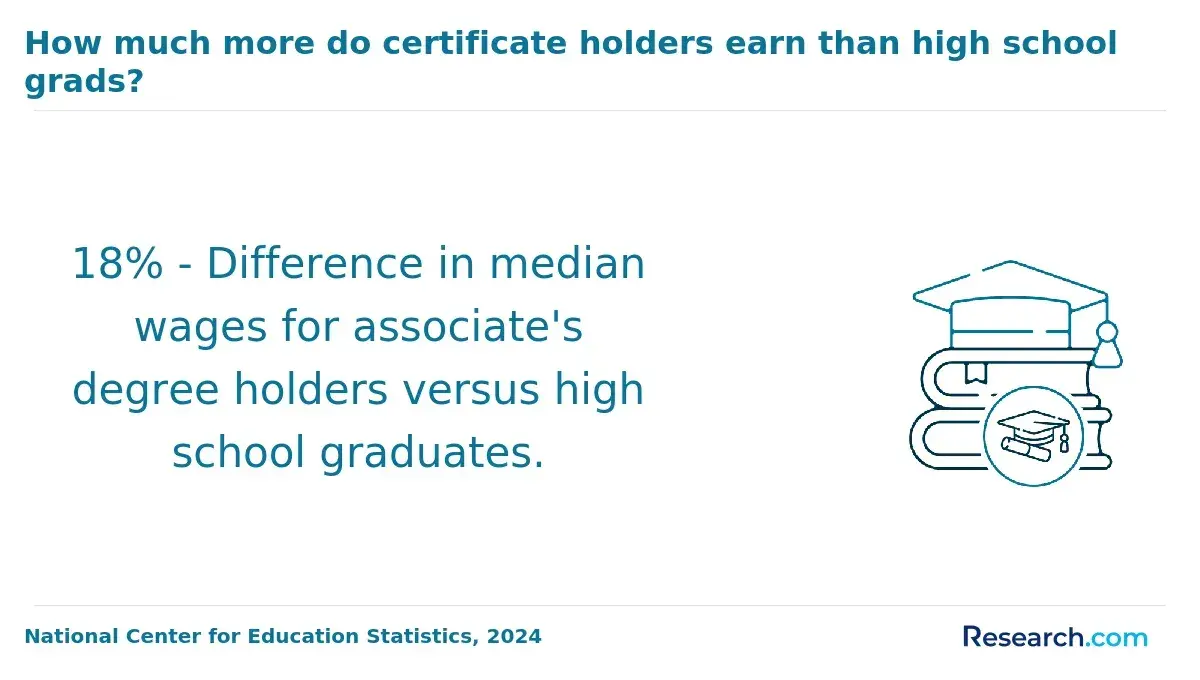
Students with an associate degree often have a strong advantage because many general education requirements may already be complete. Still, an associate degree in general studies, business, or liberal arts may leave more psychology major credits remaining than an associate degree with social science, psychology, statistics, and research-oriented courses.
Common transfer-credit mistakes can delay graduation. Review these before choosing a program.
- Assuming all accepted credits reduce time to degree when some may transfer only as excess electives.
- Ignoring upper-division requirements and discovering late that lower-division credits cannot replace senior-level psychology courses.
- Choosing a school based on a transfer cap without checking the actual course-by-course degree audit.
- Failing to submit every transcript, including community college, dual enrollment, military, and previously attempted university coursework.
- Waiting until after enrollment to ask whether old science, statistics, or psychology courses have expired or need department review.
The best transfer outcome happens when your prior credits fill general education, electives, introductory psychology, statistics, and social science foundations, leaving only focused major coursework and capstone requirements.
How Can You Verify Accreditation for Fast Online Sports Psychology Degree Programs?
Accreditation is the quality-control step that protects the value of a fast online sports psychology degree. For most bachelor's-level sports psychology programs, the essential credential is institutional accreditation from an accreditor recognized by the U.S. Department of Education or the Council for Higher Education Accreditation. Programmatic psychology accreditation is generally not available or required at the bachelor's level in the same way it may be relevant for doctoral psychology training.
Accreditation matters because it can affect transferability, federal financial aid eligibility, employer recognition, and graduate school admission. A fast program that lacks recognized accreditation can cost less upfront but create serious problems later.
Use the following process before enrolling. It is especially important for online students because some unrecognized schools use professional-looking websites and aggressive admissions messaging.
- Look up the institution in the U.S. Department of Education's recognized accreditation database and confirm the accreditor, institutional name, and campus or online division.
- Check whether the institution is eligible for Title IV federal financial aid, even if you do not plan to borrow.
- Ask the admissions office to identify the accreditor in writing and confirm that the online sports psychology pathway is covered by the institution's accreditation.
- For licensure-focused goals, contact the graduate programs or state boards you may apply to later and ask whether the bachelor's degree foundation is acceptable.
- Avoid schools that promise guaranteed licensure, guaranteed transfer acceptance, or unusually fast completion without reviewing transcripts.
Students comparing sports psychology with adjacent health or administration pathways should apply the same accreditation standard used for online healthcare degrees. For example, students exploring bachelors healthcare administration options should still verify recognized institutional accreditation, online delivery authorization, and whether transfer credits apply to the degree plan.
One important limitation: a bachelor's in sports psychology does not make someone a licensed sport psychologist. Licensed psychologist roles typically require a doctoral degree, supervised experience, exams, and state approval. Undergraduate programs can prepare students for graduate study or related performance, coaching, wellness, and behavioral science roles, but they should not be marketed as a shortcut to independent clinical practice.
Which Types of Transfer Credits Can Count Toward an Online Sports Psychology Degree?
Several kinds of previous learning may count toward an online sports psychology degree. Traditional college coursework is the most common, but many adult learners also have exam credit, military learning, workplace training, or certifications that may be evaluated for academic credit.
The table below explains how different credit sources are commonly treated. The exact decision always belongs to the receiving institution.
| Credit source | Examples | Where it may apply | Speed impact |
| Traditional college transfer | Community college, previous university, dual enrollment | General education, electives, introductory psychology, statistics, social sciences | Usually the strongest and most predictable source of transfer credit |
| Associate degree block transfer | AA, AS, or applied associate degrees | General education block, electives, lower-division requirements | Can substantially reduce remaining credits if the school has transfer-friendly policies |
| Standardized exams | CLEP, DSST, AP, IB | General education, introductory courses, electives | Can help fill missing lower-division requirements quickly |
| Military credit | Joint Services Transcript or Community College of the Air Force coursework | Electives, physical education, leadership, general education, occasionally psychology-related areas | Useful when evaluated through ACE-style recommendations and accepted by the school |
| Prior learning assessment | Portfolio, workplace learning, documented training | Electives or specific course equivalents if the school approves | Can shorten the path, but evaluation takes time and is less predictable |
| Professional certifications | Coaching, fitness, wellness, allied health, emergency response | Electives or related applied learning areas | Helpful mainly when the school has a formal credit-for-certification policy |
Course relevance matters. A biology or anatomy course may support a performance-focused curriculum, while a statistics course may satisfy a key psychology requirement. However, a large number of unrelated electives may not reduce the remaining major coursework.
Students should prepare a complete credit file before requesting evaluations. Include official transcripts, course descriptions, syllabi for older or unusual courses, exam score reports, military records, and certificates. The more documentation you provide, the more likely the evaluator can match prior learning to specific requirements.
How Do Residency and Major Requirements Affect Transfer Credits for an Online Sports Psychology Degree?
Residency requirements are one of the biggest reasons a student with many transfer credits may still need a year or more to finish. Residency does not usually mean living on campus; in online programs, it means the number of credits you must complete through the institution awarding the degree.
For a 120-credit bachelor's program, many schools require about 30 credits in residence. Some also require a certain number of upper-division major credits, a senior capstone, or specific concentration courses to be completed at the school. This protects academic integrity, but it can limit how much faster you can graduate.
The table below shows how residency and major rules can change the value of transfer credits.
| Scenario | What the student has | What may still be required | Likely effect |
| High-credit transfer student | 95 previous credits | 30-credit residency minimum plus required major courses | Student may not be able to use all prior credits toward graduation |
| Associate degree graduate | 60 to 75 credits with completed general education | Upper-division psychology and sport psychology courses | Strong acceleration if major prerequisites are satisfied |
| Career changer with unrelated credits | Many business, technical, or elective credits | Psychology core, statistics, research methods, concentration courses | Some credits may apply as electives, but major completion may still take time |
| Former psychology major | Prior psychology coursework, statistics, and research methods | Residency credits, sport psychology concentration, capstone | Often one of the fastest profiles if grades and course age are acceptable |
Major requirements are especially important in sports psychology because the degree often combines psychological theory, research methods, human behavior, performance, motivation, and applied sport contexts. Schools may be flexible with electives but strict about research methods, statistics, ethics, and capstone courses.
Before enrolling, ask direct questions that reveal whether the program is truly fast for your transcript.
- How many credits will apply to the degree, not just transfer into the university?
- How many credits must be completed in residence?
- How many upper-division psychology or sport psychology credits must be taken at this school?
- Are any required courses offered only once or twice per year?
- Can transfer students start major courses immediately, or must prerequisites be completed first?
- Is the capstone available every term, and are there minimum credits required before taking it?
The fastest program is usually the one with the cleanest remaining course map, not the one with the shortest advertising claim.
Can Prior Learning, CLEP, Military Training, or Certifications Help You Finish an Online Sports Psychology Degree Faster?
Prior learning credit can help adult learners move faster, but it works best as a supplement to traditional transfer credit rather than a replacement for the major. CLEP, DSST, military training, and approved certifications are most likely to reduce general education or elective requirements. They are less likely to replace advanced sport psychology, research, or capstone courses.
For students with healthcare, fitness, military, coaching, or wellness backgrounds, prior learning may still be valuable. Someone who completed allied health coursework, for example, may have transferable anatomy, psychology, communication, or ethics credits. Learners comparing career-focused alternatives such as short medical assistant programs should understand that nondegree training may be quick, but it does not automatically convert into bachelor's-level credit unless the receiving school has an approved evaluation pathway.
Prior learning credit is most useful when it fills specific gaps. Here is how to use it strategically.
- Ask the school for its maximum credit-for-prior-learning allowance and whether that allowance is separate from or included in the overall transfer cap.
- Identify remaining general education or elective requirements that could be satisfied by CLEP, DSST, AP, IB, military credit, or portfolio assessment.
- Confirm exam score thresholds before paying for a test.
- Ask whether the school accepts ACE-recommended military or workforce training and how it appears on the degree audit.
- Do not rely on prior learning credit for required upper-division sport psychology courses unless the department confirms a direct equivalency.
Military students should submit the Joint Services Transcript as early as possible. Veterans and active-duty learners may also benefit from schools with dedicated military transfer teams, tuition assistance knowledge, and flexible term starts.
The main red flag is a school that promises large amounts of prior learning credit without reviewing documentation. Legitimate credit evaluation is evidence-based and tied to specific academic outcomes.
How Much Does a Fast Online Sports Psychology Degree Cost After Transfer Credits and Financial Aid?
The cost of a fast online sports psychology degree depends on tuition per credit, remaining credits after transfer, fees, books, technology costs, and financial aid. Transfer credits can reduce total tuition dramatically because you pay only for the credits you still need, but a lower sticker price is not always the best value if the program accepts fewer credits or delays graduation.
Recent College Board data for the 2024-2025 academic year placed average published tuition and fees at $11,610 for in-state students at public four-year colleges and $43,350 at private nonprofit four-year colleges. These figures are not online sports psychology prices, but they show why transfer efficiency matters: reducing even one year of enrollment can have a meaningful financial effect.
Use the following cost items when comparing programs. Schools may describe these differently, so ask for a written estimate based on your specific remaining credits.
- Tuition per remaining credit after the official transfer evaluation.
- Online course fees, technology fees, graduation fees, and transcript fees.
- Textbooks, digital materials, assessment platforms, and proctoring costs.
- Prior learning assessment, portfolio, CLEP, DSST, or military transcript evaluation fees.
- Financial aid eligibility, employer tuition assistance, military benefits, scholarships, and payment plans.
A simple cost comparison should multiply tuition per credit by the number of credits you still need, then add mandatory fees. For example, a school with a higher per-credit tuition may still cost less overall if it applies 90 credits while a cheaper school applies only 60.
Students planning beyond the bachelor's degree should also consider graduate-school cost and career alignment. If your long-term goal moves toward health administration, wellness leadership, or athletic program management, comparing future graduate pathways such as an affordable online MBA healthcare management may help you avoid paying for a bachelor's concentration that does not support your next step.
Financial aid can lower out-of-pocket cost, but it does not erase the importance of total program price. Borrow only what you need, confirm satisfactory academic progress rules for accelerated terms, and remember that taking too many courses at once can backfire if it leads to withdrawals or repeated courses.
How Do Accelerated, Competency-Based, and Self-Paced Online Sports Psychology Degree Programs Compare?
Accelerated, competency-based, and self-paced programs can all shorten the time to graduation, but they work differently. The best format depends on how independent you are, how predictable your schedule is, and how many requirements remain after transfer.
The table below compares the formats most relevant to online sports psychology and psychology-related bachelor's programs.
| Format | How it works | Best for | Potential drawback |
| Accelerated term-based | Courses run in shorter sessions, often 5 to 8 weeks | Students who want structure, deadlines, and frequent start dates | Workload can be intense, especially with statistics or research courses |
| Competency-based | Students progress by demonstrating mastery of competencies | Highly independent students with strong prior knowledge and time to study consistently | Sports psychology-specific options may be limited, and graduate schools may review transcripts carefully |
| Self-paced online | Students complete coursework with flexible pacing within set limits | Working adults with variable schedules | Without strong discipline, flexible pacing can become slower rather than faster |
| Traditional online semester | Courses follow 15- or 16-week semesters | Students who need a manageable pace or plan to study part time | May take longer if required courses are offered only in certain terms |
For many transfer students, accelerated term-based programs are the most practical fast option because they combine structure with multiple starts per year. Competency-based education can be faster for the right learner, but it is less common in specialized sports psychology pathways and may not offer the exact major title a student wants.
Choose the format by matching it to your life, not just the advertised speed. Consider these decision points before enrolling.
- Choose accelerated terms if you can meet weekly deadlines and want predictable course sequencing.
- Choose competency-based study only if the degree title, transcript format, and graduate-school acceptance fit your goals.
- Choose self-paced study if your schedule changes often but you have the discipline to set your own deadlines.
- Choose a slower traditional format if you are working full time, caring for family, or taking demanding courses such as statistics and research methods.
Students who are comparing sports psychology with other fast online degree-completion options may find that a broader accelerated bachelor's degree program provides more scheduling flexibility, while a sport psychology-specific degree provides clearer subject alignment.
Are Fast Accredited Online Sports Psychology Degrees Respected by Employers and Graduate Schools?
Fast accredited online sports psychology degrees can be respected when they come from recognized institutions, include rigorous coursework, and match the student's career or graduate-school goals. Employers and admissions committees generally care more about accreditation, degree relevance, skills, experience, and academic performance than whether the courses were completed online.
Recognition depends on the role. A bachelor's degree may support entry-level or adjacent roles in coaching, recreation, wellness, athletic administration, youth sport programs, performance support, or graduate study preparation. It does not qualify a graduate for independent clinical psychology practice.
The table below connects common goals with the level of education usually expected.
| Goal | Typical education path | How an online sports psychology bachelor's helps | Important limitation |
| Coach, trainer, or performance-support role | Bachelor's degree plus sport, coaching, or fitness experience | Builds knowledge of motivation, behavior, team dynamics, and performance | Employers may also expect coaching credentials or sport-specific experience |
| Athletic administration or recreation leadership | Bachelor's degree; sometimes master's degree for advancement | Supports understanding of athletes, teams, and program environments | Business, management, or administration coursework may also be useful |
| Graduate study in psychology, counseling, or sport psychology | Bachelor's degree with strong GPA, prerequisites, and research preparation | Can provide relevant undergraduate foundation | Graduate admission requirements vary by school and may require specific courses |
| Licensed psychologist or clinical sport psychologist | Doctoral degree, supervised experience, exams, and state licensure | Can be an early academic step | Bachelor's degree alone is not sufficient for licensure |
Salary expectations should be handled carefully because sports psychology graduates enter many different fields. BLS wage data is occupation-based, not degree-based, so it cannot predict what one graduate will earn. Use it only to compare career paths and local labor markets.
Graduate-school applicants should prioritize accredited institutions, research methods, statistics, strong writing, faculty recommendations, and relevant experience. Students considering health and performance-related graduate options outside psychology, such as a master of science in dietetics, should check prerequisite science courses early because sports psychology curricula may not include all required biology, chemistry, or nutrition coursework.
The strongest candidates combine the degree with applied experience: coaching, athletic department work, research assistantships, internships, youth sport programming, strength and conditioning exposure, wellness coaching, or volunteer roles. A fast degree is most valuable when it saves time without weakening preparation.
Other Things You Should Know About Sports Psychology
They overlap, but they are not always identical. Sports psychology usually focuses on athletes, teams, motivation, performance, and sport environments. Performance psychology may apply similar principles to athletes, performers, military personnel, executives, or other high-pressure settings.
Sometimes, but it is less predictable. Regionally accredited institutions often review nationally accredited coursework case by case, and some credits may transfer only as electives. Ask for a written transfer evaluation before enrolling.
They may count if the school accepts the transcript, grade, course level, and content. Some programs are stricter with statistics, research methods, science, or major courses if the coursework is old or no longer matches current curriculum requirements.
Not automatically. If graduate school is your goal, choose a fast program only if it is accredited, includes the prerequisites you need, supports strong grades, and gives you time to build recommendations, research experience, or applied experience.
References
- Applied Sport Psychology Graduate Certificate Online https://www.uws.edu/academics/programs/sport-performance-psychology/graduate-certificate/
- FAQ https://sportpsychassociates.com/faq.html
- Sport and Exercise Psychology (Online) https://springfield.edu/graduate-programs/sport-and-exercise-psychology-online
- Psychology Accreditation: What you need to know https://www.onlinepsychologydegrees.com/articles/accreditation/
- M.S. in Applied Sport Psychology (online) - Kinesiology (Graduate) - Adams State University https://www.adams.edu/academics/graduate/kinesiology/applied-sport-psychology/
- Online Sports Psychology Degree Programs | Psychology.org https://www.psychology.org/online-degrees/sports-psychology/
- Online Sports Psychology Degrees & Programs https://www.sportspsychology.org/degree/