2027 Fastest Accredited Online Early Childhood Education Degree Programs That Accept Transfer Credits

Co-Founder and Chief Data Scientist
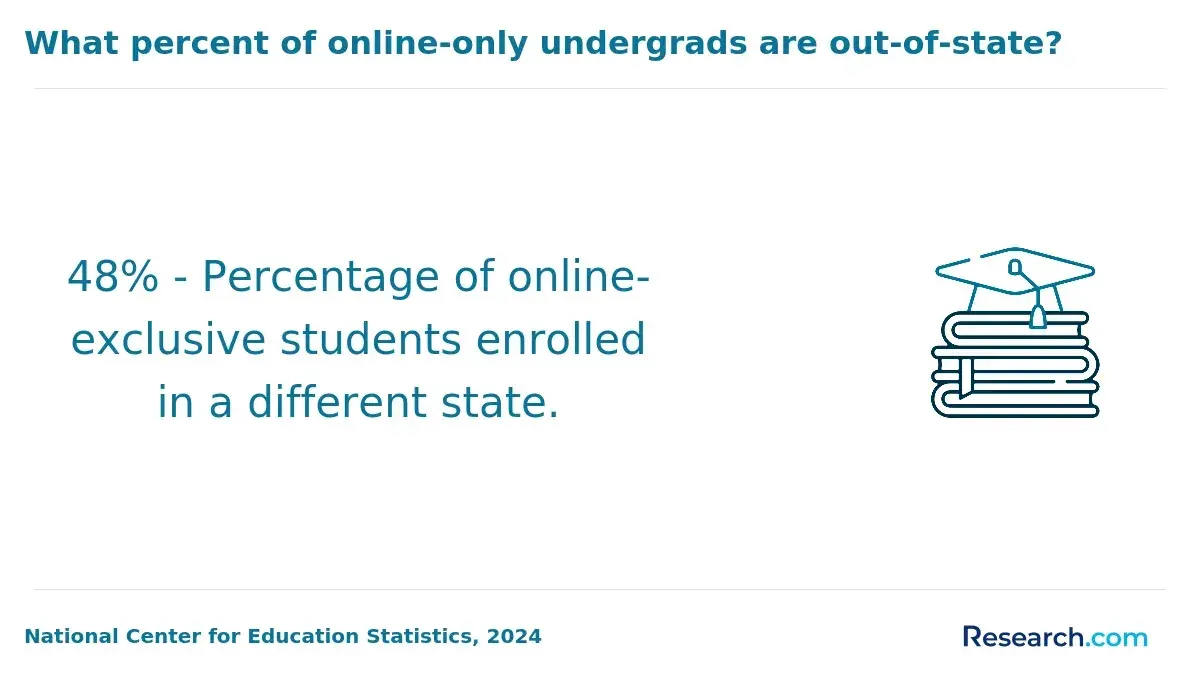
The fastest path to an accredited online early childhood education degree is often not the program with the shortest advertised schedule; it is the one that applies the most of your usable prior credits. NCES reported in its 2024 Condition of Education that more than half of undergraduates took at least one distance education course in fall 2022, making online degree completion a mainstream option.
This guide helps transfer students, working educators, and degree completers compare legitimate accelerated routes, verify accreditation, estimate graduation timelines, and avoid transfer-credit mistakes.
Key Things You Should Know
- The fastest realistic online early childhood education bachelor's paths usually require about 30 remaining semester credits after transfer, which can mean roughly 8 to 18 months depending on term length, course load, fieldwork, and whether the program is licensure-track.
- Transfer-friendly accredited programs commonly allow up to 75% of a bachelor's degree to transfer, often equivalent to 90 semester credits or 135 quarter credits, but only credits that satisfy general education, elective, major, and residency requirements actually shorten graduation.
- Programs from institutions such as Liberty University, University of Arizona Global Campus, UMass Global, Purdue Global, National University, and FIU Online are worth comparing because they publish online ECE-related options, regional or institutional accreditation, and transfer pathways, but final speed depends on an official credit evaluation.
What Are the Fastest Accredited Online Early Childhood Education Degree Programs That Accept Transfer Credits?
The fastest accredited online early childhood education degree programs are usually bachelor's completion programs that combine online delivery, short academic terms, generous transfer-credit policies, and clear degree audits. For most students, the best starting point is not a ranking list; it is a transfer evaluation showing exactly which previous credits apply to the degree.
In this context, "early childhood education" can mean several different degree types. Some programs prepare students for preschool, childcare, Head Start, early intervention, family support, or center administration roles.
Others are teacher-preparation programs that may lead to state licensure for birth-to-kindergarten, pre-K, or elementary settings. Licensure-track programs are often slower because they can require supervised field placements, student teaching, background checks, and state exams.
The table below highlights examples of accredited online ECE-related programs that are often relevant to transfer students. Policies change, so use this as a comparison framework and confirm the current catalog, state authorization, and transfer evaluation before enrolling:
| School or online option | ECE-related degree focus | Published transfer-friendly feature to verify | Why it may be fast for transfer students | Important caution |
| Liberty University | BS in Early Childhood Education Interdisciplinary Studies | Up to 75% of the degree may transfer for many undergraduate programs | Eight-week online courses and a 30-credit remaining path can work well for students with extensive prior credits | Confirm whether the program meets your state's licensure expectations; some tracks are non-licensure |
| University of Arizona Global Campus | BA in Early Childhood Education | Up to 90 approved transfer credits may apply toward many bachelor's degrees | Five-week course format can help motivated students move quickly through remaining courses | Course-at-a-time formats can still take time if major requirements are not already met |
| UMass Global | BA in Early Childhood Education or related child development pathway | Transfer-friendly bachelor's completion structure with prior college credit review | Designed for adult learners and online students who may already have community college or workforce credits | Verify fieldwork, state authorization, and whether the degree is licensure or non-licensure |
| Purdue Global | BS in Early Childhood Administration | Many programs allow up to 75% of required credits to transfer | Quarter-credit structure and frequent starts can help students with prior credits complete administrative-focused coursework faster | Quarter credits are not the same as semester credits, so compare the remaining workload carefully |
| National University | BA in Early Childhood Education or ECE-related teacher preparation option | Prior coursework and applicable transfer units are reviewed for degree applicability | Four-week courses can be efficient for students who can manage intensive pacing | Licensure-track requirements may extend the timeline beyond the classroom coursework |
| FIU Online | BS in Early Childhood Education | Often suited to students entering with lower-division credits or an associate degree | May be efficient for Florida transfer students with completed general education or AA pathways | Upper-division major sequencing can limit how quickly courses can be stacked |
These options are not interchangeable. A student with 90 transferable credits in general education and child development may finish much faster than a student with 90 credits in unrelated subjects, because the second student may still lack prerequisite education courses, practicum requirements, or state-specific content.
Students who are not committed to classroom or childcare settings may also compare adjacent human services degrees. For example, a bachelor of psychology online may fit learners who want broader preparation in child development, behavior, family services, or graduate study rather than a specifically education-centered undergraduate path.
How Fast Can You Complete an Online Early Childhood Education Degree With Transfer Credits?
With substantial transfer credit, an online early childhood education bachelor's degree can sometimes be completed in about one academic year, but that is usually the best-case scenario for students who have 90 applicable semester credits and no remaining field placement barriers. A more realistic timeline for working adults is often 12 to 24 months, especially if courses are sequenced or the student studies part time.
The number that matters most is not total credits accepted by the university; it is remaining credits after the school maps your transcript to the degree plan. The table below uses a standard 120-semester-credit bachelor's degree to show how transfer credits can affect time to graduation:
| Applicable transfer credits | Approximate credits remaining | Typical remaining courses | Fast full-time online estimate | Working-adult estimate |
| 90 credits | 30 credits | About 10 courses | 8 to 12 months | 12 to 18 months |
| 75 credits | 45 credits | About 15 courses | 12 to 18 months | 18 to 24 months |
| 60 credits | 60 credits | About 20 courses | 18 to 24 months | 24 to 36 months |
| 30 credits | 90 credits | About 30 courses | 30 to 36 months | 3 years or more |
| 0 to 15 credits | 105 to 120 credits | About 35 to 40 courses | 3 to 4 years | 4 years or more |
Several factors can make the timeline shorter or longer than the credit math suggests. Before choosing the "fastest" program, compare these constraints in the degree audit, not just the admissions brochure:
- Term length: five-week and eight-week courses can move quickly, but they require more weekly study time than traditional 15-week courses.
- Course sequencing: Some education courses must be taken in order, so a missing prerequisite can delay later classes.
- Field experience: Observation hours, practicum, or student teaching may require local site approval and cannot always be accelerated.
- Licensure alignment: State-approved teacher-preparation programs can take longer than non-licensure ECE studies degrees.
- Maximum course load: Some schools limit how many credits online students can take per term without approval.
The best fast path is a program that gives you a written remaining-course plan before you commit. If a school advertises "finish in 12 months" but cannot show how your transfer credits apply, treat the claim as a marketing estimate rather than a personalized timeline.
How Many Transfer Credits Can You Apply Toward an Online Early Childhood Education Degree?
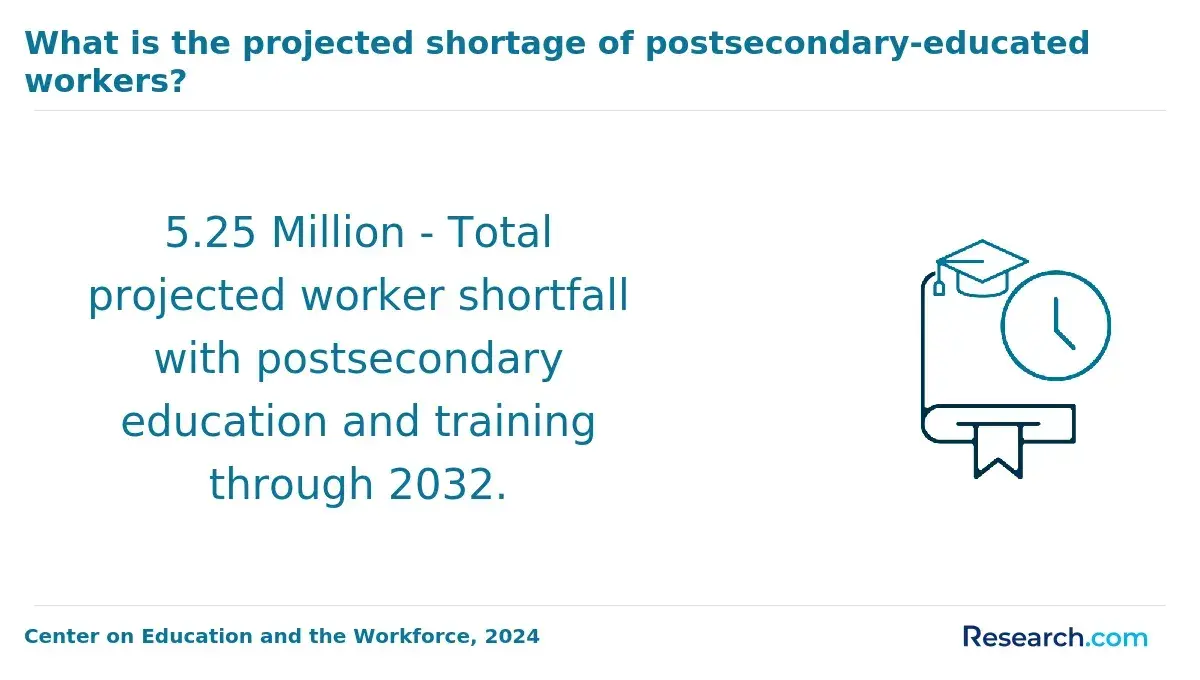
Many online bachelor's programs allow transfer students to bring in up to 75% of the total degree, commonly 90 semester credits for a 120-credit bachelor's program. However, early childhood education majors may have stricter requirements for upper-division coursework, field experience, professional standards, and state-specific content.
The difference between "accepted" and "applied" credits is critical. A university may accept your credits for admission, but some may only count as electives and may not reduce the number of major courses you still need:
| Transfer-credit category | What it means | How it affects speed | Question to ask |
| Institutional maximum | The highest number of credits the school may accept from prior institutions | Sets the outer limit, but does not guarantee a shorter path | What is the maximum transfer allowance for this specific ECE degree? |
| Degree-applicable credits | Credits that satisfy general education, major, prerequisite, or elective requirements | These are the credits that actually reduce remaining coursework | How many of my credits apply directly to the degree plan? |
| Upper-division requirements | Advanced courses that must be completed at the junior or senior level | May require additional courses even when a student has many lower-division credits | How many upper-division ECE credits must I complete here? |
| Residency credits | Credits that must be completed through the degree-granting institution | Usually creates a minimum remaining workload | What is the minimum number of credits I must take at your school? |
| Major or professional core | Required education, child development, assessment, family, curriculum, or practicum courses | Can slow completion if prior credits are mostly general electives | Which major requirements cannot be waived or transferred? |
To avoid surprises, request an official or preliminary degree audit as early as possible. Then compare schools based on remaining credits, not just transfer maximums. A school that accepts 75 credits but applies all of them to the degree may be faster than a school that accepts 90 credits but leaves you with several unmet major requirements.
How Can You Verify Accreditation for Fast Online Early Childhood Education Degree Programs?
Accreditation is the main quality-control checkpoint for online early childhood education degrees. It affects credit transfer, financial aid eligibility, employer recognition, graduate-school admission, and, in licensure pathways, whether the program can support teacher certification requirements.
Use a layered approach because "accredited" can mean different things. Institutional accreditation applies to the college or university, while programmatic approval or recognition may apply to teacher-preparation or educator-licensure programs:
- Confirm institutional accreditation through the U.S. Department of Education or Council for Higher Education Accreditation databases, using the exact school name and campus or online entity.
- Check whether the specific ECE program is licensure, non-licensure, administration-focused, or child development-focused, because accreditation of the university does not automatically mean the degree leads to teacher certification.
- For licensure-track programs, verify state educator-preparation approval with the state board of education where you plan to work.
- Ask whether the program has CAEP, AAQEP, NAEYC-related recognition, or another relevant educator-preparation approval if that matters for your target role.
- Confirm state authorization for online enrollment and field placement in your state before submitting deposits or registering for courses.
Red flags include schools that avoid naming their accreditor, promise automatic teacher licensure in every state, pressure you to enroll before reviewing transcripts, or describe "national accreditation" in vague terms without explaining how credits will transfer to regionally accredited colleges. A fast program is only useful if the credential will be recognized where you want to work.
Which Types of Transfer Credits Can Count Toward an Online Early Childhood Education Degree?
Online early childhood education programs may evaluate many kinds of prior learning, but each type of credit is treated differently. The strongest credits are usually college courses from accredited institutions that match general education, child development, psychology, education, family studies, or curriculum requirements.
The most useful transfer credits typically fall into the categories below. Review them before applying so you can gather documentation and ask more precise questions during admissions advising.
- General education credits: English composition, mathematics, science, humanities, social science, and communication courses often transfer well if they meet minimum grade and accreditation requirements.
- Early childhood or education courses: Child growth and development, early literacy, classroom management, family engagement, assessment, and curriculum courses may apply to the major if they match the school's course outcomes.
- Psychology and human development courses: Lifespan development, child psychology, abnormal psychology, and behavior-related coursework can be valuable, especially in programs that include child and family studies components.
- Community college associate degree credits: An AA, AS, or AAS in early childhood education may reduce lower-division requirements, though applied associate degrees sometimes include technical credits that transfer as electives.
- Prior four-year college credits: Previous bachelor's-level coursework may satisfy upper-division electives or general education requirements if the credits are recent and relevant.
- Standardized exam credit: CLEP, DSST, AP, or IB credit may apply to general education or elective categories depending on the school's score policies.
Credit age can matter. Some schools accept older general education credits but may require recent coursework for child development, special education, assessment, health and safety, or technology-related requirements. If your credits are more than several years old, ask whether the department has expiration rules for professional or major courses.
Transfer students should also consider whether their long-term goal is classroom teaching, childcare leadership, counseling, social services, or graduate study. If you are comparing child development with broader behavioral science pathways, psychology coursework may carry differently across programs than it would in a dedicated ECE major.
How Do Residency and Major Requirements Affect Transfer Credits for an Online Early Childhood Education Degree?
Residency requirements are the minimum number of credits you must complete at the school that grants the degree. Major requirements are the specific courses or competencies you must complete for the early childhood education major. Together, they often determine the true minimum timeline for transfer students.
The fastest possible completion plan usually occurs when your transfer credits satisfy general education and lower-division requirements, leaving only the school's required residency and upper-division ECE courses. The table below shows how common rules can change the remaining workload:
| Policy requirement | Common bachelor's degree pattern | Effect on transfer students | What to verify |
| Minimum institutional residency | Often around 30 semester credits or 25% of the degree | Creates a floor below which the remaining credits cannot usually drop | Whether online courses count toward residency |
| Upper-division credit minimum | Often required in junior- and senior-level coursework | May require additional courses if most transfer credits are lower division | How many upper-division credits must be completed in the major |
| Major core requirements | Specific ECE, child development, assessment, family, and curriculum courses | Can prevent unrelated credits from reducing the degree plan | Which major courses accept substitutions |
| Practicum or fieldwork | May require approved local placements or supervised hours | Can slow completion if placements are only available in certain terms | Who secures the placement and how long approval takes |
| Capstone requirement | Usually completed near the end of the program | May not be transferable even for experienced educators | Whether the capstone is offered every term |
A common mistake is choosing the school with the highest transfer cap without checking residency and upper-division rules. If two schools both accept 90 credits, but one requires 36 credits in residence and the other requires 30, the second may be faster only if all required courses are available when you need them.
Ask for a term-by-term plan before enrolling. It should show remaining courses, prerequisites, field requirements, and the earliest possible graduation date based on your intended course load.
Can Prior Learning, CLEP, Military Training, or Certifications Help You Finish an Online Early Childhood Education Degree Faster?
Yes, but only if the school accepts credit for prior learning and applies it to open requirements in your degree plan. Prior learning can be especially useful for experienced childcare workers, paraprofessionals, military-connected students, and students who have completed recognized professional training.
Credit-for-prior-learning policies vary widely, so review the school's rules before paying for portfolio reviews, exams, or transcript evaluations. The options below are most likely to help when they replace general education, elective, or introductory major requirements:
- CLEP or DSST exams can sometimes satisfy general education subjects such as composition, humanities, social science, or mathematics, reducing the number of courses you need to take online.
- Military training may be evaluated through Joint Services Transcript recommendations and applied to electives, leadership, health, safety, or education-related requirements when appropriate.
- Professional certifications such as CDA-related training, childcare credentials, or state early educator training may be considered for credit if the college has an approved equivalency or portfolio process.
- Prior learning assessment portfolios may help experienced educators document college-level learning, but they require evidence, faculty review, and time, so they are not always the fastest option.
- AP or IB credits from high school may still be usable if official score reports are sent and the program accepts the scores for current requirements.
The key is to compare the time and cost of earning alternative credit against simply taking the course. For example, a CLEP exam may be efficient for a general education requirement, while a portfolio for a specialized ECE course may take long enough that an accelerated online course is simpler.
Students interested in child behavior, autism services, or future graduate training may also explore specialized pathways beyond ECE. An accelerated BCBA program online is usually a graduate-level route, but reviewing those requirements can help undergraduates choose relevant psychology, behavior, and child development electives early.
How Much Does a Fast Online Early Childhood Education Degree Cost After Transfer Credits and Financial Aid?
The cost of a fast online early childhood education degree depends on tuition per credit, credits remaining, fees, books, technology charges, field placement costs, and financial aid eligibility. Transfer credits can reduce total tuition dramatically, but only when they reduce the number of credits you must still complete.
College Board's 2024 Trends in College Pricing and Student Aid reported average published tuition and fees of $11,610 for in-state students at public four-year institutions and $43,350 at private nonprofit four-year institutions for the 2024-2025 academic year.
Those figures are not online ECE-specific prices, but they show why remaining-credit math matters: cutting 30 to 60 credits from a degree plan can change the affordability comparison more than a small difference in per-credit tuition.
When comparing programs, estimate total cost using the remaining degree plan rather than the full 120-credit sticker price. Include these items in your calculation:
- Remaining tuition: Multiply the school's per-credit rate by the credits left after transfer evaluation.
- Mandatory fees: Include technology, online learning, graduation, background check, testing, and student service fees.
- Books and materials: ECE courses may require textbooks, curriculum materials, assessment tools, or digital platforms.
- Field placement expenses: Licensure-track students may need fingerprinting, transportation, substitute coverage, or unpaid student teaching time.
- Financial aid: Compare Pell Grants, federal loans, employer tuition assistance, scholarships, military benefits, and state early educator grants.
Low tuition is not always the cheapest choice if the school applies fewer transfer credits. A program charging more per credit may cost less overall if it leaves you with 30 credits instead of 45. Conversely, a very fast program may be financially risky if it requires an unrealistic full-time pace that could force you to reduce work hours.
If you are benchmarking online bachelor's tuition across majors, resources on the best online business degree options can provide a useful comparison point because business programs often publish clear online tuition and transfer pathways. Use that comparison only as a cost benchmark, not as a substitute for ECE-specific licensure and fieldwork checks.
How Do Accelerated, Competency-Based, and Self-Paced Online Early Childhood Education Degree Programs Compare?
Fast online degree formats are not all built the same way. Accelerated programs shorten the calendar with shorter terms, competency-based programs let students progress by demonstrating mastery, and self-paced formats offer scheduling flexibility within school-defined limits.
The right format depends on your transfer credits, work schedule, learning style, and whether the program includes field placements. The table below compares common formats from a transfer-student perspective:
| Format | How it works | Best for | Main speed advantage | Main trade-off |
| Accelerated term-based | Courses run in short blocks such as five, six, eight, or ten weeks | Students who want structure and predictable deadlines | Multiple start dates and faster course turnover | Heavy weekly workload if taking more than one course at a time |
| Competency-based | Students progress by proving mastery of required competencies | Experienced educators with strong prior knowledge and study discipline | Can move faster through familiar material | May not fit licensure programs with fixed fieldwork or faculty-assessed requirements |
| Self-paced online | Students control pacing within a course or subscription period | Highly organized students with variable work schedules | Flexible scheduling can reduce delays between assignments | Requires self-management and may still have term or assessment deadlines |
| Traditional online semester | Courses follow standard 15- or 16-week academic terms | Students who need a slower pace or more instructor interaction time | More manageable workload for part-time learners | Usually slower calendar time to completion |
Accelerated formats are often faster for students who still need many structured ECE courses. Competency-based formats can be faster for experienced professionals who already know the material, but they are not automatically easier and may require strong writing, documentation, and independent learning skills.
This distinction matters across helping-profession degrees, not just ECE. Students comparing online social work programs will see similar trade-offs between accelerated schedules, field placement requirements, accreditation expectations, and professional licensing rules.
Are Fast Accredited Online Early Childhood Education Degrees Respected by Employers and Graduate Schools?
A fast online early childhood education degree can be respected when it comes from an accredited institution, appears on an official transcript, aligns with the role or licensure path, and includes the required field or professional preparation. Employers generally care less about whether courses were online and more about accreditation, completed degree level, relevant experience, state requirements, and demonstrated classroom or childcare competence.
Career outcomes vary by role. BLS May 2024 wage data places preschool teachers, except special education, at a national median annual wage in the high $30,000 range, while preschool and childcare center directors typically show higher median pay because the role involves administration, staffing, compliance, and program leadership.
These national figures should be used as context, not guarantees, because wages depend heavily on state, setting, funding source, credential level, and experience.
Graduate schools may accept online bachelor's degrees from accredited institutions, but admission committees may review GPA, prerequisite coursework, recommendations, field experience, and fit with the graduate program. If you plan to pursue counseling, social work, special education, school psychology, or applied behavior analysis later, choose undergraduate electives that support those prerequisites.
Before enrolling, ask employers or graduate programs what they require. This is especially important if your target role involves public school licensure, Head Start standards, state childcare director credentials, or graduate clinical training. Students considering a future online social work masters degree, for instance, should preserve a strong GPA and complete relevant human development, research, statistics, and social science coursework when possible.
Use this final checklist before choosing a fast program:
- Confirm the institution is accredited and eligible for federal financial aid if you plan to use aid.
- Get a written transfer-credit evaluation showing remaining courses, not just an admissions estimate.
- Verify whether the degree is licensure, non-licensure, administration-focused, or child-development-focused.
- Ask whether fieldwork, student teaching, or practicum can be completed in your state and on your schedule.
- Compare total remaining cost after transfer credits, fees, aid, and lost work time.
- Check whether the degree supports your next step, such as preschool teaching, childcare leadership, public school certification, or graduate study.
Other Things You Should Know About Early Childhood Education
The duration to complete an online early childhood education degree program with transferred credits in 2027 is typically reduced to 1–2 years, depending on the number of credits accepted. Programs usually require 120–130 total credit hours for graduation, with specifics set by the institution.
It might. Non-licensure programs may be fully online, while licensure-track or practicum-based programs often require local observations, field experience, student teaching, background checks, or supervised work with children.
Online early childhood education programs typically require a reliable computer, high-speed internet access, and updated software like word processing tools. Schools may also recommend specific platforms or applications for course delivery. Ensure compatibility with video conferencing and learning management systems.
Collect official transcripts from every college attended, exam score reports, military transcripts if applicable, syllabi for specialized ECE courses, certification records, and documentation of professional training. These records help the school evaluate more credits accurately.
References
- Early childhood education https://www.starkstate.edu/academics/explore-all-programs/early-childhood-education/
- Top Online Schools That Accept Transfer Credits https://www.edvisorly.com/student-guides/online-schools-that-accept-transfer-credits
- Student Right to Know | ACE https://ace.edu/about/student-right-to-know/
- Early Childhood Education Career Pathways | StraighterLine https://www.straighterline.com/blog/online-learning-pioneer-tackles-child-care-workforce-gaps-with-stackable-pathway-in-early-childhood-education
- Early Childhood Education Transfer Pathway Associates Degree Online https://www.southeastmn.edu/major/Early-Childhood-Education-Transfer-Pathway/
- Early Childhood Education Online Completion, B.S. https://vermontstate.edu/academic-programs/early-childhood-education-online-completion-bs/
- 2025 Most Affordable Online Child Development Degrees https://www.onlineu.com/most-affordable-colleges/child-development-degrees
- Everything You Need to Know About Earning a Degree in Early Childhood Education https://mybrightwheel.com/blog/degree-in-early-childhood-education