2027 DNP Adult-Gerontology Acute Care NP Programs for Nurses in Georgia: BSN and MSN Entry Routes and Clinical Training
Audited and Verified:
Our Editorial and Data Verification Process
Research.com uses government datasets, official education statistics and primary institutional information to support its career and degree guides. Our review process checks factual accuracy, occupational definitions, source dates and the requirements associated with the credentials discussed.
How This Article Was Fact-Checked
Our editorial team verifies salary estimates, employment projections, education requirements and program information against original data providers and official organizations. Salary figures are checked against the relevant occupational definitions and reporting periods. Information about licensure, accreditation and required in-person training is reviewed separately.
Fact-checked and verified on:

Co-Founder and Chief Data Scientist
A Georgia nurse seeking to become an adult-gerontology acute care nurse practitioner needs more than a doctoral degree with an appealing schedule. The program must provide the right population-focused education, supervised clinical experiences, and preparation for certification and Georgia APRN authorization.
BSN- and MSN-prepared nurses also enter with different coursework and clinical-hour histories. This guide explains how to compare those routes, assess placement and cost, and identify the questions to settle with a school before applying.
Key Things You Should Know
- A BSN-to-DNP AGACNP route includes initial nurse practitioner preparation; an MSN-to-DNP route may be a doctorate-completion program that does not prepare nurses for a new AGACNP certification.
- Confirm three separate outcomes before enrolling: completion of an AGACNP track, eligibility for a national AGACNP certification exam, and eligibility to apply for Georgia APRN authorization.
- Clinical placements, required campus visits, and accepted prior graduate hours can change the time and total cost substantially; an online course format does not eliminate those obligations.
What are DNP adult-gerontology acute care NP programs in Georgia?
A Doctor of Nursing Practice (DNP) AGACNP program combines practice-focused doctoral study with education for the adult-gerontology acute care nurse practitioner role - if its AGACNP track includes initial NP preparation. AGACNPs evaluate and manage adolescents and adults with acute, complex, or critical health needs within their education, certification, state authority, and employer-granted privileges. Common practice settings include hospitals and specialty services, but the population focus and patient needs matter more than a building's name.
The distinction between the degree and the track is essential. A Georgia school may offer a DNP alongside an AGACNP master's program without offering a BSN-to-DNP AGACNP route. It may also offer a post-master's DNP for nurses who are already certified NPs. Ask for the curriculum and credential awarded for the specific entry route and term, not simply confirmation that the university offers both "DNP" and "acute care." Nurses aiming for longitudinal primary care should compare the population focus before considering accelerated family NP study options; a faster FNP route is not interchangeable with AGACNP preparation.
What are the BSN and MSN entry routes for Georgia DNP AGACNP programs?
The best route depends on the nurse's existing graduate education and whether that education already qualifies them for AGACNP certification. These are distinct admissions and curriculum decisions, not merely different lengths of the same program.
| Starting point | Route to examine | Critical question |
| BSN-prepared RN without NP preparation | BSN-to-DNP with an AGACNP track | Does the track include all initial AGACNP coursework and supervised care required for certification eligibility? |
| MSN-prepared nurse in education, leadership, or another non-APRN field | AGACNP-preparatory graduate route, potentially followed by or incorporated into a DNP | Will the school formally assess prior courses and provide the missing NP and population-focused preparation? |
| Certified NP in another population focus | AGACNP post-graduate certificate or an AGACNP-preparatory doctoral route | What additional coursework and supervised AGACNP care does the school's gap analysis require? |
| Already-certified AGACNP with an MSN | Post-master's DNP | Is the goal doctoral practice improvement rather than a second NP qualification? |
An MSN-to-DNP admission offer does not establish that the student will gain a new NP population focus. Similarly, prior RN employment or clinical hours in another NP specialty do not automatically replace faculty-supervised AGACNP experiences. Request a written review of transcripts, syllabi, certifications, and documented clinical hours. An ADN-prepared RN should first confirm whether a BSN or an eligible bridge is needed; master's nursing study after an ADN can be a separate planning step, not an automatic direct entry into a DNP AGACNP track.
What are the admission requirements for Georgia DNP AGACNP programs?
Schools set their own admission thresholds, but applicants should expect review of an active RN license, an eligible nursing degree, transcripts, graduate-study readiness, references, a statement of goals, and a résumé. A program may also require recent acute or critical care nursing experience, an interview, or specified graduate courses. Ask whether experience is required at application, matriculation, or clinical placement; those dates can differ.
For MSN applicants, the decisive document is often a formal gap analysis: the faculty's review of prior advanced assessment, pathophysiology, pharmacology, population-focused coursework, and supervised hours against the proposed track. Admission to the university is not proof that those credits will apply to AGACNP requirements. Applicants should also ask when background screening, immunizations, site onboarding, and Georgia or other required RN licensure must be complete.
Graduate admissions tests and initial nursing entrance tests serve different purposes. A school's policy on entrance exam policies for nursing applicants does not establish its DNP admission rules. Obtain the AGACNP track's own application checklist and clinical eligibility policies for the intended start term.
"Online" usually describes where academic instruction occurs, not where the nurse completes supervised patient care. A hybrid program may require live classes, simulation, skills assessments, intensives, or travel to campus. Campus-based instruction can make faculty interaction easier to schedule, but it does not necessarily provide a clinical site closer to home.
Compare formats using the obligations that affect work and family schedules: scheduled versus asynchronous coursework, weekday clinical availability, the number and length of campus visits, and who secures and approves preceptors. Ask whether placements are available near your Georgia residence and whether the school permits a proposed site outside Georgia. Placement rules in online FNP programs that provide preceptors illustrate why "online" and "preceptor support" must be checked separately; FNP placement arrangements do not establish what an AGACNP school will do.
Initial AGACNP preparation typically develops advanced health assessment, pathophysiology, pharmacology, diagnostic reasoning, management of acute and complex illness, and care across the adult-gerontology population. Supervised experiences should expose students to relevant patients and decisions under approved preceptors and faculty oversight. The school - not the student's employer alone - determines whether a site, preceptor, encounters, and hours meet its requirements.
DNP study adds evidence appraisal, systems leadership, quality improvement, and an applied practice project. A workplace problem may be suitable for that project, but access to patient data and implementation require appropriate organizational permission and privacy safeguards; the school and site determine any additional review. Keep separate records of direct patient-care hours, other DNP practice hours, simulation, and paid RN work. A program's and certifier's rules determine which experiences count toward each requirement.
Specialty fit matters as much as degree level. A nurse whose goal is primarily psychiatric assessment and treatment should examine the distinct curriculum and population focus of accelerated mental health NP master's coursework rather than assume an AGACNP rotation supplies PMHNP preparation.
A BSN-to-DNP route generally requires more coursework and initial NP clinical preparation than a post-master's DNP for an already-certified AGACNP. An MSN holder changing population focus may still need substantial additional courses and supervised care. Published duration can change with part-time enrollment, course sequencing, placement availability, and the time needed to finish a DNP project; a school's personalized degree plan is more useful than its shortest advertised timeline.
No single Georgia price accurately represents all entry routes. Request an itemized estimate using your credit evaluation and expected enrollment pace. It should separate tuition and mandatory fees from clinical compliance costs, books, travel and lodging for visits or placements, certification and licensure expenses, and any income lost when clinical days displace paid shifts. Also ask how tuition is charged during project continuation and whether employer assistance covers the specific degree and credits.
If the immediate objective is AGACNP eligibility rather than the doctorate itself, compare the total cost and time of an eligible master's or post-graduate certificate route with a DNP. Listings of affordable graduate pathways to NP preparation are a starting point for that comparison, but the listed program must actually offer the required AGACNP preparation.
Check institutional accreditation and nursing program accreditation separately. Confirm the institution's status with its recognized institutional accreditor, then verify that the relevant graduate nursing program is within the scope and dates of accreditation by an applicable nursing accreditor, such as the Commission on Collegiate Nursing Education (CCNE) or Accreditation Commission for Education in Nursing (ACEN). Ask the school how its exact AGACNP track meets the educational requirements of the intended national certifier and Georgia regulator.
These checks answer different questions: institutional accreditation concerns the university; nursing accreditation concerns the nursing program; certification eligibility concerns the graduate's specific NP preparation; and the Georgia Board of Nursing makes APRN licensing decisions. Accreditation of an earlier RN-to-BSN program - even one marketed as RN-to-BSN study without added bedside rotations - does not establish that a later DNP AGACNP track has acceptable graduate clinical preparation. Verify the program's status and the policies applying to your entry term directly with the responsible organizations.
Graduation, national certification, and state authorization are separate steps. An eligible graduate applies to a certifying organization offering an adult-gerontology acute care NP credential, such as the American Nurses Credentialing Center (ANCC) or AACN Certification Corporation, and meets that organization's current education, documentation, examination, and maintenance rules. The credential and exam should match the completed population-focused track.
To practice as an APRN in Georgia, a graduate must then meet the Georgia Board of Nursing's requirements for APRN authorization, including the required RN license and qualifying national certification. Employer credentialing and privileges are additional requirements for a particular job. Check the board's current application instructions rather than assuming that passing an exam or holding an RN multistate privilege confers Georgia APRN authority.
This is a postlicensure advanced-practice pathway. An LPN must first qualify for RN licensure; accelerated LPN-to-RN admission planning addresses an earlier educational decision and does not replace BSN/MSN entry requirements or AGACNP preparation.
Qualified AGACNPs may seek positions in hospital medicine, critical care, cardiology, trauma, surgical, or other acute and complex-care services, subject to each employer's privileges and onboarding. Clinical experience and documented competence remain important: a new NP should assess orientation, consultation access, patient acuity, and expectations for independent work when evaluating an offer.
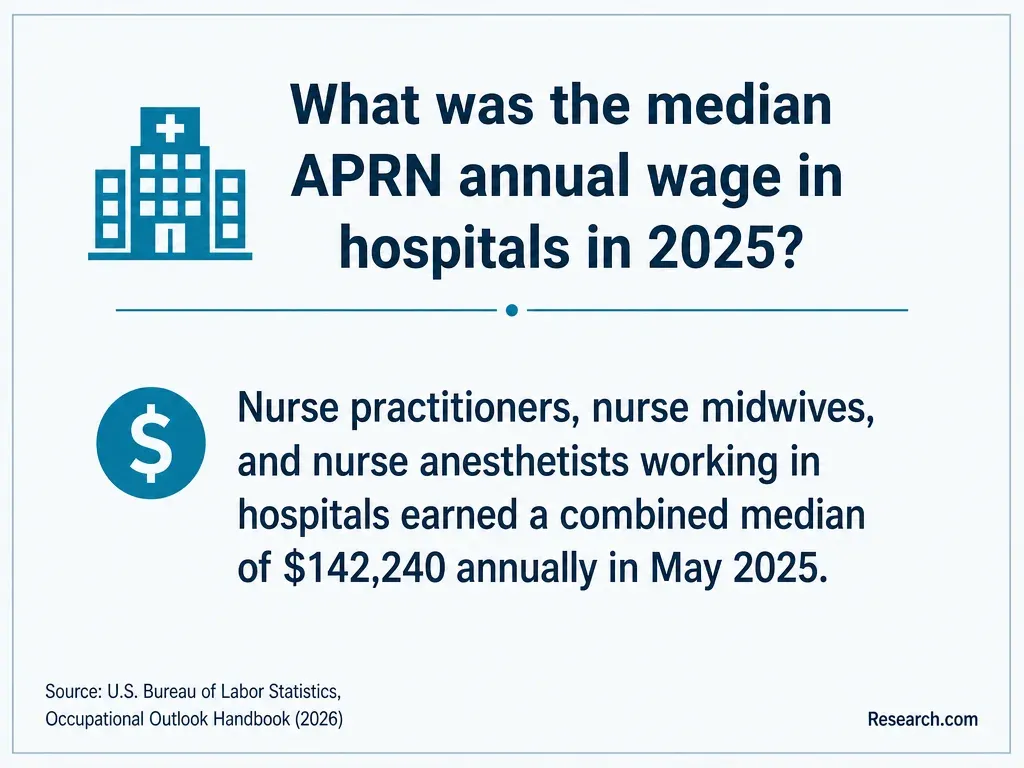
The U.S. Bureau of Labor Statistics reports earnings and employment projections for nurse practitioners as an occupation, not for Georgia AGACNPs or DNP graduates as distinct groups. An occupation-wide median therefore cannot predict a starting offer or a doctoral pay premium. For a useful local comparison, examine actual AGACNP job postings and offers by specialty, experience requirement, shifts, call, benefits, and employer type.
Consider the cost of the qualification against the role it enables, not an assumed salary increase from the letters "DNP." BSN-to-MSN bridge cost comparisons may help frame a lower-cost graduate alternative, provided the specific MSN track prepares graduates for AGACNP certification.
How should nurses choose a reputable Georgia DNP AGACNP program?
Start with the credential you need, then obtain written answers from each school for the same entry route. This prevents a short post-master's DNP from being mistaken for initial AGACNP preparation and makes clinical support and total cost comparable.
Before committing a deposit, request the following evidence and resolve any conflicting answers with the program director:
- Ask for the degree plan for your BSN or MSN starting point, including the AGACNP track, expected award, and any written gap analysis.
- Confirm nursing accreditation, national AGACNP exam eligibility, and how the school addresses Georgia APRN educational requirements for your entry term.
- Get the clinical handbook: required experiences, site and preceptor approval, placement responsibility, geographic limits, and campus attendance.
- Request an individualized estimate covering credits, fees, travel, clinical expenses, and possible extra terms; ask for track-specific completion and certification results if the school reports them.
Use reported outcomes carefully: ask which AGACNP cohort, reporting year, and number of graduates a certification pass rate represents. Short online Doctor of Nursing Practice degrees can be useful comparators for an already-certified AGACNP, but a short doctorate is not evidence that it includes the clinical education needed for initial AGACNP certification.
Other Things You Should Know About Nursing
AGACNP preparation is not pediatric NP preparation. Confirm the age range and population boundaries of your certification and Georgia authority before accepting a position that includes younger patients.
Georgia practice arrangements depend on current state law and the activities involved. Review the applicable Georgia Board of Nursing and medical-board rules, as well as employer policies, before accepting prescribing or other practice responsibilities.
Orientation varies by employer. Ask about supervised onboarding, specialty procedures, consultation, and the criteria used to grant privileges before accepting an offer.
Possibly, if the school approves the project and the employer permits the work and any proposed data access. Agree on supervision, privacy protections, and required organizational review before collecting information.
- Cost of Attendance (Budget) | 2025-2026 Federal Student Aid Handbook https://fsapartners.ed.gov/knowledge-center/fsa-handbook/2025-2026/vol3/ch2-cost-attendance-budget
- GA R&R - GAC - Chapter 410-11 REGULATION OF ADVANCED PRACTICE REGISTERED NURSES https://rules.sos.ga.gov/gac/410-11
- Online vs On-Campus College: Choose the Right Format | Bay Path University https://www.baypath.edu/news/bay-path-university-blogs/post/online-vs-on-campus-college-choose-the-right-format/
- BSN to DNP | Duke University School of Nursing https://nursing.duke.edu/academic-programs/msn-master-science-nursing/bsn-dnp
- DNP: Adult-Gerontology Acute Care Nurse Practitioner | gwu.edu https://nursing.gwu.edu/programs/dnp/adult-gerontology-acute-care-nurse-practitioner
- DNP Online Program (Post Master's - MSN to DNP) | Herzing University https://www.herzing.edu/nursing/dnp/msn-to-dnp/post-msn
- Doctor of Nursing Practice (DNP) - New York City | Columbia School of Nursing https://www.nursing.columbia.edu/academics/academic-programs/doctor-nursing-practice-direct-care
- Class Formats | Ivy Tech Community College https://www.ivytech.edu/classes/class-formats/
- Pathways to the DNP | University of Maryland School of Nursing https://www.nursing.umaryland.edu/academics/doctoral/dnp/dnp-pathways/
- CONAH Online Course Success & Helpful Definitions | Fairleigh Dickinson University https://www.fdu.edu/academics/colleges-schools/nursing/conah-definitions/