2027 Data Science Master's Programs with a Client Project vs. a Simulated Case Study

Co-Founder and Chief Data Scientist
A data science master's program can promise "real-world projects" without telling you whether students work with an outside client or a case study designed by an instructor. That distinction matters if you want experience managing stakeholder requests, restricted data, and changing requirements. It matters less if your priority is a predictable project with room to practice technical methods. This guide helps prospective students identify what a program actually offers and choose the project model that best fits their career goals and schedule.
Key Things You Should Know
- A client project involves an external stakeholder and an authentic problem; a simulated case study may use realistic data but does not necessarily involve a live client.
- Neither format is automatically stronger: compare access to usable data, faculty support, your individual responsibilities, and whether you can show the finished work to employers.
- Ask whether client placement is guaranteed for every student, optional, or dependent on sponsor availability before treating it as a reason to enroll.
What Is a Data Science Master's Client Project Versus a Simulated Case Study?
In a client project, students address a question for an organization outside the instructional team. The client may help define the problem, provide data, review findings, or use a deliverable. A faculty member can still set academic requirements and grade the work. "Client-based" does not mean every student works for a company; clients may be public agencies, nonprofits, or research organizations.
In a simulated case study, an instructor sets the scenario and evaluates students' response. The task might use public data or a realistic fictional brief. Students can still build models, communicate results, and confront practical constraints, but they should not assume an outside organization will review or implement their work.
The labels are not always reliable. An "industry capstone" might offer sponsor feedback but only synthetic data; an independently arranged project might involve a real client even when the degree advertises case-based learning. Ask who defines the question, who supplies the data, who gives feedback, and what deliverable the student produces.
How Do Client Projects and Simulated Case Studies Differ in Learning Outcomes?
Both formats can teach sound analysis. This comparison isolates the differences most likely to affect the evidence of work you leave with.
| Dimension | Client project | Simulated case study |
| Problem definition | Students may negotiate an ambiguous request with a stakeholder. | An instructor can define the scope and learning objectives in advance. |
| Data and constraints | Access, quality, privacy, and changing priorities may shape the work. | Data access and project scope are usually more controllable. |
| Feedback | May include both academic assessment and client review. | Usually comes from instructors and classmates. |
| Portfolio use | May be limited by confidentiality or ownership terms. | Can be easier to share if the data and materials permit reuse. |
Choose client work when stakeholder communication and delivery under real constraints are skills you need to demonstrate. Choose a strong simulation when you need reliable access to data, close instructional feedback, or a public technical portfolio. A poorly scoped client assignment is not necessarily more valuable than a rigorous case study with clear evaluation and reproducible results.
Which Data Science Master's Programs Include Real Client Projects?
Carnegie Mellon University's Master of Computational Data Science, Columbia University's MS in Data Science, and the University of Chicago's MS in Applied Data Science are examples worth investigating for externally connected capstone or project opportunities. Their project structures, sponsors, and participation rules may differ by program and cohort; an advertised partnership alone does not establish that every student receives a client assignment.
For each program, check the current curriculum and ask whether the outside organization supplies a question and data, meets with students, and evaluates a deliverable. Confirm whether a sponsor is assigned, selected competitively, or found by the student. If a particular sector matters to you, ask for recent project examples rather than assuming every sponsor area is available. Students aiming for health technology can also compare project opportunities with AI graduate degrees for health technology roles; access to appropriate health data and domain supervision matters more than the client label.
What Coursework Prepares Students for Data Science Client Projects and Case Studies?
Statistical inference, programming, data management, and model evaluation support either project type. A client project also benefits from training in requirements gathering, privacy, version control, and communicating uncertainty to people who will use the results. Simulation-based programs can teach those skills too, but students should check whether they practice them in a substantial project rather than encounter them only in lectures.
Read course descriptions alongside capstone requirements. Look for evidence that students must justify their choice of metric, document data limitations, test a baseline, and present findings to a defined audience. A catalog entry titled "capstone" does not, by itself, establish how much independent work or stakeholder contact it involves.
Are Online Data Science Master's Programs Effective for Applied Project Work?
Yes, online students can complete meaningful client projects or simulations, but delivery details determine whether the experience fits their lives. Remote client work may require recurring meetings, shared repositories, and coordinated team deadlines. A simulation may offer more predictable access to materials, yet still require synchronous group work.
Ask for the project course's meeting expectations, time-zone arrangements, team-assignment process, and rules for working with client data off campus. If you must study around a job, compare those answers with data science master's programs suited to professional schedules. "Online" describes where you attend, not how flexible the capstone will be.
What Are the Admission Requirements for Data Science Master's Programs?
Requirements vary by institution. Programs may assess quantitative preparation, coding experience, prior degrees, recommendations, and a statement of purpose; some specify prerequisite courses or offer ways to address gaps. Check the current admissions page for each program rather than assuming that professional experience substitutes for a formal prerequisite.
For this decision, readiness also means being able to explain what you contributed to a team project and how you handled imperfect data. If a client-based program expects skills you have not yet developed, ask whether its coursework builds them before project placement. Applicants considering a more AI-focused path can separately examine AI graduate programs with foundation study; a foundation option is not automatically available in a data science program.
How Much Do Data Science Master's Programs Cost and How Long Do They Take?
There is no reliable single price or duration for either project model. Tuition, required fees, credit load, enrollment pace, and residency rules vary by school and can change. A client capstone may also create scheduling or travel costs; a simulation does not necessarily cost less if it belongs to a more expensive degree.
Compare each school's current tuition schedule against its required credits and fees, then ask whether the project adds a separate charge or extends the expected completion time. Account for foregone work hours if client meetings conflict with employment. Avoid comparing one program's tuition-only figure with another's full estimated cost.
How Does Accreditation Affect the Quality of a Data Science Master's Program?
Institutional accreditation is an important baseline check, not proof that a capstone has strong clients or effective supervision. Verify the institution's current status through its recognized accreditor or the U.S. Department of Education, then evaluate the project course separately. Do not assume that a program lacks quality because it does not advertise a data-science-specific accreditation, or that accreditation guarantees a particular project experience.
For project quality, request a recent syllabus or project handbook. It should clarify faculty oversight, assessment, data-use rules, and what happens if a sponsor cannot continue. These details are more useful to this choice than an accreditation claim alone.
What Careers and Salaries Can Data Science Master's Graduates Expect?
Either project format can support applications for data science and related analytical roles if you can explain your methods, decisions, and contribution. Client work may provide a useful example of stakeholder collaboration; a shareable simulation may provide clearer evidence of your code and evaluation process. Neither format guarantees a job.
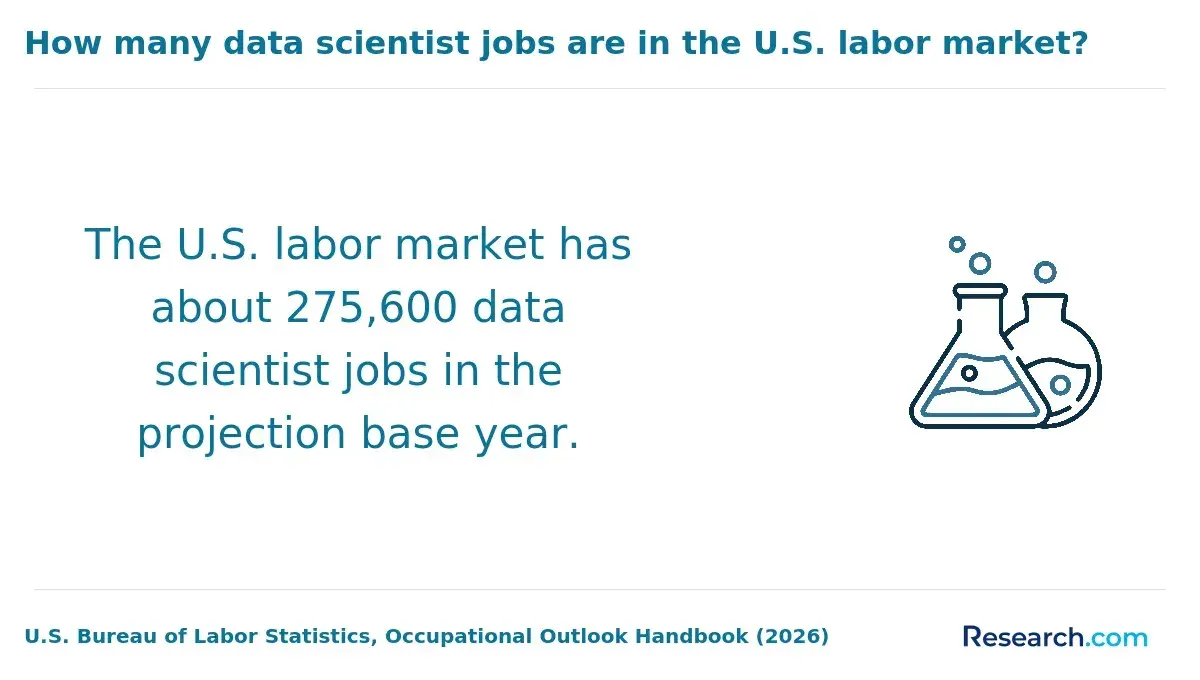
The U.S. Bureau of Labor Statistics reports a $120,230 median annual wage for data scientists in May 2025. That is an occupation-wide figure, not an expected salary for new master's graduates or proof that one capstone format pays more. Prior experience, employer, industry, and location affect an individual offer; data science compensation across industries provides additional context for evaluating career targets.
How Should Students Choose Between Client-Based and Simulation-Based Programs?
Start with the evidence you need at graduation. If you lack experience translating stakeholder needs into analytical work, a well-supported client project may fill that gap. If you need to demonstrate technical depth publicly, a rigorous, shareable case study may serve you better - particularly when client confidentiality would prevent publication.
Before accepting an offer, put the same questions to each program so that you compare actual student experiences rather than promotional labels:
- Is a client assignment required, optional, or subject to sponsor availability, and what happens if a placement falls through?
- Who supplies the data, approves its use, and decides what students may include in a portfolio?
- How often do students receive faculty and stakeholder feedback, and how is individual work assessed on a team?
- Can the program show recent project briefs or anonymized deliverables that reflect what enrolled students actually completed?
A weak answer to those questions is a warning sign, especially if "real-world" is the program's main selling point. If your intended work centers on building AI systems rather than broader data science practice, compare the curriculum and project requirements with university degree options in artificial intelligence before choosing solely on the basis of a client capstone.
Other Things You Should Know About Data Science
Only with permission under the project's data-use and ownership terms. Ask whether you can publish a sanitized description, synthetic-data demonstration, or approved summary of your individual contribution.
Ownership depends on the university's policies and any project agreement. Review those terms before starting, particularly if you want to reuse code or publish a repository.
Yes, if you can identify your own decisions and outputs without claiming teammates' work. Keep a record of your responsibilities, subject to the project's confidentiality rules.
The program's contingency policy governs what happens next. Ask whether students receive a replacement brief, continue with approved data, or move to a faculty-directed project - and how a change affects graduation timing.
References
- Master's in Artificial Intelligence - Computer Science https://cdso.utexas.edu/msai
- Master of Science in Human-Computer Interaction (HCIM) | umd.edu https://info.umd.edu/academics/masters-programs/master-of-science-in-human-computer-interaction/
- Types of Master's Projects | duke.edu https://sites.nicholas.duke.edu/mastersprojectshandbook-imep/types-of-projects/
- Practicums, Internships and Projects What's the Difference? | Oregon State University https://health.oregonstate.edu/internships/types-of-experiential-learning
- In-Person Program - UChicago Data Science Institute https://datascience.uchicago.edu/education/masters-programs/in-person-program/
- HCI Master's Programs: Compare the Training | GradPilot https://gradpilot.com/news/hci-masters-program-comparison