2027 Choosing an Online Data Science Master's for a Career in Cybersecurity Services

Co-Founder and Chief Data Scientist
Choosing an online data science master's for cybersecurity services means looking beyond the degree title. Security teams need people who can analyze logs, detect unusual behavior, and explain findings without mistaking every anomaly for an attack. For prospective students and working professionals, the decision is whether a program builds those capabilities - or whether a cybersecurity or machine learning degree is a better fit.
This guide shows what to check in the curriculum, delivery format, costs, and career evidence before enrolling.
Key Things You Should Know
- Choose a data science master's when you want to build and evaluate analytical systems for security problems; choose a cybersecurity-focused degree if your main goal is hands-on defense or incident response.
- Look for substantial work with security-relevant data, reproducible projects, and instruction in false positives, privacy, and adversarial behavior - not just a course title mentioning cybersecurity.
- The U.S. Bureau of Labor Statistics projects 35% growth in data scientist employment from 2025 to 2035, but that projection covers all industries, not cybersecurity services specifically.
What Is an Online Data Science Master's for Cybersecurity Services?
It is a graduate data science program whose methods can be applied to work performed by security teams, consulting firms, and managed security providers. Relevant work includes identifying suspicious activity in authentication or network records, prioritizing alerts, analyzing malware-related data, and measuring whether a detection system works.
"Cybersecurity track" is not a standard degree designation; some programs may offer a named concentration, while others leave students to assemble relevant electives and projects.
The distinction is the work you want to own. Data science training emphasizes statistical inference, programming, machine learning, and evaluation. A cybersecurity degree may devote more time to networks, defensive operations, digital forensics, or security governance. If you are still weighing an analytics role against other AI-oriented work, AI degree comparisons based on career interests can help clarify which credential fits your intended work.
How Can a Data Science Master's Lead to a Cybersecurity Career?
The most direct route is through a role where security decisions depend on data: detection analytics, threat intelligence analysis, fraud or abuse detection, or security-tool development. Someone already working in a security operations center may bring valuable knowledge of alerts and investigation workflows but need stronger statistics and coding. A data analyst may bring modeling skills but need to learn how networks, identity systems, and incident response work.
A degree alone does not demonstrate that you can make a model useful to an analyst. Build a project that starts with a defined security question, handles messy event data, reports false positives alongside detection performance, and explains how a human would use the result. If you are considering a different industry instead, compare AI master's options for healthcare; healthcare projects and security-services projects pose different domain and data-access problems.
What Should You Look for in an Accredited Online Data Science Master's?
First, verify that the institution holds accreditation recognized by the U.S. Department of Education or the Council for Higher Education Accreditation. Then examine the program, not just the institution: accreditation does not establish that a data science curriculum teaches cybersecurity. Confirm whether the school can enroll students in your state and whether any required activities involve campus visits or restricted software environments.
For career fit, ask for the current course catalog and recent project descriptions. Prioritize programs where you can study statistical modeling, data engineering, model evaluation, and security-relevant applications with faculty support.
A useful question for an admissions adviser is: "Can an online student complete a security-data capstone, and what data, supervision, and computing access would be available?" Treat an unanswered question as a reason to investigate further, not as proof that the opportunity exists.
What Do You Learn in a Data Science Master's Cybersecurity Track?
A strong pathway connects core data science methods to the conditions under which security teams use them. The table separates foundational learning from the security application, so you can inspect course descriptions for real depth rather than relying on a track label.
| Learning area | Security-services application | Evidence of substantive coverage |
| Statistics and experimental design | Estimating whether a detection method improves on an existing process | Evaluation that accounts for rare events and uncertainty |
| Data engineering | Joining authentication, endpoint, and network events | Projects addressing incomplete, inconsistent, or time-ordered records |
| Machine learning | Ranking alerts or identifying unusual behavior | Discussion of changing behavior, false positives, and human review |
| Security context | Interpreting alerts and operational constraints | Assignments using realistic investigation questions, not just generic datasets |
Do not assume an "anomaly detection" lecture is equivalent to a dedicated course or a supervised security project. If modeling depth matters more to you than security-specific coursework, explore online ML master's programs below $20,000 as a separate option, then check whether their project choices support your security goal.
How Do Online and Campus Data Science Master's Programs Compare?
Delivery format changes how you access people, projects, and facilities; it does not, by itself, establish academic quality. Compare specific programs on the same requirements, including course availability and any security-related project restrictions.
| Consideration | Online program | Campus program |
| Work compatibility | May allow study without relocating; live sessions can still constrain schedules | May offer more in-person contact but require attendance near campus |
| Project collaboration | Often relies on remote teams and approved digital resources | May provide easier access to on-site labs or faculty, depending on the program |
| Security-data access | Must be confirmed; online enrollment does not imply access to restricted logs | Must also be confirmed; campus attendance does not guarantee access |
Choose online study if it lets you keep relevant employment and the program can support the projects you need. Campus study may be preferable when a specific lab, employer partnership, or in-person research opportunity is central to your plan. If you are comparing degree subjects as well as delivery formats, online AI master's cost and earnings considerations offer a separate financial comparison; do not treat reported earnings as gains caused by a degree.
What Are the Admission Requirements for Online Data Science Master's Programs?
Requirements vary by institution, so check each program's current admissions page. Applicants may be asked to document undergraduate study, quantitative preparation, programming experience, recommendations, and a statement of purpose. Relevant security work can strengthen an application, but it does not automatically replace a stated mathematics or programming prerequisite.
Before applying, compare your transcript and work samples with the program's stated expectations. If you have investigated incidents but have limited statistical training, ask whether a graded preparatory course would satisfy a prerequisite.
If you have an analytics background, demonstrate security interest through a focused project rather than assuming general modeling experience proves domain knowledge. Distinguish preparation that helps you succeed from coursework the institution formally accepts for admission.
How Long Does an Online Data Science Master's Take and Cost?
There is no reliable universal timeline or price for this specialization. Duration depends on required credits, course sequencing, whether security-relevant electives run regularly, and how many courses you can take while working. Request a term-by-term plan for your intended pace, including when a project or capstone can be completed.
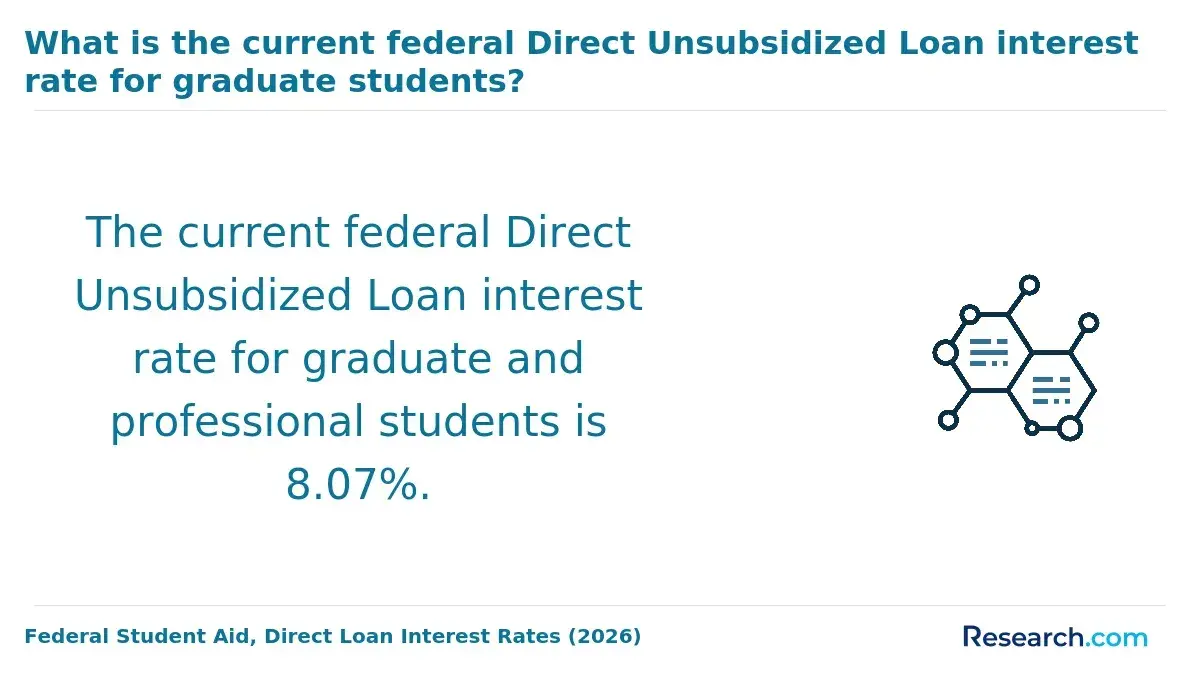
For cost, compare the same components across schools: total required tuition, mandatory fees, software or computing charges, and any travel requirement. Also account for borrowing costs and income you might give up by reducing work hours. Economical online data science master's options can help build a shortlist, but confirm each school's current charges directly. A low tuition figure is not the full cost, and a higher-priced program is not necessarily a better investment.
What Cybersecurity Jobs Can a Data Science Master's Prepare You For?
Job titles vary across employers. The practical distinction is whether the role primarily builds analytics, investigates security events, or combines both. The table shows where graduate data science training is most directly relevant and where additional security experience matters.
| Potential role | Typical contribution | Additional preparation to consider |
| Security data scientist | Builds and evaluates models using security event data | Security operations workflows and data limitations |
| Detection analytics engineer | Develops data pipelines and methods for identifying suspicious behavior | Log sources, detection rules, and production systems |
| Threat intelligence analyst with analytics duties | Connects indicators and behavioral patterns to investigation questions | Threat context and clear analyst reporting |
| Security analyst | Investigates and responds to alerts | Hands-on defensive skills that a data science degree may not teach |
Choose target job postings before choosing electives. If the positions you want emphasize incident handling over modeling, a cybersecurity-focused program or direct operational experience may be more useful than a data science master's.
What Salary and Job Outlook Can Cybersecurity Data Scientists Expect?
The U.S. Bureau of Labor Statistics reports a median annual wage of $120,230 for data scientists in May 2025. That is an occupation-wide figure, not a verified median for cybersecurity data scientists, online master's graduates, or new entrants. Pay for a particular security-services role will depend on duties, experience, location, and employer.
BLS projections likewise indicate demand for data scientists across the economy rather than a guaranteed number of openings in security services. When evaluating a program's employment claims, ask which graduates were surveyed, how many responded, what jobs they held beforehand, and whether a reported salary is a postgraduation level or an increase. Do not use an occupation-wide median as your expected return on tuition.
Which Cybersecurity Certifications Complement a Data Science Master's?
Certifications can signal security knowledge that a data science transcript may not show, but their value depends on the job. CompTIA Security+ may be worth considering if you need to establish broad security fundamentals. Role-specific cloud or security credentials may matter more when target postings repeatedly name a platform. CISSP is generally aimed at experienced security professionals; check its current eligibility rules before planning around it.
Use job postings as a filter rather than collecting credentials indiscriminately. If your main gap is statistical modeling, a security certificate will not fix it. If your main gap is understanding how analysts investigate alerts, a model-heavy degree alone will not fix that either. The strongest combination addresses the gap between your existing experience and the work you want to do.
Other Things You Should Know About Data Science
Not without permission and a careful review for confidential, personal, and security-sensitive information. Use an authorized public dataset or appropriately designed synthetic data when public sharing is the goal.
Some positions serving government clients may require one; many private-sector roles do not. Check each posting rather than assuming clearance is required for the entire field.
No such access should be assumed. Employer agreements, privacy rules, and program policies determine whether workplace data can be used for coursework.
No. Cybersecurity data science focuses on analyzing data and improving decisions or detections. Penetration testing focuses on assessing systems by attempting to find and demonstrate vulnerabilities; it calls for a different skill set.
References
- NSA Development Programs https://www.nsa.gov/Careers/Career-Fields/Development-Programs/
- Cybersecurity Education & Career Development | cisa.gov https://www.cisa.gov/resources-tools/programs/cybersecurity-education-career-development
- MS Digital Forensics and Cybersecurity | University at Albany https://www.albany.edu/business/programs/ms-digital-forensics-cybersecurity
- Online Cyber Security Degree | MS Cybersecurity Master's | University of West Florida Online https://onlinedegrees.uwf.edu/online-degrees/ms-masters-cybersecurity/
- How to Become a Data Scientist | Harvard SEAS https://seas.harvard.edu/news/how-become-data-scientist
- Admissions Information | vt.edu https://data.science.vt.edu/programs/ms-ds/admissions.html
- Cyber Security - Information Technology Master's Degree | UT San Antonio Admissions https://future.utsa.edu/programs/master/msit-cyber-security/
- Data Privacy, MS | Dakota State University https://dsu.edu/programs/MSDP/
- Online Cyber Security Master's Degree | University of North Dakota https://und.edu/programs/cyber-security-ms/index.html
- Program Requirements for Admission | Computer Science (M.S.) | Penn State Harrisburg https://harrisburg.psu.edu/science-engineering-technology/computer-science-ms/program-requirements-admission