2027 Choosing an Online BS in Business Administration Around An On-Call IT Support Role
Audited and Verified:
Our Editorial and Data Verification Process
Research.com uses government datasets, official education statistics and primary institutional information to support its career and degree guides. Our review process checks factual accuracy, occupational definitions, source dates and the requirements associated with the credentials discussed.
How This Article Was Fact-Checked
Our editorial team verifies salary estimates, employment projections, education requirements and program information against original data providers and official organizations. Salary figures are checked against the relevant occupational definitions and reporting periods. Information about licensure, accreditation and required in-person training is reviewed separately.
Fact-checked and verified on:

Co-Founder and Chief Data Scientist
An on-call IT support role can interrupt a study plan without warning. That makes choosing an online BS in Business Administration less about whether classes are online and more about what happens when an incident overlaps an exam, group meeting, or deadline.
This guide is for IT support professionals considering a move toward operations, projects, or business-facing technology leadership. It explains which program policies to inspect, how to plan a workable course load, and when a business degree is worth pursuing instead of a narrower credential.
Key Things You Should Know
- Prioritize courses with recorded instruction and workable deadlines, then verify exam, group-project, and emergency-extension policies; "online" does not mean self-paced.
- Request an official degree audit before estimating completion time or cost: accepted IT coursework may count only as electives, not business requirements.
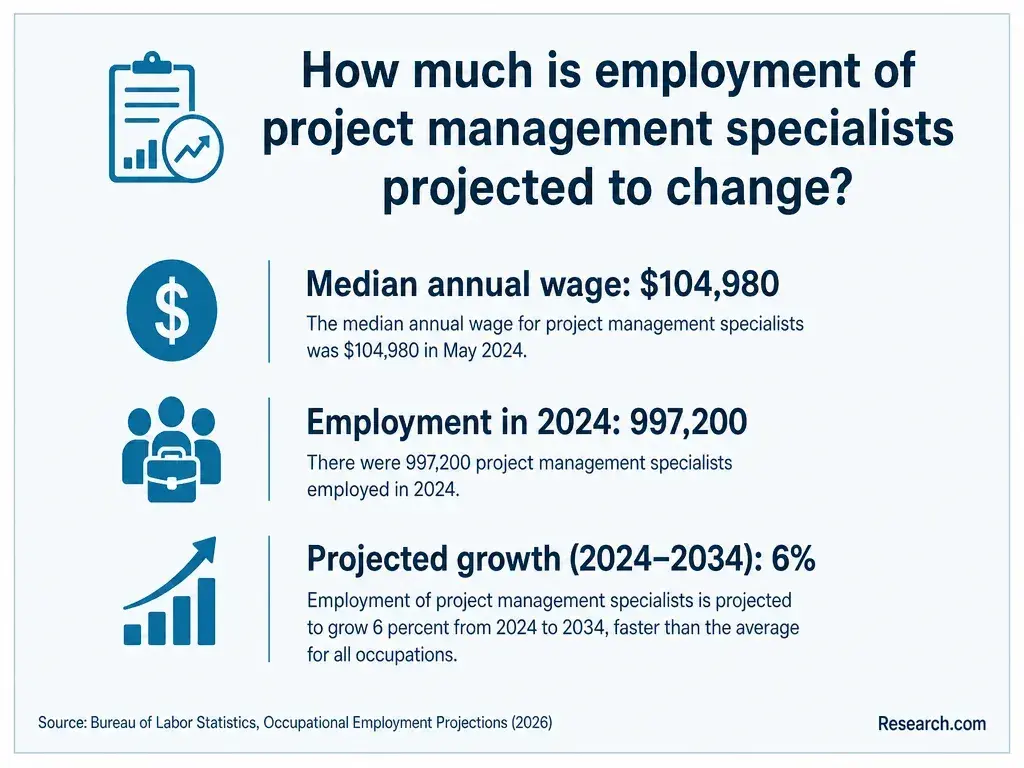
- The U.S. Bureau of Labor Statistics reports a May 2025 median wage of $102,320 for project management specialists, but that occupation-wide figure is neither an IT manager salary nor a likely starting wage after graduation.
What Is an Online BS in Business Administration for IT Support Professionals?
An online BS in Business Administration is an undergraduate degree covering how organizations manage money, people, operations, and decisions. For someone in IT support, its value lies in adding business judgment to existing technical and customer-facing experience: explaining the cost of recurring incidents, coordinating a vendor change, or presenting a service improvement to nontechnical stakeholders.
It is not an IT management credential by itself. A BS in Business Administration, a BBA, and a specialized information systems degree may overlap, but their required courses differ by school. If your goal is to lead a service desk or coordinate technology operations, compare the actual management, operations, analytics, and information systems courses - not just degree titles. If your main gap is supervising people rather than understanding business functions broadly, you can also explore shorter organizational leadership bachelor's programs and check what credits they would still require.
Is an Online Business Administration Degree Accredited and Recognized?
Online delivery does not determine whether a degree is accredited. Check that the institution holds recognized institutional accreditation and that it applies to the school awarding the degree. Then check separately whether the business school or specific program has applicable AACSB, ACBSP, or IACBE accreditation. These are different questions; a claim about the university does not establish that a particular business program has specialized accreditation.
Ask admissions for the exact degree title, awarding institution, accreditation information, and catalog that will govern your enrollment. An employer may accept an accredited online degree while still preferring particular experience or coursework for a role. The same verification matters when comparing alternatives described as accredited: even a list of project management college costs after financial aid cannot establish the accreditation scope or employer fit of a business degree you have not checked individually.
How Can an Online BS Fit Around an On-Call IT Support Schedule?
The best fit is a program whose required activities survive an unpredictable callout - not simply one that advertises asynchronous classes. Recorded lectures can be convenient, while fixed exam windows, live presentations, and group deliverables can still conflict with an incident response.
The comparison below separates common online formats by the commitment most likely to affect an on-call worker. Confirm the format course by course, because requirements can change between instructors and terms.
| Course feature | Potential fit | On-call risk to verify |
| Recorded instruction with weekly deadlines | Study around shifts | Whether an outage excuses a missed submission |
| Scheduled live sessions or group meetings | Regular contact and collaboration | Attendance rules and meeting alternatives |
| Timed or remotely proctored exams | Predictable assessment windows | Rescheduling rules, technology needs, and fees |
| Self-paced or competency-based courses | Potentially variable weekly workload | Term limits, assessment availability, and aid rules |
Before enrolling, share a realistic on-call scenario with an adviser: a priority incident begins just before an exam and lasts through the deadline. Request the written policy on extensions, exam rescheduling, leave, and withdrawal. Review required software, time zones, any campus visits, and how often required courses run. Start with a course load you can sustain during a busy rotation; a faster calendar is not helpful if interruptions force repeated courses. For a broader starting set of options, earn a business administration degree while keeping your job by comparing each program's actual attendance and assessment rules.
Most programs combine general education with a business core, electives, and sometimes a capstone or formal concentration. For IT support professionals, accounting and finance can help with service costs and budgets; operations and management can help with workflows and staffing; and statistics or analytics can help interpret ticket trends. Business communication matters when translating technical risk into choices leaders can act on.
Look beyond course names for assignments you could complete despite an unpredictable schedule. A case analysis may be easier to plan than a live simulation, while a group project may require fixed meetings. An approved workplace project could examine a support process, but employer permission and faculty approval are separate requirements; use only data you are authorized to share. If purchasing, inventory, or vendor coordination is your intended direction, compare the depth of those courses with accelerated undergraduate supply chain programs rather than assuming a general business elective provides equivalent specialization.
Requirements vary by institution and by entry route. A first-time applicant may need secondary-school records; a transfer applicant generally needs transcripts from prior colleges. Some business majors also have separate entry or progression requirements involving grades or preparatory courses. IT employment can strengthen an application, but it does not automatically replace academic prerequisites or award credit.
Ask admissions whether you are applying directly to the major, whether mathematics or introductory business courses must be completed first, and how previous technical coursework will be evaluated. Send official transcripts early, then request a degree audit showing which accepted credits satisfy general education, the business core, electives, and any residency requirement. For a closer look at possible academic preparation, review the prerequisites for a business administration degree; your chosen school's current catalog and evaluation remain authoritative.
Completion time depends on the credits that apply to the degree, the order of remaining courses, and the load you can manage alongside on-call work. An advertised accelerated schedule may assume continuous enrollment and a substantial transfer award. An accepted IT course that fills an elective slot will not necessarily shorten a sequence of required accounting, finance, and capstone courses.
Ask an adviser to map the remaining requirements by term, including prerequisites and the next offering of each required class. Compare a conservative part-time schedule with a faster schedule that leaves room for callouts or a temporary pause. Check whether changing pace affects tuition, aid eligibility, or access to required courses. If project management is another degree option, credit mapping for online project management programs illustrates why transfer-friendly advertising is only a starting point; obtain a program-specific evaluation for either path.
There is no reliable total until a school identifies your remaining requirements and how it charges for them. Compare programs using the same intended course load and include tuition, mandatory technology or proctoring fees, materials, and any travel. A shorter schedule may reduce time enrolled without reducing the work required - or the tuition charged.
The cost components below show what to request in writing before comparing offers. They also distinguish the advertised price from the cash you may need while waiting for employer reimbursement.
| Cost component | Question to resolve |
| Tuition | Is it charged by credit, course, or term, and for which remaining requirements? |
| Fees and materials | Are software, proctoring, books, or campus visits extra? |
| Financial aid | How does the proposed enrollment pace affect eligibility and borrowing? |
| Employer assistance | When is reimbursement paid, and what grades or continued employment are required? |
| Schedule changes | What are the withdrawal, refund, and repeat-course consequences? |
Request an itemized estimate based on the official degree audit, then compare net cost and near-term cash needs rather than tuition alone. If your employer offers education assistance, confirm that this degree qualifies before counting it toward your budget. Online business administration program cost-and-time comparisons can help narrow options, but personalized transfer evaluations and aid offers should control the final calculation.
The most plausible move is usually into a role that uses both your support experience and newly demonstrated business skills. A degree may help meet an employer's education requirement, but hiring and promotion still depend on responsibilities you can document, the tools you know, and available openings.
These paths differ in what you would need to show beyond course completion. Use them to choose electives or workplace assignments with a specific next role in mind.
| Potential path | How IT support experience helps | Additional evidence employers may seek |
| Service operations coordinator or supervisor | Knowledge of escalation, service levels, and user needs | Scheduling, coaching, reporting, and demonstrated accountability |
| Technology project coordinator | Experience tracking incidents and communicating across teams | Plans, risk logs, budgets, and coordination of deliverables |
| Business or operations analyst | Understanding of recurring problems and system workflows | Process maps, data interpretation, and stakeholder requirements |
| IT vendor or procurement support | Familiarity with tools and service issues | Cost comparisons, purchasing rules, and contract coordination |
Document the scope of projects you have actually handled, such as coordinating an approved rollout or improving an authorized workflow; do not present routine ticket resolution as management experience. If your intended switch is instead into employee relations or recruiting, compare HR curricula and career directions before choosing a broad business degree.
There is no single salary for an online business graduate moving from IT support into management. Pay depends on the occupation, location, employer, technical scope, and prior leadership experience. A degree also does not turn a coordinator role into a manager role or make an occupation-wide median an expected offer.
For a related, nonmanagerial comparison, the U.S. Bureau of Labor Statistics reports a May 2025 median annual wage of $102,320 for project management specialists and projects 7% employment growth from 2025 to 2035. Those figures cover workers across industries and experience levels; they are not specific to IT projects, business graduates, or new entrants. For an IT management goal, compare local postings for the precise role and their required supervisory, budget, and technical responsibilities before estimating your likely pay. If your experience is closer to purchasing or logistics, supply chain program tuition time and earnings context offers a separate pathway to evaluate rather than a salary proxy for IT management.
Which Certifications Complement a Business Degree and IT Support Experience?
Choose a certification for a documented skill gap or a target employer's requirements, not as a substitute for experience. IT service management training may suit service operations; a project management credential may suit coordination work; cloud or security credentials may matter more when the next role retains technical ownership. Check each credential issuer's eligibility, exam, renewal, and experience rules before paying - taking a business course does not confer certification.
If job postings call mainly for a specific project method and you already meet their degree requirements, a targeted credential or training course may be more direct than another bachelor's degree. If they require broad business preparation and you lack a bachelor's, the BS may serve a different purpose. Compare the time and full cost of those alternatives, including economical project management education online, against the actual requirements of the role you want.
Other Things You Should Know About Business Administration
That depends on the institution. Ask the registrar for its diploma and transcript wording rather than assuming online and campus students receive identical documents.
Only with appropriate employer permission and within school rules. Tickets may contain personal or confidential information; an approved, de-identified example or fictional case may be safer.
Not automatically. Ask the program whether it requires an internship and whether your current role could qualify through a separately approved process.
Follow the course's written reporting procedure immediately and retain any permitted documentation of the interruption. Rescheduling is governed by the instructor's and institution's policies, so verify them before the term starts.
- Understanding College Costs | studentaid.gov https://studentaid.gov/resources/prepare-for-college/students/choosing-schools/consider-costs
- Credit for Prior Learning | Transfer Credit Ohio https://transfercredit.ohio.gov/students/student-programs/Prior-Learning-Assessments
- IX. Transfer Credits and Credit for Prior Learning | sunyocc.edu https://catalog.sunyocc.edu/content.php
- Transfer Credit and Credit for Prior Learning | gtcc.edu https://www.gtcc.edu/student-life/records-and-transcripts/transfer-credit-and-credit-for-prior-learning.php
- Cost of Attendance | Financial Aid - Georgia Tech https://finaid.gatech.edu/current-cost-overview
- Tuition & Fees for Kent State Online Degrees https://onlinedegrees.kent.edu/tuition-costs
- What Does Asynchronous Mean? A Simple Guide to Online Learning Formats - Professional Development at Charlotte https://professional.charlotte.edu/what-does-asynchronous-mean-a-simple-guide-to-online-learning-formats/
- Management Information Systems: Salary, Careers and Job Outlook | SIUE https://online.siue.edu/degrees/business/mba/management-information-systems/mis-jobs-salary-guide/
- Cost of attendance | Twin Cities One Stop Student Services https://onestop.umn.edu/finances/costs/cost-attendance
- Synchronous vs. Asynchronous Classes: What You Need to Know - Boston University Questrom https://www.bu.edu/questrom/blog/synchronous-vs-asynchronous-classes-what-you-need-to-know/