2027 Choosing a BS in Business Administration When You Have Ninety Credits but No Completed Degree
Audited and Verified:
Our Editorial and Data Verification Process
Research.com uses government datasets, official education statistics and primary institutional information to support its career and degree guides. Our review process checks factual accuracy, occupational definitions, source dates and the requirements associated with the credentials discussed.
How This Article Was Fact-Checked
Our editorial team verifies salary estimates, employment projections, education requirements and program information against original data providers and official organizations. Salary figures are checked against the relevant occupational definitions and reporting periods. Information about licensure, accreditation and required in-person training is reviewed separately.
Fact-checked and verified on:

Co-Founder and Chief Data Scientist
Ninety college credits can put a bachelor's degree within reach, but they do not necessarily leave only a year of coursework. A BS in Business Administration may be a practical completion route if your previous classes satisfy its general education and business requirements - not merely its elective slots.
For returning students, the decision is which program will apply the most useful credits while offering a realistic schedule and cost. This guide shows you how to read transfer evaluations, compare completion plans, and decide whether general business or a more specialized degree better serves your goal.
Key Things You Should Know
- A bachelor's degree commonly requires around 120 semester credits, but 90 completed credits do not automatically mean only 30 remain; major, prerequisite, and residency rules control the result.
- Compare written degree audits, not advertised transfer limits: the best offer is the one with the fewest feasible remaining requirements, not necessarily the most accepted credits.
- Before enrolling, confirm course availability, your total completion cost, and whether a general business degree fits the work you want to do.
What Can You Do With 90 College Credits and No Degree?
You can apply to a bachelor's completion program, seek an evaluation for a different major, or ask a former college whether you already qualify for an associate degree. Credits alone are not a credential: employers and graduate programs generally distinguish completed coursework from an awarded degree.
A BS in Business Administration is worth considering when your credits cover substantial general education coursework and you want broad preparation in accounting, management, marketing, finance, and operations. If your target is specifically logistics or procurement, compare that route with three-year supply chain undergraduate degree routes. A specialized program may teach more relevant skills but require more courses than a general business degree.
Start by identifying the credential you need for your next step. If an employer requires any accredited bachelor's degree, the shortest suitable completion path may matter most. If the role requires accounting coursework or a technical specialty, finishing a general business degree quickly may not resolve that qualification gap.
How Do You Transfer 90 Credits Into a Bachelor's in Business Administration?
Send official transcripts from every institution attended and request a program-specific transfer evaluation. Then ask for a degree audit under the catalog that will govern your enrollment. The receiving institution - not a transfer calculator or your previous college - decides which credits it accepts and where they apply.
This distinction is the heart of the 90-credit decision. The table shows why two schools can accept the same coursework yet leave different graduation requirements.
| Audit category | What it tells you | Why it affects completion |
| General education | Whether writing, mathematics, and other breadth requirements are met | Missing requirements add courses outside the business major. |
| Business prerequisites and core | Whether prior accounting, economics, statistics, and business courses match required classes | An accepted course may count only as an elective if its content does not match. |
| Concentration and electives | Whether previous courses satisfy a formal focus area or available elective space | Excess electives may transfer without reducing required coursework. |
| Residency and upper-level work | What must be completed at the awarding school and at the required course level | These rules can limit how much prior study shortens the degree. |
Ask the transfer office or registrar to review course descriptions and syllabi for disputed equivalencies, especially quantitative courses. Check quarter-to-semester conversions, minimum grades, repeat rules, and whether older coursework meets current major requirements. An academic adviser should then confirm the remaining course sequence; the financial-aid office should review how the plan affects aid eligibility. Accelerated study formats for bachelor's students may shorten the calendar, but they do not waive missing requirements.
How Do You Choose an Accredited Business Administration Degree Program?
First verify that the institution holds recognized institutional accreditation and awards the exact degree you intend to earn. Then check whether any claimed AACSB, ACBSP, or IACBE business accreditation covers the relevant school or program. Institutional accreditation and business-specific accreditation have different scopes; neither establishes how your credits will apply.
Use leading US colleges for online business study to identify possible schools, then compare their written policies rather than relying on a list position. For each finalist, obtain a transfer audit, current catalog, required-course schedule, tuition and fee information, and graduation requirements. Ask who handles transfer appeals and how often courses needed for completion are offered.
Prefer the program with a credible path through its remaining requirements - not simply a generous stated transfer maximum. An institution can accept many credits while still requiring you to take its business core, capstone, or minimum number of in-house courses.
Choose the format that lets you complete the remaining courses consistently. Online delivery can eliminate commuting, but classes may still require live meetings, timed exams, group projects, presentations, or fixed weekly deadlines. Campus study may offer easier access to faculty and local recruiting but create travel and scheduling costs.
For someone balancing employment or caregiving, ask each program for sample schedules for the required upper-level courses - not just an overview of its online format. Compare live-session times, exam rules, internship or campus-visit requirements, part-time options, and leave policies. Online business administration programs with work-compatible schedules can provide a starting list, but confirm that the specific courses you still need fit your availability.
Requirements vary by school, but a BS in Business Administration commonly combines general education with accounting, economics, marketing, management, finance, operations, business law, and quantitative coursework. Many programs also require upper-level electives or a capstone. A formal concentration may impose its own course sequence; taking a related elective does not necessarily earn a concentration.
With 90 credits already completed, pay particular attention to prerequisite chains. A missing statistics or introductory accounting course can delay an upper-level class even when you have enough total credits. Ask an adviser to mark each requirement as completed, approved for substitution, or still outstanding - and to show when every outstanding course will next run.
If your goal is project coordination rather than broad business preparation, compare the actual project coursework with economical project management education online. A specialized degree may offer more focused assignments, but switching majors is not economical if it strands credits you could otherwise apply.
Schools may set requirements for admission to the institution and separate requirements for entry to the business major. Expect to provide transcripts from all colleges attended; the program may also review transferable credits, grades, academic standing, and completion of specified prerequisites. Do not assume that having 90 credits guarantees admission or admission directly into upper-level business courses.
Ask admissions whether you can enter with prerequisites outstanding and when they must be completed. Ask the business department whether its GPA or course-grade standards differ from the university's transfer standards. If an enrollment gap or earlier poor grades complicates your application, request the school's current readmission or academic-renewal policy rather than assuming old results are disregarded.
Application charges are separate from tuition. Colleges that waive online application costs may help you limit the expense of comparing options, but verify the waiver and application requirements for your intended term.
The often-assumed calculation - 90 credits completed against a roughly 120-credit bachelor's requirement - works only if those credits fulfill the right requirements. Your actual timeline depends on the written audit, prerequisite order, course availability, enrollment pace, and residency rules. Request a term-by-term plan before treating any advertised completion time as yours.
There is no reliable universal price for finishing the degree. This table identifies the costs to include when comparing offers on the same basis.
| Cost component | What to verify |
| Tuition | Remaining required credits or terms, applicable tuition rate, and any pricing changes by enrollment pace |
| Mandatory expenses | Institutional, technology, course, proctoring, books, and software charges |
| Schedule-related costs | Travel or lost work hours for required attendance, internships, or campus visits |
| Financing | Grant and loan eligibility, satisfactory academic progress, employer reimbursement conditions, and borrowing costs |
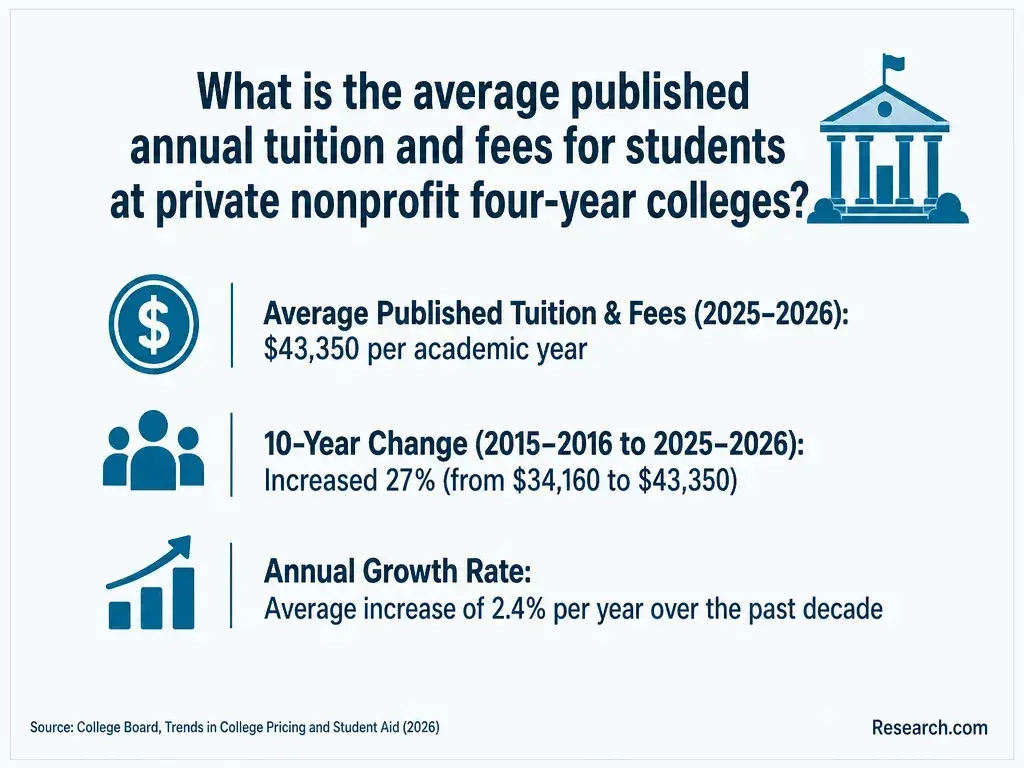
Compare remaining required coursework multiplied by the applicable charges, then add fees and likely out-of-pocket expenses. Ask financial aid to review your record before counting on assistance, particularly if previous enrollment affects satisfactory academic progress. Guides to reduce tuition costs for a business degree can help identify candidates, but only a school-specific audit and cost estimate can establish your likely total.
A completed business degree can support applications for operations coordinator, marketing coordinator, HR specialist, purchasing, sales operations, and project support roles. The best match depends on your previous work and evidence of the tasks an employer needs - not the degree title alone. Supervisory and managerial jobs commonly require relevant experience in addition to education.
Use remaining electives and an approved capstone to build evidence for a target function: a process map for operations, an appropriately sourced market analysis for marketing, or a project schedule for coordination. Do not present confidential workplace information without permission. If a specialized project-management bachelor's is more closely aligned with the jobs you seek, compare grants for project management undergraduates alongside the extra coursework it would require.
The U.S. Bureau of Labor Statistics projects 7% employment growth for project management specialists from 2025 to 2035. That occupation-level projection indicates demand across the field; it does not mean a new business graduate will enter a specialist role without the experience a particular employer requires.
A BS in Business Administration has no single salary. Pay depends on the occupation, location, industry, responsibilities, and experience you bring from before and during your degree. The Bureau of Labor Statistics reports a May 2025 median annual wage of $78,760 for market research analysts. That is an occupation-wide midpoint, not an expected starting salary for business graduates or proof that general business coursework qualifies you for every analyst opening.
For a useful return-on-investment comparison, identify jobs for which your completed degree would remove an actual hiring barrier, examine their local requirements, and compare the likely benefit with your remaining education cost and time. If supply chain work is your target, tuition and time comparisons for supply chain students may clarify the cost of a specialized alternative; an occupational median alone cannot tell you which degree is the better investment.
Do Business Administration Careers Require Certifications or Licenses?
Most general business coordination roles do not have a universal license attached to the BS in Business Administration. Specific work is different: accounting licensure, certain financial-services activities, and some other regulated functions have separate requirements. Voluntary HR or project-management certifications also set their own eligibility rules. A degree, concentration, or project-management course does not automatically award any of them.
Before paying for an additional credential, read actual job postings and the credential provider's eligibility requirements. If employers primarily require a completed bachelor's degree, finish evaluating that path first. If they require a specialized license or demonstrable experience, ask whether your proposed business curriculum supplies the necessary courses or whether a different pathway is more direct. Budget separately for any credential expenses; project management fees, books, and aid considerations for a degree are not the same as certification costs.
Other Things You Should Know About Business Administration
Possibly. Ask your former college whether you meet its award requirements or can use a reverse-transfer arrangement. An associate degree can document your progress, but it does not itself settle how another school will apply the credits.
Only if the receiving school offers an applicable prior-learning assessment or approved work-based credit option. Ask what evidence, fees, credit limits, and degree requirements apply before relying on it.
Ask the relevant state higher-education agency or records custodian where its transcripts are held. The new school will still need acceptable documentation to evaluate that study.
It may affect access to records or re-enrollment, depending on the institution and applicable rules. Contact the former registrar about transcript availability and resolution options, then tell prospective schools promptly if a required record is delayed.
- Staying Eligible | Federal Student Aid https://studentaid.gov/understand-aid/eligibility/staying-eligible
- Department Expectations: Curriculum | New York State Education Department https://www.nysed.gov/college-university-evaluation/department-expectations-curriculum
- Definitions | Transfer Credit Ohio https://transfercredit.ohio.gov/educational-partners/educational-partner-initiatives/articulation-transfer-policy-policy/articulation-transfer-policy-definitions
- Cost of Attendance (Budget) | 2025-2026 Federal Student Aid Handbook https://fsapartners.ed.gov/knowledge-center/fsa-handbook/2025-2026/vol3/ch2-cost-attendance-budget
- Texas Core Curriculum Application Guide https://reportcenter.highered.texas.gov/agency-publication/miscellaneous/waar-faq-texas-core-curriculum/
- Transfer Students | CUNY BA https://cunyba.cuny.edu/prospective-students/transfer-students/
- Business Administration Requirements | uoregon.edu https://business.uoregon.edu/programs/undergraduate/majors/business-administration/courses-requirements
- Course Work Taken Elsewhere - USC Catalogue https://catalogue.usc.edu/content.php
- Regional vs. National Accreditation: Which is Better? | Drexel University Online https://www.online.drexel.edu/news/national-vs-regional-accreditation.aspx
- How Many Credits Do You Need to Graduate College? | snhu.edu https://www.snhu.edu/about-us/newsroom/education/how-many-credits-to-graduate-college