2027 Choosing a BS in Business Administration for Business Roles in State Public Agencies
Audited and Verified:
Our Editorial and Data Verification Process
Research.com uses government datasets, official education statistics and primary institutional information to support its career and degree guides. Our review process checks factual accuracy, occupational definitions, source dates and the requirements associated with the credentials discussed.
How This Article Was Fact-Checked
Our editorial team verifies salary estimates, employment projections, education requirements and program information against original data providers and official organizations. Salary figures are checked against the relevant occupational definitions and reporting periods. Information about licensure, accreditation and required in-person training is reviewed separately.
Fact-checked and verified on:

Co-Founder and Chief Data Scientist
State agencies need people who can manage budgets, coordinate purchasing, support employees, and improve administrative processes - but a business degree is not a shortcut into every government job. If you are considering a BS in Business Administration, the key is to match its coursework and applied experience to the classifications your state actually hires for.
This guide explains which roles the degree can support, where public-sector knowledge matters more than a private-sector business elective, and how to assess programs, costs, and job requirements before enrolling.
Key Things You Should Know
- A BS in Business Administration can support state agency work in budgeting, procurement, HR, and operations, but eligibility depends on each job classification's education and experience rules.
- Prioritize public budgeting, accounting, purchasing, data analysis, and an approved agency-based project over a concentration name that adds little relevant practice.
- The U.S. median annual wage for budget analysts was $91,640 in May 2025; that occupation-wide figure is not a starting salary or a state-government pay offer.
What is a BS in Business Administration for state public agency careers?
A BS in Business Administration is an undergraduate degree covering business functions such as accounting, finance, management, operations, and quantitative analysis. It can prepare a student to support a state agency's administrative work, but it is not a government credential. Agencies operate under appropriations, public-records rules, procurement procedures, and civil-service requirements that a general business program may cover only briefly.
The degree is a strong fit when its broad core meets the education requirement for several target job classifications and leaves room for public-sector electives or experience. A public administration degree may offer more direct study of government institutions and policy; an accounting degree may provide greater depth for accounting-specific posts.
An experienced project coordinator should also compare a general business degree with transfer-friendly project management bachelor's degrees, using an official credit evaluation and actual agency postings rather than the degree title alone.
What careers can a business administration graduate pursue in state agencies?
Look for duties and minimum qualifications, not just familiar business titles. State classifications may use names such as administrative analyst, procurement specialist, budget analyst, HR specialist, or program coordinator for substantially different work.
The distinctions below show where a business graduate could contribute and what hiring officials may still expect.
| Potential role | Typical agency work | Important qualification to check |
| Administrative or program analyst | Track spending, review workflows, prepare reports, and coordinate services | Required analytical experience and familiarity with agency procedures |
| Purchasing or procurement specialist | Support solicitations, vendor records, and contract administration | State purchasing rules and any classification-specific experience |
| Budget analyst | Prepare estimates, monitor expenditures, and explain variances | Accounting or budget coursework and required experience |
| Human resources specialist | Support recruitment, classification, employee records, or training | Personnel rules, confidentiality, and HR-specific experience |
For HR-focused postings, compare the business curriculum with human resources degree planning basics. Current agency employees may be able to document relevant work and pursue internal opportunities; new graduates may need an assistant or coordinator role before qualifying for analyst or supervisory positions.
What are the admission requirements for a business administration bachelor's degree?
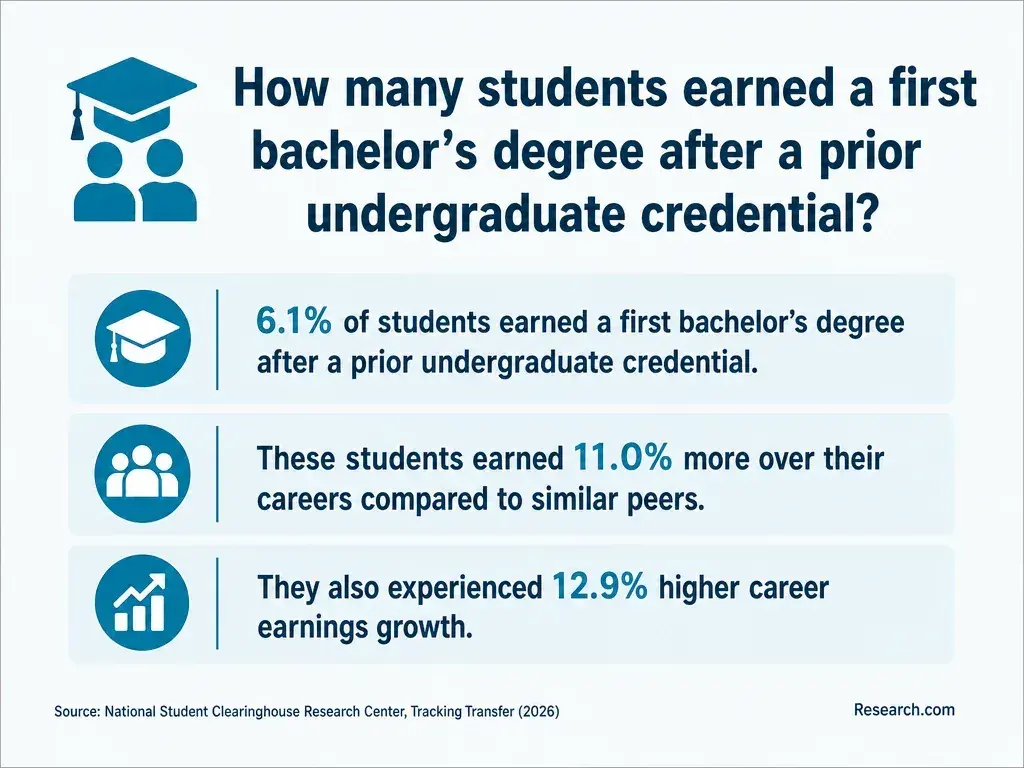
Requirements vary by institution and by whether the applicant is entering as a first-year or transfer student. Schools commonly request prior academic transcripts and may set separate standards for admission to the business major. Admission, acceptance of transfer credit, and application of that credit to degree requirements are separate decisions.
Before applying, ask for the current catalog requirements, any mathematics or accounting prerequisites, and a preliminary transfer review. If applying to several suitable programs, find online colleges with free admissions applications to reduce application costs - but do not let a waived fee outweigh curriculum fit or a favorable official degree audit.
Accounting and managerial finance help students read expenditure reports; statistics and spreadsheets help them check trends; operations and HR courses address processes and staffing. For state work, the distinguishing additions are public budgeting, government accounting, procurement, administrative law, and ethics where available. Check course descriptions: a private-sector purchasing course may teach useful vendor analysis without covering a state's solicitation rules.
Compare entry conditions for prospective business administration students before planning advanced electives, since quantitative and accounting courses may have prerequisites. A supervised internship or approved capstone involving a publicly available budget or process map can demonstrate applied skill. Agency data, employee records, and contract materials require appropriate permission; a classroom project does not establish access to them or count as agency experience automatically.
A traditional full-time bachelor's pathway generally spans four academic years. Transfer credit, part-time enrollment, course sequencing, and residency requirements can change the remaining timeline. An agency employee comparing programs should obtain a written degree audit showing which accepted credits satisfy the business core, electives, and graduation requirements.
Compare total completion cost - not tuition alone - including required fees, books, software, travel, and any earnings forgone to attend. Published prices also differ by residency and enrollment format. Start by using compare inexpensive business administration degree options as a screening step, then request school-specific estimates based on your remaining courses and aid eligibility. If your agency offers tuition assistance, confirm reimbursement timing, grade rules, and any service obligation before relying on it.
Yes, if the institution and degree meet the relevant hiring requirements and the format lets the student complete strong quantitative and applied work. Online does not necessarily mean self-paced: check live meetings, group assignments, exam proctoring, internship rules, and when required courses are offered. Those details matter particularly for employees balancing agency deadlines with study.
Fast-track bachelor's degree options may shorten the calendar schedule, but compressed courses can increase weekly demands. Ask an adviser for a term-by-term plan and confirm whether an approved workplace project could fit the program; existing employment alone does not satisfy an internship or capstone requirement.
Confirm the institution's current accreditation through the accreditor and the U.S. Department of Education's recognized-accreditor information. Then check whether any claimed AACSB, ACBSP, or IACBE business accreditation covers the specific school or program. Institutional accreditation and specialized business accreditation have different scopes; neither proves that a state agency will accept a degree for a particular classification.
For value, examine the current curriculum, faculty access, course availability, transfer policies, and evidence of relevant internships or projects. Business administration college affordability and FAFSA participation can help frame an initial comparison, but verify each school's aid participation and your own eligibility directly before budgeting. Ask agency HR whether a posting imposes any degree or accreditation condition beyond those shown on the program website.
Many administrative and analyst classifications do not require an occupational license, but requirements vary by job and state. Accounting positions may specify particular coursework or credentials; regulated accounting practice has separate licensure rules. Procurement, HR, and project-management certifications may be valued or required for particular roles, but a BS in Business Administration does not award them automatically.
Read the posting's distinction between required and preferred qualifications before paying for another credential. If a project-management role calls for a specialized degree rather than a voluntary certificate, use project management program fees explained to identify cost questions, then compare those costs with the actual classification requirements.
There is no single salary for a business administration graduate in state government. Agencies generally publish pay ranges by classification, location, and sometimes bargaining unit or experience level. Check the range and placement rules for the specific vacancy rather than using a broad "business graduate" estimate.
For context, the U.S. Bureau of Labor Statistics reports a May 2025 median annual wage of $91,640 for budget analysts across employers and experience levels. It is not a state-only figure or an expected first-job offer. Compare a posting's likely pay placement and benefits with your remaining education cost; if the pay range makes substantial borrowing hard to justify, explore shorter affordable business administration degree pathways and verify which credits and requirements would actually remain.
What is the job outlook for business administration careers in government?
National occupation forecasts offer context, not a forecast of openings at a particular state agency. BLS projects 2% employment growth for budget analysts from 2025 to 2035. That measure covers the occupation across employers; state vacancies will also depend on budgets, retirements, and agency priorities.
Use the outlook alongside current postings: note which classifications recur, whether they accept a general business degree, and which experience or technical skills they request. If project coordination is the stronger local pathway, compare its qualification requirements and funding an online project management bachelor's degree before choosing specialized study on the basis of national growth alone.
Other Things You Should Know About Business Administration
Yes, when it provides documented responsibilities such as scheduling, reporting, or service coordination. Describe what you did and who supervised it; volunteer service does not automatically satisfy a posting's paid-experience requirement.
Public availability does not remove every use restriction. Check the source, cite it accurately, and obtain approval before including internal documents or information about employees, clients, or vendors.
Not necessarily. Review target postings first. Relevant agency experience or targeted training may be more useful for the next role, while an MPA may fit work centered on public policy or government leadership.
Usually not when a classification specifies education. An exam may be one step in a state's hiring process; consult that state's official classification and vacancy instructions for the full eligibility rules.
- Internships | NC Office of Human Resources https://oshr.nc.gov/work-nc/internships
- Internships with State Government | oregon.gov https://www.oregon.gov/jobs/pages/internships.aspx
- Accreditation in the U.S. | ed.gov http://www.ed.gov/laws-and-policy/higher-education-laws-and-policy/college-accreditation/accreditation-in-the-us
- Application Procedures | illinois.gov https://careers.illinois.gov/procedures.html
- Job Titles and Class Specifications | illinois.gov https://cms.illinois.gov/personnel/employeeresources/statejobtitles.html
- Student Internship Opportunities with New York State (ny.gov) https://nysinternships.cs.ny.gov/nnyl/faq.cfm
- 10 Entry-level Government Jobs to Consider (Plus Tips on How to Get One) | Career Development Office https://careerdevelopment.pittstate.edu/blog/2025/05/26/10-entry-level-government-jobs-to-consider-plus-tips-on-how-to-get-one/
- Types of Business Degrees: Your Complete Guide | UWA Online https://online.uwa.edu/news/types-business-degrees/
- Which Courses are Best for a Business Administration Degree? - Florida National University (FNU) https://www.fnu.edu/business-administration-degree-courses/
- What Can You Do With a Business Administration Degree? | snhu.edu https://www.snhu.edu/about-us/newsroom/business/what-can-you-do-with-a-business-administration-degree