2027 Choosing a BS in Business Administration for Business Roles in Community Banks
Audited and Verified:
Our Editorial and Data Verification Process
Research.com uses government datasets, official education statistics and primary institutional information to support its career and degree guides. Our review process checks factual accuracy, occupational definitions, source dates and the requirements associated with the credentials discussed.
How This Article Was Fact-Checked
Our editorial team verifies salary estimates, employment projections, education requirements and program information against original data providers and official organizations. Salary figures are checked against the relevant occupational definitions and reporting periods. Information about licensure, accreditation and required in-person training is reviewed separately.
Fact-checked and verified on:

Co-Founder and Chief Data Scientist
Community banks need employees who can serve customers, evaluate business needs, keep operations reliable, and work within banking rules. A BS in Business Administration can prepare you for several of those functions, but its value depends on the courses you take and the experience you gain.
This guide is for students, current bank employees, and career changers deciding whether - and where - to earn the degree. It explains which roles are realistic starting points, how to compare programs, and when a more specialized path makes better sense.
Key Things You Should Know
- A BS in Business Administration fits community bank operations, relationship support, and some credit-support pathways; lending and management responsibilities generally require additional training and experience.
- Compare programs by accounting and analytics coursework, opportunities for supervised bank experience, recognized accreditation, and the cost of completing your remaining requirements.
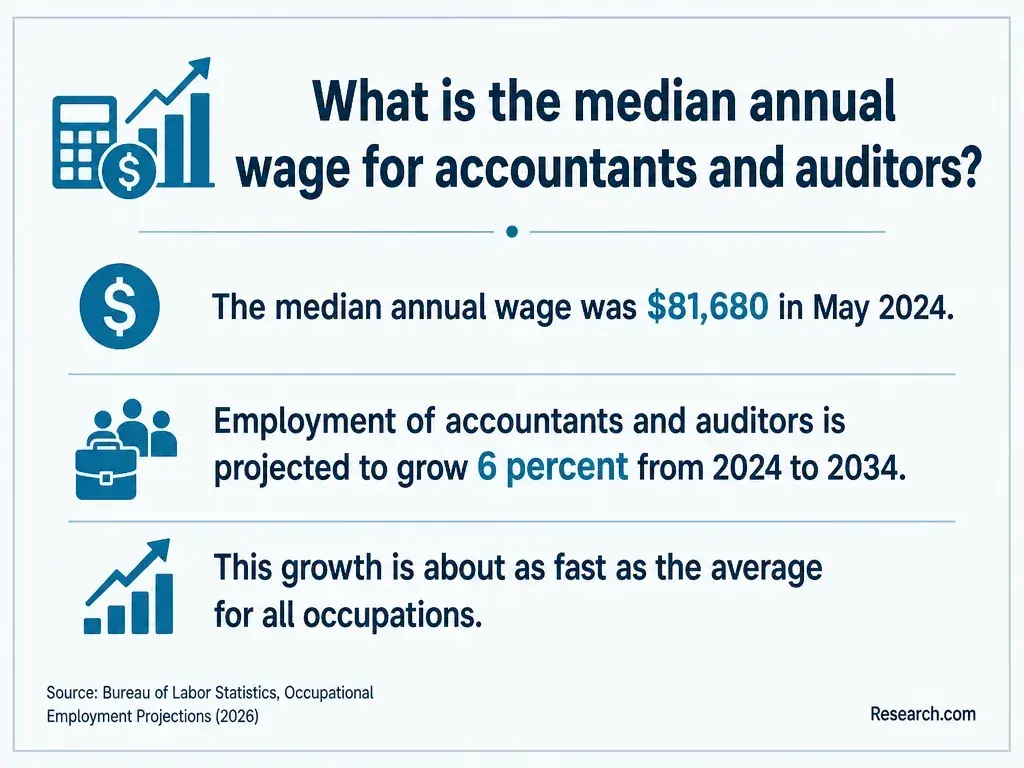
- For perspective, the U.S. Bureau of Labor Statistics reports a May 2025 median wage of $83,680 for accountants and auditors across all industries - not an expected starting salary for community bank graduates.
What is a BS in Business Administration for community banking careers?
A BS in Business Administration is an undergraduate degree covering business functions such as accounting, finance, management, operations, and data-informed decision-making. In a community bank, those subjects connect to work ranging from branch operations and customer relationships to commercial lending support. The degree does not itself qualify someone to approve loans, manage a branch, or perform regulated financial activities.
Community banks serve local households and businesses, so employees may need to understand both a customer's goals and the bank's procedures for documenting decisions and managing risk. A broad degree can suit someone who wants room to move between functions. A student committed to financial analysis may need more specialized coursework. Before enrolling, compare the remaining time and expense with the preparation your target job actually requires; a business administration degree affordability duration and value guide can help frame that comparison.
What community bank jobs can you get with a BS in Business Administration?
The most realistic entry point depends on your work history, not just your diploma. Customer-service, retail, bookkeeping, and administrative experience can support a move into banking, while prior bank experience may make a graduate more competitive for specialized work. Titles vary by employer, so compare job descriptions by duties and decision authority.
The following distinctions can help you identify a suitable starting role without confusing support work with independent lending or management responsibility.
| Role or pathway | Typical work | What strengthens an application |
| Branch operations or client-service support | Assist customers, maintain records, and follow transaction and escalation procedures | Customer service, accuracy, and documented process experience |
| Loan or commercial banking support | Gather documents, track applications, and support credit staff | Accounting fundamentals, spreadsheets, and careful written communication |
| Operations or compliance support | Help maintain workflows, records, and internal controls | Process mapping, attention to detail, and willingness to learn bank-specific rules |
| Bank HR or training support | Coordinate hiring records, onboarding, or employee learning | Relevant HR coursework and administrative experience |
A branch or loan-support position can be a practical route to learning bank systems before seeking greater responsibility. If hiring and employee development - not lending - is your target, transfer pathways into online human resources programs offer a more specialized degree-completion comparison.
What coursework prepares business administration graduates for community bank roles?
Look beyond a program's concentration label to its actual course requirements. Financial accounting helps you read statements used in business banking; statistics and spreadsheets help you check trends and explain uncertainty. Business law and ethics provide context for documentation and responsible decisions, while operations courses can help you understand controls, handoffs, and service delays. Marketing and communication matter in relationship-focused roles, but sales coursework is not a substitute for bank product training.
Choose electives around a likely first role. For commercial lending support, prioritize accounting, financial statement analysis, and Excel-based analysis. For branch operations, consider process improvement, information systems, and customer experience. An internship or supervised project can help you demonstrate these skills, but bank data and customer information require employer permission and careful handling.
If your goal is leading systems or process projects rather than entering a general banking role, compare the relevant business electives with lower-priced project management degrees. The more specialized option is useful only if its added courses match the work you want and justify any extra cost or time.
Choose based on the work you want to learn, not which title sounds more impressive. Business administration generally offers broader preparation for branch operations, customer relationships, and coordination across bank functions. A finance major may provide more depth for credit analysis and other quantitatively demanding work, but curricula differ by school. Neither degree replaces a bank's training, lending policies, or experience requirements.
Compare required accounting and finance courses, quantitative prerequisites, available internships, and how previously earned credits apply. A business administration student can sometimes add finance electives without changing majors; a finance student may need to seek out operations or management experience. If your interest is instead in coordinating bank technology or workflow projects, project management studies with transferred college credits provide another pathway to evaluate. Obtain an official degree audit before assuming a switch will preserve your graduation date.
First, verify the institution's accreditation through the institution and its recognized accreditor. Then check whether the business school or the specific program has applicable AACSB, ACBSP, or IACBE accreditation; institutional and business-specific accreditation are different claims. Neither guarantees a banking job.
Next, examine the published degree requirements and ask for evidence relevant to your intended role: accounting and analytics depth, access to finance electives, faculty guidance, and internships or projects with suitable employers. Ask career services whether it works with local banks and what its reported outcomes actually measure. If online delivery matters, you can compare nationally ranked online business programs, but use a ranking to build a shortlist - not to replace checks on curriculum, accreditation scope, and local connections.
Requirements depend on the institution and whether you apply as a first-year, transfer, or returning student. Schools commonly review prior academic records; some business majors also have separate admission standards or prerequisites in mathematics, economics, accounting, or statistics. Employment at a bank may strengthen your application without automatically satisfying academic requirements.
Ask admissions which transcripts and prerequisites it needs, then ask an academic adviser how any accepted transfer credits apply to general education, the business core, electives, and residency requirements. These are separate decisions. Application fees can add to the expense of comparing schools, so students building a shortlist may also find online colleges with free admissions applications. Verify each school's current fee and banking-relevant curriculum before applying.
A full-time bachelor's pathway commonly spans about four academic years, but a transfer student's remaining time depends on an official credit evaluation, required-course sequencing, and how often courses are offered. Part-time study can make employment more manageable while extending the calendar time to graduation.
Compare schools using the cost to finish, not an advertised tuition rate alone. Include required remaining credits, tuition and fees, books or software, travel for any in-person work, and borrowing costs. A lower-priced school may cost more overall if fewer credits satisfy its degree requirements. For help identifying aid questions to raise with each school, see financial aid planning for low-cost business administration degrees. Confirm aid eligibility and any employer reimbursement rules with the appropriate offices before counting on either source of funding.
Yes, an online degree can be suitable if the program builds relevant skills and leaves you a workable route to banking experience. Online delivery does not necessarily mean self-paced study: live meetings, group work, proctored exams, or fixed deadlines may affect your schedule. Ask whether internships or capstones can be completed with a local bank or through an approved project, and whether campus visits are required.
Students trying to enter banking quickly should compare course availability and weekly workload, not just an advertised completion date. A national comparison of accelerated business bachelor's schools can identify options to investigate, but faster terms do not eliminate assignments or guarantee that required courses fit your schedule.
There is no single salary for a "community bank professional." Pay varies by role, location, experience, and employer. The U.S. Bureau of Labor Statistics reports a May 2025 median annual wage of $83,680 for accountants and auditors, with employment projected to grow 5% from 2025 to 2035. Those figures cover the occupation across industries and experience levels; they are not a wage forecast for a new graduate or a community bank accounting employee.
For a useful personal estimate, compare local postings for your target entry role and note their required experience, pay range, and advancement criteria. Weigh those findings against your net education cost and income while studying. If finishing sooner could help you apply for degree-required roles, accelerated bachelor's program comparisons may inform your search - but only a feasible schedule and relevant experience make that timing valuable.
Do community bank careers require licenses, certifications, or professional credentials?
Many branch, operations, and support jobs do not require an individual professional license. Requirements change with the activity: mortgage loan origination, securities sales, and certain advisory work can involve role-specific registration, licensing, or other legal conditions. Check the exact job description and applicable regulator rather than assuming a business degree grants authority to perform regulated work.
Voluntary training or credentials may help later, particularly in lending, compliance, or HR, but employers can value supervised bank experience more for an entry-level opening. For an HR-focused bank career, a human resources program selection guide can help distinguish specialized education from separate professional credentials. Before paying for a credential, confirm its eligibility rules and whether banks hiring for your target role request it.
Other Things You Should Know About Business Administration
Yes. Customer-service or administrative work can build familiarity with bank procedures. Ask your employer about scheduling and education benefits, and ask your school separately whether the work qualifies for academic credit.
It may help with customer service, operations, and documentation roles, but credit unions have different organizational structures, products, and employer requirements. Compare the duties in each posting.
Only if your program approves the position under its internship rules. Ask the internship coordinator about learning objectives, supervision, required hours, and assessment before assuming your job will earn credit.
Use public information, a clearly labeled hypothetical case, or employer-approved material. Do not include customer records, internal reports, or confidential procedures without authorization.
- Bank Secrecy Act (BSA) | OCC.gov https://www.occ.gov/topics/supervision-and-examination/bsa/index-bsa.html
- BSA/AML manual introduction | ffiec.gov https://bsaaml.ffiec.gov/manual/Introduction/01
- Business vs Finance Degree: What Are the Key Differences? | American Public University https://www.apu.apus.edu/area-of-study/business-and-management/resources/business-vs-finance-degree/
- Credit Analyst Career Guide: Key Role in Financial Decisions | American College of Education https://ace.edu/student-success/career-guides/credit-analyst/
- 10 Key Subjects Taught in a Bachelor of Business Administration Program | Carson-Newman University https://www.cn.edu/cps-blog/10-key-subjects-taught-in-a-bachelor-of-business-administration-program/
- What Can You Do With a Business Administration Degree? | National University https://www.nu.edu/blog/what-can-you-do-with-a-business-administration-degree/
- Bachelor's Degree in Business: Administration or Accounting? | Bay Path University https://www.baypath.edu/news/bay-path-university-blogs/post/bachelor-s-degree-in-business-administration-or-accounting/
- Climbing the Community Bank Career Ladder | Independent Banker https://www.independentbanker.org/w/climbing-the-community-bank-career-ladder
- 15 Entry-Level Jobs in Banks (With Salaries and Job Duties) | indeed.com https://www.indeed.com/career-advice/finding-a-job/entry-level-jobs-in-banks
- Credit Analyst | wccb.com https://wccb.com/creditanalyst