2027 Cheapest Online User Experience Associate Degree Programs That Pay Well: Tuition, Duration, and Career Outcomes

Co-Founder and Chief Data Scientist
Choosing a cheap online user experience associate degree is really a cost-versus-career decision. UX, UI, web design, and digital interface jobs can pay well, but many employers still expect a strong portfolio and sometimes a bachelor's degree. The Bureau of Labor Statistics reports a 2024 median wage of $98,540 for web and digital interface designers, making the field attractive for budget-conscious students.
This guide helps first-time college students, career changers, and working adults compare tuition, timelines, transfer value, and realistic career outcomes before enrolling.
Key Things You Should Know
Which Are the Cheapest Online User Experience Associate Degree Programs That Lead to Well-Paying Careers?
Dedicated "user experience associate degree" programs are still uncommon, so the cheapest practical options are usually online associate degrees in web design, web development, digital media, interactive design, or graphic design with UX/UI coursework. Students who want a broader comparison of bachelor's-level options can also review an affordable UX degree pathway after identifying whether an associate degree is enough for their first career step.
The table below shows examples of low-cost, UX-relevant online or substantially online associate programs to use as a screening list. Tuition changes often, and residency can sharply affect price, so students should confirm total cost, online availability, course fees, and transfer options directly with each college before applying.
| School | UX-Relevant Associate Program | Typical Degree Type | Why It Can Fit UX Career Goals | Affordability Note |
| Wake Technical Community College | Web and UX Design | AAS | Career-focused curriculum commonly aligned with web layout, usability, content structure, and front-end design skills | Public community college pricing is usually strongest for in-state North Carolina students |
| St. Petersburg College | Web Development | AS | Builds web production and interface skills that can support junior UX, UI, or front-end roles | Florida public college tuition can be comparatively low for state residents |
| Seminole State College of Florida | Web Development | AS | Can support entry into web design, interface production, and technical design support roles | Often most affordable for Florida residents; nonresident rates may change the ranking |
| Northcentral Technical College | IT - Web Designer | Associate Degree | Combines design and technical web skills useful for building a UX portfolio | Technical college tuition may be affordable, but students should add software and course fees |
| Community colleges with online digital media or web design tracks | Digital Media, Web Design, Interactive Media, or Graphic Design | AA, AS, or AAS | Can prepare students for portfolio-based entry roles if courses include usability, responsive design, accessibility, and prototyping | The cheapest option is often a local public college with in-district or in-state tuition |
For most students, the best "cheap" program is not automatically the one with the lowest advertised tuition. A lower-priced program with weak transfer agreements, limited UX coursework, or few portfolio projects may deliver less value than a slightly more expensive option that offers stronger design labs, internship support, and bachelor's transfer pathways.
How Much Does an Online User Experience Associate Degree Cost?
An online UX-related associate degree usually requires about 60 credits, but the final bill depends on tuition rate, residency, institutional fees, books, software, hardware, and how many transfer credits a student brings in. College Board's 2024 pricing data placed average published tuition and fees for public two-year in-district students at $4,050 for an academic year, which explains why community colleges often provide the lowest-cost route into UX-adjacent fields.
The table below breaks down the main cost categories students should compare. This is useful because advertised tuition alone often excludes the expenses that affect out-of-pocket cost.
| Cost Factor | What to Check | Why It Matters |
| Tuition per credit | Resident, nonresident, online, and out-of-district rates | A low resident rate may become expensive if online students are billed as nonresidents |
| Required credits | Total credits needed for the degree and whether developmental courses add credits | A 70-credit program can cost meaningfully more than a 60-credit program at the same tuition rate |
| Online and technology fees | Per-credit online fees, platform fees, lab fees, and proctoring costs | These can make a low-tuition program less affordable than it first appears |
| Design software and equipment | Computer specifications, Adobe Creative Cloud, Figma-compatible setup, or other tools | UX students often need reliable hardware and design software for portfolio projects |
| Books and learning materials | Textbooks, access codes, subscriptions, and digital course packs | Open educational resources can reduce cost, but not every course uses them |
| Graduation and transcript fees | Application, graduation, official transcript, and portfolio review fees | Small required fees still count toward total program cost |
To estimate your own cost, use a simple calculation before comparing programs. This prevents a common mistake: choosing the school with the cheapest headline tuition while overlooking required credits and fees.
- Multiply tuition per credit by the number of credits required for the degree.
- Add mandatory online, technology, lab, and student fees listed in the catalog.
- Add estimated software, books, hardware upgrades, and portfolio costs.
- Subtract confirmed grants, scholarships, employer tuition support, and accepted transfer credits.
- Compare the remaining net price with expected entry-level wages in your local market, not only national median wages.
How Long Does It Take to Complete an Online User Experience Associate Degree?
Most online UX-relevant associate degrees take about two years of full-time study because they follow the standard 60-credit associate structure. Part-time students often need three or more years, while students with transfer credits, summer enrollment, or accelerated terms may finish faster.
The table below compares common completion timelines. Use it to balance speed with workload, because finishing faster only helps ROI if the pace is realistic enough for you to complete courses successfully.
| Enrollment Pattern | Typical Course Load | Estimated Completion Time | Best Fit |
| Full-time | About 12 to 15 credits per term | About 2 academic years | Students who can prioritize school and want the quickest standard path |
| Part-time | About 6 to 9 credits per term | About 3 to 4 years | Working adults, caregivers, and students paying as they go |
| Accelerated with summer courses | Full-time fall and spring plus summer credits | Potentially under 2 years | Students with strong time management and fewer outside obligations |
| Transfer-credit pathway | Varies based on accepted credits | Potentially shorter than 2 years | Students with previous college, AP, dual enrollment, military, or industry training credits |
Students should be careful with "fast" programs in design fields. UX and UI careers depend heavily on portfolio quality, so rushing through courses without producing strong case studies, accessible interface designs, and usable prototypes can weaken job readiness.
The highest-paying UX-related careers usually require a strong portfolio and, in many cases, a bachelor's degree or equivalent experience. An associate degree can still be valuable, especially for entry roles that build toward UX, web interface design, content design, product support, QA testing, or front-end production.
The table below uses 2024 U.S. labor market wage context where available and explains how realistic each role is for associate degree graduates. Median wages are not entry-level wages, so students should treat them as career benchmarks rather than guaranteed starting pay.
| Career Path | 2024 Median Wage Context | Associate Degree Access | What Improves Earning Potential |
| Web and Digital Interface Designer | BLS reported a median wage of $98,540 for web and digital interface designers | Possible with a strong portfolio, though many postings prefer bachelor's-level preparation | Portfolio case studies, accessibility knowledge, responsive design, prototyping, and front-end basics |
| Web Developer or Front-End Production Specialist | BLS groups web development and digital design among faster-growing digital roles | Possible for junior roles if the program includes HTML, CSS, JavaScript, and version control | GitHub projects, internships, JavaScript frameworks, and real client or capstone work |
| Graphic Designer or Visual Designer | BLS reported a 2024 median wage of $61,300 for graphic designers | Common associate-level pathway, especially for production and junior design roles | Brand systems, layout, typography, motion basics, and digital product design samples |
| Computer User Support Specialist | BLS reported a 2024 median wage of $61,550 for computer user support specialists | Accessible for students who combine UX interest with technical troubleshooting skills | Help desk experience, customer empathy, documentation, analytics, and product support knowledge |
| UX Research Assistant or Product Operations Assistant | No single BLS category fully captures entry UX research support roles | Possible but competitive; many employers prefer bachelor's-level social science, design, or analytics training | Research methods, survey tools, usability testing, data synthesis, and communication samples |
The strongest salary path for associate degree students is usually stepwise. Start with a realistic entry role, build a portfolio, earn professional experience, and then move toward UX designer, product designer, accessibility specialist, or UX researcher roles as your evidence of skill grows.
The best ROI usually comes from a program that keeps net cost low while building employable skills, transferable credits, and portfolio evidence. A very cheap program can have weak ROI if it delays graduation, does not transfer well, or leaves students without practical UX projects.
The table below compares ROI factors instead of ranking programs only by tuition. This helps students evaluate long-term value, not just the smallest invoice.
| ROI Factor | Strong Signal | Red Flag |
| Net price after aid | Low remaining cost after grants, scholarships, and accepted transfer credits | Low tuition but high online, software, or repeated-course costs |
| Completion time | Clear two-year plan with predictable course rotation | Required courses offered infrequently, causing extra terms |
| Portfolio development | Multiple projects in usability, accessibility, prototyping, responsive design, and user testing | Mostly theory-based courses with few portfolio-ready deliverables |
| Transfer value | Articulation agreements with bachelor's programs in UX, HCI, digital media, IT, or design | Credits transfer only as electives or do not apply to a major |
| Career support | Internships, employer projects, career coaching, and portfolio review | No career services tailored to design or technology roles |
A practical way to compare ROI is to divide your estimated net program cost by the wage range for realistic entry roles in your area. If two schools have similar costs, prioritize the one that shortens time to completion, accepts more transfer credits, or gives you stronger portfolio support.
Students should also avoid confusing median career wages with entry-level earnings. The 2024 median wage for web and digital interface designers is attractive, but a new associate degree graduate may need one or more stepping-stone roles before competing for higher-paying UX positions.
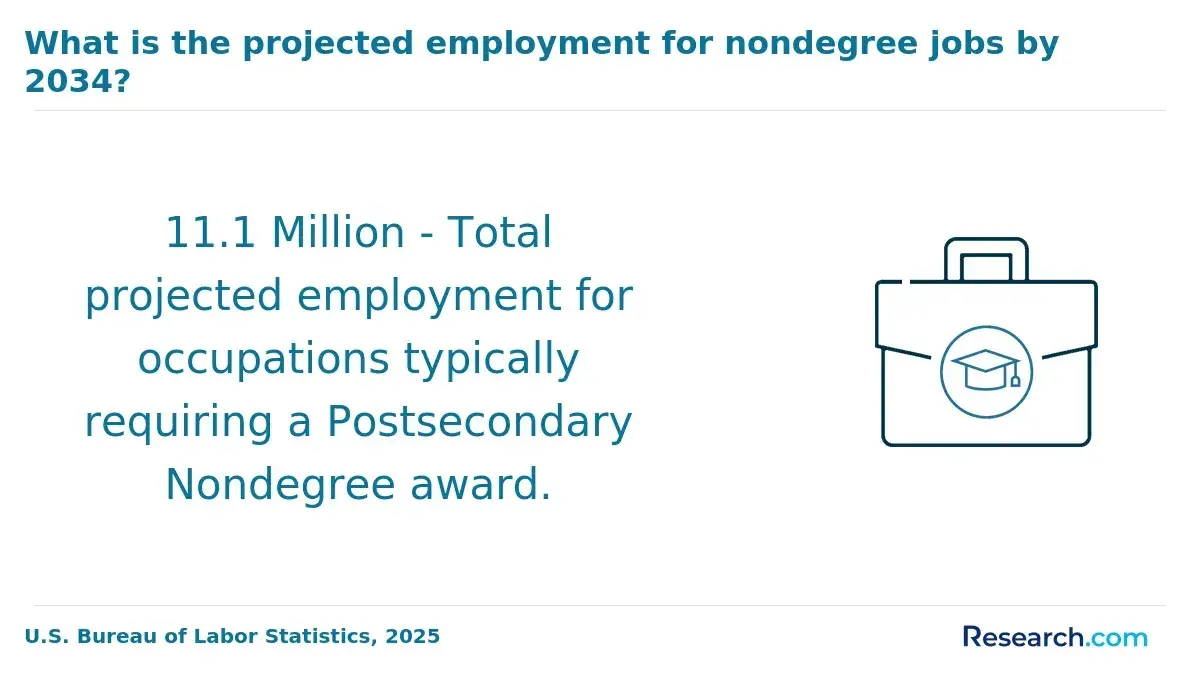
Financial aid can make a community college UX pathway far more affordable, especially for students who qualify for grants. For the 2024-25 award year, the maximum federal Pell Grant was $7,395, which can cover a large share of tuition at many public two-year colleges for eligible students.
Students should compare aid sources in the right order because free aid is more valuable than loans. The following options can reduce out-of-pocket cost without weakening long-term ROI:
- Federal Pell Grants and state grants: Start with the FAFSA and check whether your state offers need-based aid for community college or online learners.
- Institutional scholarships: Ask the college about scholarships for design, technology, adult learners, first-generation students, or students in career and technical programs.
- Workforce training funds: Some states and local workforce boards help fund programs tied to in-demand digital, IT, or web careers.
- Employer tuition assistance: Working students should ask whether their employer reimburses courses related to web, design, accessibility, software, or customer experience.
- Transfer and prior-learning credit: Previously earned college credits, military training, certifications, or exams may reduce both tuition and time to completion if the school accepts them.
- Federal student loans: Use loans cautiously and borrow only what is necessary after grants, scholarships, and payment plans are considered.
A common mistake is assuming the cheapest college before aid will also be the cheapest after aid. Always compare net price after grants and scholarships, not sticker price alone.
Accreditation affects financial aid eligibility, credit transfer, employer trust, and bachelor's degree pathways. For an online UX-related associate degree, institutional accreditation is usually more important than specialized programmatic accreditation because UX programs are not regulated like nursing, counseling, or teacher licensure programs.
Students should verify quality before enrolling, especially when a program advertises low tuition or fast completion. Use the following checks to avoid expensive mistakes.
- Confirm the college is institutionally accredited by an agency recognized by the U.S. Department of Education.
- Ask whether the exact online program is eligible for federal financial aid and whether online students receive the same credential as campus students.
- Review the curriculum for UX essentials such as usability, accessibility, user research basics, information architecture, responsive design, prototyping, and portfolio development.
- Check whether credits transfer into specific bachelor's programs, not merely whether the college "accepts transfer students."
- Ask for examples of capstone projects, internships, employer partnerships, portfolio reviews, and graduate support services.
- Review course rotation to make sure required classes are offered often enough for your planned graduation timeline.
Low tuition should not override accreditation. An unaccredited or poorly transferable program may cost less upfront but create problems when applying for aid, transferring credits, or meeting employer expectations.
Flexible online UX associate programs typically use asynchronous courses, evening deadlines, hybrid labs, summer terms, and transfer-credit evaluations to help students finish while working. Acceleration at the associate level usually means taking more credits per term or applying transfer credits, not skipping core design practice.
Students comparing pace should look for the following flexibility features. These details matter because schedule design can affect both completion time and total cost.
- Asynchronous online courses that allow students to complete weekly work without logging in at fixed class times.
- Multiple start dates or accelerated terms that make it easier to begin before the next traditional semester.
- Summer course availability for general education or major requirements.
- Clear transfer-credit review before enrollment so students know how many credits still remain.
- Part-time degree maps showing how working adults can complete the program without delaying required course sequences.
- Portfolio courses offered online with instructor feedback, peer critique, and usable final projects.
If you are comparing education pathways at several levels, remember that accelerated associate degrees and graduate fast-track degrees operate differently. Later-career educators may evaluate options such as 1 year EdD programs online, but associate-level UX students should focus on mastering practical design and technology skills rather than simply choosing the fastest schedule.
Yes, an online UX-relevant associate degree can support career advancement, but its strongest long-term value often comes from transferability. AA and AS degrees are usually more transfer-oriented, while AAS degrees are commonly more career-focused and may contain more applied technical courses that do not always transfer cleanly into a bachelor's major.
Students should understand the main degree types before enrolling. The table below shows how each associate pathway may support employment and further education:
| Degree Type | Typical Purpose | Best For | Transfer Consideration |
| Associate of Arts | Broad general education with arts, communication, and design-related electives | Students planning to transfer into design, communication, psychology, or digital media bachelor's programs | Often transfer-friendly, but may include fewer technical UX courses |
| Associate of Science | General education plus technical or scientific coursework | Students interested in web development, information technology, data, or human-computer interaction pathways | Can transfer well if aligned with a specific bachelor's agreement |
| Associate of Applied Science | Career and technical preparation | Students seeking entry-level work soon after graduation | May transfer less smoothly unless the college has applied bachelor's or articulation agreements |
Students who enjoy UX but want to move into learning technology, training design, or educational product roles may later consider graduate study in instructional design. For that longer path, comparing the best online instructional design master's programs can make sense after completing a bachelor's degree.
Before choosing an associate program, ask the school for a written transfer plan showing which credits apply to your intended bachelor's major. Transfer value can dramatically change ROI because credits that do not count toward the next degree may require you to pay for similar coursework twice.
How Should Students Choose the Cheapest Online User Experience Associate Degree for Their Career Goals?
The right affordable online UX associate degree should match your target job, budget, learning style, and long-term education plan. Students should not choose based only on rankings, marketing claims, or the lowest tuition rate shown on a college website.
Use the following decision process to compare programs in a practical way. It turns tuition, timeline, and career outcomes into a clearer enrollment decision.
- Define your target role first, such as junior web designer, UI production assistant, front-end developer, visual designer, product support specialist, or transfer student headed toward a bachelor's degree.
- Choose the degree type that fits that goal: AA or AS for transfer, AAS for faster workforce preparation, or a web development pathway if you want stronger technical skills.
- Calculate total net cost, including tuition, fees, books, software, hardware, and the value of accepted transfer credits.
- Check whether the curriculum includes portfolio-ready projects in usability, accessibility, responsive design, prototyping, and user testing.
- Verify institutional accreditation and financial aid eligibility before applying.
- Ask for written transfer agreements if you may pursue a bachelor's degree later.
- Compare local job postings to see whether employers near you accept associate degrees or usually require a bachelor's degree.
- Review course schedules to confirm that required classes are offered online often enough for your timeline.
- Ask about internships, employer projects, career coaching, portfolio review, and graduate employment support.
- Choose the lowest-cost option only if it also offers credible completion, transfer, and career value.
Students should avoid an associate degree based primarily on low cost if their target jobs consistently require a bachelor's degree, advanced research skills, or several years of experience. If your long-term goal eventually moves into university teaching, education leadership, or advanced learning design research, later doctoral comparisons such as online EdD programs no dissertation are separate decisions that come after completing earlier degree steps.
The best choice is usually the program that minimizes debt while maximizing completion likelihood, portfolio strength, and future options. A slightly higher-cost program may be worth it if it saves time, transfers cleanly, and gives you stronger evidence of job-ready UX skills.
Other Things You Should Know About User Experience
No. UX focuses on how users experience a product, including research, usability, flow, accessibility, and problem-solving. UI focuses more on the visual and interactive elements users see, such as screens, buttons, spacing, colors, and typography.
Not always, but basic HTML, CSS, and JavaScript can help. Coding knowledge makes it easier to communicate with developers, understand technical limits, and create realistic interface designs.
A beginner portfolio should show the problem, research or assumptions, sketches or wireframes, design decisions, usability considerations, final screens, and what changed during the process. Employers usually want to see how you think, not just polished visuals.
AI tools can speed up research synthesis, wireframing, content drafts, and design variations, but they do not replace user judgment, ethics, accessibility knowledge, or human-centered problem-solving. Beginners should learn AI tools while still building strong design fundamentals.
- Best Online Degree College: Affordable Online Learning https://www.jioskill.com/blog/best-online-degree-college-affordable-online-learning
- Enhancing Student Employability: The Role of Internships and Industry Collaborations https://www.vbeyond.com/blog/enhancing-student-employability-the-role-of-internships-and-industry-collaborations/
- Associates Degree in Information Technology | Online Program | University of Phoenix https://www.phoenix.edu/online-information-technology-degrees/information-technology-associate-degree.html
- Get a UX Degree | Madison College https://madisoncollege.edu/academics/areas-of-study/arts-design-humanities/ux
- How internships, career-connected learning experiences prepare students for success - TGR Foundation https://tgrfoundation.org/newsroom/internships-career-connected-learning-experiences-equip-students-success/
- How does a college degree improve graduates’ employment and earnings potential? - APLU https://www.aplu.org/our-work/4-policy-and-advocacy/publicuvalues/employment-earnings/
- Information About Degrees https://openclassrooms.com/en/paths/76-ux-designer
- The UX Job Market in 2026: The Most In-Demand Skills & Roles https://www.uxdesigninstitute.com/blog/the-ux-job-market-in-2026-2/
- How to integrate work experience into your program https://www.keg.com/news/how-to-integrate-work-experience-into-your-program
- 2025 Most Affordable Online Bachelor's Degrees https://www.onlineu.com/most-affordable-colleges/bachelors-degrees