2027 Cheapest Online Legal Studies Associate Degree Programs That Pay Well: Tuition, Duration, and Career Outcomes

Co-Founder and Chief Data Scientist
Choosing the cheapest online legal studies associate degree is really a cost-versus-outcomes decision. The U. S. Bureau of Labor Statistics reported a $61,010 median annual wage for paralegals and legal assistants in May 2024, but entry requirements, wages, and advancement paths vary widely by employer and location. This guide is for students who want a low-cost legal education without overpaying for a credential that may not match their career goals. You will learn how tuition, program length, accreditation, transfer options, and realistic job outcomes fit together before you enroll.
Key Things You Should Know
- The best low-cost online legal studies associate degrees are usually public community college programs, especially when students qualify for in-district or in-state tuition; national online options often cost more but may offer stronger scheduling flexibility.
- The highest-paying paths connected to legal studies at the associate level are not always entry-level paralegal jobs; related roles in compliance, title examination, court reporting support, and legal operations may pay more but can require experience, certification, or additional training.
- A cheap program has strong ROI only if it is accredited, can be completed in about 60 to 65 credits, prepares students for realistic jobs, and transfers cleanly into a bachelor's degree if advancement later requires one.
Which Are the Cheapest Online Legal Studies Associate Degree Programs That Lead to Well-Paying Careers?
The cheapest online legal studies associate degree is usually not a single national winner because tuition depends heavily on residency, transfer credits, fees, and whether the program is built for employment or bachelor's transfer. A strong shortlist should include public colleges first, then private online programs only when their flexibility, transfer policy, or employer recognition justifies the higher price.
Legal studies associate programs commonly appear under names such as paralegal studies, legal assisting, law and society, criminal justice with legal studies coursework, or pre-law transfer. Students comparing legal studies with justice-focused pathways may also want to review the best online associate degree programs in criminal justice, especially if their target jobs are in courts, corrections, law enforcement administration, or victim advocacy rather than law offices.
The table below shows program categories that often provide the best affordability-to-outcome balance. It is more useful than a simple ranking because the lowest advertised tuition may not be the lowest total cost for your state, transfer situation, or career target.
| Low-cost program category | Typical credential | Why it can be affordable | Best career fit | Main caution |
| Local public community college with online legal studies or paralegal courses | AA, AS, or AAS | Often offers the lowest in-district or in-state tuition and may accept dual-enrollment or prior college credits | Entry-level legal assistant, paralegal trainee, court clerk support, transfer student | Some online courses may still require local internships, proctored exams, or synchronous meetings |
| Statewide online community college program | AA, AS, or AAS | May charge a consistent online tuition rate and serve students outside the immediate district | Students who need a fully online schedule but want public-college pricing | Out-of-state online tuition can erase much of the savings |
| Career-focused paralegal AAS program | AAS | Concentrates credits in legal research, civil litigation, legal writing, and law office technology | Students who want to seek legal support employment soon after graduation | AAS credits may transfer less smoothly into a bachelor's program than AA or AS credits |
| Transfer-oriented legal studies AA or AS program | AA or AS | Uses more general education credits that can apply toward a bachelor's degree | Students planning pre-law, public administration, criminal justice, political science, or legal studies bachelor's transfer | May include fewer job-specific paralegal courses than an AAS |
| Private nonprofit or private online associate program | AA, AS, or AAS | May offer frequent start dates, generous transfer-credit review, and asynchronous classes | Working adults who value speed and flexibility over the lowest sticker price | Total tuition is often higher, so ROI depends on transfer credits, aid, and time saved |
For most cost-conscious students, the strongest first move is to identify three public options: one local community college, one statewide online community college, and one transfer-friendly college in the state where they may later pursue a bachelor's degree. This approach prevents a common mistake: choosing a national online program before checking whether a lower-cost public college can meet the same goal.
How Much Does an Online Legal Studies Associate Degree Cost?
Online legal studies associate degrees usually require about 60 to 65 semester credits. The biggest cost drivers are tuition per credit, mandatory fees, books or digital materials, legal research platform access, technology fees, graduation fees, and the number of credits that actually transfer into the program.
For context, College Board's 2024 pricing data placed average published tuition and fees for public two-year in-district students at about $4,050 for a full academic year. That figure helps explain why community colleges can be the cheapest route, but it does not include living expenses and may not reflect online course fees or out-of-district tuition.
Students comparing legal studies with justice-related majors should use the same total-cost method used to evaluate criminal justice degree price: multiply required credits by the real per-credit rate, then add required fees before subtracting grants or employer assistance.
The table below summarizes common tuition scenarios for a 60-credit associate degree. These are planning ranges, not promises, because schools set different rates for in-district, in-state, out-of-state, online, military, and transfer students.
| Tuition scenario | Estimated tuition basis | Estimated tuition for 60 credits | What it means for ROI |
| Low-cost public in-district or in-state option | About $100 to $175 per credit | $6,000 to $10,500 | Often the best value if the program is accredited, online enough for your schedule, and aligned with your target job or transfer plan |
| Public online out-of-district or out-of-state option | About $200 to $350 per credit | $12,000 to $21,000 | Can still be reasonable if it offers full online access, strong transfer agreements, or a paralegal curriculum unavailable locally |
| Private online associate program | About $350 to $500 per credit | $21,000 to $30,000 | May be worthwhile for adult learners who transfer in credits or need accelerated starts, but the higher price requires closer salary and debt analysis |
| High-cost program with limited transfer value | Above $500 per credit | Above $30,000 | Harder to justify unless the program has a clear employer connection, substantial aid, or a specific transfer pathway |
The most common cost mistake is comparing only advertised tuition. A program charging a slightly higher per-credit rate may be cheaper if it accepts more transfer credits, includes digital materials, or helps students finish in fewer terms. Conversely, a program with low tuition can become expensive if it has heavy fees, limited course availability, or credits that do not transfer.
How Long Does It Take to Complete an Online Legal Studies Associate Degree?
Most online legal studies associate degrees take two years of full-time study or three to four years part time. A typical full-time schedule is 15 credits per semester, while working adults often take 6 to 9 credits per term to balance classes with employment, caregiving, or military service.
Completion time matters because a degree that takes longer than expected can reduce ROI. Extra semesters may add fees, delay earnings, and increase the chance that students stop out before finishing.
The table below compares common completion paths. Use it to think about time cost, not just tuition cost.
| Enrollment pace | Typical course load | Common completion time | Best fit | Financial trade-off |
| Full time | 12 to 15 credits per semester | About 2 years | Students who can dedicate substantial weekly time to coursework | Fastest route to completion but may limit work hours |
| Part time | 6 to 9 credits per semester | About 3 to 4 years | Working adults and caregivers | Lower term-by-term cost but slower access to degree-based opportunities |
| Accelerated online | Short sessions or year-round terms | Potentially under 2 years with transfer credits | Students with prior college credit or strong time-management skills | Can improve ROI if it does not increase tuition or overload the student |
| Transfer-heavy completion | Varies by accepted credits | Often 1 year or less after transfer evaluation | Students with prior general education, military, or workforce credits | Best savings come from credits that satisfy actual degree requirements, not just elective credit |
Students should be cautious about programs that advertise fast completion without explaining course availability. If a required legal research or litigation course is offered only once per year, the program may take longer than the catalog suggests.
An online legal studies associate degree can prepare students for legal support jobs, but the highest salaries usually come with experience, specialized skills, employer demand, or further education. The credential is most realistic for entry-level paralegal assistant, legal assistant, court support, records, compliance support, and administrative legal roles.
BLS May 2024 wage data reported a $61,010 median annual wage for paralegals and legal assistants. That median is a useful benchmark, but new graduates may start below it, especially in smaller firms or lower-wage regions.
Some students compare legal studies with an online criminal justice degree because both can lead to court, compliance, public safety, and government roles. The better choice depends on whether you want law-office work and legal documents or broader justice-system and public-sector roles.
The table below lists career paths commonly connected to legal studies coursework. It distinguishes direct associate-level roles from careers where the associate degree is a starting point rather than the final credential.
| Career path | How legal studies helps | Typical access with an associate degree | Salary context | Important limitation |
| Paralegal or legal assistant | Builds skills in legal research, drafting, case management, civil procedure, and ethics | Common entry path, especially with internship experience or paralegal coursework | BLS reported a $61,010 median annual wage in May 2024 | Some employers prefer a bachelor's degree or a post-baccalaureate paralegal certificate |
| Legal secretary or legal administrative assistant | Supports document preparation, court filing, calendars, billing, and client communication | Accessible for many associate graduates with strong software and office skills | Pay varies widely by region, firm size, and legal specialty | Administrative roles may offer less upward mobility without added paralegal or management skills |
| Court clerk or judicial administrative support | Provides knowledge of court procedures, legal terminology, records, and public service norms | Possible for local or state court support roles, depending on civil service rules | Government pay may be more stable but location-specific | Hiring rules can require exams, background checks, or government experience |
| Title examiner, abstractor, or searcher | Applies document review, property records, contracts, and legal terminology | Possible with associate study plus employer training | Often tied to real estate, insurance, and regional property markets | Demand can fluctuate with housing and lending activity |
| Compliance assistant or regulatory support specialist | Uses legal reading, documentation, policy, and research skills | Possible in support roles; advancement often requires experience or a bachelor's degree | Compliance-related occupations can pay well, especially in finance, healthcare, and government contracting | Higher-paying compliance analyst roles often expect industry knowledge or a four-year degree |
A good salary strategy is to look beyond the job title. Legal studies students who learn e-filing systems, Excel, document management software, AI-assisted research tools, privacy basics, and client communication often have stronger employment options than students who complete only broad survey courses.
The best return on investment comes from the program that gives you the lowest net cost for the outcome you actually need. For one student, that may be the cheapest local AA that transfers to a bachelor's degree. For another, it may be an AAS with paralegal courses, an internship, and direct job preparation.
ROI should be estimated with a simple comparison: net tuition and required fees versus realistic first-job earnings and long-term transfer value. Avoid comparing total tuition to national median wages as if the median were guaranteed immediately after graduation.
The table below shows how different affordable legal studies degree types tend to perform on ROI factors.
| Degree type | Typical purpose | ROI strength | Best student profile | Potential drawback |
| Associate of Applied Science in Paralegal Studies | Workforce preparation | Strong when tuition is low and the curriculum includes legal writing, research, litigation, and internship experience | Students seeking legal support employment soon after graduation | May not transfer as efficiently into a bachelor's program |
| Associate of Arts in Legal Studies | Bachelor's transfer | Strong when credits transfer into legal studies, political science, public administration, or pre-law pathways | Students who expect to continue beyond the associate degree | May need additional career training for paralegal employment |
| Associate of Science in Legal Studies | Transfer plus applied coursework | Balanced if it combines transferable general education with practical legal courses | Students who want both job readiness and bachelor's flexibility | Program design varies significantly by college |
| Criminal justice associate with legal coursework | Justice-system employment or transfer | Strong for students targeting courts, corrections administration, victim services, or public-sector roles | Students less focused on law-firm paralegal work | May not include enough legal research or civil litigation coursework for paralegal roles |
Students should avoid choosing based primarily on low cost when the program does not match their target role. A very cheap transfer degree may be a poor fit for immediate paralegal employment, while a practical AAS may be a poor fit for a student who knows they need a bachelor's degree for advancement.
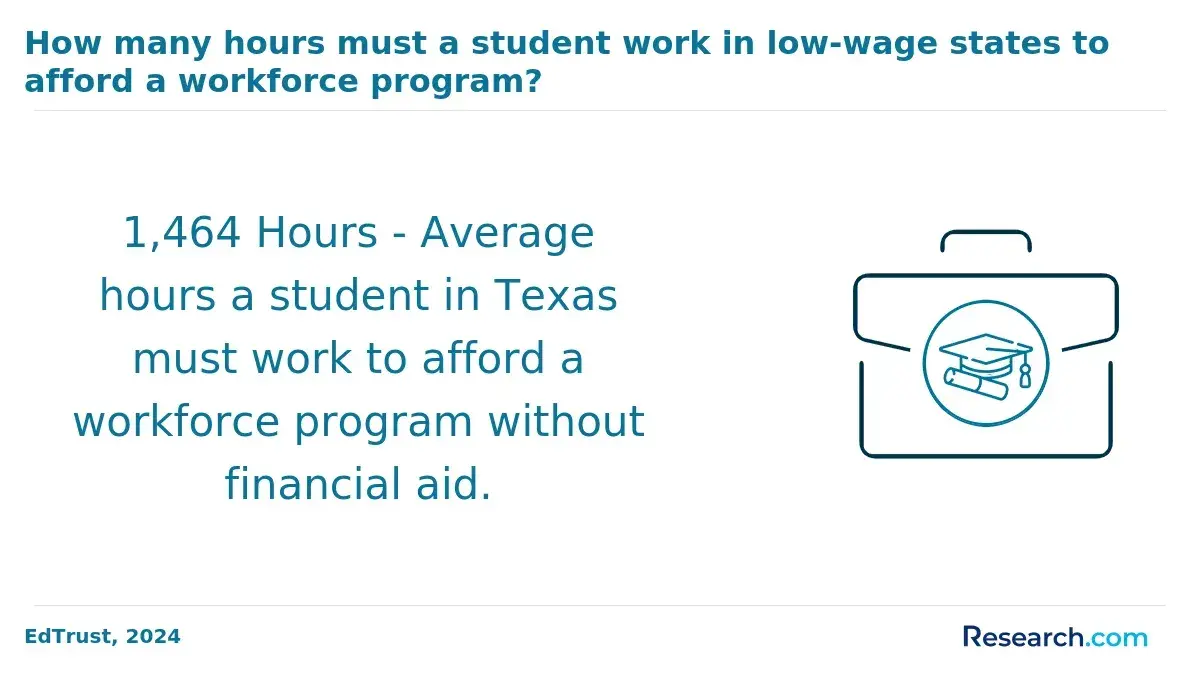
Financial aid can make a low-cost online legal studies associate degree even more affordable, especially at public colleges. The federal Pell Grant maximum for the 2024-2025 award year was $7,395, which can cover a large share of tuition at many community colleges for eligible students.
Students should compare aid based on net price, not the size of the award alone. The same grant has more buying power at a $7,000 public program than at a $25,000 private online program.
These funding options are worth checking before borrowing for an associate degree:
- Federal Pell Grants and state grants, which do not have to be repaid if eligibility rules are met.
- Community college scholarships for adult learners, first-generation students, military-affiliated students, and students in public service or legal studies pathways.
- Employer tuition assistance, especially for students already working in law firms, government offices, insurance, banking, healthcare, or corporate administration.
- Work-study or campus employment, including remote administrative roles when available.
- Credit for prior learning, military training, CLEP exams, or previous college coursework that reduces the number of credits you must pay for.
- Payment plans that spread tuition across the term without requiring unnecessary private loans.
A major red flag is borrowing heavily for a credential aimed at entry-level legal support work. Loans may still be appropriate for some students, but the monthly payment should be compared with local entry-level wages, not only national median salary data.
Accreditation affects transferability, financial aid eligibility, employer trust, and the long-term value of an online legal studies associate degree. At a minimum, students should choose an institution accredited by an agency recognized by the U.S. Department of Education or the Council for Higher Education Accreditation.
Program-level recognition can also matter. Some paralegal programs seek approval from the American Bar Association, but ABA approval is not required for all paralegal jobs and is not available or necessary for every legal studies pathway. Students should treat it as one quality signal, not the only one.
Quality is especially important because legal work is changing. Law offices increasingly use e-discovery tools, digital filing systems, document automation, and AI-supported legal research; a valuable program should teach students how to use technology ethically without implying that graduates can practice law.
Before enrolling, students should verify the following quality indicators:
- Institutional accreditation and eligibility for federal financial aid.
- Clear curriculum coverage in legal research, legal writing, civil litigation, ethics, contracts, torts, and law office technology.
- Faculty with legal, paralegal, court, compliance, or law-office experience.
- Transparent transfer agreements with four-year colleges when the degree is marketed as transfer-friendly.
- Internship, practicum, capstone, or applied legal-document assignments that build job-ready evidence.
- Published policies on online course delivery, proctoring, technology requirements, and student support.
Students should be cautious with schools that emphasize speed and affordability but provide little information about accreditation, curriculum, graduate support, or transfer pathways. A cheap degree has limited value if employers or bachelor's programs do not recognize it.
Flexible online legal studies associate programs are designed for students who cannot attend daytime campus classes. The most flexible options use asynchronous coursework, multiple start dates, online tutoring, virtual library access, and remote advising.
Accelerated completion is most realistic for students who bring in prior credits or can study year-round. A first-time college student with no transfer credit should be skeptical of any claim that a 60-credit associate degree can be completed extremely quickly without a heavy weekly workload.
When comparing flexible and accelerated programs, pay attention to the structure behind the marketing language:
- Asynchronous courses are usually best for working adults because students can complete weekly assignments without logging in at a fixed time.
- Eight-week terms can speed progress, but taking multiple compressed legal courses at once can be difficult because legal reading and writing are time-intensive.
- Year-round enrollment may shorten calendar time if required courses are offered in summer sessions.
- Generous transfer-credit policies can reduce both cost and duration, but only if accepted credits apply to required categories.
- Internship requirements can improve employability but may reduce flexibility if placements must be local or completed during business hours.
The best accelerated choice is not always the fastest one. Students who rush through legal research, writing, and procedure courses may finish quickly but lack the portfolio and confidence needed for legal support interviews.
An online legal studies associate degree can be both a career credential and a stepping stone. Students may use it to pursue entry-level legal support roles first, then transfer into a bachelor's program in legal studies, criminal justice, political science, public administration, business, or another field aligned with their long-term goals.
Transfer planning is especially important for students who want supervisory, compliance, policy, public administration, or law-related management roles. Some of these careers may eventually require a bachelor's degree or graduate education; students considering public-sector leadership later may compare long-term pathways such as a 1 year MPA online after completing a bachelor's degree.
The table below compares when an associate degree alone may be enough and when it is better viewed as the first stage of a longer education plan.
| Goal | Associate degree alone | Bachelor's transfer value | Planning advice |
| Entry-level paralegal or legal assistant work | May be sufficient for some employers, especially with applied paralegal coursework | Helpful for advancement or competitive metropolitan markets | Prioritize legal research, writing, civil litigation, and internship experience |
| Law school preparation | Not sufficient as a final credential | Essential because law school requires a bachelor's degree | Choose an AA or AS with strong transfer agreements and writing-intensive courses |
| Compliance or regulatory analyst work | May support entry-level assistant roles | Often important for analyst, specialist, or management roles | Consider business, healthcare administration, finance, or public administration transfer options |
| Court or government administration | May qualify for clerical or support roles depending on civil service rules | Helpful for promotion, supervisory roles, and policy-oriented work | Check local government job postings before choosing electives |
Students should ask every school for a written transfer map. The best transfer pathway shows exactly which associate courses apply to the bachelor's major, how many credits transfer, and whether students enter as juniors or lose credits.
How Should Students Choose the Cheapest Online Legal Studies Associate Degree for Their Career Goals?
The right cheap online legal studies associate degree is the one that fits your target job, transfer plan, budget, and schedule at the same time. A program that is cheap but poorly matched to your goal can cost more in the long run than a slightly higher-priced option with better completion and transfer value.
Use this decision process before applying:
- Define the target outcome first: immediate paralegal employment, court support work, compliance support, bachelor's transfer, or law-school preparation later.
- Confirm the credential type: choose AAS for job-focused paralegal preparation, AA for transfer, or AS for a balance of applied and transfer coursework.
- Calculate total cost: multiply required credits by your actual tuition rate, then add fees, books, technology costs, and graduation charges.
- Check accreditation and financial aid eligibility before considering rankings, ads, or tuition discounts.
- Compare course requirements with job postings in your area to see whether employers request legal research, e-filing, case management software, bilingual skills, or prior office experience.
- Ask how many credits will transfer into a bachelor's degree and request the answer in writing.
- Review completion logistics, including course rotation, internship rules, online proctoring, required software, and access to advising.
- Estimate ROI using local entry-level wages, not only national median salaries.
Students should also know when not to choose the cheapest option. Avoid a program if it lacks recognized accreditation, hides fees, has unclear transfer policies, offers limited legal coursework, or markets high-paying careers that normally require a bachelor's degree, certification, or experience.
The strongest final question is simple: "Will this program help me reach my next step at the lowest reasonable net cost?" If the answer is unclear, keep comparing before enrolling.
Other Things You Should Know About Legal Studies
No. An associate degree does not qualify someone to practice law or sit for a bar exam. It can be an early step toward a bachelor's degree and later law school, or it can prepare students for legal support roles that do not involve giving legal advice.
Not always. Paralegal studies is usually more job-focused and emphasizes legal research, writing, procedure, and law office tasks. Legal studies can be broader and may work better for transfer, pre-law, policy, or general law-related education.
Some programs require one, and others offer it as an elective. An internship can be valuable because legal employers often want evidence of document handling, confidentiality, office communication, and professional judgment.
Many employers will consider an online degree if the college is properly accredited and the student has relevant skills. Employer response depends on the role, region, curriculum, work experience, and whether the graduate can demonstrate practical legal support abilities.
- Paralegal - Salary, How to Become, Job Description & Best Schools https://www.onlinedegree.com/careers/law-criminal-justice/paralegal/
- Nonprofit vs For-Profit Universities: What's the Difference? | CSU-Global https://csuglobal.edu/blog/nonprofit-vs-profit-universities-whats-difference
- Paralegal Associate Degree https://www.paralegal411.org/degrees/associate/
- Paralegal Program Length: Don’t sell yourself short. - Paralegal College | Center for Advanced Legal Studies https://paralegal.edu/blog/paralegal-program-length-dont-sell-yourself-short/
- How Should We Think About Record-Breaking Employment for Law School Graduates? https://www.lsac.org/blog/how-should-we-think-about-record-breaking-employment-law-school-graduates
- Average Private vs Public College Tuition [2025]: Data Analysis https://educationdata.org/private-vs-public-college-tuition
- Earn an Online Paralegal Degree | OEDb.org https://www.oedb.org/rankings/online-paralegal-programs/
- NALP Research: Private Sector Salaries https://www.nalp.org/privatesectorsalaries
- Paralegal Salary by State | 2025 https://www.allcriminaljusticeschools.com/legal-and-paralegal/paralegal-salary-by-state/
- Private vs. Public Colleges https://www.onlineu.com/resources/college-planning/private-vs-public-colleges