
2027 Cheapest Online Christian Studies Associate Degree Programs That Pay Well: Tuition, Duration, and Career Outcomes

Co-Founder and Chief Data Scientist
Choosing a low-cost online Christian studies associate degree is really a question about value: Will the program prepare you for ministry, service, transfer, or better work without creating unnecessary debt? The College Board reported average published tuition and fees of $4,050 for public two-year colleges in 2024-25, making price comparisons especially important for budget-conscious students.
This guide is for working adults, ministry volunteers, career changers, and future bachelor’s students who want to compare tuition, time to completion, accreditation, and realistic career outcomes before enrolling.
Key Things You Should Know
- The cheapest credible online Christian studies associate options can cost under $5,000 in direct institutional charges, but many regionally accredited or Bible college programs cost closer to $15,000-$25,000 before aid.
- Higher-paying outcomes usually come from pairing Christian studies with transferable skills such as counseling support, nonprofit administration, fundraising, teaching support, communications, or a later bachelor’s degree.
- BLS May 2024 wage data shows related roles vary widely, from $44,240 for social and human service assistants to $67,250 for fundraisers, so students should compare tuition with realistic entry-level opportunities rather than median wages alone.
Which Are the Cheapest Online Christian Studies Associate Degree Programs That Lead to Well-Paying Careers?
The cheapest online Christian studies associate degree is not automatically the best option. The strongest choices combine low tuition, recognized accreditation, transfer-friendly credits, a practical curriculum, and a realistic path toward ministry, nonprofit work, human services, or a bachelor’s degree.
The table below compares affordable online programs that commonly appear in searches for Christian studies, biblical studies, ministry, or religious studies associate degrees. Tuition changes often, so use these figures as a decision starting point and confirm current rates, required fees, and transfer policies with each school before applying.
| School | Online associate program | Approximate published cost structure | Estimated direct tuition or program cost | Typical credits | Best fit | Accreditation consideration |
| NationsUniversity | Associate of Arts in Religious Studies | Annual tuition or fee model for U.S. students | Often under $3,000 for a two-year pace | 60 credits | Lowest-cost religious studies foundation and self-paced adult learners | Verify current DEAC status and transfer acceptance at target bachelor’s schools |
| Christian Leaders College | Associate-level ministry or divinity pathway | Low-cost course and credential fee model | Often below many traditional tuition-based programs | Varies by associate pathway | Ministry volunteers, bi-vocational leaders, and students seeking minimal upfront cost | Verify accreditation status, degree title, and transfer acceptance before enrolling |
| Veritas Baptist College | Associate-level Bible, ministry, or Christian service pathway | Per-credit online tuition model | Commonly in the lower five-figure range for 60 credits | About 60 credits | Students seeking conservative Baptist ministry preparation | Confirm institutional accreditation and whether credits transfer to your intended bachelor’s program |
| God’s Bible School and College | Online associate in Bible, theology, ministry, or related field | Per-credit tuition model | Typically lower than many private Christian colleges | About 60 credits | Students wanting a Bible college environment with online access | Check current accreditation and state authorization for your location |
| Luther Rice College & Seminary | Associate of Arts in Religion | Per-credit undergraduate tuition model | Often around the high teens to low $20,000s before aid | 60 credits | Students planning transfer into ministry, theology, or religion bachelor’s programs | Review regional or national accreditation details and transfer articulation |
| The Baptist College of Florida | Associate of Arts in Christian Studies | Per-credit tuition model | Often in the low-to-mid $20,000s before aid | About 60 credits | Students seeking a traditional Christian college curriculum online | Confirm regional accreditation and general education transferability |
| Liberty University | Associate of Arts in Religion | Per-credit online tuition model | Often in the low-to-mid $20,000s before aid, depending on full-time or part-time rate | 60 credits | Students who want broad online course availability and a clear bachelor’s pathway | Review regional accreditation, military discounts, transfer policies, and fees |
A Christian studies associate degree usually covers biblical interpretation, theology, church history, discipleship, ministry leadership, ethics, communication, and general education. Associate of Arts degrees are often the best transfer option, while applied ministry associate degrees may be better for immediate church or nonprofit work but less flexible for transfer.
Students should be especially cautious with very low-cost programs. A cheap program can be a smart investment if it is accredited, transfer-friendly, and aligned with your goal; it can be a poor investment if the credits do not transfer, the degree title is not recognized by employers, or the curriculum does not prepare you for the work you want.
How Much Does an Online Christian Studies Associate Degree Cost?
An online Christian studies associate degree usually requires about 60 semester credits. The main cost drivers are tuition per credit, required fees, books, technology fees, graduation fees, proctored exam fees, transfer-credit limits, and whether the school charges a flat annual fee or a per-credit rate.
The table below shows how different tuition structures affect the total price. This matters because advertised tuition can look low while required fees or extra semesters raise the final cost.
| Cost factor | What it means | Why it affects value |
| Tuition per credit | The base price multiplied by required credits | A $250 difference per credit can change total tuition by $15,000 over 60 credits |
| Flat annual pricing | Students pay a yearly amount instead of a per-credit rate | Can be very inexpensive for fast, motivated students but less efficient for slow pacing |
| Books and course materials | Bibles, theology texts, learning platforms, and digital materials | Open educational resources can reduce costs, but some programs require specific texts |
| Technology and distance learning fees | Online platform, student services, exam, or course delivery charges | These fees can make a low tuition rate less affordable than it first appears |
| Transfer credit policy | How many prior college, military, or exam credits the school accepts | Generous transfer rules can shorten the degree and reduce direct cost |
| Time to completion | How many terms it takes to finish all requirements | Longer enrollment can mean more fees and delayed earnings or transfer progress |
For a quick estimate, multiply the per-credit tuition by the number of credits you still need, then add mandatory fees and expected materials. A student who transfers in 15 credits only needs to price 45 credits, which can make a slightly higher per-credit school cheaper overall than a lower-rate school with restrictive transfer rules.
If you are comparing Christian studies with helping-profession pathways, it can also be useful to compare the associate degree price with the longer route to counseling credentials. Students considering ministry-adjacent counseling careers should understand that professional counseling typically requires graduate education, and resources on online masters programs for counseling can help clarify the later cost of that pathway.
How Long Does It Take to Complete an Online Christian Studies Associate Degree?
Most online Christian studies associate degrees take two years of full-time study, but actual completion time depends on course load, transfer credits, term length, work schedule, and whether the program uses accelerated sessions. Part-time students commonly take three to four years because they enroll in fewer courses each term.
The table below compares common pacing options. Use it to decide whether the cheapest program is still affordable after accounting for time, work hours, and transfer plans.
| Enrollment pace | Typical course load | Common completion time | Best for | ROI consideration |
| Full-time | 12-15 credits per semester | About 2 years | Students who can manage school as a major commitment | Faster transfer or job entry, but heavier weekly workload |
| Part-time | 6-9 credits per semester | About 3-4 years | Working adults, parents, and ministry volunteers | Lower term-by-term payments, but delayed completion |
| Accelerated online | Shorter 5-8 week courses | As little as 12-18 months with transfer credit | Motivated students with prior credits and strong time management | Can improve ROI if the student finishes without repeating courses |
| Self-paced or competency-style | Progress depends on mastery and school rules | Varies widely | Independent learners with predictable study time | Can be inexpensive, but only if the student stays active and finishes quickly |
Completion speed matters because the lowest sticker price can lose value if the structure slows you down. For example, a program with limited course availability may force students to wait for required Bible, theology, or general education courses, while a slightly more expensive program with year-round terms may lead to faster completion.
Before enrolling, ask the school how often required courses are offered, whether online students can take summer classes, and whether the associate degree maps directly into a bachelor’s program. These details are often more important than the advertised “two-year” label.
An associate degree in Christian studies can support entry into church staff roles, ministry support, nonprofit work, missions administration, social service support, youth programming, and community outreach. However, the highest-paying options usually require experience, denominational approval, a bachelor’s degree, a graduate degree, or specialized credentials.
The table below uses BLS May 2024 median wage data for U.S. occupations related to ministry, nonprofit service, and human services. Median wage is not an entry-level promise; it is a midpoint for workers in the occupation, often including people with more education and experience.
| Career path | Typical role with an associate degree | May 2024 median annual wage | Common additional requirement | How Christian studies helps |
| Fundraising | Development assistant, donor relations assistant, church fundraising coordinator | $67,250 | Bachelor’s degree often preferred for advancement | Builds mission fluency, ethics, communication, and nonprofit context |
| Clergy or pastoral ministry | Associate pastor, ministry intern, lay minister, bi-vocational minister | $60,910 | Ordination, denominational approval, or seminary may be required | Provides biblical, theological, and pastoral foundations |
| Religious activities and education | Youth ministry assistant, discipleship coordinator, Christian education assistant | $54,840 | Experience and church background often matter heavily | Supports lesson planning, biblical interpretation, and ministry leadership |
| Administrative support | Church office coordinator, ministry administrator, nonprofit program assistant | $47,460 for secretaries and administrative assistants | Office software, bookkeeping, or communications skills may be expected | Adds church and nonprofit context to general administrative skills |
| Human services | Social service assistant, outreach assistant, case aide | $44,240 for social and human service assistants | State rules and employer requirements vary; bachelor’s may be needed for case management | Strengthens service orientation, ethics, cultural awareness, and community care |
The best salary strategy is to treat Christian studies as a foundation rather than the only skill set. Students aiming for higher earnings should add practical electives or certificates in nonprofit management, bookkeeping, communications, youth work, addiction support, human services, or data tools used by churches and nonprofits.
A common mistake is assuming that a Christian studies associate degree qualifies graduates for licensed counseling, social work, or teaching roles. It usually does not. If your long-term goal is counseling, compare the Christian studies route with a cheapest online counseling degree pathway to see which undergraduate preparation better fits graduate admission and licensure expectations.
The best return on investment comes from the program that helps you reach your goal at the lowest total cost, not necessarily the program with the lowest advertised tuition. For some students, the best ROI is a very low-cost accredited religious studies program. For others, it is a more expensive associate degree that transfers cleanly into a bachelor’s program.
The table below summarizes which type of affordable program tends to provide the strongest value for different goals. This comparison is useful because Christian studies students often pursue different outcomes: immediate ministry, church employment, nonprofit support, or continued education.
| Student goal | Best low-cost degree structure | Why it may offer strong ROI | Main risk to check |
| Volunteer or bi-vocational ministry | Low-cost nationally accredited or Bible college associate pathway | Keeps cost low while building biblical and ministry knowledge | Credits may not transfer broadly |
| Transfer to a bachelor’s degree | Associate of Arts with strong general education and articulation options | Reduces the first two years of bachelor’s tuition | Some ministry courses may transfer only as electives |
| Church staff employment | Christian studies plus administration, communications, or youth ministry electives | Pairs ministry knowledge with practical workplace skills | Small churches may offer modest pay or part-time roles |
| Nonprofit or human services work | Christian studies with human services, psychology, or nonprofit coursework | Can support entry-level service roles while preserving transfer options | Advancement may require bachelor’s or state-specific credentials |
| Future graduate study | Regionally accredited transfer-oriented associate degree | Creates a clearer path to bachelor’s completion and later graduate admission | Lowest-cost options may not meet future school requirements |
A simple ROI test is to compare total out-of-pocket cost with the credential’s realistic next step. If you want an entry-level church administrative role, a $3,000-$8,000 pathway may make sense. If you plan to become a licensed counselor, chaplain in certain healthcare settings, or professor, the associate degree is only the first step and the long-term cost of bachelor’s and graduate education matters more.
Students should avoid choosing only by ranking or marketing language. Better questions include whether credits transfer, whether the school is recognized by the type of employer you want, whether the program includes general education, and whether you can finish without taking unnecessary electives.
Financial aid can turn a moderately priced Christian studies associate degree into the cheapest option for an individual student. The most important step is to compare net price after grants, scholarships, discounts, transfer credit, and employer or church support.
Students should review several aid sources before deciding that a program is too expensive. The list below shows the most common ways to reduce direct cost and why each one matters.
- Federal Pell Grant: The maximum Pell Grant for the 2024-25 award year was $7,395, and eligible students at participating schools can use it to reduce tuition and fees before borrowing.
- Federal student loans: Loans can cover remaining costs, but students should borrow cautiously because many entry-level ministry and nonprofit roles pay modestly.
- Institutional scholarships: Christian colleges may offer ministry, church partnership, academic, military, transfer, or need-based scholarships.
- Church sponsorship: Some churches help pay for volunteers, interns, ministry staff, or future pastors if the degree directly supports congregational work.
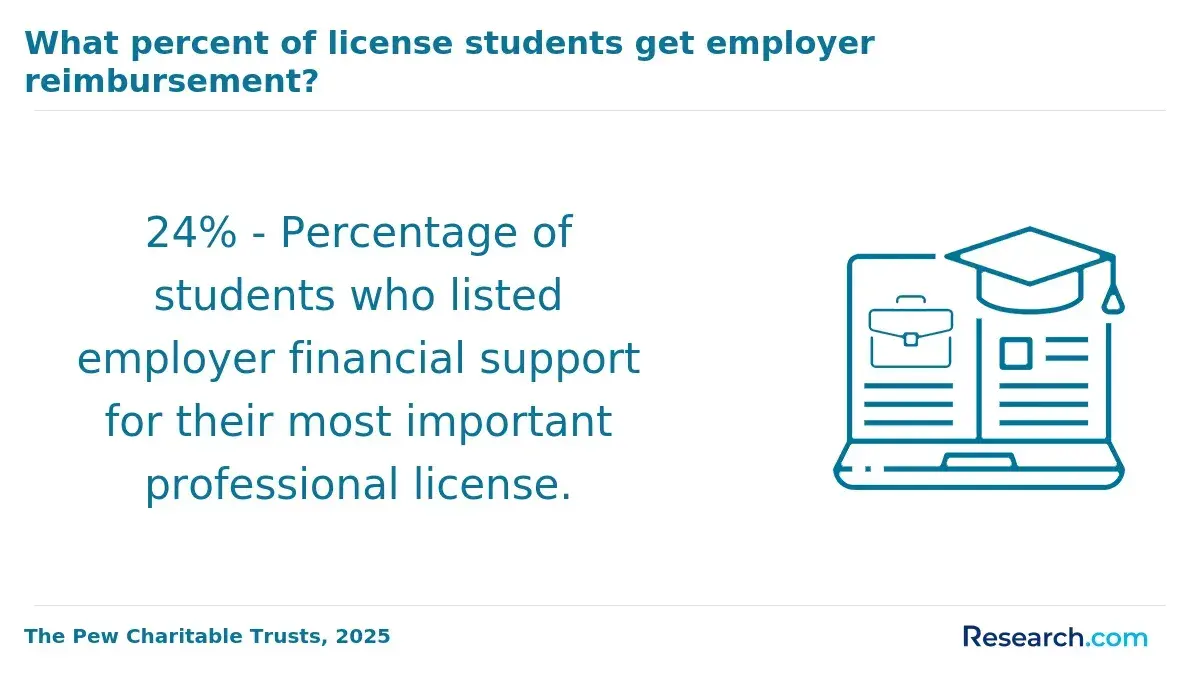
- Employer tuition assistance: Nonprofit, church, school, and healthcare employers may reimburse job-related coursework, especially for administrative or human service roles.
- Transfer credits and prior learning: Previously earned college credits, military training, standardized exams, and portfolio credit can reduce the number of courses you must pay for.
The key is to ask each school for a written cost estimate after aid. That estimate should include tuition, required fees, books, technology fees, and the number of credits you still need after transfer evaluation.
Do not assume that private Christian colleges are unaffordable or that public options are always cheaper. Net price can change significantly after aid, and private nonprofit institutions sometimes discount tuition heavily for online, ministry, military, or adult learners.
Accreditation affects whether your degree is recognized for transfer, employment, federal financial aid, and future graduate study. For online Christian studies associate programs, students may encounter regional accreditation, national faith-related accreditation, national distance education accreditation, or unaccredited religious training programs.
The table below explains how accreditation differences can affect value. This is one of the most important checks for students who want the degree to lead beyond personal enrichment.
| Accreditation or recognition type | What it may indicate | Why it matters | What to verify |
| Regional institutional accreditation | The college meets broad academic and administrative standards | Often provides the strongest transfer and graduate-school recognition | Whether the accreditor is recognized by the U.S. Department of Education |
| Faith-related national accreditation | The school meets standards for Bible, ministry, theology, or Christian higher education | Can be respected by churches and ministry employers | Whether credits transfer to the bachelor’s schools you are considering |
| Distance education accreditation | The institution has review standards for online delivery | May support legitimacy for fully online study | Whether future schools and employers accept the credential |
| Unaccredited religious training | The program may focus on ministry education without recognized accreditation | Can be useful for personal growth or church training | Whether the credential has any transfer, employment, or aid value |
Program quality also matters beyond accreditation. Strong online Christian studies programs clearly state learning outcomes, include general education, provide faculty access, publish transfer policies, offer library resources, and explain how online students receive advising and career support.
Students interested in counseling-oriented ministry should be especially careful about accreditation. Licensure-focused counseling programs have separate standards, and later graduate study may require specific preparation; students researching that route may want to compare Christian studies with cheapest CACREP-accredited programs online when planning long-term credentials.
Flexible and accelerated online Christian studies associate degrees are most valuable for students who already have credits, work irregular schedules, serve in ministry, or need to finish quickly before transferring. Flexibility can include asynchronous classes, multiple start dates, short terms, summer enrollment, and self-paced courses.
Use the following checklist to compare flexibility before you enroll. These details can determine whether a cheap program is actually finishable for your schedule.
- Ask whether courses are asynchronous, synchronous, or mixed, because required live sessions can be difficult for working adults or ministry staff.
- Check how many start dates are available each year, since frequent starts can reduce waiting time after admission or transfer evaluation.
- Confirm whether required Bible, theology, and general education courses are offered every term or only once per year.
- Ask the maximum number of transfer credits allowed and whether the school accepts credits from accredited Bible colleges, community colleges, military training, or exams.
- Review weekly workload expectations for accelerated courses, because a five-week theology class can be demanding even if it shortens the calendar.
- Confirm whether online students have access to advising, tutoring, library databases, disability services, and technical support.
Accelerated study can improve ROI if it reduces total enrollment time and helps you enter work or transfer sooner. It can hurt ROI if the pace leads to withdrawals, repeated courses, or lower grades that weaken transfer opportunities.
Students considering a later counseling specialization should note that acceleration at the associate level does not shorten state licensure requirements later. For comparison, graduate-level timelines are discussed in resources on accelerated mental health counseling programs online, which can help students understand how long the full professional path may take.
Yes, an online Christian studies associate degree can lead to advancement or a bachelor’s degree, but the path depends heavily on degree type, accreditation, transfer policy, and career goal. It is often strongest as a stepping stone rather than a final credential for higher-paying professional roles.
An Associate of Arts is usually the most transfer-oriented option because it includes more general education. An Associate of Science may be useful if the curriculum includes psychology, human services, leadership, or organizational coursework. An Associate of Applied Science may be more career-focused, but students should check carefully because applied credits do not always transfer smoothly into bachelor’s programs.
Students can use the associate degree to move in several directions. The most realistic pathways are listed below because they show how the degree can fit into longer academic and career plans.
- Bachelor’s degree in Christian studies, biblical studies, theology, ministry, religion, or pastoral leadership for students seeking deeper ministry preparation.
- Bachelor’s degree in nonprofit management, human services, psychology, communications, education, or organizational leadership for students who want broader employment options.
- Church or nonprofit advancement into coordinator roles after combining the degree with experience, references, technology skills, and leadership responsibility.
- Seminary or graduate theological study after completing a bachelor’s degree, especially for students pursuing chaplaincy, pastoral leadership, teaching, or advanced ministry roles.
- Credential-specific pathways in counseling, social work, or education, which usually require bachelor’s and graduate-level study beyond the associate degree.
A common mistake is assuming every Christian studies associate degree transfers as the first half of a bachelor’s degree. Before enrolling, send the course plan to the bachelor’s institution you may attend and ask for a preliminary transfer review.
How Should Students Choose the Cheapest Online Christian Studies Associate Degree for Their Career Goals?
Students should choose the cheapest online Christian studies associate degree by working backward from the outcome they want. A student preparing for volunteer ministry should evaluate programs differently than a student planning graduate counseling, nonprofit leadership, or seminary.
The following steps turn tuition, duration, and career outcomes into a practical decision. Use them before submitting an application or paying a deposit.
- Define your primary goal: personal enrichment, church service, paid ministry, nonprofit work, transfer to bachelor’s study, or preparation for graduate education.
- List the degree type and curriculum: AA for transfer, AS for broader academic preparation, or AAS for applied ministry or career-focused training.
- Calculate total cost: multiply credits needed by tuition, then add fees, books, technology costs, graduation charges, and any extra term costs.
- Request a transfer-credit evaluation before enrolling, especially if you have previous college, military, dual-enrollment, or exam credits.
- Verify accreditation through official accreditor and federal recognition sources, then ask target bachelor’s schools whether they accept credits from that institution.
- Compare completion timelines by asking how often required courses are offered and whether online students can enroll year-round.
- Check career realism by reviewing job postings in your region for church, nonprofit, and human service roles and noting required education, experience, and pay ranges.
- Ask for student outcome information, including graduation rates, transfer pathways, ministry placement support, and online student advising.
- Compare net price after grants, scholarships, church support, employer assistance, and transfer credit rather than relying on advertised tuition.
- Avoid programs that pressure you to enroll quickly, hide fees, make salary promises, lack recognized accreditation, or cannot explain transfer policies in writing.
The cheapest program is a good choice when it is legitimate, finishable, aligned with your goals, and low enough in cost that expected benefits outweigh the risk. Paying more can make sense when the school offers stronger transfer pathways, better advising, recognized accreditation, or a curriculum that better supports your long-term career plan.
Online study usually offers better financial value for working adults who can avoid relocation, commuting, and lost income. Campus study may be worth the added cost for students who need in-person mentoring, chapel life, ministry placements, or local church networking.
Other Things You Should Know About Christian Studies
Not exactly. Christian studies is usually broader and may include Bible, theology, ministry, ethics, church history, and practical leadership. Theology focuses more deeply on doctrine, interpretation, and systematic religious thought.
Many colleges do not print “online” on the diploma, but policies vary. Ask the registrar how the credential appears on the diploma and transcript before enrolling.
Usually not, but some Christian colleges teach from a specific denominational or theological perspective. Review the statement of faith, faculty background, and required chapel or ministry expectations to make sure the program fits you.
Yes, many online associate programs are designed for working adults. Part-time enrollment, asynchronous courses, and multiple start dates can make the workload more manageable, but students should still plan regular weekly study time.
- Top 60 Christian Scholarships to Apply for in December 2025 https://bold.org/scholarships/by-type/christian-scholarships/
- Biblical Studies Associate Degree - OU - Lancaster Bible College https://www.lbc.edu/academics/online-associate-programs/biblical-studies-associate-degree/
- Online Christian Colleges | The Best Faith-Based Universities https://www.onlinecolleges.net/rankings/best-online-christian-colleges/
- Making Christian Education Affordable: Scholarship and Aid Options https://evcsonline.com/blog/making-christian-education-affordable-scholarship-and-aid-options
- The Best Online Christian Colleges And Universities https://www.learnhowtobecome.org/online-universities-and-colleges/christian/
- Online Associate in Theology Degree Guide & Directory - TheologyDegree.org https://www.theologydegree.org/online/associate/
- Associate Degrees in Christian Ministry Online and Religious Studies https://christianministryedu.org/degrees/christian-associate-degrees/
- Christian College Scholarships & Programs for Students & Educators https://www.acsi.org/academic-programs/acsi-elevate--higher-education-program/acsi-christian-college-scholarships-and-programs-for-students-and-educators
- Servants University | Training Servants for Christ https://www.servantsuniversity.com/austin-bible-university-home/
- Associates in Christian Leadership https://destinybiblecollege.education/associates-in-christian-leadership/


