2027 Cheapest Accredited Online Social Media Degree Programs That Accept FAFSA

Co-Founder and Chief Data Scientist
Choosing an online social media degree is really a cost-and-value decision: you need a program employers will respect, but you also need a price you can realistically pay. The maximum Federal Pell Grant is $7,395 for the 2025-26 award year, which can materially reduce tuition for eligible students. This guide is for students comparing accredited, FAFSA-eligible online programs in social media, digital marketing, communication, and related fields. You will learn how to compare tuition, net price, accreditation, transfer credits, aid, and career return before applying.
Key Things You Should Know
- The cheapest FAFSA-eligible online social media options are usually public universities or nonprofit online programs with tuition around $299 to $495 per credit before fees and aid.
- FAFSA participation does not mean a program is free; Pell Grants, scholarships, work-study, and federal loans depend on eligibility, enrollment level, cost of attendance, and satisfactory academic progress.
- For career ROI, compare total borrowing with realistic outcomes: the BLS reported a May 2024 median wage of $76,950 for market research analysts and marketing specialists, a common data-driven pathway for social media graduates.
Which Are the Cheapest Accredited Online Social Media Degree Programs That Accept FAFSA?
The lowest-cost accredited online social media degrees are usually bachelor's programs in social media management, digital marketing, strategic communication, digital audiences, or public relations with substantial social media coursework. A true apples-to-apples comparison should look at tuition per credit, total credits, institutional accreditation, federal student aid participation, and whether the program's curriculum includes portfolio-building, analytics, content strategy, paid social, and digital campaign work.
| School | Online program related to social media | Institutional accreditation | Typical credits | Published online tuition estimate before aid | Best affordability angle |
| University of Florida Online | Bachelor's in Public Relations with digital and social media coursework | SACSCOC | About 120 to 124 | About $129 per credit for Florida residents; higher for nonresidents | Potentially one of the lowest-cost options for Florida residents |
| Arkansas State University | B.S. in Strategic Communication with Social Media Management emphasis | Higher Learning Commission | 120 | About $299 per credit | Clear social media focus and comparatively low per-credit tuition |
| Southern New Hampshire University | B.A. in Communication or marketing-related online pathways with new media and social media coursework | NECHE | 120 | About $330 per credit | Large transfer-credit policy and predictable online tuition |
| Liberty University | B.S. in Strategic Communication with Social Media Management concentration | SACSCOC | 120 | About $390 per credit for full-time online undergraduate study; higher part-time rate may apply | Structured concentration and large online course catalog |
| Franklin University | B.S. in Marketing with digital and social media marketing coursework | Higher Learning Commission | 120 | About $398 per credit | Adult-focused scheduling and transfer-friendly design |
| Bellevue University | B.S. in Marketing or related online pathways with social media marketing coursework | Higher Learning Commission | About 120 to 127 | About $449 per credit | Strong fit for working adults who need asynchronous study |
| Johnson & Wales University Online | B.S. in Digital Marketing & Social Media | NECHE | 120 | About $495 per credit | Specific digital marketing and social media degree title |
| Arizona State University Online | B.A. in Digital Audiences | Higher Learning Commission | 120 | Often above $560 per credit, varying by program and student factors | Higher price but strong digital audience, analytics, and media emphasis |
A program with the lowest sticker tuition is not always the cheapest after financial aid. A slightly higher-tuition school can cost less if it accepts more transfer credits, awards institutional scholarships, charges fewer fees, or lets you finish faster without stopping work.
How Does FAFSA Eligibility Work for Online Social Media Degree Programs?
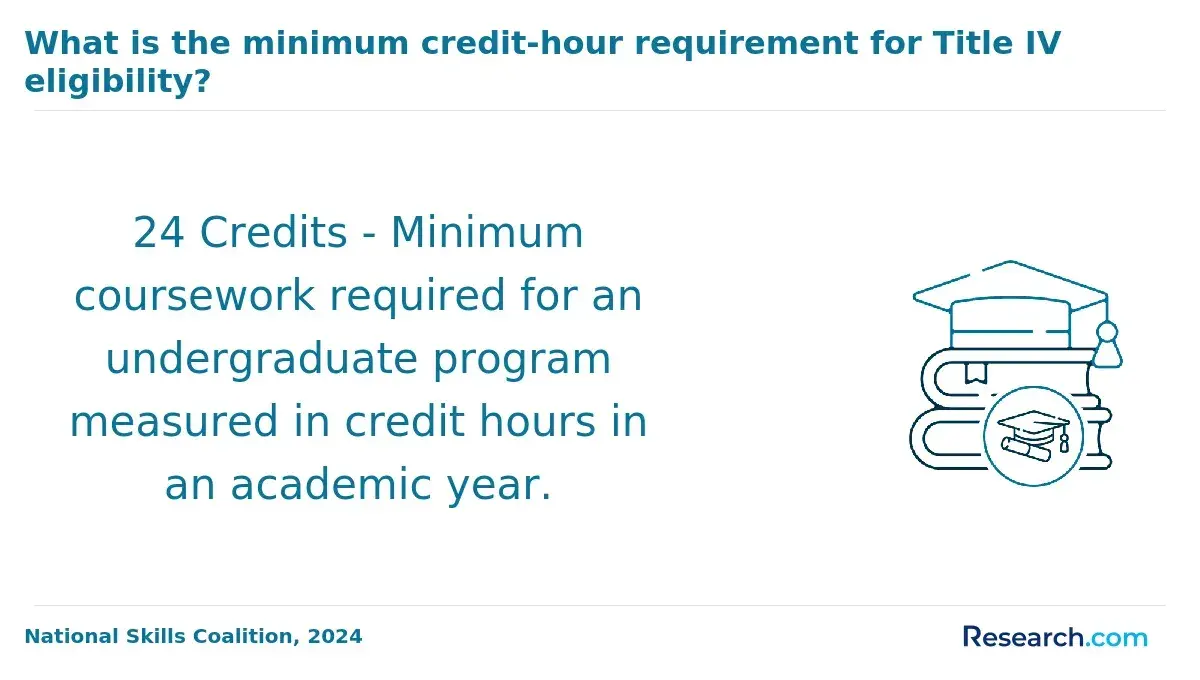
FAFSA eligibility means the institution participates in federal Title IV student aid and the student is enrolled in an eligible degree program. It does not automatically mean every course, certificate, enrollment pattern, or student will receive grant funding.
Since the 2024-25 aid cycle, the FAFSA has used the Student Aid Index instead of the older Expected Family Contribution. That matters because grant eligibility is now calculated differently, so students should compare official aid offers rather than relying on family income alone.
The same federal-aid logic applies across many accredited online degrees, whether a student is comparing social media programs or specialized options such as online masters speech pathology programs: the school, program, enrollment status, and student eligibility all have to line up.
Before assuming a program accepts FAFSA aid, use this verification sequence:
- Confirm that the institution has a current federal school code and participates in Title IV aid.
- Ask whether the specific online social media, communication, marketing, or digital media degree is aid-eligible, not just whether the university accepts FAFSA.
- Check whether you must enroll at least half time to use certain forms of federal loans or campus-based aid.
- Ask whether accelerated, competency-based, certificate, or nondegree versions of the curriculum have different aid rules.
- Request a written cost-of-attendance estimate that includes tuition, mandatory fees, technology charges, books, software, and expected living-cost allowances.
A common mistake is treating "FAFSA accepted" as a promise that tuition will be covered. The FAFSA is an application and eligibility tool; the actual financial aid offer comes from the school after it reviews your FAFSA data, enrollment plan, academic level, dependency status, and remaining aid limits.
How Much Does an Online Social Media Degree Cost After Financial Aid?
The real cost of an online social media degree is the net price: tuition and required costs minus grants, scholarships, tuition discounts, and other gift aid. Federal loans can help with cash flow, but they do not reduce the price because they must be repaid with interest.
The table below shows how Pell Grant eligibility can change the tuition picture. These are planning examples, not guarantees, because Pell eligibility depends on federal rules, enrollment intensity, lifetime Pell usage, cost of attendance, and school certification.
| Cost scenario | Planning calculation | What it means for the student |
| Low-tuition 120-credit program at $299 per credit | About $35,880 in tuition before fees | A student with strong grant eligibility may reduce borrowing substantially, especially with transfer credits. |
| Maximum Pell Grant for four full-time years | Up to $29,580 total, based on $7,395 per award year | This can cover a large share of tuition at lower-cost schools, but it may not cover fees, books, housing, or full tuition at higher-priced programs. |
| Remaining tuition after maximum Pell in the low-tuition example | About $6,300 before other aid and fees | This is why FAFSA-eligible low-tuition programs can be powerful for high-need students, but actual aid offers may be lower. |
| 120-credit program at $495 per credit | About $59,400 in tuition before fees | Even with the same Pell eligibility, the student may need more scholarships, employer aid, personal payments, or loans. |
Fees can be the hidden difference between "cheap" and genuinely affordable. Ask about online course fees, technology fees, graduation fees, proctoring charges, Adobe or analytics software, camera or production equipment, and whether textbooks are included in tuition.
Students should also compare aid renewal rules. Losing eligibility because of low grades, dropped courses, or failing satisfactory academic progress can quickly turn an affordable program into an expensive one.
Which Affordable Online Social Media Degree Programs Offer the Best Value?
The best value is not always the program with the lowest per-credit tuition. A strong value program combines reasonable net cost, verified accreditation, flexible scheduling, transfer-credit acceptance, relevant coursework, portfolio development, and career services that fit social media, digital marketing, public relations, and content strategy roles.
Social media is also a creative technology field, so students should compare programs the same way they would evaluate other portfolio-driven degrees such as a masters in game design: cost matters, but the work samples and applied skills you graduate with matter too.
The table below summarizes which affordable options may offer the best value for different student profiles. Use it as a shortlisting tool, then confirm current tuition and aid details directly with each school.
| Student priority | Programs that may fit | Why this can be a good value | When to be cautious |
| Lowest possible tuition for residents | University of Florida Online for Florida residents | Resident tuition can be much lower than many national online rates. | Nonresident pricing and admission selectivity may change the value calculation. |
| Clear social media management concentration | Arkansas State University or Liberty University | The curriculum is easier to connect to social media campaign, communication, and digital strategy goals. | Compare fees, transfer acceptance, and whether the course sequence matches your timeline. |
| Maximum transfer flexibility | SNHU, Franklin University, Bellevue University | Transfer-friendly policies can reduce total tuition more than a small per-credit discount. | Ask for an official transfer evaluation before enrolling. |
| Brand recognition and digital audience analytics | Arizona State University Online | The program may appeal to students who want audience research, platform strategy, and media analytics depth. | Higher tuition can reduce ROI if the student must borrow heavily. |
| Specific digital marketing and social media degree title | Johnson & Wales University Online | A direct degree title can be attractive for students targeting digital marketing and social media roles. | Compare net price carefully against lower-cost communication or marketing degrees. |
Current employer expectations also affect value. Social media roles increasingly require comfort with AI-assisted content tools, short-form video workflows, paid social dashboards, audience segmentation, search behavior, brand safety, and performance reporting. A cheap program that ignores analytics and portfolio work may be less valuable than a moderately priced program with applied campaign projects.
When comparing value, focus on the factors that directly change your career readiness and total cost:
- Whether the program requires campaign planning, social analytics, content production, crisis communication, and marketing research projects.
- Whether students graduate with a portfolio, capstone, internship, practicum, or client-based project.
- Whether the school has career support for marketing, communication, public relations, ecommerce, and agency roles.
- Whether transfer credits, prior learning, military credits, or employer tuition assistance can reduce the number of credits you pay for.
Are the Cheapest Online Social Media Degree Programs Properly Accredited?
Accreditation is one of the most important safeguards when choosing a low-cost online degree. For social media degrees, institutional accreditation is the key requirement because there is no universal programmatic accreditor required for social media management, digital marketing, or online communication degrees.
Institutional accreditation means the college or university has been reviewed by a recognized accrediting body for academic quality, governance, financial stability, student support, and learning outcomes. It also affects federal aid eligibility, transfer-credit acceptance, graduate school admission, and employer confidence.
Use this process before applying:
- Look up the institution's accreditor in official federal or recognized accreditation databases rather than relying only on marketing language.
- Confirm that the accreditor covers the entire institution, not just one campus or one division that excludes your online program.
- Ask whether the online program appears on the same transcript as the university's other degree programs.
- Check whether the program is a degree program, concentration, certificate, or nondegree bootcamp, because aid and transfer rules can differ.
- Ask graduate schools or target employers if they have any accreditation preferences before you enroll.
Red flags are especially important when a program advertises very low tuition. Watch for warning signs such as:
- No recognized institutional accreditation or vague claims such as "internationally accredited" without a recognized U.S. accreditor.
- Pressure to enroll before receiving a written aid offer and transfer-credit evaluation.
- Tuition advertised without mandatory fees, technology costs, or course-material requirements.
- Promises of guaranteed employment, guaranteed salary, or guaranteed influencer-style success after graduation.
- Nondegree certificates presented as equivalent to an accredited bachelor's degree for financial aid or transfer purposes.
The cheapest accredited program can be a smart choice, but a program that is cheap because it lacks recognized accreditation can create long-term problems with aid, transfer, graduate study, and employer screening.
What FAFSA Grants and Federal Aid Can Pay for an Online Social Media Degree?
FAFSA can connect eligible students to grants, federal loans, work-study, and sometimes school or state aid. The best funding mix uses grants and scholarships first, then carefully considers loans only after the net price is clear.
The table below summarizes major federal aid types commonly relevant to online undergraduate students. Exact eligibility depends on the student, school, enrollment level, and remaining federal aid limits.
| Aid type | Current federal amount or rule | How it affects affordability |
| Federal Pell Grant | Maximum award is $7,395 for the 2025-26 award year | Gift aid that can reduce tuition and does not have to be repaid if enrollment and eligibility rules are met. |
| Federal Direct Subsidized Loan | Available to eligible undergraduates with financial need, subject to annual and aggregate limits | Interest is subsidized during eligible in-school periods, but the loan still increases total cost after repayment. |
| Federal Direct Unsubsidized Loan | Available to many undergraduate students, subject to annual and aggregate limits | Can help cover gaps, but interest begins accruing after disbursement. |
| Federal Work-Study | Amount varies by school funding and student eligibility | May help with living or education expenses, but online students should confirm remote or local job availability. |
| Parent PLUS Loan | Available to eligible parents of dependent undergraduate students after credit review | Can cover remaining cost, but families should evaluate repayment responsibility carefully. |
| State and institutional grants | Amount varies by state, school, residency, and deadline | Can make public or nonprofit programs much cheaper, especially for in-state students. |
Federal undergraduate Direct Loan limits are also important. Dependent undergraduates generally have lower annual and aggregate borrowing limits than independent students, so a high-cost program may leave a funding gap even after federal loans.
To keep debt manageable, apply aid in this order:
- Use FAFSA-based grants and state grants first because they generally do not need to be repaid.
- Apply for institutional scholarships, transfer scholarships, adult learner awards, military education benefits, and employer tuition assistance.
- Use personal payment plans only if the monthly amount is realistic and does not increase high-interest consumer debt.
- Borrow federal loans only for the remaining gap, and calculate total debt across all years before accepting the full amount.
A major mistake is accepting the maximum loan offered every term. A loan refund may feel helpful in the short term, but it raises the total cost of the degree and can reduce ROI after graduation.
How Do Transfer Credits Lower the Cost of an Online Social Media Degree?
Transfer credits can be the biggest cost reducer in an online social media bachelor's degree. If a school charges $330 per credit and accepts 30 prior credits, that can reduce billed tuition by about $9,900 before considering grants or scholarships.
This is why students with prior college experience should compare transfer policies as carefully as tuition. A higher-priced school that accepts 75 or 90 credits may cost less than a cheaper school that accepts only a small number of credits toward the major.
Students trying to finish quickly may also want to compare social media programs with broader completion-focused pathways, including an accelerated bachelor's degree online accredited option, especially if their credits do not fit neatly into a marketing or communication major.
The table below shows common transfer-credit sources and how they can reduce total cost. The actual savings depend on the school's evaluation and whether credits apply to general education, electives, major requirements, or upper-division coursework.
| Transfer-credit source | Typical use in an online social media degree | Cost impact |
| Community college credits | Often apply to general education and lower-division electives | Can reduce the number of university credits billed at a higher rate. |
| Completed associate degree | May satisfy a block of lower-division requirements at transfer-friendly schools | Can shorten the bachelor's timeline significantly if the degree articulates well. |
| Prior university credits | May apply to communication, marketing, business, writing, statistics, or elective requirements | Can reduce tuition, but older or unrelated credits may not apply directly. |
| Military training | May be evaluated through recognized credit recommendations | Can reduce elective or applied learning requirements for eligible students. |
| Credit by exam or prior learning | May satisfy selected general education or elective requirements | Can be cheaper than taking the full course if the school accepts the credit. |
Before enrolling, ask for an official transfer evaluation, not an informal estimate. The key question is not "How many credits will you accept?" but "How many credits will apply to the degree requirements I still need to complete?"
Which Students Benefit Most From a Low-Cost Online Social Media Degree With FAFSA?
A low-cost FAFSA-eligible online social media degree is usually best for students who need a bachelor's credential, want flexible study, and are targeting entry-level or advancement roles in social media management, digital marketing, content strategy, public relations, brand communication, audience research, or marketing analytics.
It can be especially useful for students who already have credits or professional experience but need a coherent degree path. Students comparing broader majors may also want to review online interdisciplinary studies degree career outcomes if they want to combine communication, business, design, and technology without choosing a narrowly branded social media major.
These students tend to benefit most:
- Working adults who need asynchronous courses and cannot attend campus during business hours.
- Community college transfer students who can reduce bachelor's-level tuition with accepted credits.
- Students who qualify for Pell Grants, state aid, employer tuition assistance, military benefits, or institutional scholarships.
- Career changers moving from retail, hospitality, customer service, journalism, design, or sales into digital marketing and communications.
- Students who can build a portfolio during school through internships, freelance projects, student organizations, or employer-based campaigns.
However, some students should not choose primarily by lowest tuition. If you need intensive design training, advanced data analytics, a highly selective internship pipeline, or a strong alumni network in a specific metro market, a slightly more expensive program may be worth considering if it reduces career risk and borrowing remains reasonable.
Typical admissions requirements for online bachelor's programs include a high school diploma or equivalent, transcripts from all prior colleges, a minimum GPA requirement for transfer students, and sometimes prerequisite coursework. Most undergraduate social media programs do not require a portfolio for admission, but a portfolio is often important for internships and jobs.
How Does the Cost of an Online Social Media Degree Affect Career ROI?
Career ROI depends on the relationship between total cost, total borrowing, completion time, and the jobs you can realistically pursue. Social media roles vary widely: some are entry-level content coordinator jobs, while others sit within digital marketing, audience research, public relations, ecommerce, or brand strategy teams.
The BLS reported a May 2024 median annual wage of $76,950 for market research analysts and marketing specialists. That figure is not a promise for social media graduates, but it is useful because many social media jobs now require analytics, campaign measurement, audience segmentation, and marketing research skills rather than content posting alone.
Students considering future graduate study should also think about cumulative education debt. For example, someone planning to move later into management or people operations might compare undergraduate borrowing with the cost of a 1 year online master's in human resources or another career-focused graduate program before using all available loan capacity on the bachelor's degree.
The table below shows how cost affects ROI even when the credential is similar. The lower the total debt, the more flexibility a graduate has to take entry-level roles, internships, agency jobs, or portfolio-building opportunities.
| Degree-cost outcome | Likely ROI effect | Decision signal |
| Low net price with grants and transfer credits | Usually strongest financial position because the student needs less income growth to justify the degree cost. | Often a good fit if the curriculum still builds job-ready skills. |
| Moderate tuition with strong portfolio and career support | Can be worthwhile if the program improves internship access, campaign experience, and career readiness. | Compare outcomes and borrowing before rejecting it based only on price. |
| High tuition with heavy borrowing | Creates more pressure to earn quickly after graduation and may limit flexibility in lower-paid entry roles. | Choose only if the program has clear advantages that match your goals. |
| Cheap program with weak applied learning | May save money upfront but leave the student needing extra certificates, portfolio work, or unpaid experience later. | Ask whether the low cost comes with enough career preparation. |
ROI is strongest when the degree includes measurable skills: social analytics, paid social reporting, copywriting, content calendars, search and platform behavior, email and CRM basics, visual production, AI-assisted workflows, ethics, accessibility, and crisis communication. Employers often want evidence of what you can do, so coursework should produce usable work samples.
How Should Students Choose the Cheapest FAFSA-Eligible Online Social Media Degree?
The best selection process starts with net price, but it should not stop there. A good program should be accredited, FAFSA-eligible, affordable after aid, transfer-friendly, flexible enough to finish, and aligned with the type of social media career you want.
Use this decision process before committing:
- Shortlist accredited schools with online social media, digital marketing, public relations, communication, or digital audience programs.
- Confirm that the specific online degree is eligible for federal student aid, not just that the school has a FAFSA code.
- Request a written estimate of tuition, mandatory fees, software, books, and expected total cost through graduation.
- Submit all prior transcripts and wait for an official transfer-credit evaluation before comparing total program cost.
- Compare financial aid offers by grants, scholarships, loans, and out-of-pocket cost rather than total aid amount.
- Review the curriculum for analytics, content strategy, paid social, campaign planning, ethics, audience research, and portfolio projects.
- Ask about internships, capstones, career services, employer partnerships, and whether online students receive the same support as campus students.
- Estimate total borrowing across all years and compare it with realistic entry-level and mid-career goals.
Ask each admissions or financial aid office these questions in writing:
- Is this exact online degree program eligible for federal student aid?
- What is the total estimated cost to complete the degree after my accepted transfer credits?
- Which fees are mandatory for online students?
- What GPA, credit-completion rate, and enrollment level must I maintain to renew aid?
- How many credits must be completed at your institution?
- Will my diploma or transcript identify the degree as online?
- What portfolio, internship, or capstone experiences are built into the program?
The final choice should balance affordability with completion likelihood. The cheapest program is a poor deal if the schedule causes you to stop out, the credits do not transfer, or the coursework does not help you build marketable social media and digital marketing skills.
Other Things You Should Know About Social Media
Many programs can be completed fully online, but requirements vary. Confirm whether the program has internships, proctored exams, synchronous sessions, portfolio presentations, or residency requirements before enrolling.
Most bachelor's programs do not require a portfolio for admission. However, building a portfolio during the degree is important because employers often want examples of campaigns, analytics reports, content calendars, writing samples, and creative work.
Usually, yes. A certificate can be cheaper and faster, but it may not replace a bachelor's degree for jobs that require a four-year credential or for students who plan to pursue graduate school later.
Many universities issue the same diploma for online and campus students, but policies differ. Ask the registrar how the degree appears on the diploma and transcript before enrolling.
References
- Bachelor of Communications Scholarships https://teach.com/online-ed/communications-degrees/online-bachelor-communications/bachelors-communications-scholarships/
- Do Online Colleges Accept FAFSA? | Ascent Funding https://www.ascentfunding.com/blog/do-online-colleges-accept-fafsa/
- Social Media Marketing https://www.southmountaincc.edu/degrees-certificates/business-entrepreneurialism-management/social-media-marketing-5830-ccl
- Social Media Marketing | Estrella Mountain Community College https://www.estrellamountain.edu/degrees-certificates/business-entrepreneurialism-and-management/social-media-marketing-5830-ccl
- Cost of College by Country [2025]: Average Tuition Fees https://educationdata.org/average-cost-of-college-by-country
- Applying for Scholarships and Grants - UNCF https://uncf.org/pages/applying-for-scholarships-and-grants
- 2025 Most Affordable Online Colleges & Degrees https://www.onlineu.com/most-affordable-colleges
- Best Affordable Master's Degree In Social Work https://www.psychology.org/social-work/best-affordable-masters-programs/
- Top social media management and marketing programs | edX https://www.edx.org/learn/social-media-marketing
- Undergraduate Online Financial Aid | Bushnell University https://www.bushnell.edu/financial-aid/undergraduate-online/