
2027 Cheapest Accredited Online Public Safety Master's Programs With No Out-of-State Tuition Surcharge

Co-Founder and Chief Data Scientist
An online public safety master's can help working professionals move toward emergency management, homeland security, public administration, or leadership roles without paying a nonresident premium. Cost matters because advertised per-credit tuition can exclude fees, travel, and required courses. The U.S. Bureau of Labor Statistics reported a $86,130 median annual wage for emergency management directors in May 2024, although pay varies widely by employer and location.
This guide helps prospective students compare accredited, residency-neutral programs by total cost, format, aid, and career fit.
Key Things You Should Know
- A true no-out-of-state-surcharge policy charges online students the same published tuition regardless of where they live, but it does not automatically make a program the lowest-cost option after fees, required credits, and travel.
- Institutional accreditation is the essential credential to verify; public safety master's programs commonly require 30-36 credits, so even a small per-credit difference can materially change total tuition.
- For career context, emergency management directors had a May 2024 median annual wage of $86,130, but an affordable master's has the strongest value when its curriculum, schedule, and leadership focus match the student's target role.
What Does No Out-Of-State Tuition Surcharge Mean for an Online Public Safety Master's Program?
A no-out-of-state-tuition-surcharge online public safety master's program uses one tuition rate for eligible online students, whether they live in the institution's home state or elsewhere. At a public university, this usually means the school has removed the higher nonresident rate for the specific online program. It does not mean tuition is free, that students receive the campus in-state rate, or that every online degree at the university follows the same policy.
Public safety is a broad graduate field that may be labeled public safety administration, emergency management, homeland security, disaster management, criminal justice administration, or public administration with a public-safety emphasis. An MA may emphasize policy, communication, and social science; an MS may place more weight on analytics, risk, operations, or technical systems. A professional master's often ends in a capstone or applied project, while an academic program may offer a thesis option. The right label matters less than the curriculum and career alignment.
Students should distinguish the common tuition models below before comparing advertised prices.
| Tuition model | How residency affects price | Who it can fit | Key item to confirm |
| Residency-neutral online tuition | Eligible online students pay one rate | Out-of-state working professionals seeking predictable pricing | That the rate applies to the exact degree and every required term |
| In-state and out-of-state rates | Nonresidents usually pay more | Residents or students eligible for a documented waiver | Whether online enrollment changes residency classification |
| Online tuition waiver | A nonresident premium is waived under stated conditions | Students who meet program, modality, or enrollment requirements | Expiration dates, exclusions, and whether fees remain different |
| Flat program tuition | One amount is charged for the program or term | Students who want simple budgeting | Credit-load limits, fee exclusions, and tuition-change rules |
A residency-neutral rate is most useful for a learner living far from the campus, especially one who cannot reasonably relocate to establish residency. A resident should still compare the online rate with the university's regular in-state rate; in some cases, the resident campus rate is lower. Professionals whose work overlaps with social services may also compare an online public safety curriculum with a human services degree when their goal is community-program leadership rather than emergency operations or security administration.
Do not rely on a search-result snippet or a university-wide statement. Ask admissions to confirm in writing: "What tuition rate will apply to my online public safety master's program for all required credits, based on my state of residence?"
How Can Students Verify Accreditation for an Affordable Online Public Safety Master's Program?
Start with institutional accreditation. This indicates that the university has been reviewed by a recognized accreditor and is generally the credential employers, other colleges, and federal-aid processes expect. Verify the institution in the U.S. Department of Education's accreditation database and then confirm that the accreditor and accreditation status shown there match the university's current catalog.
Programmatic accreditation is different. Public safety and emergency management master's programs do not have one universal programmatic accreditor comparable to the systems used in some clinical professions. A school may hold specialized recognition or align its curriculum with professional standards, but that is not a substitute for institutional accreditation. If a job, promotion policy, certification, or doctoral program requires a particular credential, obtain confirmation from that outside organization before enrolling.
Use the following sequence to avoid a common and costly mistake: assuming an institution's name or nonprofit status proves that the specific online degree will meet your needs.
- Locate the exact online degree in the current university catalog, not only on a marketing page.
- Confirm the institution's accreditor, current status, and any public actions in the federal accreditation database.
- Compare the degree title, required credits, delivery method, and curriculum with your employer's or target role's requirements.
- Ask whether the transcript identifies the same degree earned by campus students and whether online students receive the same academic support.
- Request written clarification about any practicum, internship, residency, background-check, or field-placement requirement.
Accreditation alone does not establish quality or career return. Review faculty expertise in emergency planning, incident management, public administration, law enforcement leadership, cybersecurity, or disaster recovery, depending on your intended path. Also determine whether the degree is a suitable foundation for later doctoral study; doctoral admissions offices, not the master's institution, decide transferability and prerequisites.
How Much Does the Cheapest Online Public Safety Master's Program Cost in Total?
There is no single permanent "cheapest" accredited online public safety master's program. Schools can change tuition by academic year, charge different rates by program, and apply mandatory fees differently to online students. The least expensive option for one applicant may not be the least expensive after transfer credit, employer support, or required travel is considered.
The most useful calculation is total expected educational cost, not the advertised per-credit figure. For a 30-credit program, a rate that is only $25 lower per credit reduces tuition by $750; that advantage can disappear if the lower-rate school has substantially higher course, technology, graduation, or residency costs.
This worksheet identifies the cost categories students should request from each program. Fill it with figures from the current tuition schedule and a written financial estimate.
| Cost category | Calculation | Why it matters |
| Base tuition | Published per-credit rate × required credits | Shows the core charge before aid and exclusions |
| Mandatory institutional fees | Per-term fees × expected terms | Part-time enrollment can increase term-based charges |
| Course-specific fees | Fee × applicable courses | Some technology, simulation, or applied courses cost extra |
| Books, software, and equipment | Estimated cost for all required materials | May not appear in a tuition quote |
| Travel and lodging | Estimated cost of required visits or field experiences | Can change the value of an otherwise fully online program |
| Net cost | Total educational cost − grants − scholarships − employer funding | Supports a more realistic borrowing decision |
Ask whether tuition is locked for continuing students or subject to annual increases, and whether a flat online rate applies during summer terms. Also ask whether dropped courses, repeated courses, prerequisite coursework, and an extension beyond the normal completion period are billed at the same rate. These details are especially important for working students whose schedules can change.
A low total price is meaningful only if the degree fits your objective. Paying slightly more can be reasonable when a program offers a relevant concentration, stronger scheduling flexibility, required emergency-management coursework, or an applied capstone that supports a promotion portfolio. Paying more is harder to justify when the extra cost buys no clear improvement in accreditation, outcomes, or fit.
Do Online Public Safety Master's Students Have to Establish Residency to Receive the Lowest Tuition Rate?
Usually, no: students in a genuinely residency-neutral online program do not need to establish state residency to receive its published online rate. The policy itself, however, may limit eligibility to fully online enrollment, particular academic programs, or students who do not take campus-based classes. A student who adds an in-person course may be moved into a different tuition category.
Residency rules are established by states and institutions, not by a single national standard. A university may require substantial physical presence, financial independence, voter or vehicle records, tax documentation, or a waiting period before classifying a student as an in-state resident. Moving primarily for education often does not create immediate residency eligibility.
Before planning a relocation or assuming a waiver applies, get answers to these questions in writing.
- Is the stated online tuition rate available to students residing in my state?
- Does the rate apply only while I remain fully online?
- Are any courses, orientations, internships, or capstones delivered on campus?
- Can the tuition classification change after admission or between academic years?
- Are distance learners charged the same mandatory fees as campus students?
A residency-neutral program is generally the cleaner choice for a nonresident who needs predictable costs and cannot attend campus. A traditional public university may still be the better financial choice for an established in-state resident, particularly if the campus in-state rate is lower and the program's occasional in-person requirements are easy to meet.
How Do Public and Private Universities Compare on the Cost of an Online Public Safety Master's Degree?
Public and private nonprofit universities can both offer credible online public safety master's degrees, but they price them differently. Public institutions often have separate resident, nonresident, and online rates; a residency-neutral online rate can make a public program competitive for applicants nationwide. Private nonprofit institutions more often use a single tuition rate regardless of residence, though that rate may be higher or lower than a public online alternative.
The comparison should be based on the individual program's total cost and value, not its governance model. Public status does not guarantee the lowest online price, and nonprofit status does not guarantee lower borrowing or stronger outcomes.
This comparison highlights the trade-offs to evaluate when deciding between a public university and a private nonprofit university.
| Factor | Public university | Private nonprofit university | Decision implication |
| Residency pricing | May vary by resident, nonresident, and online status | Often one rate regardless of residence | Compare the rate assigned to you, not the headline rate |
| Tuition predictability | Can depend on state policy and program classification | May be simpler, but still subject to annual changes | Request a current program-specific estimate |
| Institutional resources | May provide state or regional public-sector connections | May emphasize smaller cohorts or tailored adult-student services | Verify actual career support and faculty access |
| Program design | May offer broad public administration or emergency-management pathways | May offer focused leadership or organizational-management pathways | Match coursework to the target role |
Students interested in technical public-safety work, such as infrastructure resilience, emergency communications, or systems security, may find it useful to compare the cost structures described in a cheap online engineering degree guide as well. That comparison is most relevant when the intended career requires engineering preparation rather than public-safety administration.
For either institution type, verify that the school is authorized to enroll students in your state, particularly if a practicum or field experience is required. State authorization is separate from accreditation and can affect whether the institution may deliver instruction or arrange supervised experiences where you live.
Can Financial Aid Reduce the Cost of a Cheap Online Public Safety Master's Program?
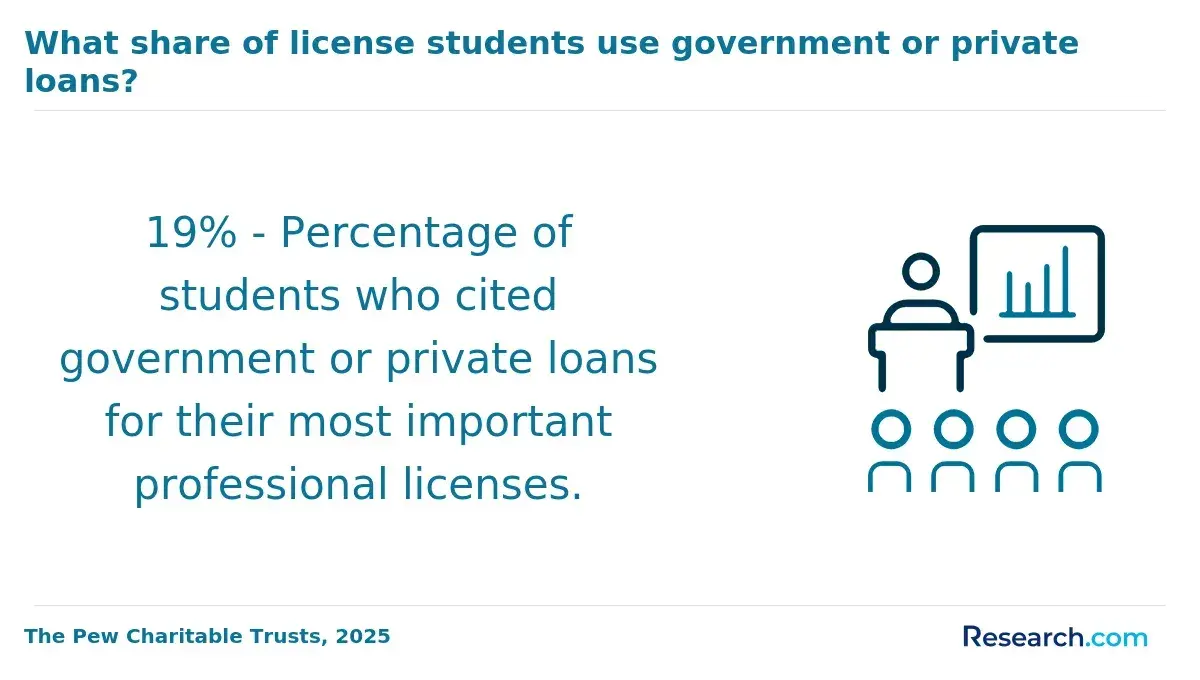
Yes. Financial aid can make a higher-tuition program less expensive out of pocket than a lower-tuition alternative, but students should calculate aid conservatively. Graduate students may qualify for federal Direct Unsubsidized Loans and, if eligible, Direct PLUS Loans after submitting the FAFSA. Loans reduce the immediate payment requirement, not the underlying cost, because repayment and interest still apply.
Look first for funding that does not require repayment, then compare it with employer benefits and borrowing. Public safety professionals may have access to agency tuition assistance, union benefits, workforce-development awards, departmental scholarships, or veterans' education benefits. Eligibility, annual caps, grade requirements, service commitments, and reimbursement timing vary.
Review each funding source in this order so that the net-cost estimate reflects the most dependable aid first.
- Submit the FAFSA early and review the school's financial-aid offer for the specific enrollment period.
- Search for university graduate scholarships that explicitly include online students and your academic department.
- Ask your employer whether tuition assistance covers online programs, fees, books, and reimburses before or after course completion.
- Confirm veterans' education-benefit eligibility and whether required online or hybrid components affect certification.
- Borrow only after subtracting confirmed grants, scholarships, employer funding, and available savings from the total cost.
A common error is treating the maximum loan amount as a recommended budget. Instead, compare the estimated monthly payment obligation with realistic earnings, household expenses, and the likelihood that the degree is needed for a specific promotion or career change. If employer reimbursement requires continued employment, consider the financial risk of changing jobs before the reimbursement period ends.
How Do Program Format and Completion Time Affect the Cost of an Online Public Safety Master's Degree?
Format affects both direct charges and opportunity costs. A fully online program can reduce commuting, relocation, and lodging expenses, but it may still require synchronous sessions, proctored exams, fieldwork, or short campus residencies. Hybrid programs can be worthwhile when in-person simulations, networking, or specialized facilities directly support the student's goal, but travel should be included in the total-cost calculation.
Most public safety master's programs are designed for working professionals and offer part-time, full-time, asynchronous, synchronous, or mixed delivery. Accelerated terms can shorten time to completion, but they demand a heavier weekly workload. Traditional-length courses can better suit shift workers, first responders, caregivers, and students who need time for complex applied projects.
The format comparison below shows how delivery and pace can alter the actual price of a degree.
| Format or pace | Potential cost advantage | Potential cost risk | Best fit |
| Fully online, asynchronous | May minimize travel and allow continued employment | May require strong self-management and still include online fees | Working students with variable schedules |
| Fully online, scheduled live classes | Can provide regular faculty and cohort interaction | Shift conflicts may cause withdrawals or delayed completion | Students who can reliably attend set times |
| Hybrid | May add applied learning and local networking | Travel, lodging, and time away from work can raise total cost | Students near campus or needing in-person training |
| Accelerated | May reduce the number of terms and term-based fees | Heavy course loads can make work reductions or repeats more likely | Students with substantial available study time |
| Part-time traditional pace | Can support steady employment and manageable workload | More terms can mean more term-based fees and slower advancement | Professionals balancing demanding responsibilities |
Do not assume "online" means self-paced. Review the academic calendar, live-meeting expectations, group-work requirements, deadline structure, and maximum time allowed to finish. Students comparing online formats across helping professions can also see how scheduling and clinical requirements shape affordability in SLP programs online; those programs have distinct clinical requirements and should not be treated as directly equivalent to public safety degrees.
Choose acceleration only if you can complete courses successfully without reducing work income or repeatedly withdrawing. The fastest program is not necessarily the least expensive if its pace causes additional terms, retaken coursework, or lost employer benefits.
How Much Can Transfer Credits Reduce the Cost of an Online Public Safety Master's Degree?
Transfer credit can reduce the number of credits you must pay for, but graduate transfer policies are often limited. Many programs accept only a small number of graduate-level credits, require a minimum grade, set an age limit on prior coursework, and reserve final approval until after admission. Professional training, academy coursework, certificates, and work experience may be valuable for admission yet not convert into graduate credit.
To estimate possible savings, multiply only approved transfer credits by the tuition rate that would otherwise apply. Do not count tentative evaluations, credits from an unfinished degree, or credits that duplicate required coursework. Also ask whether transferred credits reduce total program tuition or simply free space for electives.
These policy points determine whether transfer credit creates a real cost reduction.
- Maximum number of graduate credits accepted toward the degree
- Minimum grade and accreditation requirements for the prior institution
- Time limit for completed coursework
- Whether credits must match a required course or may apply as electives
- Whether a transfer evaluation carries an application or review fee
- Whether transfer credit changes financial-aid eligibility, full-time status, or completion time
Advanced standing can be useful for students with a closely related graduate certificate in emergency management, homeland security, public administration, or criminal justice. It is less likely to help applicants whose prior learning is experiential rather than transcripted. A school that charges more per credit may still cost less overall if it accepts applicable graduate work and avoids duplication.
Is a Cheap Online Public Safety Master's Degree Worth the Cost for Career Advancement?
A low-cost online public safety master's degree can be worthwhile when it supports a concrete next step: qualifying for a management role, strengthening eligibility for a public-sector promotion, moving into emergency planning, or building expertise in disaster response, risk assessment, policy, or interagency coordination. It is less compelling when the student has no target role, no employer demand for the credential, or a cheaper certificate and relevant experience would meet the same requirement.
Public safety careers are diverse. Emergency management directors develop plans, coordinate response activities, communicate with officials and the public, and help organizations prepare for disasters. The U.S. Bureau of Labor Statistics projects 3% employment growth for emergency management directors from 2023 to 2033. That national projection is modest, so prospective students should evaluate local government hiring, agency promotion rules, and their existing experience rather than assuming the credential alone will create openings.
A strong program can build skills in incident planning, emergency operations, crisis communication, budgeting, grant administration, leadership, ethics, data-informed decision-making, and collaboration across agencies. Concentrations may focus on homeland security, emergency management, criminal justice leadership, cybersecurity, disaster recovery, or public administration. Confirm that the selected concentration appears in the curriculum rather than assuming it is available online every term.
For students considering investigative or federal law-enforcement paths, salary expectations and education requirements can differ sharply by role; reviewing criminal profiler salary information can help distinguish a specialized career path from general public safety administration. A public safety master's may strengthen relevant leadership or analytical preparation, but it does not by itself satisfy every agency's hiring, experience, background, or training requirements.
Before enrolling, compare the degree's net cost with the likely value in your own workplace. Ask a supervisor or human-resources office whether a master's changes job classification, promotion eligibility, pay bands, or selection competitiveness. Treat any answer as employer-specific, because compensation structures vary by agency, union agreement, locality, and role.
How Should Students Compare the Cheapest Accredited Online Public Safety Master's Programs?
Compare programs using a consistent worksheet and eliminate options that fail a nonnegotiable requirement before ranking them on price. For many applicants, the best value is the lowest verified net total cost among accredited programs that fit their schedule, career target, and location. The cheapest advertised rate should be only the starting point.
Use the following comparison categories for every school under consideration. They reveal whether a no-surcharge policy is genuinely valuable or simply an attractive headline.
| Comparison category | What to record | Red flag |
| Accreditation | Institution, recognized accreditor, and current status | Vague claims without a verifiable accreditor |
| Tuition policy | Rate, residency treatment, effective term, and tuition-lock policy | "Starting at" pricing without program-specific confirmation |
| Total required credits | Core courses, electives, capstone, and prerequisites | Credit total missing from the catalog |
| Mandatory charges | Online, technology, course, graduation, and residency costs | Fees omitted from the estimate |
| Format and timeline | Live sessions, campus visits, term length, and expected completion time | "Fully online" language that conceals travel requirements |
| Career fit | Concentrations, capstone, faculty expertise, and employer relevance | Curriculum unrelated to the intended job transition |
| Transfer and aid | Written transfer evaluation, scholarships, and employer-benefit rules | Informal promises without a policy or award notice |
After collecting the information, take a disciplined final approach.
- Calculate each program's total required tuition and mandatory fees using the same expected credit load.
- Add realistic costs for books, travel, technology, and any lost work time.
- Subtract only aid, scholarships, and employer funding you can document.
- Check that the remaining options meet accreditation, state-authorization, schedule, and career requirements.
- Choose the option with the strongest overall fit at a borrowing level you can reasonably manage.
Cross-field comparisons can be useful when evaluating graduate education costs, but degree requirements differ. For example, PsyD programs commonly involve different training, practicum, and licensure considerations than public safety master's programs. Use comparisons to understand pricing models and online-delivery questions, not to substitute one profession's requirements for another's.
Finally, contact the bursar or financial-aid office rather than relying solely on admissions staff. Request a dated, written estimate identifying the tuition rate, number of billable credits, mandatory fees, residency treatment, and any conditions that could change your price.
Other Things You Should Know About Public Safety
Many programs are designed for employed adults, but workload varies by course length, live-session requirements, group projects, and capstones. Review a sample syllabus and academic calendar before choosing a full-time or accelerated path.
Some programs require an applied project, field experience, or capstone, while others do not. Confirm the requirement, location rules, background-check expectations, and whether your employer can serve as an approved site before enrolling.
Requirements commonly include a bachelor's degree from an accredited institution, transcripts, an application, and a statement of purpose. Some schools request recommendations, a résumé, minimum undergraduate GPA, or professional experience; prerequisites vary by specialization.
Public safety administration and emergency management master's degrees are generally not licensure programs in the way many clinical degrees are. Specific jobs may require separate certifications, academy training, background screening, security clearance, or state and local qualifications.
References
- 2025 Most Affordable Online Master's Degrees in Homeland Security https://www.onlineu.com/most-affordable-colleges/homeland-security-masters-degrees
- Military-friendly Online Master's Programs for Service Members https://www.onlinemastersdegrees.org/features/military-friendly-programs/
- Accredited Online Master's Degree Programs at CSU Global | Colorado State University Global https://csuglobal.edu/academic-programs/graduate-degrees
- Master in Public Service & Safety Leadership https://www.drury.edu/graduate/master-in-public-service-and-safety-leadership/
- Online Master's Degree: Public Safety Leadership https://www.umgc.edu/online-degrees/masters/public-safety
- Best Choice: Affordable & Flexible Online Degrees - MSU Denver https://www.msudenver.edu/online/


