2027 Cheapest Accredited Online Marketing Master's Programs With No Out-of-State Tuition Surcharge

Co-Founder and Chief Data Scientist
An online marketing master's can be affordable for out-of-state students, but a low per-credit rate does not necessarily mean the lowest bill. This guide is for working professionals and career changers comparing accredited, residency-neutral programs. The U.S. Bureau of Labor Statistics reports a $161,030 median annual wage for advertising, promotions, and marketing managers in May 2024, making cost-conscious preparation important for people targeting advanced marketing roles. Learn how to verify tuition policies, accreditation, fees, aid, format, and career fit before applying.
Key Things You Should Know
- A true no-out-of-state-surcharge online marketing master's charges the same published tuition to eligible online students regardless of where they live; it does not mean tuition is free or automatically the market's lowest price.
- Most marketing master's programs require roughly 30 to 36 credits, so compare the complete credit requirement, mandatory fees, and any travel costs rather than choosing solely on the lowest advertised per-credit amount.
- For career context, advertising, promotions, and marketing managers had a $161,030 median annual wage in May 2024, but a degree alone does not guarantee entry into management or a particular salary.
What Does No Out-Of-State Tuition Surcharge Mean for an Online Marketing Master's Program?
A no-out-of-state-tuition-surcharge policy means an institution does not add the higher nonresident rate to qualifying online students' tuition. The school may call this a flat online rate, distance-learning rate, eRate, online tuition rate, or universal tuition rate. It is different from receiving traditional in-state tuition because the universal online rate can be above, below, or equal to the university's resident campus rate.
This model most often benefits students who live outside the university's home state, move frequently, serve in the military, or want to avoid residency paperwork. It may offer little financial advantage to a resident who could already receive a lower campus-based rate.
The policy language deserves close reading because eligibility can vary. Confirm these details in writing before making an enrollment deposit:
- Whether the published online rate applies to the specific marketing master's, not merely to selected online courses.
- Whether all required credits, including electives, capstones, and prerequisites, receive the same rate.
- Whether the rate changes for part-time enrollment, summer terms, or students taking a hybrid course.
- Whether location-based fees, differential business-school charges, or technology fees remain separate.
- Whether the policy applies for the full program or only for the current academic year.
A common mistake is treating "no residency requirement" as proof that every student pays the same final amount. Tuition can be residency-neutral while fees, course materials, optional travel, and financial-aid eligibility differ. Ask for an estimated cost of attendance built around your expected number of credits and enrollment pace.
How Can Students Verify Accreditation for an Affordable Online Marketing Master's Program?
Start with institutional accreditation. In the United States, an accredited university is reviewed by an accrediting agency recognized by the U.S. Department of Education or the Council for Higher Education Accreditation. Institutional accreditation is generally the key verification for federal aid eligibility, credit transfer review, and employer confidence.
Business-school accreditation can add another signal, but it is not universally required for marketing careers. Some business schools hold accreditation from AACSB, ACBSP, or IACBE; each has different standards and scope. Verify whether the accreditation covers the business school or the relevant academic unit, rather than assuming a university-wide claim applies to the program.
Use this verification sequence to avoid relying on outdated marketing pages:
- Find the university's institutional accreditor on its official accreditation or consumer-information page.
- Search the accreditor's directory for the institution's current status and any applicable notes.
- Confirm that the degree is formally awarded by that accredited institution and identify whether it is an MS, MA, Master of Science in Marketing, or MBA concentration.
- Ask admissions whether the online pathway uses the same institutional accreditation and transcript as the campus pathway.
- For business accreditation, check the relevant accreditor's official membership or accredited-school directory.
Accreditation does not by itself establish affordability, selectivity, instructional quality, or job outcomes. It is one screening criterion. After confirming it, compare curriculum, faculty access, career support, total price, and whether the degree aligns with your intended employer or doctoral-study goals.
How Much Does the Cheapest Online Marketing Master's Program Cost in Total?
The cheapest program is the one with the lowest total cost for your path to graduation, not necessarily the lowest tuition headline. A 30-credit program at a slightly higher rate can cost less than a 36-credit program at a lower rate, particularly when recurring technology or student-service fees apply.
The calculation below shows how to turn a school's published figures into an apples-to-apples estimate. Replace the illustrative entries with figures supplied by each university; they are a method, not a quotation of any school's price.
| Cost component | How to calculate it | Why it matters |
| Tuition | Published online rate × required billable credits | Programs can require different numbers of credits. |
| Mandatory university fees | Per-credit fee × credits, plus per-term fees × expected terms | These can materially change a low tuition quote. |
| Program charges | Course, assessment, capstone, software, or proctoring charges | Some charges apply only to particular courses. |
| Travel and residency costs | Transportation, lodging, meals, and lost work time, if required | Hybrid requirements can raise the real cost. |
| Net price estimate | Total direct costs − grants, scholarships, and employer funding | Loans reduce immediate payment needs but remain debt. |
Request both a term-by-term bill estimate and a full-program estimate. Also ask whether the quoted rate is guaranteed for continuing students. Tuition changes are common, and a school may reserve the right to revise rates annually.
An MS or MA in marketing is often a focused professional degree, while an MBA with a marketing concentration combines marketing with finance, operations, and management. If you need broad business leadership training, compare cheapest MBA programs online alongside specialized marketing degrees, but calculate the added credits and total cost rather than comparing labels alone.
Do Online Marketing Master's Students Have to Establish Residency to Receive the Lowest Tuition Rate?
Usually, students do not need to establish residency when a program has a genuine flat online tuition policy. The published online rate should apply regardless of state of residence, subject to the program's enrollment conditions. However, schools can use different rules for online tuition, campus tuition, state authorization, and institutional aid.
Residency may still matter if the program uses conventional resident and nonresident rates, offers a limited waiver, or requires an in-person component. A waiver may require military affiliation, employer partnership, regional reciprocity, a particular course load, or continuous enrollment. Do not move or change legal domicile solely to pursue a rate until the registrar confirms the policy and timeline.
Before relying on a residency-neutral price, obtain answers to these questions:
- Is the stated rate available to online marketing master's students living in my state?
- Does any required campus visit convert a term or course to a different tuition schedule?
- Will a move during the program affect tuition, enrollment authorization, or internship placement?
- Are institutional scholarships restricted to state residents even when tuition is not?
- Can the university provide the policy, rate sheet, and applicable fees in an email or official document?
State authorization is separate from residency pricing. A university may charge one online tuition rate yet be unable to enroll students in every state or support certain experiential activities there. Confirm authorization before applying, especially if you expect to relocate.
How Do Public and Private Universities Compare on the Cost of an Online Marketing Master's Degree?
Public universities often offer low resident tuition, while a flat online rate can make them competitive for nonresidents. Private nonprofit universities typically do not use state-residency pricing, which can make their published price more predictable across locations. Neither category is automatically cheaper or better; program length, fees, grants, and employer support determine the more useful comparison.
This comparison highlights the usual trade-offs students should investigate instead of relying on institutional type alone.
| Factor | Public university | Private nonprofit university | What to verify |
| Residency pricing | May have resident, nonresident, or flat online rates | Often uses one rate, though online pricing can vary | Program-specific rate for your location |
| Tuition predictability | Can be favorable when a universal online rate is published | Can be straightforward when one tuition schedule applies | Whether the rate is fixed or may change annually |
| Institutional aid | May include state-related or school-based opportunities | May offer school-based merit aid | Online-student eligibility and renewal rules |
| Program structure | May offer research-oriented or professional paths | May offer cohort-based professional scheduling | Required credits, capstone, travel, and pacing |
A private nonprofit program with a higher sticker price can be the lower net-cost option after a scholarship or employer partnership. Conversely, a public program with inexpensive base tuition can become costlier if nonresident charges, required visits, or per-term fees apply. Compare formal award letters and complete cost estimates, not assumptions about public or private status.
Students deciding between specialized marketing preparation and a broader management credential can also review top accelerated MBA programs. An accelerated option makes sense only when its pace fits your workload and its total price remains favorable after all fees.
Can Financial Aid Reduce the Cost of a Cheap Online Marketing Master's Program?
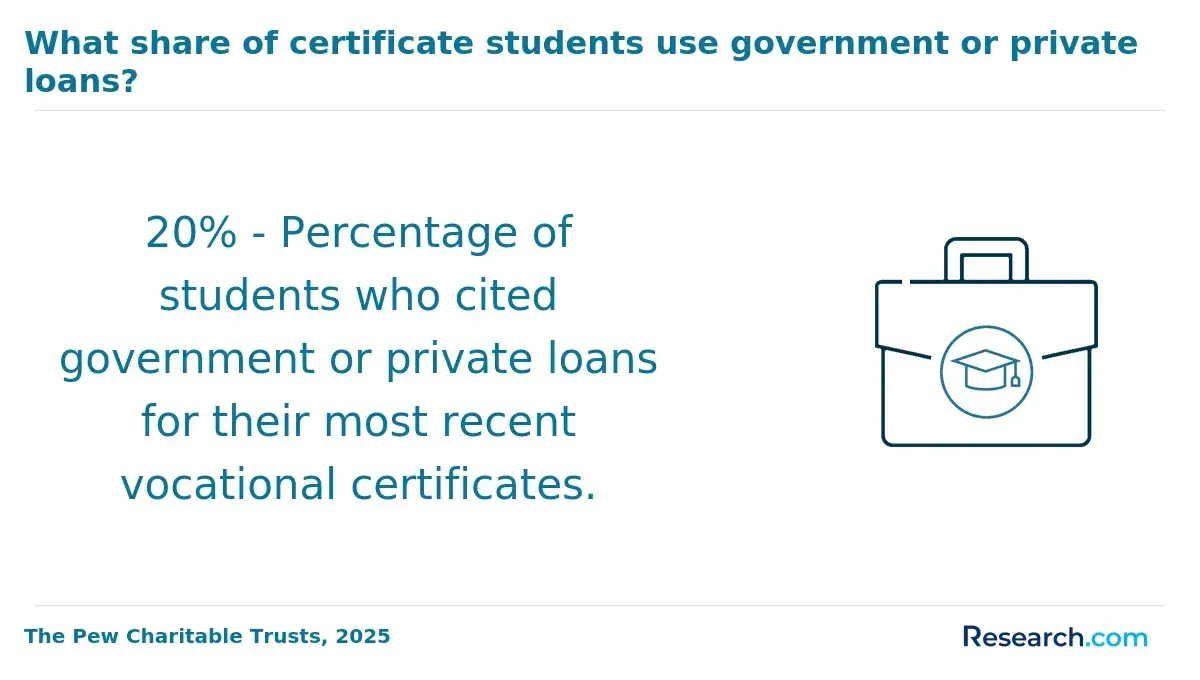
Financial aid can reduce the amount you pay from current income, and grants or scholarships can reduce the net cost. Graduate students should submit the FAFSA early, then ask each school which aid is available to fully online marketing students. Federal Direct Unsubsidized Loans and Graduate PLUS Loans may be options for eligible students, but loans are borrowed funds rather than discounts.
Evaluate funding in this order because the sources have different repayment consequences:
- Apply for scholarships, grants, fellowships, and employer-paid benefits that do not require repayment.
- Confirm whether your employer reimburses tuition at payment time or only after you earn a specified grade, and learn its annual limit and service commitment.
- Compare school-specific payment plans and institutional awards using the same full-program cost estimate.
- Borrow only after subtracting confirmed non-loan funding and considering the interest, origination costs, and repayment impact.
Employer assistance can make a moderately priced program less expensive than a cheaper program that is not on an approved-school list. Ask human resources whether the benefit covers online delivery, fees, books, repeat courses, and a marketing degree specifically.
If you are exploring education-adjacent career paths instead, an online master's in counseling has different practicum, licensure, and funding considerations.
Do not assume an aid offer covers every charge. Compare the amount of grants and scholarships separately from loans, and recalculate your expected out-of-pocket cost each year if tuition or enrollment plans change.
How Do Program Format and Completion Time Affect the Cost of an Online Marketing Master's Degree?
Format affects both direct charges and the opportunity cost of time. Fully online asynchronous programs can reduce commuting and scheduling pressure for working adults. Synchronous sessions may provide live interaction but can limit flexibility across time zones. Hybrid programs may require travel, while a required residency, internship, or on-campus presentation can add expenses beyond tuition.
Many professional marketing master's programs use a capstone rather than a thesis. A capstone typically applies marketing research, analytics, strategy, consumer behavior, or campaign planning to a practical project. Research-focused MA or MS programs may include a thesis and suit students considering doctoral study, but they may take longer or require different faculty supervision.
Use the format comparison below to decide whether a lower advertised rate is truly compatible with your schedule and budget.
| Format or pace | Potential cost advantage | Potential cost risk | Best fit |
| Fully online asynchronous | May reduce travel and allow continued employment | Requires strong time management and may have online fees | Working professionals needing schedule flexibility |
| Fully online synchronous | May provide live faculty and cohort access without travel | Class times can conflict with work and time zones | Students who value scheduled interaction |
| Hybrid or residency-based | May offer networking and in-person learning | Travel, lodging, and time away from work add costs | Students able to attend required sessions |
| Accelerated | May reduce the number of terms and finish sooner | Heavy course loads can lead to reduced work hours or repeated courses | Students with reliable time capacity and support |
| Part-time traditional pace | Can spread payments and workload over time | More terms may mean more recurring fees and exposure to tuition increases | Students balancing work or caregiving |
AI tools and marketing automation are increasing the value of current skills in analytics, customer insights, content governance, experimentation, and responsible data use. Review syllabi for measurable, current coursework rather than selecting a faster format solely because it appears less expensive.
How Much Can Transfer Credits Reduce the Cost of an Online Marketing Master's Degree?
Transfer credit can reduce the number of credits you must pay for, but graduate policies are often restrictive. A school may cap transferred credits, require a minimum grade, limit the age of prior coursework, exclude applied or capstone courses, or require that credits come from an accredited graduate institution. Some programs do not accept transfer credit at all.
The potential savings are straightforward: accepted transfer credits reduce the number of billable program credits, but only if they replace required credits. A transferred elective that does not satisfy a degree requirement may not shorten the program.
| Question to ask | Why it changes cost |
| What is the maximum number of graduate transfer credits accepted? | It sets the largest possible reduction in billable credits. |
| Which required marketing courses can transferred work replace? | Course applicability matters more than credit count alone. |
| Is there a transfer-evaluation fee or deadline? | Administrative costs and timing can affect enrollment plans. |
| Can professional certificates, prior learning, or microcredentials count? | Many graduate programs do not award credit for them, even when skills overlap. |
| Will transfer credit affect financial-aid enrollment status? | Fewer credits may change aid timing or eligibility. |
Request a preliminary evaluation before enrolling whenever possible, and keep course descriptions, syllabi, transcripts, and assignments available. Do not resign from a program or assume a completion date based on an informal verbal estimate. For another technical path where transfer rules can be equally important, compare a computer science online degree using the same total-credit and policy review.
Is a Cheap Online Marketing Master's Degree Worth the Cost for Career Advancement?
A low-cost accredited degree can be worthwhile when it fills a clear skills gap, supports advancement at your employer, helps you pivot into a marketing specialty, or provides a credential required for a target role. It is less compelling when you need only a narrow technical skill that a shorter certificate, portfolio project, or employer training program could provide more efficiently.
Marketing master's graduates may pursue or advance toward roles in brand management, digital marketing, market research, marketing analytics, customer relationship management, product marketing, content strategy, and marketing operations.
Management roles typically also require relevant experience, demonstrated results, communication ability, and leadership capacity. The Bureau of Labor Statistics projects 6% employment growth for advertising, promotions, and marketing managers from 2024 to 2034, a rate that indicates continuing demand but not guaranteed openings for individual graduates.
Assess value by matching the degree's curriculum to the work you want to do:
- Choose marketing analytics or research coursework if you want to interpret customer, campaign, pricing, or market data.
- Choose digital strategy, consumer behavior, or brand coursework if you work in communications, campaigns, or growth functions.
- Choose a broad MBA-style curriculum if your objective is cross-functional management rather than marketing specialization.
- Choose a thesis or research-intensive path if doctoral study, research, or academic work is a serious long-term goal.
- Choose a capstone-based professional program if you need portfolio-ready applied work and can evaluate the quality of the project support.
Compare your estimated net cost with realistic benefits: potential promotion requirements, employer reimbursement, time away from work, networking access, and the ability to build a stronger portfolio. Salary data describes an occupation across workers with varied experience and education; it should guide research, not serve as a personal earnings forecast.
How Should Students Compare the Cheapest Accredited Online Marketing Master's Programs?
Start by eliminating programs that do not meet your nonnegotiables: recognized institutional accreditation, authorization to enroll students in your state, a curriculum aligned with your target role, and a documented tuition policy for online nonresidents. Then compare finalists using a consistent worksheet. This approach prevents a low advertised price from obscuring a longer program, limited support, or expensive required travel.
Use the following sequence when contacting admissions and financial-aid offices:
- Confirm the exact degree title, required credits, concentration options, thesis or capstone requirement, and expected completion range.
- Obtain the current online tuition schedule and verify in writing that no nonresident surcharge applies to your specific program.
- Calculate total direct cost using required credits, all mandatory fees, likely course-material costs, and any residency travel.
- Verify institutional accreditation through the accreditor and ask whether any business-school accreditation applies to the online program.
- Request transfer-credit rules, application costs, scholarship criteria, employer-partnership information, and a financial-aid estimate.
- Compare course schedules, live-session expectations, faculty access, career services, alumni outcomes information, and support for capstone or internship work.
- Choose the program with the strongest overall fit at a manageable net cost, not simply the smallest tuition number.
A strong final comparison records the same fields for every school: total billable credits, tuition per credit or term, mandatory fees, estimated total direct cost, aid, travel, transfer allowance, completion time, delivery format, accreditation, and curriculum fit. Save dated screenshots or official PDFs because pricing and policies can change.
Students considering another applied master's field can use this same framework for a masters in library science online program, particularly when comparing online fees, required field experiences, and accreditation expectations.
Other Things You Should Know About Marketing
Not always. Many programs accept applicants from business, communications, social science, technology, and other backgrounds. Schools may require prerequisites in statistics, economics, business fundamentals, or marketing, which can add time and cost.
Useful skills include written communication, market research, data interpretation, presentation, consumer insight, project management, and ethical handling of customer data. Digital marketing roles may also value analytics platforms, experimentation, search strategy, marketing automation, and content measurement.
Some programs offer internships, experiential projects, or client-based capstones, while others do not require them. Ask whether participation is optional or required, whether the school helps secure placements, and whether students are responsible for any related travel or unpaid time.
An MS in Marketing usually provides deeper marketing-focused study in areas such as analytics, research, consumer behavior, and strategy. An MBA with a marketing concentration typically combines marketing courses with broader management, finance, operations, and leadership coursework. The better choice depends on whether you want specialization or general business leadership preparation.
References
- 2025 Most Affordable Online Master's Programs https://www.onlineu.com/most-affordable-colleges/masters-degrees
- Average Cost of a Master's Degree: 2025 Analysis https://educationdata.org/average-cost-of-a-masters-degree
- 11 tuition-free universities in the US for master's degrees https://studyinternational.com/news/tuition-free-universities-in-the-us/
- Most Affordable Online Master's Degrees in Marketing in 2025 https://www.onlinemastersdegrees.org/most-affordable/marketing-programs/
- The 10 Most Affordable Online Masters in Marketing - Best Marketing Degrees https://www.bestmarketingdegrees.org/most-affordable-online-masters-in-marketing/
- Online Master's in Marketing Programs in 2026 https://www.mastersincommunications.org/online-marketing/