
2027 Cheapest Accredited Online Interior Design Master's Programs With Flat-Rate Tuition: Costs per Term and Total Degree Estimates

Co-Founder and Chief Data Scientist
Choosing an online interior design master's program on price alone can be risky when a low term charge does not reveal how many terms the degree requires. The U.S. Bureau of Labor Statistics reported a $63,490 median annual wage for interior designers in May 2024, making cost control important for professionals weighing graduate-school debt against career goals.
This guide explains how flat-rate tuition works, how to estimate a total price, what accreditation and licensure issues to check, and how to compare programs when published pricing is incomplete.
Key Things You Should Know
- There is no reliable nationwide list of "cheapest" accredited online interior design master's programs with universally published flat-rate term prices; applicants should request a written tuition schedule and degree plan from each school before comparing offers.
- Flat-rate tuition is cheapest only when a student can use the full credit allowance each term; taking a light load, repeating a course, or needing one extra term can sharply raise the effective price.
- Interior designers had a $63,490 median annual wage in May 2024, according to the U.S. Bureau of Labor Statistics, but a master's degree is not universally required for design employment or state licensure.
What Does Flat-Rate Tuition Mean for an Online Interior Design Master's Program?
Flat-rate tuition is one published charge for a defined enrollment period, such as a semester, quarter, or accelerated session, rather than a separate charge for every credit. The rate may cover a range of credits, often only after a student meets a full-time threshold. It does not automatically mean unlimited courses, unlimited credits, or that fees are included.
For an online interior design master's program, the model can work well for students who can consistently complete the maximum permitted load. It is less favorable for working professionals who need one or two courses per term, for students whose required studio sequence limits course selection, or for students who expect to pause enrollment.
Before treating a program as flat-rate, ask the registrar whether the charge applies to all graduate credits, only a stated credit band, or only a specific online format. Also confirm whether thesis, capstone, practicum, portfolio-review, and summer terms use the same rate. Students comparing other graduate formats may notice similar pricing questions in an executive MBA online search, but design programs often add studio-specific costs that business programs do not have.
| Tuition model | How the school bills | Best fit | Primary cost risk |
| True flat rate | One price for an eligible term, up to a credit cap | Students taking the maximum allowable load | Paying the same charge for a low course load |
| Credit-band rate | One price within a stated credit range | Students who reliably stay in that range | Crossing below the minimum or above the maximum |
| Per-credit rate | Price multiplied by enrolled credits | Part-time and variable-load students | Higher cost when many credits are taken at once |
How Much Does a Flat-Rate Online Interior Design Master's Program Cost Per Term?
A defensible per-term comparison requires a school's current tuition schedule, the term calendar, the credit range included, and mandatory charges. Because relatively few institutions offer a fully online, professionally relevant interior design master's degree with clearly published flat-rate pricing, applicants should be cautious of rankings that combine per-credit programs, graduate certificates, unaccredited providers, and campus-only rates.
Use the school's billed amount rather than its headline tuition figure. The following calculation identifies the number that matters for budgeting.
| Cost component | Calculation | Why it matters |
| Advertised flat-rate tuition | Published term tuition | Starting point, not necessarily the amount billed |
| Mandatory term charges | Technology fee + student services fee + required program fee | May recur every term |
| Books, materials, and software | Estimated required out-of-pocket costs | Often vary by studio, rendering, and portfolio course |
| Actual term budget | Tuition + mandatory charges + expected course expenses | Supports a realistic cash-flow comparison |
Ask admissions for the rate applicable to your intended start term, whether it can change while you are enrolled, and whether summer pricing differs. A school should be able to identify the exact credits included and distinguish tuition from unavoidable fees in writing.

How Much Does an Online Interior Design Master's Degree Cost in Total With Flat-Rate Tuition?
Total tuition is determined by the number of paid terms, not simply by the program's credit requirement. The basic estimate is: flat-rate tuition per term multiplied by expected paid terms, plus mandatory fees and academic expenses. A 30-credit degree can cost very differently depending on whether the program permits those credits to be completed in three, four, or more billed periods.
This worksheet separates the facts a school must provide from the assumptions a student should test. It is more useful than comparing a single advertised term price.
| Input to verify | How to use it in the estimate | Common misunderstanding |
| Total credits required | Confirm the catalog requirement for your concentration | Assuming all credits can be taken in any order |
| Credits allowed per billed term | Divide total required credits by a realistic completed load | Using the maximum load when prerequisites prevent it |
| Flat rate and recurring fees | Multiply each by projected paid terms | Counting a fee only once when it recurs |
| One-time charges and supplies | Add application, graduation, software, and portfolio costs | Assuming online study has no material expenses |
| Extra-term contingency | Add one full additional billed term to the budget | Budgeting only for the ideal timeline |
For perspective, cost-comparison methods used for the cheapest online MSW are also useful here: compare the credential's full completion price, not the first-term invoice. The programs themselves differ substantially in curriculum, placement requirements, and professional regulation.
A master's degree may support advanced design research, sustainable design, hospitality, healthcare, workplace, or leadership goals. However, it is not a universal substitute for the education, experience, examination, or jurisdiction-specific requirements connected with professional interior design practice. Verify rules with the relevant state licensing or registration authority before assigning a financial value to the degree.
How Does Course Load Affect the Cost of a Flat-Rate Online Interior Design Master's Degree?
Course load determines the effective cost per credit. If the flat rate covers up to a stated number of credits, completing more eligible credits during that term lowers the effective tuition cost per credit. Completing fewer credits raises it, even though the invoice may be unchanged.
The table shows the calculation without assuming a particular school's rate. Replace "term tuition" with the published charge and "credits completed" with the number you can realistically finish.
| Enrollment pattern | Effective tuition per completed credit | Financial implication |
| Maximum eligible credit load | Term tuition ÷ maximum completed credits | Usually produces the lowest effective credit price |
| Standard planned load | Term tuition ÷ planned completed credits | Useful baseline for a degree-plan estimate |
| Part-time load | Term tuition ÷ fewer completed credits | Can be more expensive than per-credit billing |
| Withdrawn or repeated course | Term tuition ÷ remaining completed credits | May increase cost and require another paid term |
Interior design curricula can make acceleration harder than the credit cap suggests. Studio courses, critiques, software-intensive assignments, group projects, capstones, and sequential research requirements may limit which classes can be taken together. Working students should plan around the required sequence and their weekly capacity rather than using the most optimistic credit load in a cost estimate.
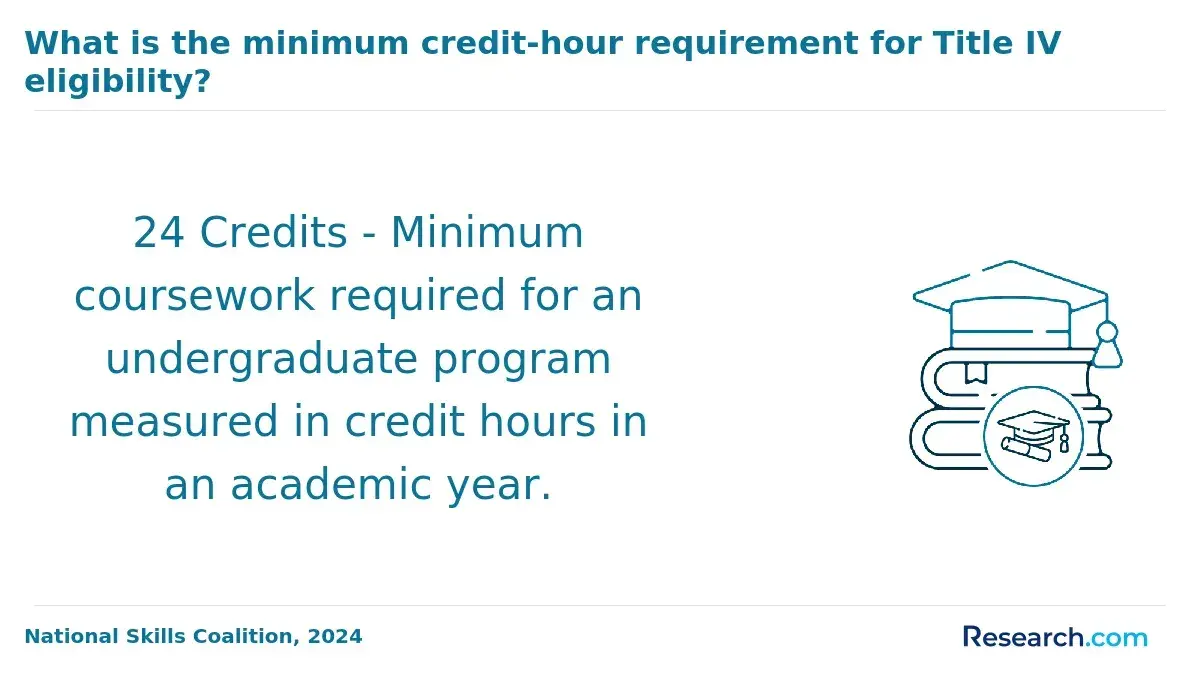
Students should also check whether federal financial-aid eligibility requires a minimum enrollment level. A low load may be academically sensible, but it can change both the tuition value calculation and aid eligibility.
Is Flat-Rate Tuition Cheaper Than Per-Credit Tuition for an Online Interior Design Master's Degree?
Flat-rate tuition is cheaper when its total billed price, including recurring fees, is lower than the per-credit alternative at your actual course load. Per-credit pricing can be cheaper for a student taking only a few credits, changing enrollment frequently, or finishing a small number of remaining requirements.
Compare the two models using the same number of credits and the same expected completion timeline. The comparison below focuses on the decision rule rather than unsupported average prices.
| Comparison | Formula | Prefer this option when |
| Flat-rate term cost | Flat tuition + mandatory term fees | You can use enough included credits to lower the effective price |
| Per-credit term cost | Per-credit rate × enrolled credits + mandatory term fees | You need a light or irregular schedule |
| Break-even course load | (Flat tuition + flat-rate fees − per-credit fees) ÷ per-credit rate | Your intended credits are at or above the break-even point |
Do not assume that an online format is automatically less expensive than campus study. Online programs may avoid commuting and relocation costs, while still charging distance-learning, technology, software, or residency expenses. The same total-cost discipline applies when evaluating an online PsyD, although clinical training and accreditation expectations are different.
A common mistake is comparing a flat rate covering a full semester with a per-credit rate quoted for a shorter session. Convert both options to the same academic period and include every mandatory recurring charge before deciding.
What Fees and Additional Expenses Apply to a Flat-Rate Online Interior Design Master's Program?
Tuition is only one part of the degree budget. Online interior design students may need computing equipment capable of running required design applications, subscriptions or licenses, physical materials, printing, model-making supplies, professional portfolio production, and travel for any required orientation, critique, exhibition, or residency.
Request an itemized list of expected charges from the program, then separate costs paid to the university from costs paid to vendors. The following categories are worth confirming before accepting an offer.
- Recurring institutional charges, including technology, distance-learning, student-services, registration, and course-material fees.
- Program-specific expenses, including design software, rendering tools, digital storage, fabrication, printing, sample materials, and portfolio reviews.
- One-time administrative charges, including application, enrollment, transcript, graduation, and diploma fees.
- Possible travel and lodging costs for optional or required residencies, exhibitions, site visits, or in-person presentations.
Ask whether supplies can be purchased from a vendor of your choice and whether software is provided through an institutional license. Also ask whether tuition covers independent-study, thesis, or continuation enrollment, because those items can create an unexpected bill near graduation.
Can Accelerated Study Lower the Total Cost of a Flat-Rate Online Interior Design Master's Degree?
Accelerated study can lower total tuition when it removes an entire billed term without causing course withdrawals, lower academic performance, or an additional continuation term. The potential savings are approximately one full term's tuition and recurring fees, not merely the price of the extra credits.
Acceleration is most realistic when the school offers frequent starts, allows a heavier load, has enough course sections, and does not block progress with a once-a-year prerequisite. It is less suitable when students have substantial work obligations or when studio and capstone courses require intensive iterative feedback.
Before accelerating, use this sequence to test whether the savings are realistic.
- Obtain a term-by-term degree map showing prerequisites, capstone timing, and course availability.
- Identify the maximum credit load permitted without special approval and the weekly work expected for each course.
- Calculate whether the planned load eliminates a whole billed term rather than simply moving credits earlier.
- Confirm how withdrawals, incomplete grades, and repeated courses affect tuition and future course access.
- Keep a contingency budget for one additional term until the final required course is successfully completed.
Faster completion also has non-tuition implications. It may reduce the time before a student can pursue a new role, but it can reduce time available for portfolio development, networking, internships, and professional experience - factors that can matter as much as the credential for many design roles.
Can Financial Aid and Employer Reimbursement Reduce the Cost of a Flat-Rate Online Interior Design Master's?
Financial aid and employer benefits can reduce the amount a student pays from current income, but they do not change the school's published tuition. Eligibility, award amounts, repayment obligations, enrollment thresholds, and reimbursement caps vary by student, employer, school, and academic term.
Start with the Free Application for Federal Student Aid and the school's financial-aid office. Graduate federal loan borrowing may be available to eligible students, while institutional scholarships and assistantships can be limited in fully online programs. Employer reimbursement can be particularly relevant for designers working in architecture, facilities, retail, hospitality, furniture, healthcare, or workplace-design settings.
Use the following checks to determine whether assistance truly improves affordability.
- Confirm whether aid applies to online enrollment and whether your planned credit load meets the school's definition of eligible enrollment.
- Ask whether scholarships are renewable, whether they apply to summer terms, and whether they reduce only tuition or also mandatory fees.
- Read employer reimbursement rules for preapproval, grade requirements, annual caps, repayment obligations after departure, and whether payment occurs before or after course completion.
- Compare net cost after grants and employer support separately from loan amounts, because loans generally must be repaid with interest.
Students evaluating graduate education across professions can apply the same net-cost framework to MLIS programs; however, reimbursement policies and career pathways vary by employer and field.
How Do Enrollment Breaks and Extra Terms Affect the Cost of an Online Interior Design Master's Degree?
An enrollment break can affect more than timing. Depending on the institution, students may face reactivation charges, newer tuition rates, expired catalog requirements, loss of aid eligibility, or delays caused by courses offered only in particular terms. An extra term is especially costly in a flat-rate model because the student may pay the full term price to finish one remaining requirement.
Before enrolling, read the leave-of-absence, withdrawal, satisfactory-academic-progress, course-repeat, incomplete-grade, and continuous-enrollment policies. Ask whether a break changes your cohort sequence or access to a faculty adviser and whether the school guarantees access to required courses before a catalog-expiration date.
The following planning habits reduce the chance that a manageable delay becomes a full-price extension.
- Build a completion plan around required course sequencing instead of assuming every course is available every term.
- Keep copies of the tuition schedule, catalog requirements, and written confirmations about how long your rate remains in effect.
- Schedule capstone, thesis, and portfolio milestones early enough to leave time for revisions before the final term ends.
- Ask whether students who finish coursework but need more time for a final project pay full tuition, a continuation fee, or no additional tuition.
How Should Students Choose the Best-Value Flat-Rate Online Interior Design Master's Program?
The best-value program is not necessarily the one with the lowest stated term rate. It is the program that offers appropriate institutional accreditation, relevant curriculum, a realistic completion pathway, transparent total pricing, and outcomes aligned with your design goal. If professional practice or licensure is important, investigate whether the program's educational structure fits requirements in the state where you intend to work.
Institutional accreditation confirms that the college or university meets recognized quality standards, while specialized interior design accreditation can be relevant to professional preparation. These are not interchangeable. Check the exact program, delivery format, and degree level; do not assume that accreditation of an on-campus undergraduate program automatically extends to an online graduate option.
Use these questions during your final comparison process.
- Is the institution appropriately accredited, and is the specific online master's program recognized in a way that supports my professional or licensure goal?
- What is the exact tuition amount for my start term, what credit range does it cover, and which charges are mandatory each term?
- How many paid terms does the program map for a student with my background, and which required courses can delay completion?
- Can prior graduate work transfer, how many credits are accepted, and will accepted credits actually remove a full paid term?
- What portfolio, software, studio, residency, and capstone requirements will create costs beyond tuition?
- What career support, faculty expertise, and industry connections are available for my intended specialty?
For career context, interior designers plan functional and aesthetically appropriate spaces, select materials and furnishings, interpret codes and accessibility needs, coordinate with clients and project teams, and communicate concepts through drawings, specifications, and visualizations. A master's degree may be worthwhile for professionals seeking specialized knowledge or advancement, but a portfolio, technical skills, experience, and local practice requirements remain central to many hiring decisions. Salary research for other credential paths, such as paralegal salary associate's degree, illustrates why degree level alone should never be treated as a guaranteed earnings outcome.
Make your final decision using a written net-cost comparison: total tuition through completion, recurring fees, supplies, travel, expected aid, employer support, and the cost of one extra term. If a school will not clearly document these items, treat that lack of transparency as a meaningful red flag.
Other Things You Should Know About Interior Design
Not always. Requirements differ by employer, role, state, and the type of work performed. Many interior design positions emphasize a relevant degree, technical proficiency, a strong portfolio, project experience, and knowledge of codes and materials. Check local rules if you plan to pursue regulated or registered professional practice.
Programs commonly emphasize design research, space planning, materials, lighting, sustainability, building systems, visual communication, digital modeling, professional documentation, and presentation. The exact balance depends on the concentration and whether the program is intended for career changers or experienced designers.
It can, if the curriculum includes studio projects, critique, visual documentation, and portfolio review. Ask to see examples of student work, learn how feedback is delivered online, and confirm whether the program supports software access and professional presentation standards.
Career changers should verify prerequisite expectations in art, design, drafting, architecture, or related coursework. Some master's programs expect an undergraduate design background, while others offer foundational coursework. Also compare the time and cost of prerequisite classes with the master's degree itself.
References
- Interior Designers Institute | California's Premier Interior Design School https://www.idi.edu/about/accreditation
- Master of Fine Arts in Interior Design - New York School of Interior Design https://www.nysid.edu/master-of-fine-arts-in-interior-design
- Master of Interior Design - Woodbury University https://woodbury.edu/program/school-of-architecture/programs/interior-design/
- How Long is an Online Master's Degree Program? OnlineEducation.com https://www.onlineeducation.com/faqs/how-long-to-earn-masters-degree
- Accreditations and Recognition - IDI USA https://www.theinteriordesigninstitute.com/us/en/accreditations
- How Much Does it Cost to Become an Interior Designer? https://pro.houzz.com/pro-learn/blog/startup-guide-interior-design-cost-to-become-a-designer
- Average Cost Of College 2024-2025 | Bankrate https://www.bankrate.com/loans/student-loans/average-cost-of-college/
- FAQ: Reduced-Credit Undergraduate Degrees - SACSCOC https://sacscoc.org/news-and-events/faq-reduced-credit-undergraduate-degrees/
- Higher Education in California: Student Costs - Public Policy Institute of California https://www.ppic.org/publication/higher-education-in-california-student-costs/
- The Hidden Costs of Higher Education http://perspectives.acct.org/stories/the-hidden-costs-of-higher-education-0


