2027 Can a Data Science Master's Help You Move from Government to Private-Sector Analytics?

Co-Founder and Chief Data Scientist
A data science master's can help a government analyst move into private-sector analytics, but the degree is most useful when it closes a specific skills gap - not when it simply adds a credential. Policy, operations, and research analysts may already have valuable experience with complex data and consequential decisions. This guide helps you identify realistic target roles, assess whether graduate study is necessary, and compare programs against the technical skills, projects, and costs that matter for your transition.
Key Things You Should Know
- Government experience in analysis, documentation, and stakeholder communication can transfer; employers will still want evidence that you can use tools and methods relevant to their work.
- A master's is most compelling for a move toward advanced modeling or data science. An analyst targeting reporting or business intelligence may be able to transition through targeted training and a portfolio instead.
- The Bureau of Labor Statistics projects 35% growth in data scientist employment from 2025 to 2035, but that occupation-wide forecast does not predict an individual graduate's hiring prospects.
Can a data science master's help government analysts transition to private-sector careers?
Yes - particularly if your government role has given you domain expertise and analytical judgment but limited opportunities to build production-ready technical skills. A well-matched master's can provide structured training in programming, statistics, machine learning, and applied projects. Its value depends on whether those additions address requirements in the jobs you actually want.
Start by reading several postings for one target role, then compare their requirements with work you can already demonstrate. If the main gap is SQL, dashboards, or a commercial reporting tool, a degree may be more time and expense than you need. If you want to design models, evaluate their performance, and explain their limitations, graduate study may offer a more coherent route. An AI-focused path is worth considering only if the target work calls for that specialization; online artificial intelligence master's value comparisons can inform that separate choice.
What private-sector analytics jobs can government professionals pursue after graduation?
Your closest match depends less on your current job title than on the analyses you have performed. The table distinguishes adjacent roles from those likely to require a larger technical shift; titles and requirements vary by employer.
| Target role | Government experience that may help | Likely evidence gap |
| Business or operations analyst | Performance measurement, process analysis, stakeholder reporting | Commercial metrics, SQL, dashboarding |
| Business intelligence analyst | Recurring reports, data quality checks, explaining trends | Data modeling and widely used BI tools |
| Data scientist | Statistical analysis, research design, interpreting uncertainty | Programming, model evaluation, applied machine learning |
| Risk or fraud analyst | Compliance analysis, anomaly investigation, documented decisions | Industry-specific data, workflows, and performance measures |
An adjacent analyst role may be the faster first move if you can already show relevant work. A master's becomes more valuable when your intended role repeatedly calls for methods you have not had the chance to practice.
Is a data science master's worth the cost for government employees?
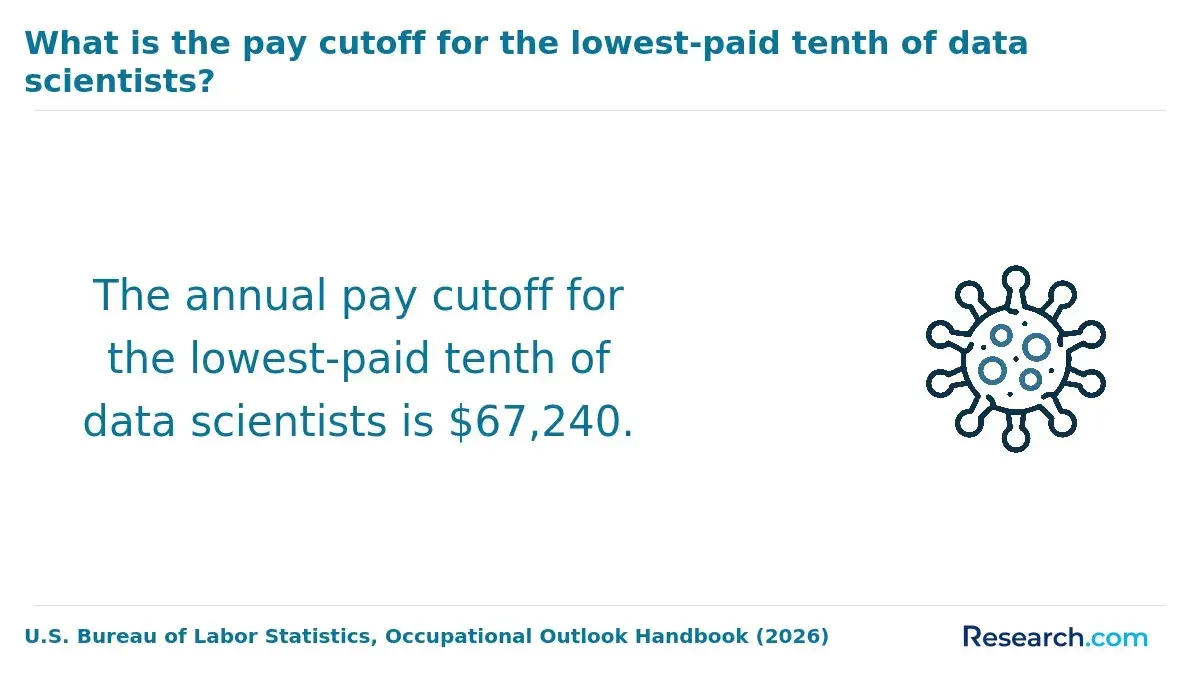
It can be, but compare the degree with your next-best route, not with staying in your current job forever. Request a written estimate covering tuition, mandatory fees, required software or materials, and any travel. Then account for forgone income if you would reduce your hours or leave work. Employer tuition assistance can change the calculation, but eligibility and repayment conditions vary.
Before committing, compare that total with a smaller skills-building option and the roles each could plausibly help you reach. If your target is specifically AI work, lower-tuition artificial intelligence degree options provide another cost comparison - not a substitute for checking whether the curriculum fits the job. Do not calculate a promised "payback period" from a data scientist's median wage: your salary change depends on your existing pay, experience, location, and eventual offer. If you have federal student loans or a government retirement benefit, examine how leaving public service could affect your own eligibility and benefits before treating a higher offer as a net gain.
Which skills from government analytics transfer to private industry?
Government analysts often bring experience defining messy problems, checking data quality, documenting assumptions, and explaining findings to people who must act on them. Work involving privacy, compliance, or high-stakes decisions can also be valuable where employers need defensible analysis. The transferable skill is the method and judgment, not necessarily familiarity with a government dataset or reporting process.
The common gap is translating that experience into evidence an employer recognizes. Build a portfolio project around an accessible dataset: define a business-style decision, show the code and validation, state the limits, and write a short recommendation. If your current work is confidential, create a separate project rather than exposing restricted data or reproducing internal analyses. Match the project to your target role: a reliable dashboard suits business intelligence, while a carefully evaluated predictive model better supports a data science application.
What do data science master's programs teach aspiring analytics professionals?
Relevant programs commonly combine statistical reasoning, programming, data management, machine learning, and communication. For a government-to-industry move, look beyond course titles: examine assignments and capstones for opportunities to work with imperfect data, choose meaningful evaluation measures, and explain results to nontechnical decision-makers.
Choose depth according to your target role. An analyst seeking business intelligence may benefit more from databases, visualization, and applied projects than from a program dominated by advanced modeling. Someone targeting AI-intensive work should check how thoroughly a program addresses model evaluation and responsible use; AI master's programs with responsible AI content offer a way to investigate that emphasis. A passing mention of ethics or machine learning is not the same as assessed coursework or substantial project practice.
Should government employees choose an online or campus-based program?
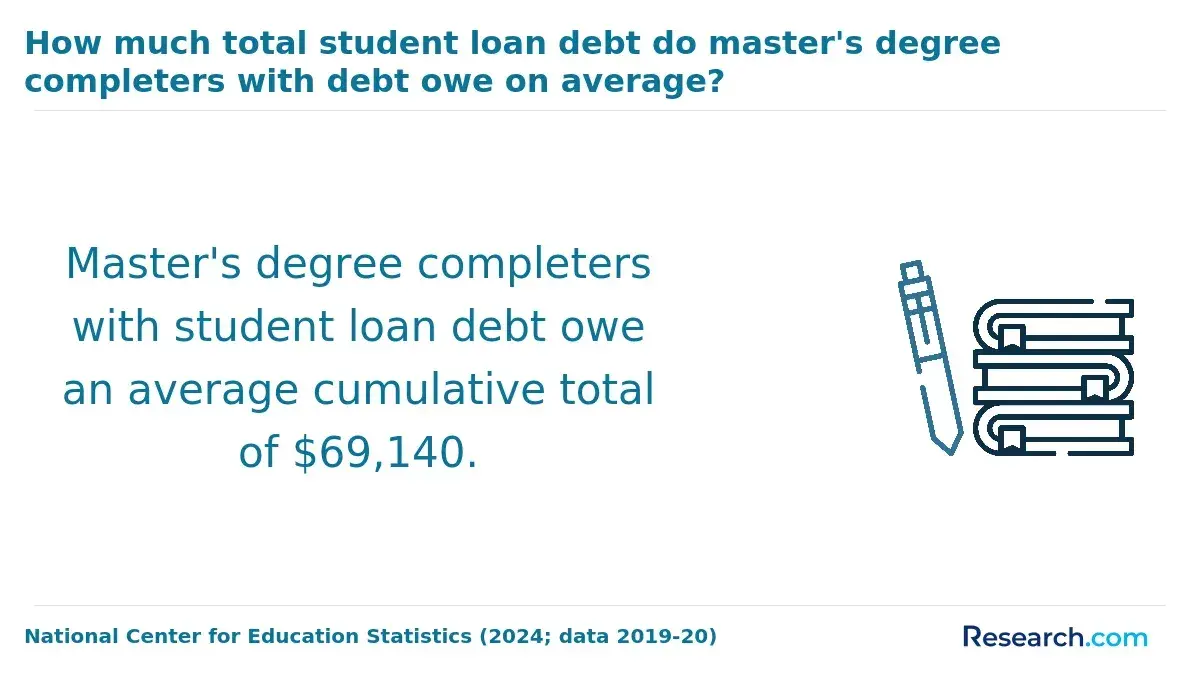
Choose the format that lets you complete demanding technical work while building the connections your transition needs. Online study may make it easier to remain employed, but ask about live attendance, group-project schedules, access to faculty, and recruiting support. Campus study may offer more face-to-face interaction, yet commuting or leaving a job can substantially increase its cost.
Neither format automatically provides an industry network. Ask how students meet employers and graduates, and whether career services work with experienced career changers rather than only new graduates. If networking is a priority, investigate AI graduate study and access to alumni networks as one comparison point, then verify the actual events and services available to students in your chosen program.
What admission requirements do data science master's programs have?
Requirements differ by program. Schools may assess prior coursework in mathematics, statistics, or programming alongside academic records and professional experience. Government analysis experience can strengthen an application, but it does not automatically fulfill a stated course prerequisite.
Before applying, compare each program's published requirements with your transcript and work history. If a prerequisite is unclear, ask admissions whether professional experience, a prior course, or approved preparatory study satisfies it - and obtain the answer for that program. If you are missing technical foundations, building them before enrollment may matter as much for succeeding in the coursework as it does for admission.
How long and how much do data science master's programs take?
Length and total price depend on credit requirements, enrollment pace, tuition policy, and fees; there is no reliable single figure for all programs. A part-time path can preserve income but delay completion, while full-time study can raise the opportunity cost of leaving or reducing paid work. Ask each school for a term-by-term plan and a total-cost estimate based on your residency and enrollment status.
Compare prices on the same basis: required tuition and fees for the full degree, not one school's per-credit rate against another school's total. If machine learning is your intended specialization, you can compare online ML master's programs under $20,000, then confirm current charges and whether each curriculum meets your broader analytics goals. Check how a change in pace would affect both cost and completion time.
What salaries and job outlook can data science graduates expect?
The Bureau of Labor Statistics reports a $120,230 median annual wage for data scientists in May 2025. That is a wage for people employed in the occupation, not a starting salary or an outcome attributable to a master's degree. It includes workers with different levels of experience, education, and responsibility.
The BLS also projects strong growth in data scientist employment through 2035. Demand does not remove competition for individual openings, and a government analyst moving into a different role - such as business intelligence - should not use data scientist wages as a salary forecast. Evaluate actual postings in your target market and compare potential offers with your current compensation and benefits.
How can professionals choose an accredited data science master's program?
First, verify the institution's current accreditation through the accreditor or the U.S. Department of Education's recognized-accreditation resources. Accreditation is a baseline check, not proof that a particular curriculum or career service fits your goals. For an online program, also confirm that the school can enroll students where you live.
Then compare a short list against one target job: required technical courses, assessed projects, opportunities for industry-relevant work, scheduling, full-degree cost, and support for experienced applicants. Ask to see recent capstone examples and what career-outcome figures represent, if the school publishes them. A warning sign is a program that advertises career results without making clear which students were counted or when outcomes were measured. Choose the program that closes your demonstrated gaps at a manageable cost - not the one with the broadest promises.
Other Things You Should Know About Data Science
Generally, you can explore opportunities, but review your agency's ethics and outside-employment rules before interviewing for work involving organizations you oversee or regulate. Ask an ethics official about a specific potential conflict.
It may matter for positions that require an eligible clearance, particularly with certain contractors. Many commercial analytics roles do not require one, so emphasize your analytical work rather than assuming clearance alone establishes fit.
They may, especially when you can describe methods, decisions, and results that match the posting. Translate agency-specific titles and acronyms into plain language without disclosing protected information.
Often, but check the dataset's terms and your agency's policies before using it. Public availability does not mean you can include restricted information, unpublished work, or an agency endorsement in your project.
References
- Find your next job in data science in the Federal Government | USAJOBS https://data-science.usajobs.gov/
- 11 FAM 610 ETHICS AND FINANCIAL DISCLOSURE PROGRAMS | state.gov https://fam.state.gov/fam/11fam/11fam0610.html
- General Schedule Qualification Policies | U.S. Office of Personnel Management https://www.opm.gov/policy-data-oversight/classification-qualifications/general-schedule-qualification-policies/
- Quantifying the UK Data Skills Gap - Full report | GOV. UK https://www.gov.uk/government/publications/quantifying-the-uk-data-skills-gap/quantifying-the-uk-data-skills-gap-full-report
- Certificate vs. Degree: Which Is Right for You? | UC San Diego Division of Extended Studies https://extendedstudies.ucsd.edu/news-events/extended-studies-blog/certificate-vs-degree-making-the-right-education-decision
- 6 Master of Business Analytics & AI Careers | Freeman News https://freemannews.tulane.edu/2025/03/06/6-master-of-business-analytics-ai-careers
- Skills or degree? The rise of skill-based hiring for AI and green jobs - ScienceDirect https://www.sciencedirect.com/science/article/pii/S0040162525000733
- Careers in Data Science and Public Policy | Public Affairs Master's Degree Programs at Northeastern https://publicaffairs.northeastern.edu/articles/careers-in-data-science-and-public-policy/
- Demand for Data Science Drives Graduate Career Success | virginia.edu https://datascience.virginia.edu/news/demand-data-science-drives-graduate-career-success
- What Can You Do with a Master's Degree in Data Science? | UCLA MSOL Data Science https://www.msol.ucla.edu/data-science-engineering/articles/what-can-you-do-with-masters-degree-data-science/