2027 Can a BS in Business Administration Prepare You for a Contract Administration Specialist Role? Skills and Entry Requirements
Audited and Verified:
Our Editorial and Data Verification Process
Research.com uses government datasets, official education statistics and primary institutional information to support its career and degree guides. Our review process checks factual accuracy, occupational definitions, source dates and the requirements associated with the credentials discussed.
How This Article Was Fact-Checked
Our editorial team verifies salary estimates, employment projections, education requirements and program information against original data providers and official organizations. Salary figures are checked against the relevant occupational definitions and reporting periods. Information about licensure, accreditation and required in-person training is reviewed separately.
Fact-checked and verified on:

Co-Founder and Chief Data Scientist
A BS in Business Administration can provide a foundation for contract administration, but employers also need evidence that you can track obligations, work with stakeholders, and handle documents accurately. That distinction matters if you are choosing a degree, finishing one, or changing careers. This guide explains what contract administration specialists do, where business coursework helps, which gaps require practical experience, and how to assess costs and career prospects before committing to a program.
Key Things You Should Know
- A BS in Business Administration can support entry into contract administration, but it does not replace contract-specific training or relevant experience.
- Business law, procurement, accounting, and operations are useful courses; a supervised contract-tracking project can provide stronger evidence of readiness than coursework alone.
- There is no single reliable national salary or growth figure for the title "contract administration specialist"; job duties and BLS occupational classifications vary by employer.
Can a BS in Business Administration lead to a contract administration specialist role?
Yes. A BS in Business Administration can qualify you to apply for roles that accept a business-related bachelor's degree. Whether it makes you competitive depends on your experience, the contracts involved, and the employer's requirements. Graduates often have a more realistic first step in a contract coordinator, procurement assistant, purchasing support, or contract analyst role than in a position owning complex agreements independently.
Existing work can shorten that transition. If you have tracked purchase orders, maintained vendor records, reviewed invoices, or coordinated approvals, document those responsibilities alongside your degree. If your goal is primarily purchasing and supplier operations, compare the business degree's breadth with economical study options for supply chain careers; a more focused curriculum may suit that path better.
What does a contract administration specialist do?
A contract administration specialist helps an organization manage an agreement after - and sometimes during - its approval. Depending on the workplace, the role may include preparing documents for review, routing signatures, recording amendments, monitoring deadlines and deliverables, checking invoices against terms, and keeping an auditable contract file. Specialists coordinate with legal, procurement, finance, project teams, and vendors; they do not necessarily draft legal terms or have authority to approve them.
Titles can conceal important differences. A project coordinator may track schedules and deliverables, while a contract specialist focuses on the agreement that defines responsibilities, payment, and changes. Students considering both routes can review transfer admission options for project management undergraduates, then compare course requirements against contract-focused job postings before switching programs.
What education and entry requirements do contract administrators need?
Requirements are set by employers, not by a universal contract-administrator license. Some support roles accept relevant administrative or purchasing experience; others prefer or require a bachelor's degree in business, supply chain management, finance, or a related field. Specialist postings may also ask for prior contract, procurement, industry, or government purchasing experience. Public-sector positions can have distinct hiring classifications and procurement rules.
Read the duties as carefully as the degree requirement. A role centered on vendor agreements calls for different examples than one centered on employee documentation. If you are comparing those paths, online HR bachelor's programs accepting transfer credits are an alternative for an HR-specific goal, not an automatic substitute for procurement preparation. For any target role, collect postings from your intended sector and note which requirements are mandatory versus preferred.
Business law introduces agreement concepts and legal risk, while accounting helps you interpret pricing, invoices, and payment terms. Operations and supply chain courses can explain purchasing workflows; project management can strengthen deadline and change tracking. Information systems or analytics coursework may help with contract databases and reporting. Check actual syllabi: a course title alone does not establish how much contract practice it includes.
Look for an assignment that requires you to build a contract-obligation tracker from a fictional or authorized case, identify responsible parties, and flag renewal dates and exceptions. A general business degree with relevant electives may be sufficient. If your intended work centers more on project delivery than agreements, compare lower-priced project management degrees against the cost and contract-related content of your business options.
Accuracy, document control, professional writing, and follow-through are central: a missed renewal date or poorly recorded change can affect money and service delivery. Specialists also need to interpret terms within their authority, communicate exceptions without overstating legal conclusions, reconcile records, and use spreadsheets or contract-management systems. Judgment matters when a discrepancy should go to legal counsel, procurement leadership, or an authorized contract owner.
To show these skills, describe a permitted work or classroom example: what you tracked, how you checked it, and when you escalated an issue. Remove confidential terms, prices, and personal information before using employer materials in a portfolio. If project coordination is a significant skills gap, find project management programs with lower total costs, but compare that investment with a targeted course or supervised assignment first.
Contract administration is not generally a state-licensed occupation in the United States. Employers may prefer a voluntary contracting or procurement certification, particularly for experienced candidates, but eligibility and examination requirements depend on the issuing organization and credential. Government contracting positions may also require agency-specific training or employment conditions. A business degree does not award any of these credentials automatically.
Check several target postings before paying for certification. If you already have a bachelor's degree and the main gap is contracting knowledge, targeted training and relevant work may be more direct than another full degree. If you do need a bachelor's, compare the least expensive business administration schools using remaining credits and total required costs - not tuition alone.
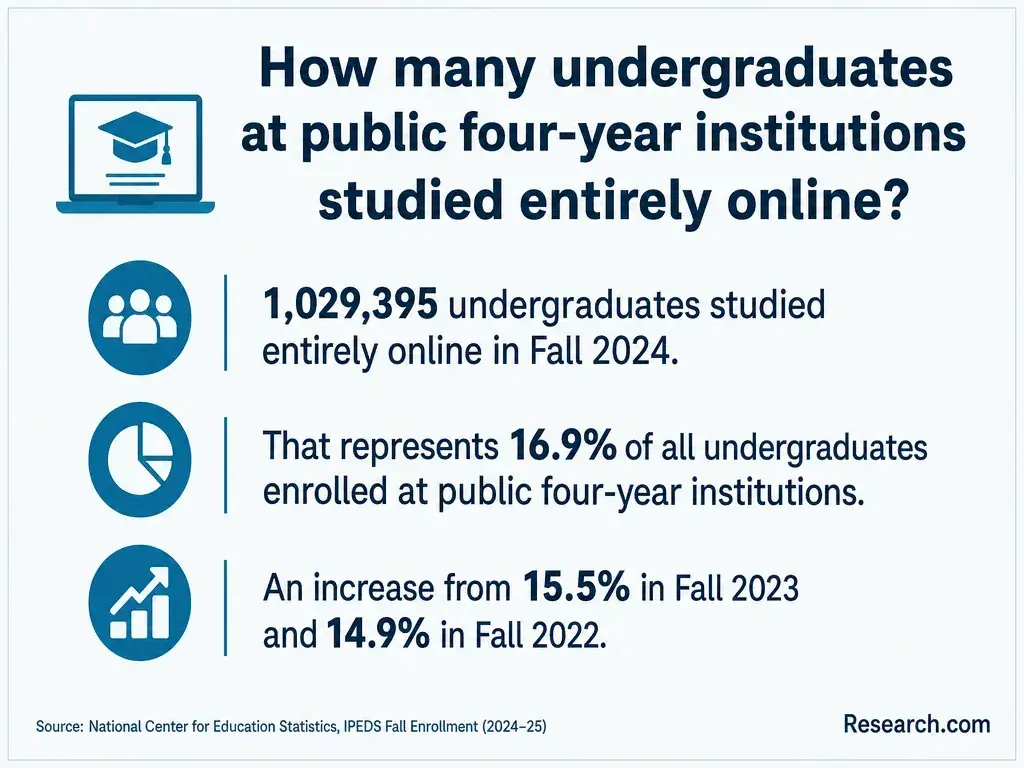
Yes, if the institution and curriculum meet your needs and the format lets you complete relevant work. Online delivery does not, by itself, weaken business-law or accounting preparation; nor does it guarantee flexible deadlines, independent pacing, or access to a contract-focused internship. Ask how group projects, exams, live sessions, and any required workplace assignments operate before enrolling.
Use US business college rankings for online learners as a starting point, not a substitute for checking institutional accreditation, the exact degree requirements, career support, and opportunities to produce contract-relevant work. An internship or employer project also needs the school's approval where academic credit is involved.
A bachelor's degree is commonly planned as four years of full-time undergraduate study, but your remaining time depends on accepted credits, which requirements those credits satisfy, course sequencing, and enrollment pace. A prior course may transfer as an elective without replacing a required business course. Ask for an official degree audit before relying on a completion estimate.
Compare tuition with required fees, books, software, travel or proctoring costs, and income you might forgo while studying. Financial aid eligibility and net cost depend on your circumstances and the institution. You can compare low-tuition business administration schools accepting FAFSA, but confirm each school's aid offer and your remaining required courses before estimating what you will pay.
There is no single dependable national wage figure for the exact title "contract administration specialist." Employers classify similar work under different occupations, and pay varies with sector, location, experience, and responsibility. For context - not as an expected contract-administrator salary - the U.S. Bureau of Labor Statistics reports a May 2025 median annual wage of $102,320 for project management specialists. That occupation includes different duties and career stages, so its median should not be treated as an entry-level offer.
For a useful pay estimate, compare posted salary ranges for contract roles matching your experience and location, including public-sector pay grades where relevant. Then weigh any potential earnings against the cost and time of finishing a degree. Business programs with accelerated online classes may reduce calendar time, but verify their workload and total price rather than assuming a faster program improves your financial return.
How strong is the job outlook for contract administration specialists?
Job prospects depend on the function behind the title. Contract work appears in procurement, government administration, construction, healthcare, and project delivery, but there is no single BLS projection for every contract administration specialist. BLS projects 7% employment growth for project management specialists from 2025 to 2035. That figure is useful only as context for overlapping project-related work, not a forecast of contract-administrator openings.
Focus your search on employers and contract types in your area, then test whether postings call for a bachelor's degree, specific software, or prior procurement experience. If you need to complete a degree quickly to meet a stated requirement, accelerated online bachelor's programs may be worth examining - but speed does not replace relevant experience or guarantee a job opening.
Other Things You Should Know About Business Administration
Yes, especially if you have documented requests, resolved discrepancies, or coordinated across teams. Translate those examples into evidence of recordkeeping and stakeholder communication, while acknowledging any gap in procurement or contract knowledge.
Not necessarily. If employers accept your existing degree, a contracting course, relevant work assignment, or entry-level coordinator role may be a more direct path. Check the requirements of the jobs you want before enrolling.
Only if you have permission to use it and can comply with confidentiality and intellectual-property rules. A fictional case or properly authorized, redacted sample is usually safer.
If you meet the stated mandatory requirements, an application can be reasonable. Explain your transferable experience and address the most important preferred skill gaps with specific examples, rather than claiming expertise you do not have.
- Legacy FAC-C Certification Requirements | FAI. GOV https://www.fai.gov/certification/fac-c/contracting-fac/fac-c-legacy-cert-reqs
- Contract Administrators: How to Become One | Franklin University https://www.franklin.edu/career-guide/buyers-and-purchasing-agents/how-to-become-contract-administrators
- What Can You Do With a Government Contracting Degree? | American Public University https://www.apu.apus.edu/area-of-study/business-and-management/resources/what-can-you-do-with-a-government-contracting-degree/
- What is a Business Administration Degree? | University of Bridgeport https://www.bridgeport.edu/news/what-is-a-business-administration-degree/
- Business Administration Associate Degree | Bay Path University https://www.baypath.edu/academics/undergraduate-programs/business-administration-associate-degree/
- What Is a Contract Administrator? Key Skills and Qualifications | Indeed.com https://www.indeed.com/career-advice/finding-a-job/what-is-contract-administrator
- Business Administration Degrees (Types, Courses & FAQ) | allbusinessschools.com https://www.allbusinessschools.com/business-administration/degrees/
- Career Path in Contract Management | ncmahq.org https://ncmahq.org/Web/Web/Membership/Career-Path-in-Contract-Management.aspx
- What Does a Contract Administrator Do? Duties & Skills | sirion.ai https://www.sirion.ai/library/contracts/contract-administrator/
- Procurement vs Contract Management: What's the Difference? | UniAthena https://uniathena.com/procurement-vs-contract-management