2027 Business Administration BS Opportunity Costs: Compare Tuition, Work Time, and Career Options
Audited and Verified:
Our Editorial and Data Verification Process
Research.com uses government datasets, official education statistics and primary institutional information to support its career and degree guides. Our review process checks factual accuracy, occupational definitions, source dates and the requirements associated with the credentials discussed.
How This Article Was Fact-Checked
Our editorial team verifies salary estimates, employment projections, education requirements and program information against original data providers and official organizations. Salary figures are checked against the relevant occupational definitions and reporting periods. Information about licensure, accreditation and required in-person training is reviewed separately.
Fact-checked and verified on:

Co-Founder and Chief Data Scientist
A BS in Business Administration can open career options, but the decision is not simply whether you can afford tuition. Classes may reduce paid work hours, delay a promotion, or compete with time you could spend gaining experience.
This guide is for US students and employees weighing a business degree against continued full-time work. It shows how to compare total costs, scheduling choices, and realistic career paths so you can decide whether to enroll, study part time, or pursue a more direct route.
Key Things You Should Know
- Compare net education costs plus earnings you would actually forgot, not tuition alone, with the cost of continuing to work.
- Keeping a full-time job may reduce lost wages, but a slower course load can extend fees, borrowing, and the time until you finish.
- The Bureau of Labor Statistics reports a May 2025 median wage of $78,760 for market research analysts; that occupation-wide figure is not a starting salary or a return promised by a business degree.
What is a business administration bachelor's degree, and what opportunity costs does it involve?
A BS in Business Administration is an undergraduate degree combining general education with subjects such as accounting, finance, marketing, operations, management, and business analysis.
Its exact curriculum differs from a BBA or a specialized accounting or supply chain degree; the name alone does not establish its depth in any one function.
Opportunity cost is the value of the best alternative you give up. For a prospective student, that may mean wages lost by reducing work hours, missed overtime, postponed job experience, or time unavailable for family and other commitments. Some costs are financial; others, such as schedule strain, matter even though they cannot be priced reliably.
Compare the degree with a specific alternative: continuing full-time work, taking employer-funded courses, or studying part time. If speed matters, online undergraduate business rankings for shorter study paths can help identify programs to investigate, but confirm how many of your credits would satisfy degree requirements before treating a shorter advertised timeline as your own.
How much does a business administration bachelor's degree cost compared with working full time?
There is no reliable universal price difference. Schools charge by credit, course, term, or another structure, while the earnings at stake depend on your job and proposed study schedule.
Start with each school's written cost estimate and an evaluation of credits that apply to the degree, not merely credits it accepts.
The comparison below separates cash expenses from earnings forgone. Use the same anticipated completion period for every option, and count living expenses only to the extent that enrollment changes them:
| Option | Costs to include | Income and timing to check |
| Study full time; reduce or leave work | Remaining tuition, mandatory fees, materials, travel, and borrowing costs after confirmed aid | Take-home earnings and benefits actually lost; earliest realistic graduation date |
| Study part time; keep working | Charges over the longer enrollment period, materials, and borrowing costs | Earnings retained; effects of class deadlines on overtime or advancement |
| Keep working without enrolling | Any targeted training or credential costs | Earnings retained; roles available without the bachelor's requirement |
For each study option, add net education expenses to earnings and benefits you expect to forgo. Then compare that total with the no-degree path. Treat grants differently from loans: a loan helps with immediate cash flow but does not reduce the price you ultimately pay.
Confirm employer reimbursement caps, payment timing, grade rules, and any obligation to repay the employer. When screening cheapest online business administration degrees, compare your remaining required courses and fees rather than a headline tuition rate.
What careers can you pursue with a business administration degree?
The strongest career case starts with a target role, not a promise that a general degree leads directly to management. Entry routes may include operations coordinator, marketing coordinator, HR assistant, procurement staff member, or project coordinator.
Employers may value spreadsheet work, clear communication, budgeting knowledge, and evidence from relevant jobs or projects alongside the degree.
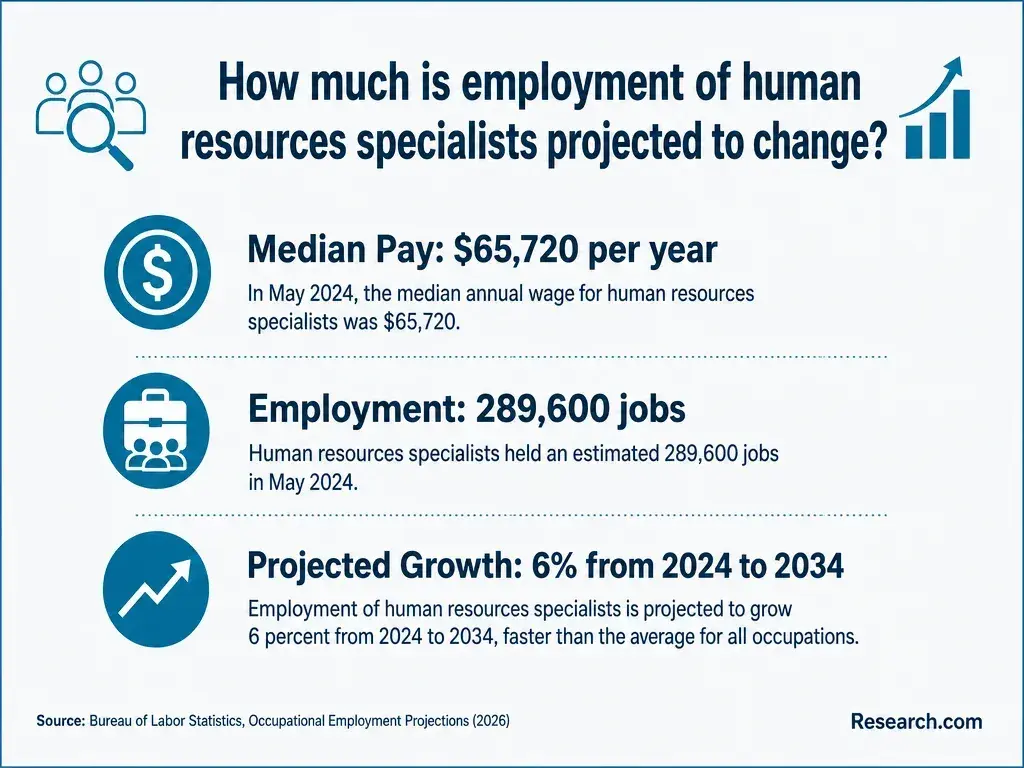
More specialized roles require closer scrutiny. A market research analyst interprets customer and market information; an HR specialist handles recruiting or other personnel functions. Analyst, supervisory, and management openings can also require experience or technical skills that introductory business courses do not provide.
If you already have operations experience and want a supply chain role, compare the general BS with a focused pathway; compare economical supply chain study timelines against the credits and experience you already have.
Before attributing a career gain to the degree, review actual postings for your target job. Separate positions requiring any bachelor's degree from those demanding a particular major, software skill, industry background, or years of responsibility. A targeted course or employer-supported move may be less costly if the bachelor's credential is not the barrier.
Online study can eliminate a commute and make continued employment more feasible, but it does not automatically eliminate opportunity costs.
Campus study may provide convenient in-person recruiting or group work for some students, while its fixed travel and class times may require reduced work hours. Neither format determines quality or flexibility on its own.
Ask for a sample term schedule: live sessions, assignment deadlines, group meetings, proctored exams, internships, and any required visits. Then compare those commitments with work shifts and caregiving. A program described as flexible may still make overtime or an irregular schedule difficult.
Flexible business administration programs for career progression are worth examining if retaining income is central to your plan, but confirm the obligations in required courses, not just in an introductory class.
Programs commonly combine general education with accounting, economics, finance, marketing, management, operations, statistics, and business communication. Some add electives, an official concentration, an internship, or a capstone.
Review the course sequence as well as the catalog descriptions: a prerequisite or infrequently offered required course can extend enrollment and increase total cost.
Choose electives for the work you want to do. Someone considering project coordination, for example, should check whether coursework builds scheduling, budgeting, and stakeholder-communication skills - and whether a project management course satisfies a degree requirement rather than adding credits.
Students with prior coursework can examine project management undergraduate transfer pathways as an alternative, while asking each institution for an official evaluation. Accepted credits do not necessarily replace business-core courses.
Requirements vary by school and by whether you enter as a first-year, transfer, or returning student. Institutions may ask for prior transcripts, evidence of secondary-school completion, and specific academic preparation.
Admission to the institution may be separate from admission to the business major; math, accounting, or other prerequisites may still be outstanding.
Request the current admission rules and a written degree audit before committing money. The audit should show which previous courses satisfy general education, prerequisites, business-core requirements, and electives.
If a requirement is unclear, ask admissions or the business department who can approve an equivalency or substitution. This matters especially when comparing business administration admissions eligibility rules: meeting an entry rule does not establish how much of the degree remains.
Completion time depends on applicable prior credit, required courses, course availability, and how much you can study while working. A full-time schedule may bring graduation sooner but reduce current earnings. A part-time schedule can protect income while extending exposure to fees, loan interest, or changes in your circumstances.
Ask an adviser to map a term-by-term plan under both schedules, including prerequisites and courses offered only in certain terms. Check the withdrawal and leave policies if your work hours could change.
When you compare fast-paced online business degrees, distinguish shorter calendar time from fewer required courses: acceleration may compress the same academic and work commitments into a tighter schedule.
First, confirm the institution's accreditation and accreditor through the US Department of Education's accreditation database or the Council for Higher Education Accreditation's directory. Check the institution's exact name, campus or online arrangement, and accreditation status rather than relying on an advertisement.
Then verify any claimed business-specific accreditation directly with AACSB, ACBSP, or IACBE. Determine whether it covers the business school or the particular program and delivery location you are considering.
Institutional accreditation and business-specific accreditation are different claims; neither guarantees transfer acceptance or a job. If you compare nationally ranked online business programs, independently check accreditation scope and the current catalog before using a ranking to narrow your choices.
No single salary describes business administration graduates. The US Bureau of Labor Statistics reports that market research analysts earned a median annual wage of $78,760 in May 2025, with employment projected to grow 7% from 2025 to 2035.
Those figures describe an occupation across experience levels and educational backgrounds - not what a new BS graduate will earn or the probability of receiving an offer.
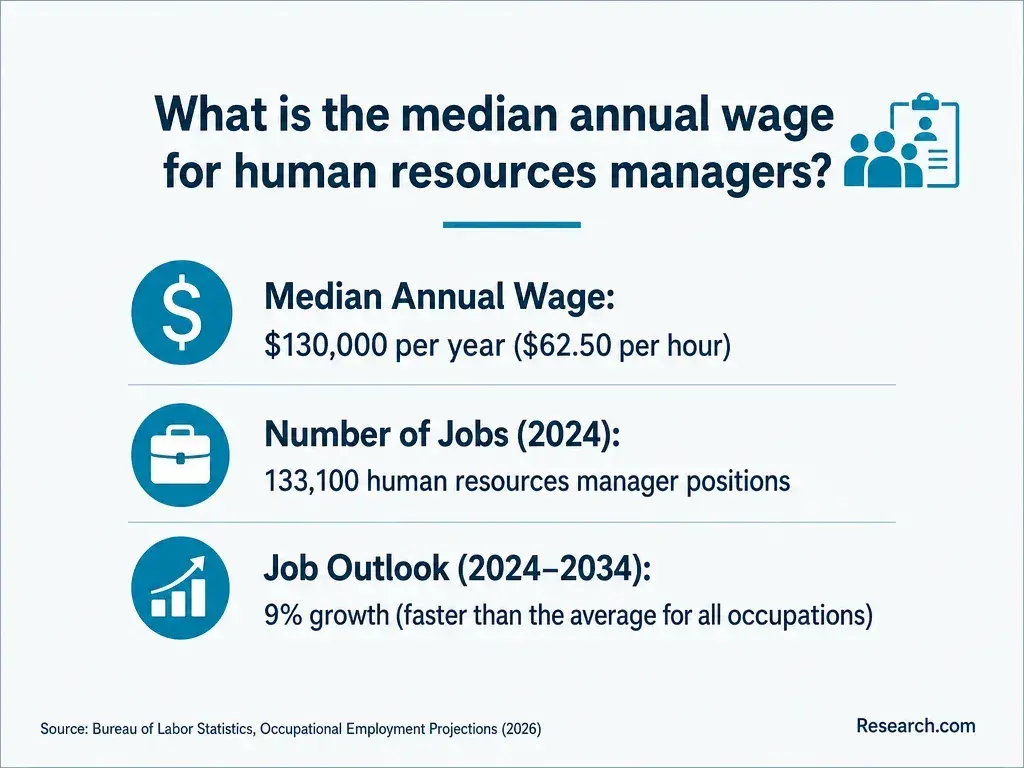
For a useful return-on-investment estimate, find pay ranges in local postings for roles you could realistically obtain with your experience, then compare them with opportunities available without the degree. Do not substitute a manager's occupation-wide median for an entry-level offer.
If the likely pay difference is small or uncertain, keeping income while studying, or delaying enrollment until an employer benefit is available, may reduce financial risk. Affordable school choices for online business students can provide a starting set of options, but your net cost and job prospects determine whether any one is affordable for you.
Which certifications or licenses can strengthen business administration career options?
A degree and an occupational credential serve different purposes. Depending on your target role, a relevant HR, project management, accounting, or financial-services credential may help demonstrate specific knowledge.
Eligibility can involve exams, supervised experience, particular coursework, or state rules; a general business degree does not itself confer a license or establish certification eligibility.
Check the issuing organization's requirements and job postings before paying for preparation. If project coordination is your goal, compare the time and expense of a targeted credential with those of additional degree coursework; tuition budgeting for an accredited project management degree offers another education-cost comparison.
Choose the route that addresses the qualification employers actually request, not the one with the most credentials.
Other Things You Should Know About Business Administration
Possibly. Some institutions assess documented prior learning, but job experience does not automatically award credit. Ask whether assessment is available, what evidence is required, what it costs, and where approved credit would apply.
No. Borrowing may cover a bill now, but the principal must generally be repaid, often with interest. Separate grants and scholarships from loans in your comparison.
Some employer policies require repayment if you leave within a specified period or fail to meet stated conditions. Read the written benefit agreement before enrolling.
Ask the school about leave, reentry, course availability, and how a pause affects financial-aid eligibility and loan repayment. A workable stop-and-return plan can matter as much as the fastest possible graduation date.
- Delayed Time-to-Degree and Post-college Earnings - PMC https://pmc.ncbi.nlm.nih.gov/articles/PMC7875953/
- Fast Facts: Undergraduate graduation rates (40) | ed.gov https://nces.ed.gov/fastfacts/display.asp
- Federal Student Aid Estimator https://studentaid.gov/aid-estimator
- Cost of Attendance (Budget) | 2025-2026 Federal Student Aid Handbook https://fsapartners.ed.gov/knowledge-center/fsa-handbook/2025-2026/vol3/ch2-cost-attendance-budget
- How Many Credits Do You Need to Graduate College? | snhu.edu https://www.snhu.edu/about-us/newsroom/education/how-many-credits-to-graduate-college
- Post-Graduate Outcomes - Penn Career Services | University of Pennsylvania https://careerservices.upenn.edu/post-graduate-outcomes/
- Undergraduate Career Outcomes & Employment Stats | Babson College https://www.babson.edu/undergraduate/outcomes/
- Academic Progress to Degree | osu.edu https://ugeducation.osu.edu/academics/academic-progress-degree
- Working During College - Urban Institute https://collegeaffordability.urban.org/covering-expenses/working-during-college/