2027 BS in Business Administration with a Real Estate Focus vs. a Standalone Real Estate Degree
Audited and Verified:
Our Editorial and Data Verification Process
Research.com uses government datasets, official education statistics and primary institutional information to support its career and degree guides. Our review process checks factual accuracy, occupational definitions, source dates and the requirements associated with the credentials discussed.
How This Article Was Fact-Checked
Our editorial team verifies salary estimates, employment projections, education requirements and program information against original data providers and official organizations. Salary figures are checked against the relevant occupational definitions and reporting periods. Information about licensure, accreditation and required in-person training is reviewed separately.
Fact-checked and verified on:

Co-Founder and Chief Data Scientist
A real estate focus within a BS in Business Administration can look similar to a standalone real estate degree, but the choice changes how much specialized coursework you take and how easily you can pursue work outside the industry. It does not, by itself, settle whether you qualify for a real estate license.
For students and career changers considering brokerage, property operations, development, or investment analysis, this comparison explains the academic and professional trade-offs. You'll leave with a way to judge programs against your target role, existing credits, budget, and state requirements.
Key Things You Should Know
- Choose a business administration real estate focus for a broader business foundation; choose a standalone real estate degree when its required courses and industry opportunities closely match your target role.
- Neither degree automatically grants a real estate license. Your state regulator determines whether coursework counts and what additional requirements apply.
- Salary comparisons must be occupation-specific: the U.S. Bureau of Labor Statistics reports a May 2025 median annual wage of $102,320 for project management specialists, not for new real estate graduates.
What is the difference between a business administration real estate focus and a real estate degree?
A BS in Business Administration with a real estate focus is a business degree whose real estate component may be a formal concentration, a minor, or simply selected electives. A standalone real estate degree makes real estate the named major. Neither label establishes the number or depth of real estate courses; the catalog and degree audit do.
This comparison identifies the structural difference to check when reviewing two actual programs.
| Feature | Business administration with real estate focus | Standalone real estate degree |
| Degree awarded | Business administration degree; a concentration may also appear on the record | Degree with real estate as the named major |
| Required emphasis | Broad business core plus a smaller real estate sequence | Real estate coursework typically occupies more of the major |
| Main advantage | Flexibility across business functions and industries | More room for property-specific study and industry projects |
| Main limitation | Specialized depth depends heavily on elective availability | Less room for unrelated business electives, depending on the curriculum |
A degree title alone is a poor shortcut: a business program with substantial property finance coursework may better serve an analyst than a real estate major centered on brokerage. If finishing quickly matters, compare accelerated business programs, then check whether the real estate courses you need fit the shorter schedule.
Which degree is better for real estate careers and business opportunities?
The better degree is the one that closes the gap between your current experience and your intended work. A prospective commercial property analyst should favor the program with stronger finance, valuation, spreadsheet modeling, and supervised deal-analysis opportunities, regardless of its title. Someone who wants to run a property services company and retain the option to work in other industries may benefit more from the broader business core.
Existing experience can reverse that advice. A working leasing professional may already understand transactions but need accounting and operations skills; a finance graduate moving into development may need property law, land use, and local industry connections. Compare the additional learning each degree supplies rather than paying to repeat skills you can already demonstrate.
For students primarily seeking general supervisory skills rather than property-specific work, online leadership bachelor's programs with compressed schedules are another comparison. Leadership coursework, however, does not replace real estate analysis or the experience employers expect in property roles.
Does a real estate degree or concentration meet state licensing requirements?
U.S. states set their own rules for real estate salesperson and broker licenses, including qualifying education, examinations, applications, and other conditions. A degree course may count toward a requirement in some circumstances, but only the relevant state licensing authority can confirm whether a particular course or degree qualifies. Broker requirements may differ from salesperson requirements.
Identify the occupation before comparing credentials: practicing as an agent or broker is different from working in property analysis or development. Appraisal and mortgage loan origination have separate regulatory pathways. Ask the state authority whether a proposed course is approved, what documentation it requires, and whether the school's description applies to your intended license and state. Get that answer before relying on an admissions representative's licensing claim.
If your goal is coordinating construction projects rather than conducting licensed transactions, compare the education needed for that role and project management college costs after financial aid. A project management degree is a different career pathway, not a real estate licensing substitute.
A business administration core commonly covers accounting, finance, economics, marketing, management, and quantitative decision-making. Its real estate focus might add property finance, investment analysis, real estate law, or development. A standalone major may require more of those subjects alongside valuation, market analysis, land use, property management, or a substantial real estate project. Course names and requirements vary by school.
Look beyond titles to the work students actually produce. For an investment-analysis goal, a useful course should require defensible cash-flow assumptions, sensitivity analysis, and an explanation of risk - not just familiarity with property terminology. For property operations, budgeting, tenant communication, contracts, and maintenance planning may be more relevant. An internship or capstone is valuable only if you can access an appropriate role or project and meet the school's approval requirements.
Industrial-property careers can intersect with logistics, but property decisions and supply-chain operations are different specialties. If warehouse operations interest you more than leasing or development, an online supply chain bachelor's fast-track guide offers a more directly aligned curriculum to compare.
An online degree can provide comparable academic preparation when the institution is appropriately accredited and its courses, assessments, faculty access, and applied work meet your needs. Delivery format alone does not establish quality or employer preference. Campus programs may make local site visits and networking easier; online programs may let working students reach courses they could not attend in person.
Check the practical details before treating "online" as "flexible": required live sessions, group meetings, exam arrangements, software, internship locations, and whether specialized courses run often enough for your planned graduation date. Ask how remote students obtain feedback on property analyses and connect with employers in their intended market. Ranked US college pathways in online business can help generate options, but verify the specific real estate focus and delivery requirements directly with each school.
Requirements depend on the institution and entry route. First-year applicants generally submit evidence of secondary-school completion; transfer applicants provide prior college transcripts. A school may admit a student to the university before allowing entry to a competitive business or real estate major, and it may require particular grades or prerequisite courses. Ask which decision applies to you.
For transfer students, the crucial distinction is between credits accepted by the university and credits that satisfy the business core, real estate major, electives, or residency rules. Request a written degree audit and ask about accounting, economics, mathematics, and statistics equivalencies before estimating completion time. If you already work in another business function, compare its academic route with a switch into property work; for example, compare HR curricula and career directions if your experience centers on staffing rather than property transactions.
A bachelor's degree commonly takes about four years of full-time study from first enrollment, but a transfer student's remaining time depends on the official degree audit and course schedule. A real estate focus is not necessarily faster than a standalone major: prerequisites, limited elective offerings, and required residency credits can outweigh a difference in the number of courses shown in a catalog.
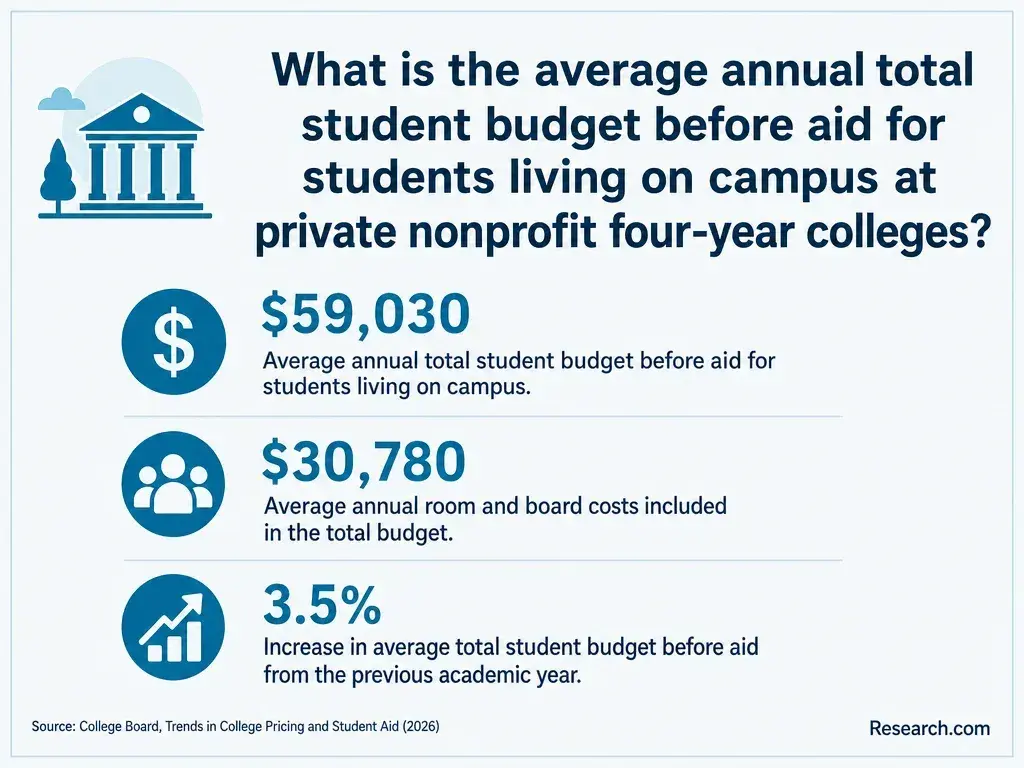
Compare the cost to complete, not just the advertised tuition rate. Obtain each school's estimate for remaining required credits, tuition, mandatory fees, books or software, and any travel or internship expenses. Then account for available grants, scholarships, employer assistance, and borrowing. A lower per-credit price can cost more overall if fewer transfer credits apply or a required course delays graduation. Resources on how to reduce tuition costs for a business degree are a starting point, not a substitute for school-specific financial aid offers and degree audits.
Either route can support applications for real estate-related work, but employers hire for demonstrated tasks and experience, not the degree label alone. This comparison shows where each curriculum may offer the stronger starting point; it does not imply that graduation qualifies someone for every listed role.
| Career direction | Preparation to prioritize | Important qualification distinction |
| Property or leasing operations | Budgets, contracts, tenant communication, and operational systems | Some activities may require a state license; duties vary by employer and state |
| Real estate research or analyst support | Spreadsheets, market evidence, valuation concepts, and written recommendations | More advanced analyst roles may require substantial finance skills and experience |
| Development or project coordination | Financial feasibility, land-use context, scheduling, and stakeholder communication | Coordinating a project is not the same as directing development decisions |
| General business roles in property firms | Accounting, marketing, operations, or customer-facing work | A broad business core can remain useful outside real estate |
Internships, relevant employment, and carefully documented projects can show what you can do with the coursework. For a student drawn to warehouse operations rather than property ownership or leasing, supply chain degree duration and salary considerations may reveal a better-matched path.
There is no single reliable salary or growth rate for "real estate graduates": the two degrees can lead to different occupations, and pay varies with responsibilities, location, industry, and experience. The U.S. Bureau of Labor Statistics reports a $102,320 median annual wage in May 2025 for project management specialists and projects 7% employment growth from 2025 to 2035. That occupation-wide median includes experienced workers across industries; it is not an expected starting salary for a graduate entering development coordination.
Use occupational data only after narrowing your target job and checking local openings for required skills and pay. A business focus may protect your ability to seek jobs outside property markets, while a specialized degree may improve your preparation for particular property tasks; neither creates a predictable earnings premium. If project coordination is the primary goal, assess the cost of that alternative - including funding sources for a bachelor's in project management - against the roles you could realistically pursue.
How can you choose an accredited and reputable real estate program?
Start by confirming the institution's accreditation through the accreditor and the school. Then determine exactly what, if anything, an AACSB, ACBSP, or IACBE claim covers; institutional accreditation and business-school or programmatic accreditation are different. Neither establishes state licensing eligibility or guarantees employment.
Before committing, compare the current catalog with a personalized degree audit, sample course schedules, and the available applied opportunities. Ask for evidence of how students access internships, faculty feedback, and career support - especially if you will study online or seek work in a different local market. If speed is important, use ranked programs for finishing a business bachelor's sooner to identify candidates, then confirm that your required real estate courses are offered on a workable schedule.
Make the final decision using three documents from each serious contender: its official curriculum, its evaluation of your prior credits, and its individualized cost estimate. Those reveal whether the program supplies the specialization you need without adding avoidable time or expense.
Other Things You Should Know About Business Administration
Not generally. You do need to understand financing, cash flow, taxes, legal obligations, and risk; targeted courses and qualified professional advice may be more useful than another degree for a personal investment decision.
No universal requirement applies. An MBA may help with advanced finance or leadership preparation, but relevant transactions, analytical ability, and industry relationships may matter more for a particular role.
Yes. Practice building transparent cash-flow scenarios and explaining how assumptions affect a conclusion. A model is evidence of a skill, not proof that a projected investment outcome will occur.
Sometimes. Schools may limit seats or require prerequisites, and electives alone may not appear as a formal concentration on your academic record. Confirm both access and credential rules in the catalog.
- Cost of Attendance (Budget) | 2025-2026 Federal Student Aid Handbook https://fsapartners.ed.gov/knowledge-center/fsa-handbook/2025-2026/vol3/ch2-cost-attendance-budget
- Real Estate Salesperson Frequently Asked Questions | ny.gov https://dos.ny.gov/real-estate-salesperson-frequently-asked-questions
- Types of Financial Aid: Grants, Work-Study, and Loans | studentaid.gov https://studentaid.gov/understand-aid/types
- Requirements to Apply for a Real Estate Broker License - DRE https://www.dre.ca.gov/examinees/requirementsbroker.html
- Do you really need a real estate degree? - USC Price https://priceschool.usc.edu/price-blog/do-you-really-need-a-real-estate-degree/
- Business Administration (Real Estate) | Majors at Mizzou https://majors.missouri.edu/business-administration-real-estate-bsba/
- Career paths in real estate | Cornell SC Johnson College of Business https://business.cornell.edu/news/2025/03/03/real-estate-career-paths/
- Do College Rankings Matter? How to Compare Colleges | post.edu https://post.edu/blog/college-rankings-what-they-really-measure-and-do-they-matter/
- BS with a major in Real Estate - The University of Alabama Online https://online.ua.edu/degrees/bachelor-of-science-major-in-real-estate/
- Business Administration, Real Estate Concentration, B.A. | fullerton.edu https://catalog.fullerton.edu/preview_program.php