2027 BS in Business Administration: Comparing Programs When Your Goal Is an Internal Promotion
Audited and Verified:
Our Editorial and Data Verification Process
Research.com uses government datasets, official education statistics and primary institutional information to support its career and degree guides. Our review process checks factual accuracy, occupational definitions, source dates and the requirements associated with the credentials discussed.
How This Article Was Fact-Checked
Our editorial team verifies salary estimates, employment projections, education requirements and program information against original data providers and official organizations. Salary figures are checked against the relevant occupational definitions and reporting periods. Information about licensure, accreditation and required in-person training is reviewed separately.
Fact-checked and verified on:

Co-Founder and Chief Data Scientist
You may already know the people, systems, and problems at your organization, yet a promotion could still call for a bachelor's degree or stronger business skills. A BS in Business Administration might close that gap - but only if the program fits the role you want and the hours you work. This guide shows experienced employees how to compare degree options against internal job requirements, identify useful coursework and projects, and assess cost and timing before enrolling. It also explains when targeted training or a different credential may be the more direct route.
Key Things You Should Know
- Start with the internal job posting and a conversation with HR: a degree may satisfy an eligibility requirement, but promotion still depends on the employer's selection criteria and your record of work.
- Compare programs by credits that apply to graduation, courses relevant to the target role, scheduling obligations, total remaining cost, and opportunities to document workplace results.
- For context, the U.S. Bureau of Labor Statistics reports a May 2025 median wage of $75,940 for human resources specialists; that occupation-wide figure is not a pay forecast for business administration graduates.
What Is a BS in Business Administration for Internal Promotion?
A BS in Business Administration is an undergraduate degree covering multiple business functions, typically including accounting, finance, management, marketing, operations, and quantitative decision-making. For an employee seeking promotion, its value is not simply the diploma: it is the combination of a recognized credential, relevant skills, and work you can point to when applying for a specific internal role.
First, separate a degree requirement from a readiness requirement. A posting may require any bachelor's degree, prefer business study, or specify expertise in areas such as accounting or supply chain. Ask HR how equivalent experience is assessed and whether a completed degree is required when you apply or when you assume the role. Your manager can then help identify responsibilities you need to demonstrate.
A BS, BBA, and BS in Management can overlap, but their titles do not establish identical curricula. If the next position is primarily people leadership, compare business administration with shorter study timelines for leadership bachelor's students; review actual course requirements before assuming the leadership option is faster for your transfer record.
Can a Business Administration Degree Help You Earn an Internal Promotion?
Yes, when it removes a documented education barrier or develops skills the selection committee expects to see. It cannot guarantee a promotion, create a vacancy, or substitute for a record of sound decisions. Your strongest case connects degree work to responsibilities you already handle and responsibilities you could reasonably take on next.
The right education choice depends on the gap between your current qualifications and the target posting. This comparison keeps a broad degree from becoming the default answer to a narrower problem.
| Promotion barrier | Potentially useful path | What to verify |
| A bachelor's degree is required; subject is flexible | BS in Business Administration or another applicable completion degree | Which prior credits satisfy graduation requirements and when the credential must be completed |
| Financial, HR, analytics, or operations depth is required | Relevant concentration or specialized degree | Whether the curriculum and your work evidence match the actual duties |
| The degree requirement is already met; a specific skill is missing | Employer training, a course, mentorship, or an appropriate certification | Whether the hiring team recognizes that preparation |
| Leadership results are the main gap | Stretch assignments and documented performance, with education as needed | Which results and decision-making responsibilities count in selection |
Ask for the posting, selection criteria, and examples of successful candidates' responsibilities - not assurances about your outcome. If study is warranted, explore how to earn a business administration degree while keeping your job, then check whether its assignments could help you build evidence relevant to your employer.
What Accreditation Should You Look for in a Business Administration Program?
Confirm that the institution holds accreditation recognized by the U.S. Department of Education. This is the first check for a credible degree and can affect federal aid eligibility and how other institutions evaluate coursework. Check the institution's status directly with the accreditor and clarify the status applicable to your enrollment period.
Business-school accreditation is a separate consideration. AACSB, ACBSP, and IACBE accredit business education within their respective scopes; their presence does not mean every degree or location is covered. Verify that the specific school and program you are considering fall within the stated scope. For an internal promotion, also ask whether your employer has any accreditation policy beyond its general degree requirement.
Accreditation is not evidence that graduates receive promotions. Use a national guide to ranked online business colleges to identify options, then compare verified accreditation, course access, transfer policies, and support against your own promotion timeline.
The best format is the one you can complete consistently while meeting work obligations. An asynchronous online course may let you choose when to watch lectures but still impose weekly deadlines, group meetings, or scheduled exams. A hybrid program may offer valuable face-to-face contact while adding travel. Evening classes can be predictable, but a shift change may make them difficult to sustain.
Ask each program for sample schedules from required upper-level courses, not only a description of its online format. Check live attendance, exam proctoring, group projects, campus visits, course rotation, part-time enrollment, and leave policies. If promotion eligibility depends on a completion date, confirm that required courses will be offered in the terms your plan assumes.
Accelerated bachelor's program comparisons can help identify shorter calendars, but acceleration usually compresses deadlines rather than reducing the work. Choose it only if the course sequence, transfer evaluation, and your available study time support the pace.
Most programs combine general education with a business core and electives or a concentration, but requirements differ. For a prospective supervisor, managerial accounting can support budget discussions; organizational behavior and HR coursework can clarify team decisions; operations and statistics can strengthen process analysis. A strategy course or capstone may bring these subjects together without, by itself, proving managerial experience.
Compare course descriptions with the target role's tasks. If the promotion involves forecasting and reporting, look for substantive spreadsheet, statistics, and analytics assignments - not just a course title mentioning data. If it involves purchasing or logistics, inspect operations and supply chain depth and any prerequisite sequence. An elective is not automatically an official concentration, and a classroom exercise is not the same as an employer-approved project.
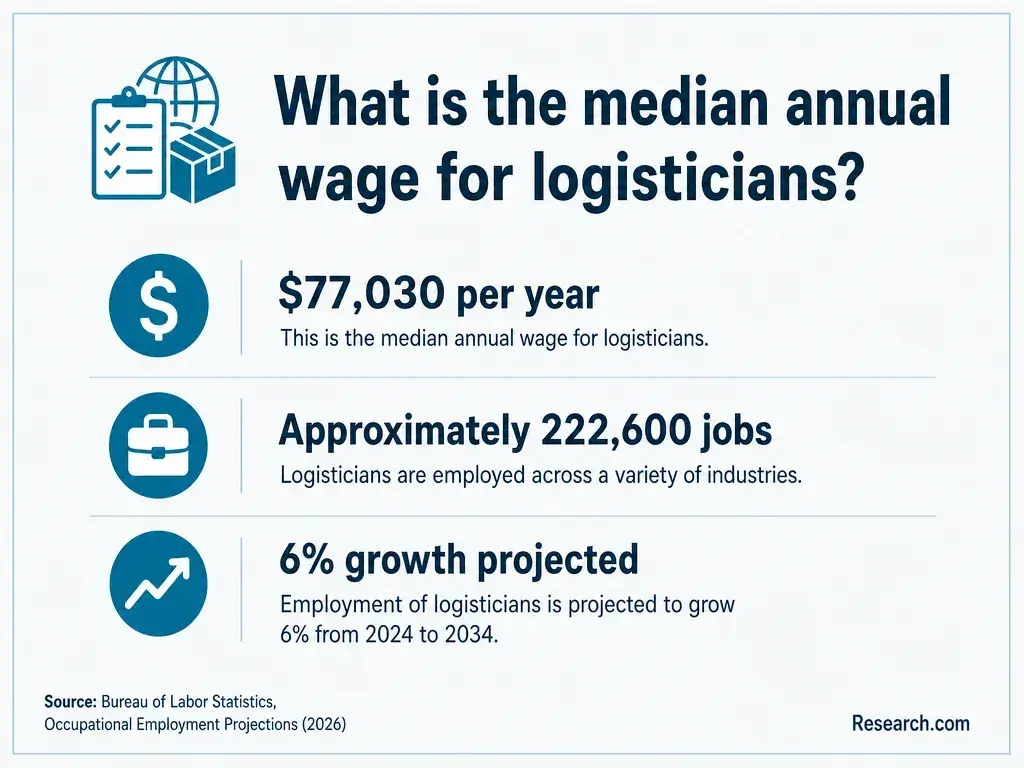
When the desired job is predominantly logistics rather than general administration, compare supply chain degrees by cost and length before deciding that a broad business degree with one operations elective is sufficient.
Requirements vary by institution and by whether you enter as a first-time or transfer student. Schools commonly request prior academic transcripts and may set admission standards for the institution and separate progression standards for the business major. Mathematics, accounting, economics, or statistics courses may be prerequisites for advanced classes even when they are not conditions for initial admission.
If you have previous college study, request an official transfer evaluation and degree audit. Accepted credit is not the same as a satisfied requirement: a course may count as an elective while leaving a business-core requirement unfinished. Ask the admissions or transfer office which credits apply; ask the business adviser to confirm prerequisites, sequencing, and any residency rules. Professional experience may be considered through a school's prior-learning process, but it does not automatically award credit.
Use the program's current catalog to check prerequisites before applying to business administration programs, particularly if your promotion timeline depends on entering upper-level courses promptly.
Your remaining requirements - not the advertised length of a full bachelor's program - determine a realistic completion date. An official audit should show general education, business-core, elective, concentration, and institutional residency requirements. Map those courses to actual term offerings; a missing prerequisite or infrequently offered capstone can delay graduation even when relatively few credits remain.
For cost, request a term-by-term estimate covering remaining tuition, mandatory fees, books or software, and any travel or proctoring charges. Compare that estimate with the aid and employer benefits for which you are actually eligible. Tuition reimbursement may arrive after you pay the school and may carry grade, employment, or repayment conditions. Ask HR and financial aid staff about those terms before treating the benefit as cash available upfront.
Resources on business administration degrees for limited tuition budgets can narrow the search. The lowest advertised tuition is not necessarily the lowest completion cost if credits do not apply or required courses extend your enrollment.
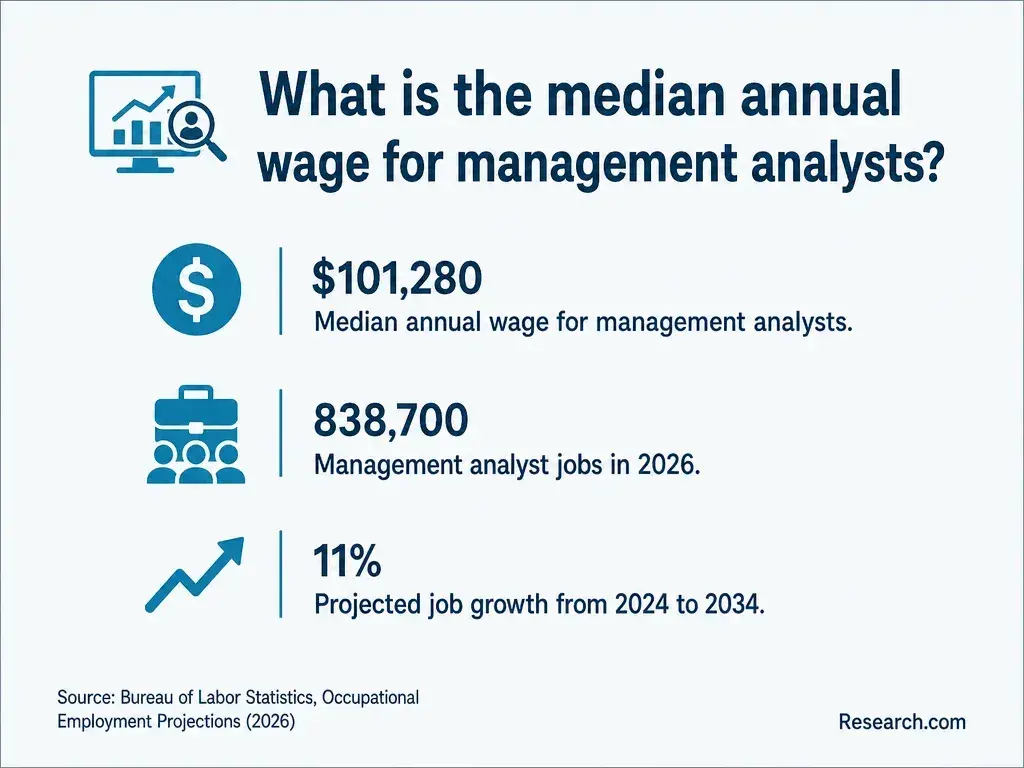
For an internal candidate, the most plausible next step usually builds on responsibilities already held. An operations employee might pursue process or procurement work; an administrative employee might move toward project coordination; someone supporting hiring and training might seek an HR specialist role. Each path needs evidence beyond a business degree: relevant systems knowledge, judgment, communication, and results within the organization.
Management roles add responsibility for people, resources, and decisions. A degree can support preparation, but employers generally assess actual leadership and functional experience too. Specialized work may favor a specialized degree or credential. For example, an employee aiming for project-focused roles can compare business administration with affordable pathways to study project management after checking the internal posting's requirements.
The U.S. Bureau of Labor Statistics projects employment of project management specialists to grow 7% from 2025 to 2035. That national projection describes an occupation, not vacancies or promotion odds at your employer; internal openings and your demonstrated project responsibilities are more decisive for your next application.
There is no reliable salary figure for a BS in Business Administration that applies across internal promotions. Your compensation will depend on the new role, employer pay band, location, industry, and experience. Ask HR for the position's posted range, placement rules, and whether a degree affects eligibility or pay independently of a job change.
As occupational context, the U.S. Bureau of Labor Statistics reports a May 2025 median annual wage of $102,320 for project management specialists. That median includes workers at different career stages and employers; it is not the expected salary for someone who completes a business degree or moves into an internal project role.
Evaluate the potential move using your employer's pay information against your remaining education cost and time commitment, not a national median alone. If you are comparing a specialized qualification, review project management tuition fees and financial aid under the same assumptions you use for a business administration program.
Which Certifications Strengthen a Business Administration Promotion Case?
A certification can strengthen an application when it matches a named responsibility or employer preference. HR, project management, process improvement, analytics, and software credentials serve different purposes; none replaces a bachelor's degree when the employer explicitly requires one. Check each credential's eligibility, exam, renewal, and experience rules with its issuing organization before paying for preparation.
Ask the hiring manager which capability is missing from your current record. If it is a specific tool or method, targeted training plus a supervised work assignment may be more efficient than another degree. If it is broad project responsibility, compare certification eligibility with degree study and actual opportunities to lead projects. Employees with previous college credits might also investigate whether they can finish project management studies with transferred college credits; only the receiving school can determine how those credits apply.
Whichever route you choose, keep a promotion portfolio focused on your own contributions: the problem, your authorized role, the method used, and verifiable outcomes. Obtain permission before sharing internal documents, employee information, or proprietary data in coursework or an application.
Other Things You Should Know About Business Administration
If the relationship allows it, discuss the role you want and the responsibilities you hope to develop. You can ask for feedback without implying that enrollment entitles you to a promotion.
Ask HR whether candidates who are still enrolled can apply and what proof of progress is accepted. Do not assume an anticipated graduation date satisfies a completed-degree requirement.
Only with the appropriate employer and instructor permissions. If access is restricted, use public or synthetic data and clearly label it rather than copying confidential records.
Describe the decisions, projects, stakeholders, and outcomes you were actually responsible for. Have your manager confirm the scope where appropriate; avoid claiming ownership of team results you cannot substantiate.
- Accreditation in the U.S. | ed.gov http://www.ed.gov/laws-and-policy/higher-education-laws-and-policy/college-accreditation/accreditation-in-the-us
- Prohibited Employment Policies/Practices | U.S. Equal Employment Opportunity Commission https://www.eeoc.gov/prohibited-employment-policiespractices
- Frequently asked questions about educational assistance programs | Internal Revenue Service https://www.irs.gov/newsroom/frequently-asked-questions-about-educational-assistance-programs
- Fact Sheet 13: Employment Relationship Under the Fair Labor Standards Act (FLSA) | U.S. Department of Labor https://www.dol.gov/agencies/whd/fact-sheets/13-flsa-employment-relationship
- How to Be Successful in Online and Hybrid Classes | mwcc.edu https://mwcc.edu/blog/how-to-be-successful-in-online-hybrid-classes/
- How to Finish Your Degree Online | University of North Carolina Wilmington https://flex-online.uncw.edu/blog/online-degree-completion/
- Accreditation Process | AACSB https://www.aacsb.edu/educators/accreditation/accreditation-process
- Employer Tuition Reimbursement: How It Works and How to Pay for College | Winston-Salem State University https://ramsonline.wssu.edu/blog/employer-education-benefits/
- Choosing between Online, Hybrid, Hyflex | uoregon.edu https://teaching.uoregon.edu/choosing-between-online-hybrid-hyflex
- In-Person vs. Online Learning: An Educator's Guide | American College of Education https://ace.edu/blog/examining-in-person-instruction-from-a-virtual-mindset-what-can-we-improve/