2027 Best Professional Doctorate Programs With Open Enrollment

Co-Founder and Chief Data Scientist
Finding a professional doctorate that accepts applications is not the same as finding one that admits every applicant. That distinction matters if you are planning advanced study around a career, a license, or an upcoming start date. The U.S. Bureau of Labor Statistics reported median weekly earnings of $2,278 for workers in its doctoral-degree category in 2024, but that broad figure does not predict the return from a particular program. This guide compares practice-focused fields and shows prospective students how to verify admissions access, requirements, costs, and career fit before applying.
Key Things You Should Know
- Open enrollment is rarely literal at the doctoral level. A rolling application window or multiple start dates still leaves room for selective program admission.
- Start with the credential your goal requires. A DBA, EdD, DNP, or PsyD serves a different purpose, and some paths require an existing license or graduate degree.
- Verify the doctoral program's policy before applying. Check the current deadline, eligibility rules, required in-person work, accreditation, and full cost; an institution-wide admissions claim is not enough.
Top 10 Best Professional Doctorate Programs With Open Enrollment
Business / DBA Programs
A Doctor of Business Administration (DBA) emphasizes applied research and organizational problems. It may suit experienced managers who want to investigate a challenge in their workplace; an MBA or additional management experience may be more useful if the goal is simply a promotion. Check whether a DBA accepts applications continuously, starts new cohorts periodically, or reviews candidates only by a fixed deadline. An available application does not remove requirements for prior education, professional experience, or a substantial doctoral project.
Education / EdD Programs
A Doctor of Education (EdD) commonly focuses on improving educational practice through leadership, evaluation, or an applied inquiry project. It can fit educators and training professionals who already know the problem they want to address. Entry requirements and start dates vary by program; some pathways expect a master's degree or relevant experience. Confirm whether admission is to a specific cohort and whether the project can be completed in your workplace. An EdD is not a substitute for a required teaching credential.
Educational Leadership Programs
Educational leadership doctorates may award an EdD and concentrate on school systems, colleges, or organizational change. They are most useful when the curriculum matches the level at which you work. Before treating an available start date as an accessible pathway, check required leadership experience and whether applicants need a teaching or administrator license. For principal or superintendent roles, compare the program with your state's certification rules; a leadership doctorate alone may not satisfy them.
Psychology Programs
A Doctor of Psychology (PsyD) generally emphasizes clinical training, although program goals differ. Prospective therapists should distinguish a clinical PsyD from a nonclinical doctorate: only an appropriate training pathway can support a psychologist-licensure application. Admission is typically selective because supervised placements matter, regardless of how often applications are accepted. Check programmatic accreditation, internship arrangements, state licensing requirements, and whether the program's location and delivery format allow you to complete required clinical work.
Nursing / DNP Programs
A Doctor of Nursing Practice (DNP) prepares nurses for advanced clinical practice, systems leadership, or quality improvement, depending on the track. Bachelor's-to-DNP and post-master's pathways have different prerequisites and workloads. Applicants should verify nursing licensure, specialty eligibility, clinical placement responsibilities, and whether enrollment is tied to a cohort. An online classroom does not eliminate supervised clinical requirements, and a DNP does not by itself grant advanced-practice licensure.
Public Health Programs
A Doctor of Public Health (DrPH) emphasizes public health leadership and applied population-health work. It may suit professionals who already have public health experience; an MPH is often the more direct option for someone entering the field. Review the program's graduate-degree and experience requirements before relying on an advertised application window. Also compare the practicum or applied project, any campus sessions, and the kinds of leadership problems students can address.
Computer Science Programs
Practice-focused doctorates in computing can center on applied technology leadership or organizational implementation, but the awarded credential and curriculum differ substantially. Do not mistake an available computer science PhD application for a professional doctorate: a PhD is generally a research pathway. Ask what degree appears on the diploma, whether admission requires technical graduate preparation, and what project or dissertation remains after coursework. For many software roles, experience or a relevant master's may offer a clearer route.
Cybersecurity Programs
Cybersecurity-focused professional doctorates can explore governance, risk, and security practice. They are most relevant to experienced professionals pursuing complex organizational work, not necessarily to someone seeking a first security job. Program titles do not establish an open admissions policy: verify the actual doctorate's review schedule, prerequisites, and applied-project expectations. Compare the curriculum with less costly alternatives such as targeted certifications and security leadership experience before committing to doctoral study.
Social Work / Human Services Programs
A Doctor of Social Work (DSW) commonly develops advanced practice, leadership, or applied scholarship. Related human-services doctorates may target program administration rather than clinical work. Check whether the specific pathway requires a social work master's degree, professional experience, or an existing license, and whether applications remain open between cohorts. A DSW does not replace the separate state requirements for clinical social work licensure; choose a program based on the work you intend to do.
Public Administration / Public Policy Programs
A Doctor of Public Administration (DPA) can support applied leadership in government and nonprofits. Other professional policy doctorates may emphasize evaluation or implementation; a policy PhD, by contrast, is typically more research-oriented. Compare the awarded degree and project with your intended role rather than assuming that any doctoral title signals executive preparation. Verify admissions timing, required professional background, and whether the curriculum addresses the sector in which you plan to work.
What Is a Professional Doctorate Degree?
A professional doctorate is a doctoral-level credential organized around advanced practice, leadership, or applied scholarship. Common examples include the DBA, EdD, DNP, PsyD, DrPH, DPA, and DSW. Many require a substantial project, clinical work, or dissertation; "professional" does not mean research-free or academically easier.
A PhD usually places greater emphasis on original research and preparation for research-intensive work. Choose by the work you want to do, not by the letters alone. If research is your main goal, compare funding and dissertation expectations in affordable PhD programs rather than assuming a practice-focused doctorate is the better match.
"Open enrollment" would suggest that qualified applicants can enroll without a selective admissions decision. That is not a safe assumption for a professional doctorate. Schools may instead advertise rolling admission, multiple application deadlines, or several annual starts while still reviewing each applicant against doctoral-program requirements.
No specific DBA, EdD, DNP, PsyD, or other doctorate should be counted as open enrollment solely because its university uses that phrase elsewhere. For any program you are considering, obtain the current doctoral admissions page or written confirmation from the program. Ask whether applications are reviewed as received, when the next cohort starts, whether places are limited, and which requirements still determine admission. If your priority is starting soon, a verified upcoming start date may be more useful than an ambiguous "open enrollment" label.
Begin with the occupation or professional problem you want the doctorate to address. Then confirm institutional accreditation recognized by the U.S. Department of Education or the Council for Higher Education Accreditation. In regulated fields, check the relevant programmatic accreditation and your state board's rules separately; institutional accreditation alone may not establish licensure eligibility.
Compare programs using the same questions: What degree is awarded? What prior education or license is required? What remains after coursework? Who arranges clinical placements? Are campus visits mandatory? What is the estimated total cost through the project or defense? A red flag is a school that highlights quick admission but will not clearly document these requirements. Rankings cannot resolve a mismatch between a program's training and your intended career.
Applicants generally need at least a bachelor's degree; many professional doctorates require or prefer a relevant master's degree, experience, or an active professional license. A program may also request transcripts, recommendations, a statement of purpose, a writing sample, an interview, prerequisites, or field-specific evidence of readiness. GPA and GRE or GMAT policies vary. A missing published minimum is not proof that no academic standard applies.
Neither format is inherently better. An online format can reduce travel for coursework, while campus study may make face-to-face collaboration easier. Both can involve fixed class times, scheduled faculty meetings, and work that must be completed at an approved site.
The comparison below separates where coursework happens from the other commitments that determine whether a program fits your schedule.
| Format | Potential advantage | Constraint to check |
| Online | Remote access to some or all coursework | Live sessions, residencies, local placements, or defenses |
| Hybrid | Remote study combined with planned in-person work | Travel frequency and scheduling of required visits |
| Campus-based | Regular in-person access to faculty and peers | Commuting, relocation, and on-campus attendance |
Request the current program calendar before enrolling. "Online" should not be interpreted as self-paced, part-time, or free of in-person academic requirements unless the program explicitly says so.
Coursework usually combines advanced field knowledge, research or evaluation methods, and a specialization. Students may then complete an applied research project, evidence-based practice project, clinical training, dissertation, or another substantial culminating requirement. The precise sequence depends on the credential: a DNP's clinical and practice work differs from a DBA's organizational research.
If you hope to avoid a traditional dissertation, inspect the official curriculum rather than relying on a marketing label. Resources on doctoral programs without dissertation can help frame the question, but you must confirm what each professional doctorate actually requires. A project or capstone can still demand extensive research, approvals, writing, and revision.
There is no reliable universal timeline or price. A bachelor's-entry clinical pathway may require substantially more preparation than a post-master's pathway, while project approval, data collection, placements, and enrollment intensity can extend study after classes end. Do not assume a master's degree automatically reduces doctoral requirements; ask for a program-level evaluation of any eligible graduate credit.
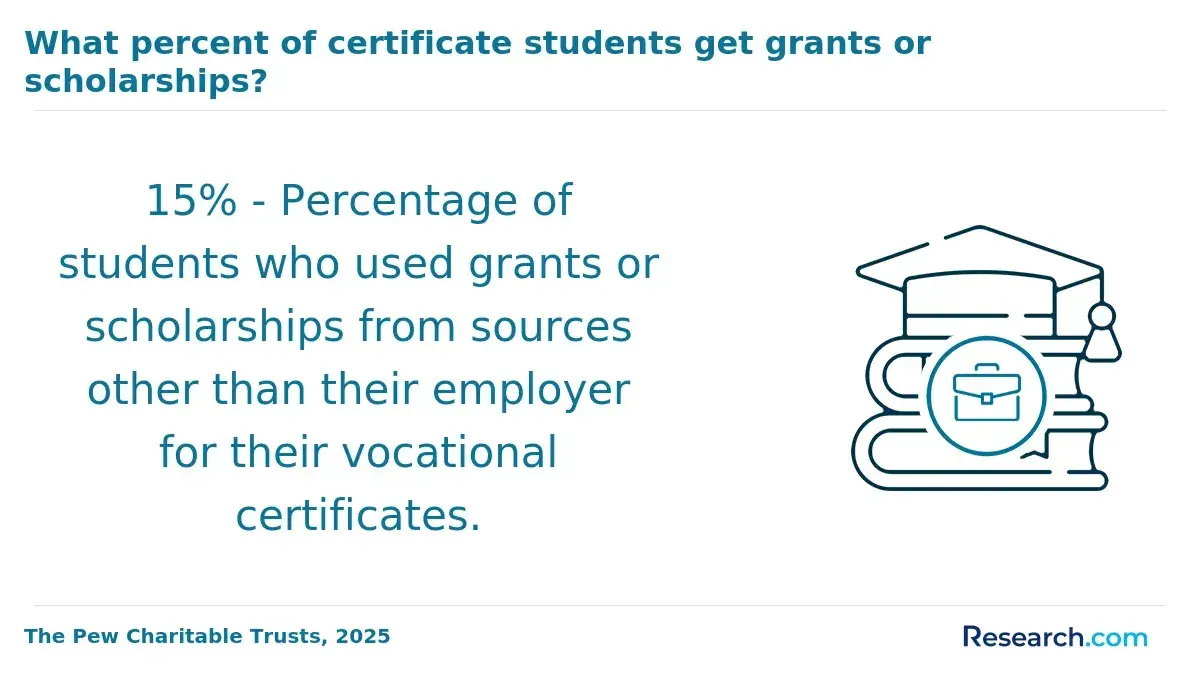
Estimate the full expense using the remaining required credits, tuition and mandatory fees, possible tuition increases, travel, clinical or project costs, and the time you expect to remain enrolled. Ask whether scholarships, employer assistance, or federal aid may apply and what conditions they carry. If you still need undergraduate preparation, comparing cheap online colleges is a separate cost decision; undergraduate tuition does not indicate what a professional doctorate will cost.
Career possibilities depend on the field, prior experience, and required credentials. Graduates may pursue advanced clinical practice, educational or public-sector leadership, organizational consulting, or applied research. Some of those roles also employ people with master's degrees, and a doctorate alone does not confer a promotion or an executive appointment.
Use occupational wage figures carefully: they describe people working in an occupation, not the earnings caused by a doctorate. Compare the roles you could realistically pursue before and after graduation, including any license or experience requirements. For a decision about financial return, weigh likely additional opportunities against tuition, funding, time away from work, and the cost of a master's degree, certification, or further experience instead.
Do Professional Doctorate Graduates Need Licensure or Certification?
Some do. A psychologist, advanced-practice nurse, clinical social worker, or school administrator may face state-specific education, supervised-practice, examination, and licensing or certification rules. Earning the doctorate and receiving permission to practice are separate events. A DBA, DPA, or similar leadership doctorate generally does not create a professional license, though employers may value other credentials.
Before applying to a regulated-field program, identify the state where you intend to practice and compare its board requirements with the program's accreditation, curriculum, and placement arrangements. Ask the program to explain how its pathway supports eligibility in that state; do not infer eligibility from the degree title or an online delivery claim.
Other Things You Should Know About
No. A school may accept applications throughout the year while selecting candidates against doctoral-program requirements. Confirm the program's actual admissions policy.
Sometimes. Entry routes differ by credential and program; other pathways require a relevant master's degree, experience, or professional license.
Not necessarily. They often emphasize applied work rather than the same research goal as a PhD, but clinical training, projects, and dissertations can be demanding.
Ask for the next verified start date, doctoral eligibility requirements, accreditation and licensure implications, required in-person work, culminating requirement, and an estimate of total cost.
- Programmatic Accrediting Agencies | U.S. Department of Education http://www.ed.gov/laws-and-policy/higher-education-laws-and-policy/college-accreditation/programmatic-accrediting-agencies
- Chapter 5 - Advanced Degree or Exceptional Ability https://www.uscis.gov/policy-manual/volume-6-part-f-chapter-5
- Recognition of Accrediting Agencies | Texas Higher Education Coordinating Board https://www.highered.texas.gov/recognition-of-accrediting-agencies/
- Online Programs | Rutgers https://shp.rutgers.edu/online-programs/
- Undergraduate and Graduate Tuition and Fees | Purdue Global https://www.purdueglobal.edu/tuition-financial-aid/undergraduate-graduate-tuition-and-fees/
- Admission Requirements | seu.edu https://seu.edu/admission/admission-requirements/
- Can You Go to Nursing School Online? What Students Should Know | Carrington College https://carrington.edu/blog/can-you-get-a-nursing-degree-online/
- Doctoral Learning and Resources - Section 7. Learning Modalities and Resources - Academics at Walden University https://academics.waldenu.edu/handbook/learning-modalities/doctoral-research-resources
- Online doctoral degrees without a dissertation | Capella University https://www.capella.edu/blog/phd-doctorate/the-difference-between-a-dissertation-and-doctoral-capstone/
- Frequently asked questions for Graduate Admissions | American University https://www.american.edu/spa/admissions/faqs.cfm