
2027 Best Online Women's Health Nurse Practitioner Doctorate Programs for Research Careers

Co-Founder and Chief Data Scientist
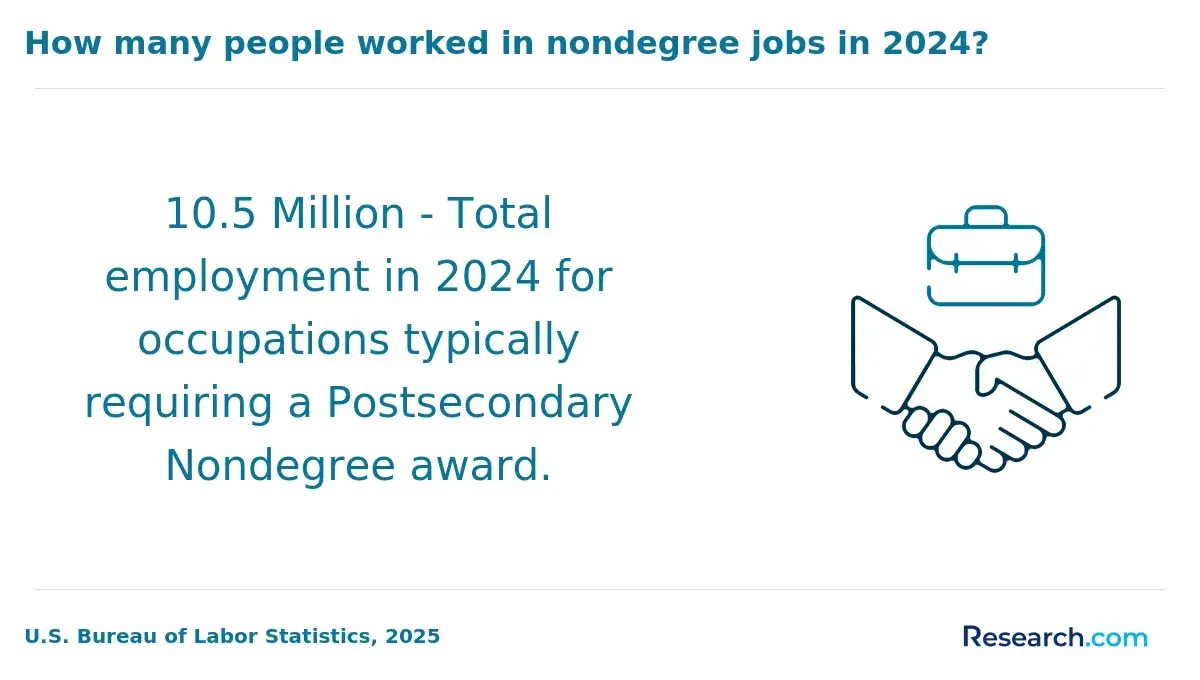
Choosing an online women's health nurse practitioner doctorate for a research career is different from choosing a practice-focused credential. The right program can shape your access to mentors, datasets, dissertation support, grants, publications, and academic roles. The U. S. Bureau of Labor Statistics reported a $129,210 median annual wage for nurse practitioners in 2024, reflecting strong value for advanced clinical expertise, but research careers require more than clinical preparation. This guide helps WHNPs compare doctoral formats, research depth, faculty fit, accreditation, costs, and outcomes before committing time and money.
Key Things You Should Know
- The strongest online WHNP doctorate for a research career is usually a PhD in nursing or nursing science with women's health faculty, dissertation-based research training, and access to funded mentorship; a DNP is better when the goal is applied clinical scholarship, implementation science, or leadership in evidence-based practice.
- Accreditation matters in two ways: institutional accreditation protects degree legitimacy, while CCNE or ACEN program accreditation is especially important for nursing quality, employer recognition, financial aid eligibility, and any pathway tied to APRN preparation or certification.
- Cost and funding can change the best choice: research-intensive PhD programs may offer assistantships or tuition support, while online DNP programs are often self-funded; compare total tuition, required campus visits, clinical or project fees, technology costs, and whether research assistant roles are open to distance learners.
What Are the Best Online Women's Health Nurse Practitioner Doctorate Programs for Research Careers?
The best online women's health nurse practitioner doctorate for a research career is not simply the cheapest, fastest, or most flexible program. It is the program whose faculty, research infrastructure, doctoral curriculum, and scholarly expectations match the type of research you want to produce. For WHNPs, that may include maternal health, reproductive health, contraception access, menopause care, gynecologic oncology survivorship, perinatal outcomes, health disparities, implementation science, policy, or population health.
Because many universities do not label a doctorate specifically as an "online WHNP research doctorate," prospective students usually compare three realistic options: an online or hybrid PhD in nursing with women's health faculty, an online DNP with WHNP or women's health-focused scholarly projects, or a dual/stacked pathway that combines advanced clinical preparation with doctoral research or evidence-translation work. If you are still comparing master's or post-graduate clinical pathways before the doctorate, a broader review of online nurse practitioner programs can help you understand the clinical foundation that often comes first.
The table below summarizes the main program types that can support WHNP-related research careers. Use it to identify which structure best aligns with your intended research role, not just your preferred delivery format.
| Program type | Best fit for | Research strength | Typical scholarly product | Main trade-off |
| Online or hybrid PhD in nursing or nursing science | WHNPs seeking academic, scientific, grant-funded, or policy research careers | Strongest for original research, theory, methods, and dissertation training | Dissertation, manuscripts, conference presentations, grant proposals | May require residencies, full-time study, statistics-intensive coursework, or mentor matching before admission |
| Online DNP with WHNP focus or women's health project pathway | Clinicians seeking leadership in evidence-based practice, quality improvement, or implementation science | Moderate to strong for applied clinical inquiry, but usually not designed as primary preparation for independent research scientist roles | DNP project, practice-change evaluation, quality improvement portfolio | Often self-funded and may not include dissertation-level research methodology |
| Post-master's DNP for certified WHNPs | Practicing WHNPs who want doctoral-level clinical leadership without changing population focus | Best for translating research into practice settings | Systems improvement project, practice guideline evaluation, program evaluation | May have limited faculty depth in a specific women's health research niche |
| PhD with interdisciplinary women's health concentration | Students interested in public health, health policy, epidemiology, reproductive justice, or population outcomes | Strong when students can work with nursing, public health, medicine, or policy faculty | Dissertation using quantitative, qualitative, mixed-methods, or population datasets | May not provide WHNP clinical preparation or APRN eligibility |
A strong "best program" shortlist should include schools that publish faculty research agendas, list funded projects, name dissertation advisors, disclose residency expectations, and show evidence of student scholarship. Red flags include vague "research emphasis" language, no named women's health faculty, no recent doctoral student publications, or a capstone-only curriculum when your goal is original research.
Should You Choose a PhD or Professional Doctorate in Women's Health Nurse Practitioner for a Research Career?
For a research career, the PhD and the professional doctorate serve different purposes. A PhD prepares nurses to generate new knowledge, design studies, analyze data, publish findings, and compete for research or academic roles. A DNP prepares nurses to apply evidence, improve systems, lead clinical change, and evaluate outcomes in practice settings. Both can contribute to women's health research, but they do so from different angles.
The decision is especially important for WHNPs because many research careers require methodological depth, mentorship, and dissertation experience. A DNP can be valuable for implementation-focused roles, but it is usually not the most direct route to becoming an independent investigator or tenure-track research faculty member.
Use the comparison below to match the degree type to your intended career outcome.
| Goal | Better fit | Why it fits | When to reconsider |
| Tenure-track nursing faculty role with a research agenda | PhD | Emphasizes dissertation research, publications, theory, methods, and grant preparation | Choose a DNP only if the role is primarily clinical teaching or practice leadership |
| Principal investigator or co-investigator on women's health studies | PhD | Provides deeper preparation in research design, statistics, ethics, and scholarly dissemination | Consider postdoctoral training if the PhD program has limited grant infrastructure |
| Evidence-based practice leadership in clinics or health systems | DNP | Focuses on translating evidence into care delivery and measuring practice outcomes | Choose a PhD if you want to design original studies rather than implement existing evidence |
| Quality improvement in reproductive, perinatal, or gynecologic care | DNP | Supports applied projects that improve processes, access, safety, or outcomes | Look for strong evaluation coursework, not just leadership courses |
| Policy research or population health analysis | PhD or research-oriented DNP | Depends on whether you want to generate research or lead policy implementation | Compare faculty expertise in health disparities, epidemiology, and public health methods |
A practical rule is simple: choose a PhD if your desired output is a dissertation, peer-reviewed research, grants, or a faculty research agenda. Choose a DNP if your desired output is a practice-change project, care model redesign, clinical leadership, or evidence implementation. If you want both, ask schools whether DNP-to-PhD pathways, postdoctoral research training, or interdisciplinary certificates are available.
What Accreditation and Quality Indicators Should You Look for in an Online Women's Health Nurse Practitioner Doctorate Program?
Accreditation is the first quality filter for any online WHNP doctorate. At minimum, the university should hold institutional accreditation from an agency recognized by the U.S. Department of Education or the Council for Higher Education Accreditation. Nursing program accreditation from CCNE or ACEN is also a major quality signal, especially for DNP, APRN, or post-graduate clinical pathways.
Quality indicators go beyond accreditation. For research careers, you should verify whether the program has the faculty depth, doctoral infrastructure, and research culture needed to support your topic over several years. Students comparing clinical entry points may also want to review how accreditation and program quality are discussed across broader accelerated nurse practitioner programs, since speed should never outweigh credential integrity.
Before applying, confirm these quality signals directly with the school and, when possible, with current doctoral students or recent graduates.
- Institutional accreditation: Confirms the university meets recognized standards and is typically required for federal financial aid eligibility.
- Nursing accreditation: CCNE or ACEN accreditation indicates external review of nursing curriculum, faculty qualifications, student outcomes, and program governance.
- WHNP certification alignment: If the program includes WHNP clinical preparation, confirm that it aligns with the National Certification Corporation WHNP-BC exam requirements and your state's APRN rules.
- Research-active faculty: Look for faculty with recent publications, funded projects, dissertation chairing experience, and expertise in your women's health topic.
- Doctoral student outcomes: Ask about completion rates, time to degree, dissertation topics, publications, conference presentations, faculty placements, and research roles after graduation.
- Online student research access: Confirm that distance learners can use library databases, statistical consulting, writing centers, research software, human-subjects training, and virtual dissertation meetings.
Common mistakes include choosing a program because it is fully online without checking research mentorship, assuming a DNP automatically prepares graduates for academic research roles, or enrolling before verifying whether required clinical hours, residencies, or dissertation defenses require travel. Accreditation protects the legitimacy of the degree; research infrastructure determines how useful that degree is for your long-term goals.
Admission requirements vary by school and degree type, but online WHNP doctorate programs usually expect evidence of advanced nursing preparation, a current RN license, academic readiness, and a clear scholarly purpose. PhD programs often prioritize research fit and writing potential, while DNP programs usually emphasize clinical experience, APRN preparation, leadership potential, and readiness for a practice-focused doctoral project.
If you are still mapping the earlier clinical pathway, a guide on how to become a nurse practitioner can help clarify the RN-to-MSN, BSN-to-DNP, post-master's, and certification sequence that may come before doctoral research specialization.
Most applicants should prepare the following materials early because mentor matching, license verification, and transcript review can slow down the process.
- Active RN license: Many programs require an unencumbered RN license, and clinical DNP pathways may require licensure in the state where clinical experiences occur.
- BSN, MSN, or related graduate degree: BSN-to-PhD, MSN-to-PhD, BSN-to-DNP, and post-master's DNP routes differ substantially in length and clinical requirements.
- Graduate GPA: Schools commonly review prior academic performance, especially in advanced pathophysiology, pharmacology, assessment, statistics, and research courses.
- APRN certification or WHNP experience: Post-master's WHNP-focused DNP programs may expect current national certification, while PhD programs may admit nurses with broader women's health, public health, or research backgrounds.
- Statement of research or scholarly goals: Research-focused applicants should name potential faculty mentors and explain a focused women's health question rather than submitting a broad interest statement.
- Writing sample or scholarly work: PhD programs may request a paper, publication, thesis, poster, or evidence of research readiness.
- References: Strong letters should speak to your clinical judgment, research potential, writing ability, leadership, and persistence in long-term doctoral work.
- Interview: Faculty may use interviews to assess research alignment, doctoral expectations, and whether distance learning is realistic for your schedule.
A strong application does more than prove eligibility. It shows that your topic fits the school's faculty expertise, that you understand the difference between clinical practice and research preparation, and that you have a realistic plan for balancing work, study, and scholarly productivity.
Research training is the feature that most clearly separates a research-ready doctorate from a flexible but mainly professional credential. A PhD usually includes advanced research methods, theory development, statistics, qualitative or mixed-methods design, responsible conduct of research, grant writing, and a dissertation. A DNP usually includes evidence appraisal, quality improvement, implementation science, systems leadership, outcomes evaluation, and a practice-focused scholarly project.
In WHNP-related research, the strongest programs help students move from a broad clinical concern to a feasible, ethical, and publishable study. For example, a student interested in contraception access might refine that interest into a mixed-methods dissertation on access barriers in rural clinics or a DNP project evaluating a standardized counseling workflow.
The table below explains how common doctoral research requirements differ by degree type and why those differences matter for career planning.
| Requirement | PhD expectation | DNP expectation | Why it matters for research careers |
| Research methods | Deep coursework in quantitative, qualitative, or mixed methods | Applied evidence appraisal and evaluation methods | Determines whether you can design original studies or mainly evaluate practice change |
| Statistics and data analysis | Often includes advanced statistical modeling or research design sequences | Usually focuses on interpreting outcomes and evaluating interventions | Advanced methods are important for independent research and grant-funded work |
| Human-subjects research | Required for dissertation planning and institutional review board approval | Required when projects involve patient data, implementation, or evaluation | Essential for women's health research involving sensitive reproductive or clinical data |
| Dissertation or final project | Original dissertation that contributes new knowledge | Practice-focused DNP project that applies evidence | Employers and faculty search committees may weigh these products differently |
| Publication preparation | Often expected or strongly encouraged | May be encouraged, especially for high-quality implementation projects | Publications strengthen applications for academic, research, and policy roles |
Ask programs how many doctoral students publish before graduation, whether online students can join faculty research teams, and whether dissertation chairs meet virtually on a consistent schedule. A program that advertises "research" but offers only one basic methods course may not provide enough preparation for competitive academic or scientific research roles.
Faculty mentorship is often the deciding factor in a research-focused WHNP doctorate. A convenient online format is helpful, but a dissertation or major scholarly project depends on faculty who understand your topic, methodology, population, and intended career path. The best programs make faculty research interests easy to find and encourage applicants to contact potential mentors before applying.
Women's health research is broad, so specialization fit matters. The examples below show common research areas and the type of faculty background that may support each one.
| Research specialization | Potential faculty expertise to look for | Possible doctoral project direction |
| Maternal morbidity and perinatal outcomes | Maternal health researchers, epidemiologists, midwifery or obstetric nursing faculty | Disparities in postpartum follow-up, severe maternal morbidity risk factors, care coordination models |
| Reproductive health access | WHNP faculty, public health researchers, health policy scholars | Contraception access, rural reproductive care, telehealth counseling, policy barriers |
| Gynecologic oncology survivorship | Oncology nursing researchers, symptom science faculty, survivorship experts | Quality of life, sexual health after treatment, symptom management interventions |
| Menopause and midlife health | Women's health clinicians, behavioral health researchers, aging specialists | Decision support, symptom burden, cardiovascular risk counseling, patient education models |
| Health disparities and reproductive justice | Community health, equity, sociology, public health, or policy faculty | Structural barriers, culturally responsive care, community-based participatory research |
| Implementation science in women's health care | DNP faculty, systems researchers, quality improvement experts | Adoption of evidence-based screening, workflow redesign, provider education interventions |
When evaluating mentorship, do not stop at a faculty biography. Review recent publications, funded projects, dissertation committees, and whether the faculty member is accepting new doctoral advisees. If your topic requires specialized methods such as longitudinal data analysis, qualitative interviewing, community-based participatory research, or secondary dataset analysis, confirm that the program can support those methods before you enroll.
Students should also ask whether online doctoral learners can attend research seminars, join writing groups, present at virtual works-in-progress sessions, and collaborate on manuscripts. Those opportunities can be just as important as coursework because research careers are built through sustained scholarly production and professional networks.
Program length depends on entry point, degree type, enrollment intensity, transfer credits, clinical hour requirements, and dissertation or project pace. An online post-master's DNP may be completed more quickly than a PhD, while a BSN-to-DNP WHNP pathway can take longer because it combines graduate clinical preparation with doctoral coursework. PhD timelines vary widely because dissertation research, data collection, analysis, and publication goals can extend the final stage.
Fully online completion is possible in some programs, but many doctoral nursing programs use a hybrid model. Required campus visits may include orientation, intensives, proposal defense, skills assessment, research immersion, or final defense. Students considering speed-focused pathways should compare them carefully with accelerated nurse practitioner programs, because accelerated clinical preparation and research-intensive doctoral study solve different problems.
The table below gives a practical timeline comparison for common pathways. Exact timelines vary by school, so use these ranges as planning categories rather than promises.
| Pathway | Common format | Typical planning horizon | Research-career consideration |
| Post-master's DNP for certified WHNPs | Often online or low-residency | Shortest doctoral route for practicing APRNs | Best for applied scholarship, leadership, and practice improvement rather than original dissertation research |
| BSN-to-DNP with WHNP preparation | Online coursework with clinical placements and possible campus intensives | Longer because it includes APRN preparation and doctoral work | Useful for students who need WHNP clinical eligibility and a practice doctorate |
| MSN-to-PhD in nursing | Online, hybrid, or low-residency depending on the school | Often longer than a post-master's DNP because of dissertation research | Strongest route for academic and independent research preparation |
| BSN-to-PhD in nursing | Less commonly fully online; often mentor-driven | Long planning horizon with intensive research training | Best for students committed early to research and faculty careers |
Full-time study can improve research immersion, access to assistantships, and momentum toward publication. Part-time study can make the doctorate feasible for working WHNPs, but it may reduce availability for research assistantships, delay dissertation progress, and make mentor continuity more important. Before choosing part-time enrollment, ask whether your dissertation chair can support a longer timeline and whether courses are offered often enough to avoid gaps.
Cost is one of the biggest trade-offs in online WHNP doctoral study. Public universities may offer lower in-state tuition, while private universities may offer more predictable online pricing but higher total costs. Research-intensive PhD programs may provide assistantships, tuition remission, or stipends, but these opportunities may be limited for part-time or fully online students. DNP programs are commonly self-funded, especially for working clinicians.
The National Center for Education Statistics reported in 2024 that average graduate tuition and required fees remain substantially different between public and private nonprofit institutions, which means the sticker price can vary widely before books, travel, software, clinical costs, and lost work time are added. For doctoral students, the more useful number is total program cost, not cost per credit.
When reviewing program pages, collect every cost item in writing. Prices should be compared as a full-degree budget, not as isolated tuition figures.
- Per-credit tuition for online graduate nursing courses
- Total required credits after transfer review
- University fees, technology fees, graduation fees, and distance-learning fees
- Campus residency travel, lodging, meals, and time away from work
- Clinical placement costs, background checks, immunizations, malpractice insurance, and documentation systems
- Research software, transcription, statistical consulting, survey tools, or dataset access fees
- Conference travel, poster printing, publication fees, and professional memberships
- Lost income if you reduce clinical hours to complete research, dissertation work, or residencies
Funding options differ sharply by degree type. PhD applicants should ask about research assistantships, teaching assistantships, fellowships, tuition waivers, traineeships, grant-funded faculty projects, and whether online students are eligible. DNP applicants should ask about employer tuition benefits, HRSA-related opportunities, state workforce programs, military benefits, scholarships, payment plans, and loan repayment options tied to service in shortage areas.
For research careers, the cheapest program is not always the best value. A higher-cost program may be worth considering if it offers strong faculty mentorship, publication opportunities, funded research teams, and dissertation support. Conversely, an expensive online program with limited women's health faculty and minimal project support can create high debt without improving research readiness.
A doctorate in women's health nurse practitioner-related study can support several research-facing careers, but the right degree type matters. PhD-prepared nurses are more competitive for research faculty, scientist, and grant-focused roles. DNP-prepared WHNPs are often better positioned for clinical leadership, implementation, quality improvement, and practice-based scholarship. Some graduates blend both worlds by practicing part time while conducting applied research or teaching.
Salary varies by role, employer, geography, funding source, and whether the position is clinical, academic, administrative, or research-based. The BLS 2024 Occupational Employment and Wage Statistics reported a $129,210 median annual wage for nurse practitioners, while academic and research roles may follow different pay structures. Comparing related APRN compensation, such as psychiatric nurse practitioner salary, can also show how specialty, state, and employer setting influence earning potential across advanced practice nursing.
The table below outlines common research-aligned paths for WHNP doctoral graduates. It is designed to help you connect degree choice with the kind of work you want to do after graduation.
| Career path | Common employers | Typical responsibilities | Best doctoral fit |
| Nursing faculty researcher | Universities, academic health centers | Teach, publish, mentor students, develop a research agenda, pursue grants | PhD |
| Women's health research scientist | Academic medical centers, research institutes, health systems | Design studies, analyze outcomes, write manuscripts, collaborate on funded projects | PhD |
| Implementation science or quality improvement lead | Hospitals, clinics, community health organizations | Translate evidence into workflows, evaluate outcomes, improve care delivery | DNP or PhD with applied focus |
| Reproductive health policy analyst | Government agencies, nonprofits, advocacy organizations, think tanks | Analyze policy effects, synthesize evidence, write briefs, evaluate programs | PhD, DNP with policy expertise, or interdisciplinary doctorate |
| Clinical trials or research program director | Academic centers, contract research organizations, health systems | Coordinate studies, oversee protocols, manage teams, ensure compliance | PhD, DNP, or doctorate plus research operations experience |
| WHNP clinical scholar | Women's health practices, integrated care systems, teaching clinics | Provide care, lead evidence-based initiatives, present outcomes, mentor clinicians | DNP or PhD depending on research expectations |
A doctorate can improve credibility and access to scholarly roles, but it does not guarantee a faculty appointment, grant funding, or a specific salary. Competitive research careers usually require a record of publications, conference presentations, methods training, strong mentorship, and a clear area of expertise. Students targeting academia should also ask whether graduates have moved into tenure-track, clinical faculty, postdoctoral, or research staff roles.
How Should You Choose the Best Online Women's Health Nurse Practitioner Doctorate Program for Your Research Goals?
Choosing the best online WHNP doctorate starts with your research goal, not the delivery format. A flexible online program is valuable only if it gives you the mentorship, methods training, and scholarly community needed to produce credible research. Start by defining the role you want, then work backward to the degree type, faculty fit, funding model, and dissertation or project structure that supports it.
Use the following step-by-step process to compare programs consistently and avoid being swayed by marketing language.
- Define your research destination: Decide whether you want to become a tenure-track researcher, clinical scholar, quality improvement leader, policy analyst, research program director, or educator.
- Choose the correct doctorate type: Prioritize PhD programs for original research and academic scientist roles; prioritize DNP programs for evidence translation, clinical leadership, and implementation work.
- Map faculty fit: Identify at least two faculty members whose active research aligns with your women's health topic, methods, and population of interest.
- Verify accreditation and certification implications: Confirm institutional and nursing accreditation, and check WHNP certification alignment if the program includes APRN preparation.
- Review research infrastructure: Ask about dissertation support, statistical consulting, research seminars, writing groups, grant workshops, IRB support, and online student access to research teams.
- Compare total cost and funding: Build a full budget that includes tuition, fees, travel, clinical costs, software, lost work time, and whether distance learners qualify for assistantships or scholarships.
- Ask for outcomes evidence: Request examples of dissertation titles, DNP projects, publications, conference presentations, faculty placements, research roles, and student completion support.
- Test the online format: Confirm synchronous requirements, residency dates, clinical placement expectations, technology platforms, time zone issues, and dissertation defense procedures.
Several red flags should slow your decision. Be cautious if a program cannot name faculty mentors in women's health, gives vague answers about dissertation support, claims to be fully online but has undisclosed travel requirements, provides no information on doctoral student scholarship, or presents a DNP project as equivalent to a PhD dissertation for all research careers.
The best choice is the program where your topic is not an exception. If faculty are already publishing in your area, students are producing related scholarship, and the curriculum includes the methods you need, your online doctorate is more likely to support a serious research trajectory.
Other Things You Should Know About Women's Health Nurse Practitioner
Usually, no. A PhD in nursing is a research doctorate and does not automatically provide WHNP clinical eligibility. If you need WHNP certification, look for an accredited MSN, post-graduate certificate, or BSN-to-DNP pathway that includes the required population-focused clinical preparation.
Clinical hours are common in DNP programs, especially BSN-to-DNP or APRN-preparation pathways. PhD programs generally focus on research rather than clinical hours, though they may require research practica, residencies, or dissertation-related fieldwork.
No. PhD programs typically require a dissertation based on original research. DNP programs usually require a scholarly or practice-focused project instead of a dissertation, although the project may still involve data collection, implementation, and outcomes evaluation.
Yes. For research-focused doctoral study, faculty fit is one of the strongest indicators of program fit. Contact potential mentors with a concise summary of your research interests, methods background, and career goals, and ask whether they are accepting new doctoral students.
- New Graduate Employment Data https://www.aacnnursing.org/news-data/research-data-center/new-graduate-employment-data
- Women and alcohol: Screening, brief intervention, and referral to treatment https://npwomenshealthcare.com/page/21/
- How to Become a Women’s Health Nurse Practitioner https://www.allnursingschools.com/specialties/womens-health-nurse/
- Top Online WHNP Programs 2026: Comprehensive Rankings https://www.npschools.com/rankings/all-online-whnp-programs
- Doctoral Project Repository https://doctorsofnursingpractice.org/scholarship-and-grant-opportunities/
- Women's Health Nurse Practitioner (NP) Programs - Nurse Practitioner Degrees https://npdegrees.org/degrees/np-masters-degrees/womens-health-np-programs/
- Online Doctor of Nursing Practice (DNP) Degrees for the Clinical Nurse Specialist-Women’s Health Role https://www.doctorofnursingpracticednp.org/online-doctor-of-nursing-practice-dnp-degrees-for-the-clinical-nurse-specialist-womens-health-role/
- Grad School Scholarships for Women | Go Grad https://www.gograd.org/financial-aid/scholarships/women/


